Category Archives: Forensic controls

Breaking News: Houston City Council Takes Crime Lab Away From the Police…

From Chron.com:

City Council has appointed a nine-member board to oversee the city’s crime lab, the first step in yanking it from police department control and setting up a publicly funded non-profit corporation to do evidence testing.

The vote was 15-2.

For a decade the Houston crime lab has been mired in controversy over decrepit facilities, a backlog of more than 6,600 rape kits and past audits that raise questions about the integrity of testing. Several men have been exonerated after serving years in prison after convictions largely based on crime lab evidence that was later discredited.

Though Council members supported the mayor’s proposal to try to insulate the crime lab from pressure from police,  prosecutors and politicians, some raised questions about the city’s plan to go it alone when the county is about to build its own forensics tower.

“There’s so many areas the city and county can save taxpayers money, and this is one of them,” said Councilman Jack Christie, who voted no. Councilwoman Helena Brown, the other no vote, called the plan “a political stunt” that wastes taxpayer money by failing to cooperate with the county.

Councilman Ed Gonzalez, a former Houston police officer,  said he would like to see a city-county operation. However, he said,  the crime lab needs reform now and the Council can’t wait “for ships that may never come in.” Gonzalez and others said the city had an obligation to change the governance of the crime lab, regardless of whether it does so with the county’s cooperation.

Councilman Larry Green agreed.

“How long do we have to wait for justice?” Green said.

Mayor Annise Parker said the plan does not preclude the future participation of the county.

Earlier piece from Chron.com:

The City Council on Wednesday could wrest control of Houston’s crime lab from the police department and outsource it to a publicly funded nonprofit Continue reading

Thomas Arthur, Death Row, and State v. Commercial Labs….

Thomas Arthur

I previously blogged here about Thomas Arthur, a man who is awaiting execution in Alabama.  He’s on my mind again, because I’m being interviewed today by the Oprah Network for an episode on the case (because I was an expert witness on the case back in 2008).  The issue now is that state officials down in Alabama want to move quickly toward execution, but won’t allow Mr. Arthur the chance to exhaust all possible DNA testing avenues to prove his possible innocence.

The perpetrator in this case wore a wig that was later recovered.  Years later, someone else confessed under oath to wearing the wig and committing the murder.  The State says the third-party’s confession is bogus and was orchestrated by Mr. Arthur.  That may very well be true.  Or it may not.  No one, of course, really knows but Mr. Arthur and the confessor.  But a DNA test result finding the confessor’s DNA in the wig would prove the confession to be accurate and reliable.  And it’s not like DNA has never proven a prosecutor to be dead wrong.

The State submitted the wig to nuclear STR testing in its own lab, and it failed to find a DNA profile.  But anyone who does this type of work knows that private labs, which used more sensitive and advanced forms of DNA testing like mini-STR, frequently find DNA profiles when the state labs can’t.  Just ask my client Raymond Towler.  The State of Ohio in his case claimed for years it could not find any sperm or male DNA  on the child rape victim’s panties.  We sent the same piece of evidence to a commercial lab, which found sperm galore and developed a DNA profile that sprung Mr. Towler from prison after 29 years.  I’ll never forget the call with one of the  prosecutors after we got the exonerative results, wherein she expressed amazement that the commercial lab found something that the State lab  had not.  I wanted to say, “Are you kidding me?, this is the rule rather than the exception.”

I’m not trying to knock state labs or the good people who work for them.  They are underfunded and overworked and have smart and hardworking people doing the best they can (like our state labs in Ohio, who are staffed by scientists I know and trust).  But the simple fact that commercial, private labs usually have more sensitive and up-to-date technology and can often get DNA results that state labs can’t is a given to anyone in this line of work.  The fact that Alabama turns a blind eye to this phenomenon, and wants to execute Arthur without seeing what a private, commercial lab can add to the equation, is egregious.

This editorial from the Atlantic says it all:

Another month, another man on death row, another excruciating case that illustrates just some of the ways in which America’s death penalty regime is unconstitutionally broken. This time, the venue is Alabama. This time, the murder that generated the sentence took place 30 years ago. And this time, there is an execution date of March 29, 2012, for Thomas Arthur, a man who has Continue reading

Saturday’s Quick Clicks…

Cell Tower Triangulation – How it Works

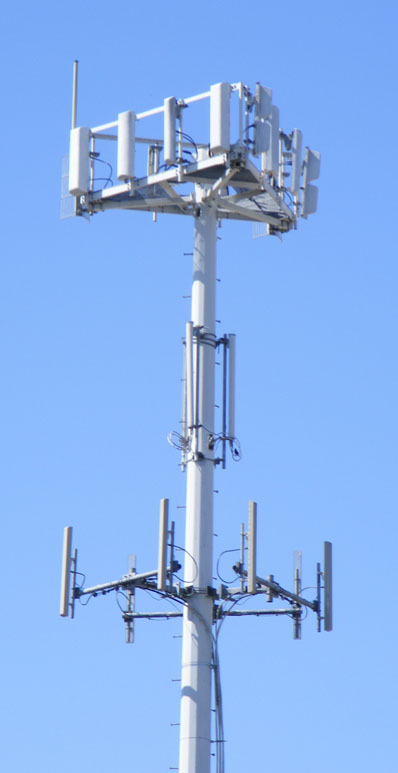
Cell TowerFirst, I refer you to Martin Yant’s earlier post on this subject:  https://wrongfulconvictionsblog.org/2012/05/10/cell-phone-evidence-doesnt-always-ring-true/

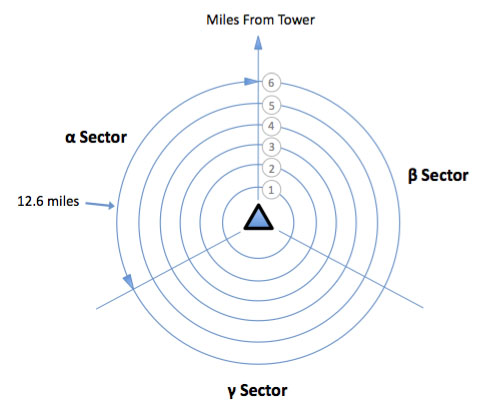
The post makes the point that data from a single cell tower is essentially worthless in trying to place someone in a particular location.  The best you can expect is a band within a 120° “pie wedge” from the cell tower.

If two cell towers are used, it gets much better, and if three towers are used it gets even better yet.  But to make sure this kind of evidence doesn’t get misused, and to know what it’s limitations are, it’s important to know how it works.

You may have noticed that the antennas on a cell tower are always arranged in a triangle.  There are some sound technical and economic reasons for this, but we won’t go into that here.  But it does mean that a cell tower can tell from which of the three antenna arrays it is receiving a signal.  Each of the three antenna arrays covers a 120° sector with the tower at it’s focus, and these sectors, by convention, are referred to as alpha, beta, and gamma – αβγ.

Within each sector, the tower can make a measurement of how far away the transmitting cell phone is.  This is done by measuring signal strength and the round-trip signal time.  For a lot of technical reasons, this is not a very accurate measurement, and the determined distance will have a reasonably significant error band.

Here is a diagram of a single cell tower showing concentric bands of distance from the tower, and the three “sectors”.  The distance bands don’t stop at “6”, but this is just to give you the idea.  Note that at six miles out, the arc of a sector is 12.6 miles long.

Continue reading

Exoneration in Arson Case Today

From CBS.com:

Freedom is in the offing for a man wrongfully convicted of a deadly arson fire.

As WBBM Newsradio’s Bob Conway reports, it has been a long wait for James Kluppelberg, 46, who has been in prison for 24 years for a crime he did not commit.

Kluppelberg was convicted and sentenced to life in prison for setting fire to a building at 4448 S. Hermitage Ave. in the Back of the Yards neighborhood March 1984, leaving Elva Lupercio and her five children – Santos Jr. 10; Sonia, 8; Cristobel, 6; Yadira 4; and Anabel, 3 – dead, the Chicago Tribune recalled.

The initial investigation determined the fire to be accidental, but four years later, a supposed witness testified that he saw Kluppelberg at the scene, while a Fire Department investigator said the fire was arson.

A Tribune article from July 15, 1989, said Criminal Court Judge Loretta Hall Morgan found Kluppelberg guilty after a bench trial, largely on the testimony of supposed witness Duane Glassco – a convicted burglar who was Kluppelberg’s roommate.

The article said Glassco admitted to him that he had started the fire, and told him: “You know how I am when I feel I’m losing someone. I do stupid things,” the Tribune reported. But the meaning of that statement was never explained during the trial, the newspaper reported.

But defense attorneys said Glassco had an axe to grind with Kluppelberg, because his ex-girlfriend had left him for Kluppelberg a short time earlier, the Tribune reported.

Kluppelberg was mistakenly released from the Cook County Jail after being sentenced and fled to Georgia, where he was captured and returned to Illinois, the Tribune reported. A jail guard was later charged with letting Kluppelberg out in exchange for help getting cocaine, the newspaper reported.

On appeal, Kluppelberg’s defense attorneys said the fire was not an arson at all, and that advances in science since the incident had made that clear, the Tribune reported.

On Wednesday, the Cook County State’s Attorney’s office decided to dismiss the charges, on the grounds that prosecutors cannot prove guilt beyond a reasonable doubt, the Tribune reported.

Kluppelberg is expected to be released from the Menard Correctional Center later Thursday.

By a Hair’s Breadth — Hair Analysis Evidence

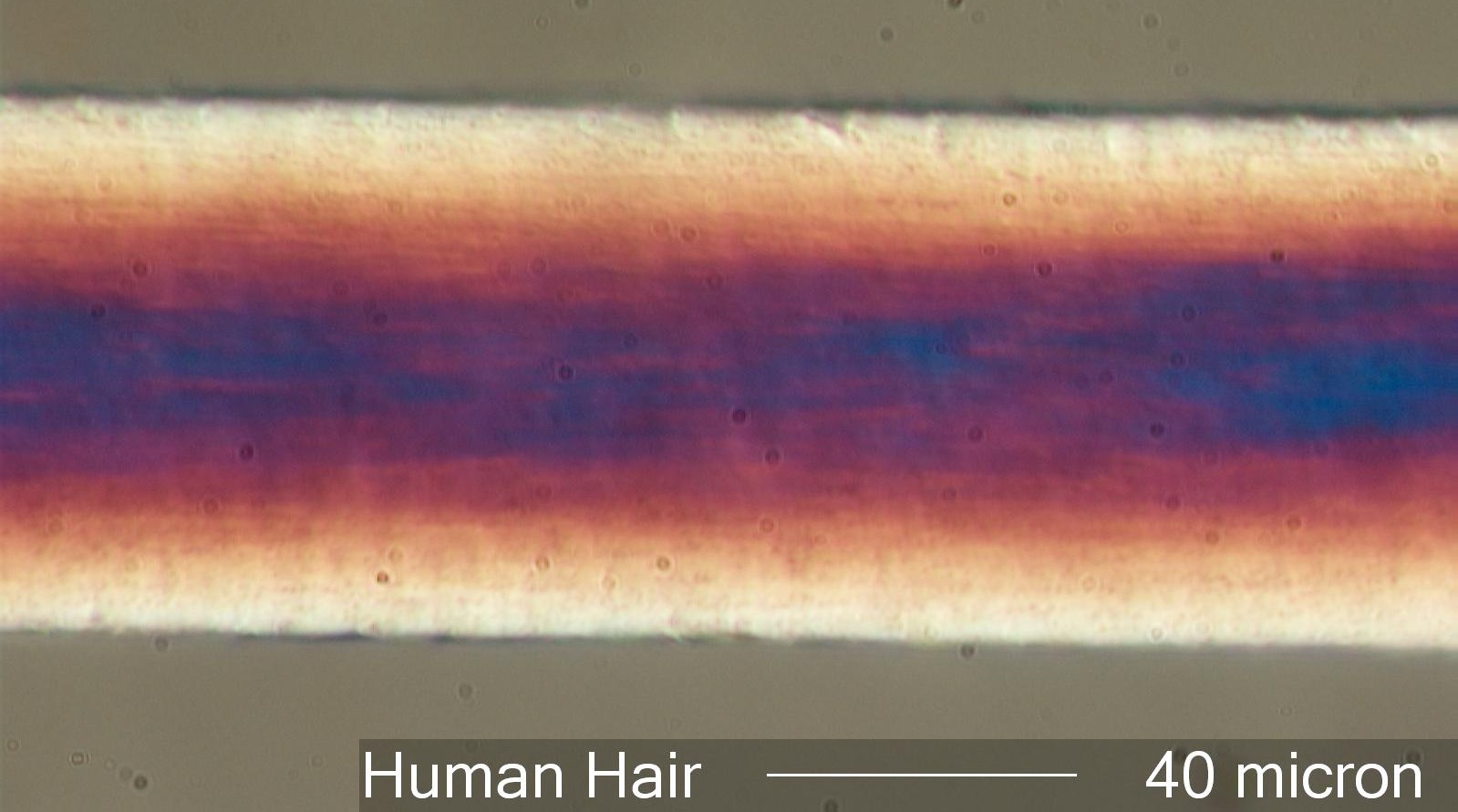
Microscopic comparison of hair evidence is a long established forensic discipline.  Technically, it’s called “trichology”, and the field dates to the mid-1800’s.  Like other visual pattern matching forensics, it had come to be accepted despite the fact that it has essentially no basis in science – just empirical, anecdotal inferences drawn from flawed inductive reasoning.  Microscopic comparison of hair evidence has been used as the sole evidentiary basis to not only convict people, but also to execute them.  The problem is – it’s not reliable.  There are details of two cases cited below in which hair evidence was just plain wrong.

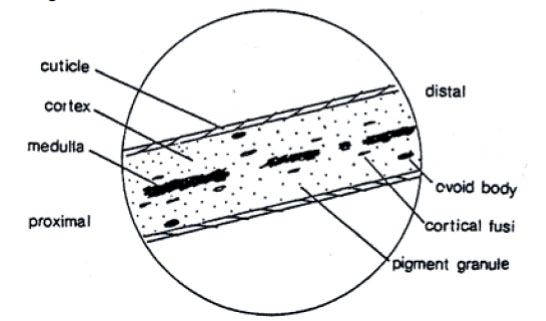
Here’s how it works.  This is a diagram of the basic structure of hair:

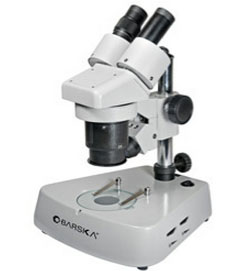
A hair from the crime scene, or one found on the victim, will be microscopically compared with a number of hair samples from the suspect.  The examiner will record observations of characteristics such as the following:

Continue reading
Friday’s Quick Clicks…

Breaking News: Texas Judge Recommends Exoneration for Woman on Death Row; Says Conviction Was Based on Junk Science…

Cathy Lynn Henderson

From Statesman.com (video story here):

The state’s highest criminal court should overturn the capital murder conviction of Cathy Lynn Henderson, once two days from execution for the 1994 death of an infant she was baby-sitting, a Travis County judge has recommended.

District Judge Jon Wisser said scientific discoveries into the causes of head trauma similar to the injury suffered by 3-month-old Brandon Baugh — and a change of heart from the prosecution’s star witness, former medical examiner Roberto Bayardo — mean no reasonable juror would convict Henderson if presented with the new evidence at trial.

“Testimony of the state’s chief experts was, at bottom, scientifically flawed,” Wisser wrote in findings dated May 14 and delivered Tuesday to the Court of Criminal Appeals.

After reviewing evidence via testimony and briefs, Wisser recommended that the appeals court dismiss Henderson’s conviction and return her case to Travis Continue reading
Wednesday’s Quick Clicks…

A Renewed Call for Forensic Lab Independence in the U.S….

From the National Law Journal:

On April 17, Indianapolis’ police chief stepped down after his department botched the handling of evidence in a high-profile case involving one of its own: an officer who may have been legally drunk when he drove his police car into two motorcycles stopped at a red light. The tainted blood sample has fueled allegations of a possible police cover-up in the case.

The Indianapolis incident provides another reminder that there needs to be a wall of separation between forensic science and law enforcement.

One city that’s on the right track is Houston, where Mayor Annise Parker has called for an independent crime lab, which would report to an independent board, rather than the police or prosecutor’s office.

Parker has the right idea — first, and foremost, because it matters who’s boss.

If you work for the police, you tend to see things from that point of view. Same goes for the prosecution. Usually, it is not a conscious thing. You want to be fair and unbiased, and you think you are. But when the boss hopes you’ll find evidence to support her point of view, your mistakes may lean in that direction.

That’s what happened in Houston, where an independent audit in 2006 found several cases in which forensic scientists in the crime lab had skewed reports — Continue reading

Breaking News: Exoneration of Todd Willingham Was in Process, but Halted by Court of Appeals…

From the Huffington Post:

A Texas judge who reviewed the controversial 2004 execution of Cameron Todd Willingham planned to posthumously exonerate the father who was put to death for killing his three daughters in a house fire.

Scientific experts who debunked the arson evidence used against Willingham at his 1992 trial and a jailhouse witness who recanted his shaky testimony convinced District Court Judge Charlie Baird in 2010 that “Texas wrongfully convicted” him. But Baird’s order clearing Willingham’s name never became official, because a higher court halted the posthumous inquiry while it considered whether the judge had authority to examine the capital case.

While waiting for permission to finish the case from the Third Court of Appeals, Baird put together the document that “orders the exoneration of Cameron Todd Willingham for murdering his three daughters,” because of “overwhelming, credible and reliable evidence” presented during a one-day hearing in Austin in October 2010.

“You can’t do anything for Willingham except clear his name,” Baird told The Huffington Post. “When they tried Willingham, I’m convinced that everyone Continue reading

Friday’s Quick Clicks…

Reflections on System Resistance to Innocence Part II

In a blog post that appeared on March 14, 2012 entitled Bryant ‘Rico’ Gaines to Walk Free Today in Ohio:  Reflections on System Resistance to Innocence (Blog Post), I expressed frustration over how the criminal justice system in Cincinnati reacted to a post-conviction claim of innocence, in the context of a specific case, in a way that I felt did not comport with a prosecutor’s duty to search for truth and ‘do justice.’

After the Blog Post was published, I heard that at least one member of the Prosecutor’s Office was upset because he or she believed that the Blog Post contained some inaccurate facts.  As a result, I invited the Prosecutor or his representative to respond to the Blog Post in the comment section and asked them to specifically address any mistakes I had made so that we could flesh them out through discussion.

I later received this 10-page letter dated April 3, 2012 (‘the Letter’).  After receiving the Letter, representatives of the Prosecutor’s Office confirmed that it was intended as a public response to the Blog Post and encouraged me to post it in my blog, which I have done above.  [Note:  The Letter responded to my Blog Post by using the names of the various actors in the case.  I did not use names in the original Blog Post because I see this as an academic discussion about the criminal justice system broadly rather than a discussion that is personal in nature.  Therefore, I have redacted most names from the Letter.]

My response to the Letter:

I.  Global Comments

A.   Prosecutorial Tunnel Vision and Resistance to Innocence Claims

First, I would like to clarify the point of my Blog Post.  I intended to explore the concept of prosecutorial tunnel vision in post-conviction cases and to allow blog readers to contrast the reaction of the Prosecutor’s Office when presented with post-conviction evidence of Gaines’ potential innocence with how police and prosecutors have reacted in other similar cases I have celebrated on the blog, such as in the articles herehereherehereherehere, and here.

Specifically, in the Blog Post, I pointed out examples of prosecutorial behavior Continue reading

Fire Science! Fire Science! Wherefore Art Thou, Fire Science?

We’ve talked a lot about the progress that has been made in replacing “junk” fire science with “real” fire science.  Sadly, however, the “junk” has not been completely purged.  This is a process that will require, along with ongoing training, education, and research, that “old line” fire inspectors retire or die and be replaced with properly educated and trained fire inspectors who understand the real science.

Below is a link to a very good article from Discover Magazine (online) which makes that very point.   Spark of Truth: Can Science Bring Justice to Arson Trials?  Here is the lead from the article: “Fire researchers have shattered dozens of arson myths in recent years. Yet American courts continue to convict people who are likely innocent of the crime.”

And these two quotes from the text:  “Despite the surge in fire science, pseudoscience remains entrenched in arson investigation.” and “One can only hope that in ten to twenty years we get trained scientists doing these investigations.”

http://discovermagazine.com/2011/nov/12-spark-truth-science-bring-justice-arson-trials/article_view?b_start:int=0&-C=

And to “add more fuel to the fire” (so to speak), here is a link to an ABC 20/20 episode detailing the cases of two mothers who each survived a fire in their home, but their children did not.  Both mothers were (wrongfully) convicted, based upon junk fire science, and sent to prison for murdering their children.  The episode also briefly covers two other arson cases (both from Texas), one being the Willingham case.  This is a fascinating video.  Watch it!

http://abc.go.com/watch/2020/166626/260464/fire-scientist-questions-arson-finding

And by the way, if you haven’t been able to watch the documentary film “Incendiary”, which won the 2011 Innocence Network Journalism Award, it’s a “must see”.  It chronicles the Cameron Todd Willingham arson case in Corsicana, TX.  It’s available for download online.

Ten Important Facts About the Wrongful Conviction of Carlos DeLuca, an Innocent Man Executed in Texas…

From the Daily Beast:

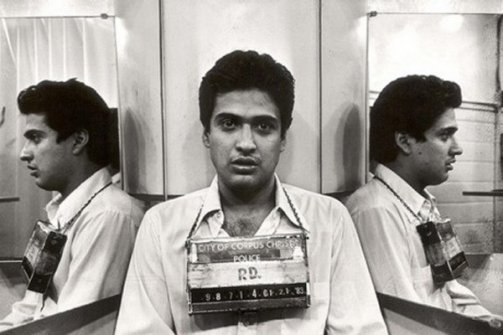
Los Tocayos Carlos: An Anatomy of a Wrongful Execution is a haunting chronicle of how Carlos DeLuna, a poor Hispanic man with a history of petty crime and the intelligence of a child, was wrongfully convicted and then executed for the 1983 murder of Wanda Lopez, a convenience-store clerk in Corpus Christi, Texas.  An entire issue of the Columbia Human Rights Law Review has been dedicated to publishing the tale of how DeLuna was put to death and the real killer, a brutal thug named Carlos Hernandez, continued to roam free. The remarkable thing about the narrative is the utter banality of it in what the authors describe as a “case of the obscure accused of murdering the obscure.” Here are 10 of the most gripping and shocking parts of this tragic story.

Ignored By 911

Wanda Lopez was a divorced single mother and high-school dropout who worked the 3–10 p.m. shift behind the register at the Sigmor Shamrock gas station and convenience store. It was in a rough neighborhood inCorpus Christi, located next to a strip club called Wolfy’s. At 8:09 p.m., she called 911 in a panic. She immediately asked “[C]an you have an officer come to 2602 South Padre Island Drive? I have a suspect with a—a knife inside the store … He’s a Mexican. He’s standing right here at the counter.” Instead, the 911operator, Jesse Escochea, who wasn’t supposed to be answering calls and just picked up the phone because everyone else was occupied, quizzed her for 77 seconds because he thought she had “an attitude.” He didn’t dispatch a police car until after Lopez had been fatally stabbed in her chest while asking for help. It later emerged that the reason for her “attitude” was that she had previously called 911 about the same man loitering outside the door and was told to immediately call back if the man entered. If the regular 911 operator had answered, help would have come right away and Wanda Lopez might not have been stabbed.

The Arrest

Eyewitnesses saw two different men running in different directions near the gas station. The only actual witness to the crime saw the stabbing and then watched a Continue reading

More on DNA ‘errors’ and the fallibility of DNA databases (and the humans that use them)

Jeff Jonas has written a great blog post here…. 

Self-Correcting False Positives/Negatives: Exonerate the Innocent

on the ‘false positives’ and ‘false negatives’ that ALL databases produce, but in particular, focussing upon forensic DNA databases. He suggests that such databases should be ‘self-correcting’, so that any new data entered that contradicts prior data generated, should immediately be flagged up. So, if a DNA ‘match’ had convicted an innocent person, yet a later DNA sample entered into the database also matched the crime scene for the earlier conviction, then an alert would be created. Jonas looks at the CODIS system and makes some great recommendations, using cases were DNA ‘errors’ (by humans) had led to wrongful convictions, and yet DNA could exonerate. By making the system automatically generate alerts to ‘errors’ (both Type I and Type II) then we could save an awful lot of work from Innocence Projects around the world!

(To see a GREAT blog post on Type I & Type II erros in the justice system – read here… )

Of course, if mistakes are ‘discovered’, there needs to be sufficient transparency (and honesty/ ethical behaviour) among the State actors for that to be acted upon. In this article from Viriginia:

Convict’s story prompted budget amendment on DNA

it is explained that the discovery that DNA matches with suspects to crime for whom someone was already sitting in jail, wrongfully convicted, has not led to any action: “Initially, the state Board of Forensic Science, which oversees the department, said only prosecutors and police were to learn the test results and that it would be up to authorities to decide the significance of the testing and to take any action.” Fortunately, legislators in Virginia have realised that this is not an acceptable state of affairs and made an amendment: “That the amendment got in the pending budget, Howell said, “is, I think, a reflection of an ongoing frustration with the process and the lack of transparency and the lack of effort made by the Department of Forensic Science.”

Such actions need to be replicated both across the US and internationally.

However, one issue in the UK at least, is that with our DNA database, crime scene samples are deleted from the database once a case is deemed to be ‘solved’ (i.e. there has been a conviction). It is rare for DNA profiles to be retained once someone is behind bars for a crime. This means that many people who may have been convicted based on the result of ‘errors’ cannot have that remedied unless there is access to original exhibits (and they still contain sufficient DNA to profile). This is a significant flaw in the UK system that so far, the government appears to be ignoring in it’s latest amendments to DNA legislation, despite the issue being brought to their attention (at the very least, in this report on “The Future of Forensic Bioinformation”). 

See a related blog post I recently wrote on the subject here.

Innocence in the Czech Republic…

Daniel Vanek, DNA expert in the Czech Republic

I am in the Czech Republic lecturing over the next few days about the Innocence Movement.  I am so heartened and inspired when I go to countries like this to find kindred souls who are on the ground educating, teaching, and fighting for justice for the innocent.  DNA specialist Daniel Vanek is that person in the Czech Republic, and I am honored to be able to to spend time with someone who is this passionate about the movement.  I will write more later when I’m back to the States, but wanted to share now a video that was on national television in the Czech Republic this weekend about Daniel and his fight for forensic controls and the wrongfully convicted.

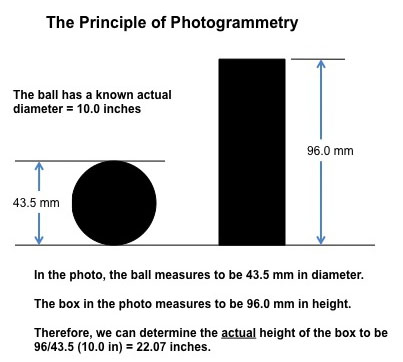
Photogrammetry – what’s THAT?

Photogrammetry is the science of determining measurements from photographs.  It’s most general use is in surveying and mapping, but, in the forensic context, it is also used to determine measurements of crime scenes and in accident reconstruction; and even more specifically, it can be used to determine measurements of the physical size of perpetrators from surveillance camera images.  In a simple two-dimensional situation, here is basically how it works:

Continue reading

Massachusetts Supreme Court Upholds Conviction Despite Exaggeration of DNA Statistics…

From source:

The Supreme Judicial Court of Massachusetts has decided to uphold the convictions in a first-degree murder prosecution even after finding that a prosecution witness gave mathematically erroneous DNA testimony.
“[O]ur review of the record indicates that Leanna Farnam, the chemist from the DNA unit of the State police crime laboratory who testified on behalf of the Commonwealth, made several calculation errors in her conversions of fractions into percentages, and thereby understated the likelihood that a randomly selected individual with no connection to the item could be ‘included’ as a potential contributor to the DNA samples,” Justice Margot Botsford wrote for a unanimous court.

“We conclude, however, that there was no substantial likelihood of a miscarriage of justice,” Botsford continued. “The difference of one per cent between the figures given by Farnam and the true figures was unlikely to have substantially influenced the jury’s deliberations, because the percentage of the population who were excluded as possible contributors to the DNA remained very high — over ninety-eight per cent — meaning it was still very unlikely that anyone included as a contributor had no connection to the item.”

Cuts to Legal Aid in NZ a Threat to Forensic Science and Justice?

An interesting short comment has appeared on The Forensic Group site (New Zealand based), questioning whether the cuts to legal aid in that country are having a detrimental impact on the commissioning of forensic tests. It also warns that some of the ‘best’ defence lawyers in New Zealand are moving out of criminal law because of the funding shortages. As they explain:

“The problem with losing good criminal defence lawyers is that access to justice will be compromised, there will be more appeals and, potentially, miscarriages of justice.”

Some very worthwhile questions asked…. read the full post here…

Legal Aid costs and forensic science: the cost of justice?