Category Archives: investigations and investigation techniques

Thanks to courts, police perjury remains major problem

According to an old lawyer joke, the best way to tell when a lawyer is lying is to look to see if his lips are moving. That rule seems to apply to cops on the witness stand, too. But “testilying” is no laughing matter. It is undoubtedly a significant factor in many wrongful convictions.

Proving it to the courts’ satisfaction, though, is another matter. As Radley Balko notes here, “The problem isn’t that cops aren’t capable of telling the truth. The problem is that the courts have treated cops as if they’re incapable of lying.”

Alan M. Dershowitz said the same thing in an op-ed in 1994. “Some judges refuse to close their eyes to perjury,” he wrote, “but they are the rare exception to the rule of blindness, deafness and muteness that guides the vast majority of judges and prosecutors.”

Balko argues that this could be changing, thanks to increasing prevalence of video cameras that catch cops in lies, as happened recently in a Chicago-area case. But until video cameras are everywhere, some cops will probably continue to lie as long as the courts allow them to get away with it.

Fingerprint identification based on flawed assumptions

From The (London) Telegraph

By Sarah Knapton, Science Correspondent

Fingerprint evidence linking criminals to crime scenes has played a fundamental role in convictions in Britain since the first forensic laboratory was set up in Scotland Yard in 1901.

But the basic assumption that everyone has a unique fingerprint from which they can be quickly identified through a computer database is flawed, an expert has claimed.
Mike Silverman, who introduced the first automated fingerprint detection system to the Metropolitan Police, claims that human error, partial prints and false positives mean that fingerprints evidence is not as reliable as is widely believed.

Nobody has yet proved that fingerprints are unique and families can share elements of the same pattern.

And there are other problems, such as scanning fingerprints of the elderly as their skin loses elasticity and in rare conditions leaves some people with smooth, featureless fingertips.

Mr Silverman, who was the Home Office’s first Forensic Science Regulator, said: “Essentially you can’t prove that no two fingerprints are the same. It’s improbable, but so is winning the lottery, and people do that every week.

“No two fingerprints are ever exactly alike in every detail, even two impressions recorded immediately after each other from the same finger.

“It requires an expert examiner to determine whether a print taken from crime scene and one taken from a subject are likely to have originated from the same finger.”
However there are numerous cases in which innocent people have been wrongly singled out by means of fingerprint evidence.

In 2004, Brandon Mayfield, was wrongly linked to the Madrid train bombings by FBI fingerprint experts in the United States.

Shirley McKie, a Scottish police officer, was wrongly accused of having been at a murder scene in 1997 after a print supposedly matching hers was found near the body.
“What both cases clearly demonstrate is that, despite the way fingerprint evidence is portrayed in the media, all comparisons ultimately involve some human element and, as a result, they are vulnerable to human error,” said Mr Silverman who has recently published his memoirs ‘Written in Blood’ and now works as a private forensic consultant.

“And the fingerprint often isn’t perfect, particularly at a crime scene. It might be dirty or smudged. There are all sorts of things that reduce the accuracy.
“I think it is important that juries are aware of this. Too often they see programmes like CSI and that raises their expectations. What you see on CSI or Silent Witness simply doesn’t exist.”

Unlike other forensic fields, such as DNA analysis, which give a statistical probability of a match, fingerprint examiners traditionally testify that the evidence constitutes either a 100 per cent certain match or a 100 per cent exclusion.
Previous studies have shown that that experts do not always make the same judgment on whether a print matches a mark at a crime scene, when presented with the same evidence twice.

A study by Southampton University found that two thirds of experts, who were unknowingly given the same sets of prints twice, came to a different conclusion on the second occasion.

It was Scottish surgeon Dr Henry Faulds who first discovered that fingerprints might be useful for identification purposes. He published a paper in the journal Nature in 1880 and offered the idea to the Met Police, but at the time the force was not interested.
Undeterred, Dr Faulds approached Charles Darwin who passed the concept on to his cousin Francis Galton. Galton published a book on the forensic science of fingerprints and claimed that the chance of two people having the same prints was about one in 64 million.
On the back of his work and later research Fingerprint Bureau was founded at Scotland Yard in 1901 and eventually the national Forensic Science Service (FSS) was founded with provided services to all UK forces.

However in 2010, the service was closed and forensic work is now carried out by the private sector, although the Met Police recently re-established its own lab.
Mr Silverman, whose opinion was sought on the murder cases of Damilola Taylor and Rachel Nickel, believes the closure of the FSS could lead to miscarriages of justice in the future.

“Police forces have to slash their budgets and the easy thing not to spend money on is forensic services,” he said.

“You have to ask yourself what price you put on justice.”

Three cities to start reviewing criminal-justice mistakes

It’s been a common refrain in the innocence movement that when an airliner crashes there is an intense investigation on how it happened to prevent similar crashes, but when a wrongful conviction occurs the criminal-justice system does nothing to prevent a recurrence.

Well, that’s about the change. According to The Crime Report, the major criminal-justice players in Philadelphia, Milwaukee and Baltimore have agreed to develop a system to review cases that went wrong or almost went wrong in an attempt to keep similar mistakes from happening again. Stephen Handelman writes about the project, which will be supported in part by the National Institute of Justice, here.

Swirls and Whorls: Litigating Post-Conviction Claims of Fingerprint Misidentification after the NAS Report

U of Washington Professor, and director the Innocence Project Northwest, Jackie McMurtry has posted the above-titled article on SSRN. Download here. The abstract states:

The National Research Council of the National Academies’ 2009 report, Strengthening Forensic Science in the United States: A Path Forward (“NAS Report”), noted that “[t]he number of exonerations resulting from the analysis of DNA has grown across the country in recent years, uncovering a disturbing number of wrongful convictions — some for capital crimes — and exposing serious limitations in some of the forensic science approaches commonly used in the United States.” The evidence can include the comparisons of bite marks, hairs, voiceprints, earprints, and fingerprints.

This article provides a brief outline of latent fingerprint evidence as it is currently presented in courts. Latent fingerprint individualization was rapidly accepted as forensic identification evidence, largely without question — and before being validated through scientific research. Legal challenges only began in the 1990s. Although the NAS Report’s discussion of fingerprint identification raises many questions, petitioners who claim to have been wrongly convicted because of it will still face substantial hurdles.

Police lying: an endemic international problem?

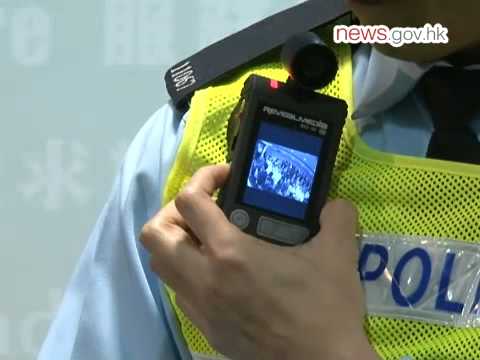
It is starting to feel in the UK like ‘another day, another story of police lies’. In what feels like just a few months we have had media coverage of (to mention just a few) scandals where, for example, police have been caught falsifying reports of an altercation that they ‘witnessed’ when they were not present (see Plebgate scandal...). We have the ongoing revelations over police lies and their coercion of others to lie in the Hillsborough disaster cover-up (see Hillsborough inquiry...). It is suspected that these tactics were honed during the Miner’s Strike when striking miners were ‘fitted up’ (see Miners Strike….). Such tactics clearly have continued for years with many undercover police officers lies leading to convictions (see undercover policing....) as well as the recent revelation that high profile victim Stephen Lawrence’s family were put under police surveillance during the inquiries into the police failures after Stephen’s murder (to try and discredit the family and their campaign for justice). This all comes on top of the almost run-of-the-mill stories of police ‘collusion’ with one another after fatal police shootings, with the introduction of body-worn cameras to enable the police to be ‘more transparent’ about fatal shootings. In fact, the introduction of police body-worn cameras has been posited as a boon for police as it will cut down on false allegations from the public. However, is it perhaps more likely that police body-worn cameras may serve to make the police more honest? Will they be able to lie with camera footage of the real altercation readily available?

0In Omagh, Northern Ireland, the introduction of CCTV cameras in the town has led to the uncovering of police lies leading to miscarriages of justice - with solicitors claiming that miscarriages may be ‘endemic’: increasingly, CCTC footage is being shown to demonstrate that the police account of events is unreliable - even untrue (see story here…) Of course this has not been a good week either for police south of the border in Ireland, having been found to have been illicitly tape recording phone calls made to police stations (see here…). The other side of the world, in New Zealand, they are calling police lies and false evidence which have led to convictions as ‘failings’ and ‘sloppy police work’ (see here…Police failures led to wrongful conviction).

We have all known for years that there are ‘rotten apples’ and that wrongful convictions have often had police misrepresentations, if not outright corruption and lying, at their heart. However, the question must surely now be asked: is lying among the police an endemic international problem? If so, what can be done about it? These questions are already beginning to be murmured in corners of the UK, I think it is now time to get such questions out in the open. These are challenging times for the police, and if we are not to lose trust in them completely, I believe some hard questions must be asked and answers demanded.


Are prosecutors’ conviction-integrity units the real deal?

Are prosecutors’ conviction-review or conviction-integrity units a sincere effort to right wrongs or an insincere attempt to cover up challenged cases with a heavy layer of whitewash? Hella Winston explores the issue in an excellent article for The Crime Report, which you will find here.

Interrogations may be getting worse instead of better

False confessions are a leading cause of wrongful convictions in the United States, and many of them are obtained by detectives using the pervasive Reid technique of interrogation. But if you think that law-enforcement officials are beginning to realize the inherent flaws of a system that gets people to confess to crimes they didn’t commit, guess again.

In a thought-provoking blog post here, forensic psychologist Karen Franklin says she is actually seeing Reid technique “taken to more and more extreme levels” because of American courts’ “tacit encouragement” of deceit and the watering down of Miranda rights.

The Child Abuse Pediatrician (CAP) - Just Another Term for Medical “Cop”

CAP Ethics

A new paper has recently been published by George Barry and Diane Redleaf of the Family Defense Center in Chicago. The paper, titled Medical Ethics Concerns in Physical Child Abuse Investigations, explores and reveals the extent of breeches of medical ethics by child abuse medical investigators (CAP’s).

This paper is a prodigious work, including five detailed case studies.

The title of Section I of Part III conveys the theme of the paper: “Physicians Have an Ethical Obligation Not to Become Law Enforcement Officers.” And here is an excerpt from the Executive Summary: “We submit, in this Paper, that this system of child abuse investigation and medical assessment is failing the children and families. We also submit that the failings are due at least in part to practices that are ethically questionable at best, or plainly unethical at worst. The harm of these practices occurs because, while the child may quickly recover from a toddler fracture, nursemaid’s elbow or subdural hematoma that is called in to child protection authorities as suspicious, the trauma families have experienced at the hands of the child protection system does not fade quickly or ever entirely disappear. Moreover, the Center is able to represent only a tiny fraction of the wrongly accused family members in medically complex cases and resources like the Center provides are not available to the vast majority of family members who encounter the child protection and medical care establishment in these cases. Unfortunately, we see little sign that the child protection and medical care establishment are addressing in a meaningful way the harmful impact of erroneous child abuse reports that have resulted from questionable ethical practices that this Paper documents. Indeed, for reasons this Paper documents, we believe that the medical profession has turned a blind eye to the treatment of children and families who are the victims of misplaced child abuse allegations and we are concerned about developments in the handling of medically complex allegations that make these problems worse, not better.”

Don’t get me wrong. Child abuse is a horrific thing, but equally, if not more, horrific is when when innocent parents and care givers get thrown into prison or separated from their children for a child abuse “crime” they did not commit, and that did not ever happen. This is a tragedy that occurs all too often when a medical diagnosis is made that does not recognize the new scientific understandings regarding symptoms that have traditionally (and wrongly) been attributed solely to abuse.

And here’s the scary part - the CAP’s, who are basically a medical cop, as part of their training, have been indoctrinated with the American Academy of Pediatrics medical dogma concerning causation of certain symptoms (the triad and long bone fractures) that they insist are pathognomonic (exclusively indicating) of abuse. This is what the SBS Wars is all about.

“Chid Abuse Pediatrics” was established as a pediatric sub-specialty by the American Board of Medical Specialties in 2006. This definition of the discipline is from the website of the Council of Pediatric Subspecialties (ironically known as CoPS): “Child Abuse Pediatricians are responsible for the diagnosis and treatment of children and adolescents who are suspected victims of any form of child maltreatment. This includes physical abuse, sexual abuse, factitious illness (medical child abuse), neglect, and psychological/emotional abuse. Child Abuse Pediatricians participate in multidisciplinary collaborative work within the medical, child welfare, law enforcement, and judicial arenas as well as with a variety of community efforts. Child Abuse Pediatricians are often called to provide expert testimony in the court systems. This field offers the opportunity for involvement and leadership roles in community, regional and national advocacy, and in prevention efforts and public policy.” (emphasis is mine).

I would contend the very existence of the child abuse pediatrician specialty becomes something of a self-fulfilling prophecy. “I’m here to diagnose child abuse, so that’s what I’m going to do.”

This would be my advice. If you find yourself in the situation of taking your child to the emergency room, and you find yourself talking with a child abuse pediatrician (and they probably won’t tell you they are one), consider that you are under suspicion, and you are talking to the police. How you choose to deal with that I must leave to you.

New Scholarship Spotlight: The Need for Defense Access to the Law Enforcement DNA Database

Jason Kreag has posted Letting Innocence Suffer: The Need for Defense Access to the Law Enforcement DNA Database on SSRN. Download here. The abstract states:

Law enforcement has gradually amassed a sizable DNA database that holds considerable promise for solving cold cases and identifying suspects. The Supreme Court has blessed this effort, allowing investigators to include profiles of arrestees as well as convicted persons in the database. At present, though, law enforcement has a near monopoly on use of the DNA database, leaving defendants at the whim of the law enforcement officials who control access to this tool. Legal scholars have alternatively praised and decried the database, but none has examined its prospects for proving defendants’ innocence post-conviction. This Article fills that void by identifying a limited due process right to defense-initiated DNA database searches. The Article argues that the database is a powerful truth-promoting tool that should be available to law enforcement and defendants alike. Because legislators have failed to promote the search for actual offenders through statutory rights of access, this Article presents the constitutional authority for defense-initiated searches to vindicate the rights of innocent defendants.

Arson Exoneration in Michigan…

Release yesterday from the Michigan Innocence Clinic:

The Michigan Innocence Clinic is very pleased to announce that our client Victor Caminata was exonerated today at the Wexford County Courthouse in Cadillac, Michigan. Mr. Caminata had served 5 years and 2 weeks of wrongful imprisonment for arson before he was released on July 2, 2013, when the Michigan Attorney General’s Office agreed that his conviction should be vacated because its experts no longer stood by the arson determination that had sent Mr. Caminata to prison to serve 9 to 40 years. Today, the AG dismissed the case with prejudice.

Mr. Caminata was convicted after the house he shared with his then-girlfriend and their children burned in 2008. An initial fire investigation concluded that the fire originated in the chimney, which was connected to a wood stove. But after the police received an anonymous tip, investigators re-examined the wreckage and found supposed signs that the fire had been intentionally set to look like a chimney fire. Remarkably, the state’s investigators never examined the interior of the chimney, which is the most basic step a fire investigator is required to take before ruling out a chimney fire.

Today’s final dismissal came almost two years after we filed a motion for relief from judgment for Mr. Caminata based on the conclusion of our experts that the state’s fire investigators had committed fundamental errors in violation of NFPA 921, that the supposed signs of arson were spurious, and that the original determination that an accidental chimney fire had burned the house was, in fact, correct.

We are especially grateful to Jim Samuels of Big Rapids, Michigan, and Mike McKenzie of Atlanta, Georgia, both of whom co-counseled the case with the Clinic on a pro bono basis, and to experts Joe Filas and Tom May, who also lent their services pro bono. Staff attorney Imran Syed led our legal team, which included at various times former co-director (now Michigan Supreme Court justice) Bridget McCormack, clinical professor Kim Thomas, and former students Blase Schmid, Adam Thompson, Kate O’Connor, Rachel Burg, Zach Dembo, Nick Hambley, Laura Andrade, Jocelin Chang, and Marc Allen, and current students Lexi Bond, Emily Goebel, and Claire Madill.

Satanic ritual abuse panic seems to be unraveling

Child-abuse hysteria has produced hundreds, if not thousands, of wrongful convictions over the past 30 years. One of the most virulent strains of this hysteria was the one that started it: Satanic ritual abuse. Linda Rodriguez McRobbie offers a hopeful update here that suggests that the last vestiges of this panic are unraveling. But immense damage was done, and if the lessons left behind aren’t learned, there will be more panics and more innocent people sent to prison for crimes they didn’t commit or that didn’t even occur.

Exciting Case Successes Last Week in Netherlands and UK…

Last week, two innocence organizations in Europe got good news on several cases they have been working on for many months/years.

In the Netherlands, the Knoops Innocence Project obtained the exonerations Andy Melaan and Nozai Thomas in the Dutch Antilles. The Project was able to prove through expert analysis that Thomas was working behind his computer downloading music at the time of the murder, and that Melaan was on the other side of the island (proved via phone records). The Court also accepted that Thomas’ confession was a false confession. The two men served eight and five years in prison respectively. More details here.

In the UK, the Cardiff Innocence Project has had a case referred back to the Court of Appeals by the CCRC. The defendant is Dwaine George, and his murder conviction was based on faulty GSR testimony. More details here. Upon hearing the news, Dwaine said: ‘ I have said from day one that it wasn’t me. I know there are still huge hurdles ahead, but I want to prove my innocence. I just want a chance to get justice, and I want to thank Cardiff’s innocence project students for the work they have done that will hopefully give me that opportunity.’

Congrats to the Knoops and Cardiff Innocence Projects, and more importantly, to Thomas, Meelan and George….

Wrongfully Jailed Man Dies in an Argentinean Prison

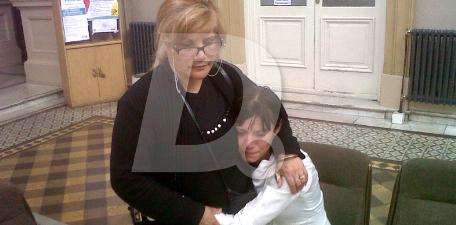
Luciano Peralta was the father of three children. He earned his living as a gardener. He had recently separated from his wife, Esther Cerrudo, but the two were on very amicable terms. On Sunday, October 27, 2013, Esther asked Luciano to watch the kids while she took care of some personal matters.

Argentinian police officers allege that a neighbor called to report a robbery at Esther’s residence. When they arrived, the officers arrested Luciano in front of his children. They proceeded to seize his motorcycle and the bicycle that belonged to Luciano’s young son.

Luciano was imprisoned in La Plata, a province in the capital city. When his ex-wife and mother arrived at the prison, Esther explained that she had asked him to be there and the children at the house were Luciano’s children. Nonetheless, they were told he would be spending the night in jail.

The following day, a public defender assured Luciano he would be free. She noted that he seemed lost and confused. Prior to his being released, Luciano began to suffer a panic attack. He started trembling and convulsing. His mother was at the prison, but she was not allowed to see him. The officers did not call a doctor nor did they call an ambulance. Luciano received no medical attention. Ultimately, he died in his cell.

Norma Silguero and Tatiana Peralta, mother and sister of the deceased. (Photo: @martinenlared)

Norma Silguero and Tatiana Peralta, mother and sister of the deceased. (Photo: @martinenlared)

We may never know the true motivations for the arrest or what really happened to Luciano at the jail. This case is another example of tragedies that can result from wrongful arrests and the need for reform within the Argentinian police.

Follow me on Twitter: @JustinoBrooks

Professor Justin Brooks
Director, California Innocence Project
California Western School of Law
225 Cedar Street
San Diego, CA 92101
jpb@cwsl.edu
www.californiainnocenceproject.com

For more information please see:

<http://diagonales.infonews.com/nota-204205-Estuvo-preso-sin-causa-y-murio-en-los-Tribunales-de-La-Plata.html&gt;

Wednesday’s Quick Clicks…

  • Innocence Project New Orleans is hosting a fundraiser featuring David Simon and the cast of HBO’s Treme, which shined light on flawed criminal justice system
  • The Minnesota Innocence Project and a Twin Cities law firm are digging for legal flaws that could free five men convicted of killing a co-worker in Green Bay 21 years ago. The five were convicted of killing Tom Monfils in 1992 at what was then the James River paper mill. Monday night, almost four dozen people took part in an annual walk and rally for the defendants. Denis Gullickson told them that two attorneys from Minnesota are examining the case for free – as is the St. Paul-based equivalent of the Wisconsin Innocence Project, which has succeeded in freeing a number of high-profile inmates who were wrongly convicted. More details
  • Diary of a UK Innocence Project Part 3: Students, students everywhere and not a stop to think
  • Illinois hopes to stem wrongful convictions with new interrogation law

“Scenes of a Crime” - Documentary of a False Confession

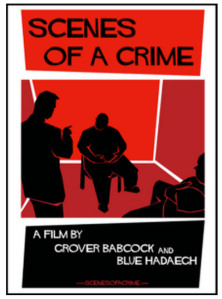
ScenesOfaCrimeSue Luttner posted a commentary on this film yesterday on her blog On SBS.

If you want to have a better understanding of how false confessions can happen, and why an innocent person would confess to something they didn’t do, here’s an ‘eye opener.’ The opening paragraph of Sue’s post: “After watching “Scenes of a Crime” over the weekend, I now know why this potent documentary has garnered so much praise. Filmmakers Grover Babcock and Blue Hadaegh have interspersed actual footage from the lengthy police interrogation of an accused father in Troy, New York, with excerpts from Reid Technique training films and commentary by key players in the case. The result is a clean, careful, and gripping illustration of how a man can be manipulated into confessing to a crime he didn’t commit.”

While this particular case involves SBS (shaken baby syndrome), the methods are the same as those used in general by law enforcement, and the Reid Technique for interrogation is prominent. We’ve reported on the Reid Technique on this blog here, here, here, and here.

You can read Sue’s full post here.

Tuesday’s Quick Clicks…

click

‘False Justice: Eight Myths That Convict the Innocent’ - Why Did They Write It?

I hope that you’re all familiar with, and in fact have read, the book by Jim and Nancy Petro, False Justice: Eight Myths That Convict the Innocent.

Jim&Nancy

.

.

.

.

Jim is a former Attorney General of the state of Ohio, and Nancy, among her many other endeavors, is also a contributing editor to this blog.

I recently just happened across this interview with Jim and Nancy at the Columbus Metropolitan Club in 2010. They talk about what brought them to write the book.

It’s about an hour long, and I found it both fascinating and illuminating. Definitely worth a watch.

A Victory for the “Flat Earth Society”

clickFrom chron.com:

NEW YORK (AP) — Bite mark evidence that may connect a murder suspect to the victim will be allowed at his trial, a judge decided Thursday, disappointing those who hoped the case would help get the forensic technique banished from the nation’s courtrooms.

Manhattan state Supreme Court Justice Maxwell Wiley’s decision follows lengthy testimony last year that went to the heart of the reliability of bite mark analysis, which involves comparing bite marks left on the flesh of victims with the teeth of suspects.

At least 24 men convicted or charged with murder or rape based on bite marks found on victims have been exonerated in the U.S. since 2000, according to a June report by The Associated Press based on decades of court records, archives, news reports and filings by the Innocence Project, which helps wrongfully convicted inmates win freedom through DNA testing.

Many of those who were exonerated spent more than a decade in prison, including time on death row.

The AP analysis is the most comprehensive count to date of those exonerated after being convicted or charged based partially or entirely on bite mark evidence.

In Thursday’s case, Wiley said he would explain the reasoning behind his ruling in a written decision, but he did not say when that would be.

He did say that his basic finding was that “the field of bite mark analysis comports with the standards of evidence under New York law.” He added: “It’s obviously a field that has not been looked at closely by the courts in a long time.”

Chris Fabricant, director of strategic litigation at the Innocence Project, was at Thursday’s hearing and said Wiley’s decision was “contrary to the overwhelming consensus of the scientific community.”

“It’s a victory for the Flat Earth Society,” he said.

The Innocence Project and other defense attorneys slam bite mark analysis as sham science and argue that it should no longer be allowed in courtrooms.

Many forensic dentists defend the practice as useful, especially when trying to eliminate suspects, and say it has helped convict murderers and rapists, most famously serial killer Ted Bundy.

The New York case involves the murder of 33-year-old Kristine Yitref, whose beaten and strangled body was found wrapped in garbage bags under a bed in a hotel near Times Square in 2007.

A forensic dentist concluded that a mark on her body matched the teeth of Clarence Brian Dean, a 41-year-old fugitive sex offender from Alabama.

Dean told police he killed Yitref in self-defense, saying she and another man attacked him in a robbery attempt after he agreed to pay her for sex; no other man was found.

Dean is awaiting trial on a murder charge. His attorney declined to comment after Thursday’s hearing.

Prosecutors wanted the bite mark evidence allowed at his trial to help convince jurors of Dean’s guilt. His defense attorneys wanted it barred because of past mistakes involving the practice and how powerful bite mark evidence can be to jurors, even with opposing testimony.

Dr. David Senn, a San Antonio forensic dentist, testified in last year’s hearings that bite mark analysis is valid when used in a closed population of suspects and that problems of the past can be blamed on individual dentists, not the science itself.

“The issue is not that bite mark analysis is invalid, but that bite mark examiners are not properly vetted,” he said.

He added that he couldn’t imagine a case today in which he would identify a biter unless “there was other very strong corroborating evidence.”

Testifying for defense attorneys at the hearings was Dr. Mary Bush, a researcher at the University of Buffalowho has used computer models to study bite marks made on dead bodies using pliers and dental models. Her research, which has been published in the Journal of Forensic Sciences, found that human dentition is not unique and cannot be accurately transferred to skin.

Bush acknowledges that a significant limitation of her research includes the fact that she’s using dead bodies that have been frozen and thawed and using machinery to create bite marks, a method that is far from re-creating a real-life bite made on a live person during an act of violence.

Bush testified that she did not feel that bite marks should be admissible in courtrooms but that more research in the field is needed.


Crime Labs Paid For Convictions…

From the Huffington Post:

By Radley Balko

I’ve previously written about the cognitive bias problem in state crime labs. This is the bias that can creep into the work of crime lab analysts when they report to, say, a state police agency, or the state attorney general. If they’re considered part of the state’s “team” — if performance reviews and job assessments are done by police or prosecutors — even the most honest and conscientious of analysts are at risk of cognitive bias. Hence, the countless and continuing crime lab scandals we’ve seen over the last couple decades. And this of course doesn’t even touch on the more blatant examples of outright corruption.

In a new paper for the journal Criminal Justice Ethics, Roger Koppl and Meghan Sacks look at how the criminal justice system actually incentivizes wrongful convictions. In their section on state crime labs, they discover some astonishing new information about how many of these labs are funded.

Funding crime labs through court-assessed fees creates another channel for bias to enter crime lab analyses. In jurisdictions with this practice the crime lab receives a sum of money for each conviction of a given type. Ray Wickenheiser says, ‘‘Collection of court costs is the only stable source of funding for the Acadiana Crime Lab. $10 is received for each guilty plea or verdict from each speeding ticket, and $50 from each DWI (Driving While Impaired) and drug offense.’’

In Broward County, Florida, ‘‘Monies deposited in the Trust Fund are principally court costs assessed upon conviction of driving or boating under the influence ($50) or selling, manufacturing, delivery, or possession of a controlled substance ($100).’’

Several state statutory schemes require defendants to pay crime laboratory fees upon conviction. North Carolina General Statutes require, ‘‘[f]or the services of’’ the state or local crime lab, that judges in criminal cases assess a $600 fee to be charged ‘‘upon conviction’’ and remitted to the law enforcement agency containing the lab whenever that lab ‘‘performed DNA analysis of the crime, tests of bodily fluids of the defendant for the presence of alcohol or controlled substances, or analysis of any controlled substance possessed by the defendant or the defendant’s agent.’’

Illinois crime labs receive fees upon convictions for sex offenses, controlled substance offenses, and those involving driving under the influence. Mississippi crime labs require crime laboratory fees for various conviction types, including arson, aiding suicide, and driving while intoxicated.

Similar provisions exist in Alabama, New Mexico, Kentucky, New Jersey, Virginia, and, until recently, Michigan. Other states have broadened the scope even further. Washington statutes require a $100 crime lab fee for any conviction that involves lab analysis. Kansas statutes require offenders ‘‘to pay a separate court cost of $400 for every individual offense if forensic science or laboratory services or forensic computer examination services are provided in connection with the investigation.’’
In addition to those already listed, the following states also require crime lab fees in connection with various conviction types: Arizona, California, Missouri, Tennessee, and Wisconsin.

Think about how these fee structures play out in the day-to-day work in these labs. Every analyst knows that a test result implicating a suspect will result in a fee paid to the lab. Every result that clears a suspect means no fee. They’re literally being paid to provide the analysis to win convictions. Their findings are then presented to juries as the careful, meticulous work of an objective scientist.

No wonder there have been so many scandals. I’m sure we’ll continue to see more.

(Disclosure: In 2008, Koppl and I co-wrote an article for Slate on how to fix some of these problems.)


Civil-forfeiture laws cost innocent as well as guilty

Presumption of innocence is thrown out the window in U.S. courts when it comes to civil-forfeiture procedures. ProPublica, a non-profit investigative organization, reports here that seizures of crime-related property have become big business for police agencies throughout the country.

ProPublica estimates that billions of dollars in cars, cash, real estate and other assets are seized every year throiugh civil forfeitures. Much of it comes from people who weren’t charged with a crime, let alone convicted of one.

The New Yorker weighs in on the same topic in a compelling article here that describes civil forfeiture as “the Guantanamo Bay of the legal system.”