Category Archives: Legislation

Tuesday’s Quick Clicks…

click
  • Statute of limitations issues may haunt prosecution of former prosecutor now judge Ken Anderson, charged with criminal offenses for his conduct leading to the wrongful conviction of Michael Morton.
  • After 24 years in prison, Wyoming man gets retrial, taste of freedom, and a cookie
  • Georgia needs a method to compensate the wrongfully convicted.
  • Yesterday, the Texas House voted on HB 166, a bill that would create the Timothy Cole Exoneration Review Commission. This so-called innocence commission would investigate past exoneration cases to find out why the wrongful conviction happened in the first place. The group would not intervene in pending cases or open cases without an exoneration.

  • A Vancouver man suing for compensation for 27 years in prison for sex assaults he didn’t commit has won a preliminary round in court against the provincial government. The government opposed Ivan Henry’s application in B.C. Supreme Court to change his legal claim that would spell out the circumstances where the province can be held liable for breaching his rights under the Charter of Rights and Freedoms. The government claimed the rule of prosecutorial immunity only allows claims for charter breaches to succeed if they arose from malicious conduct by the prosecutor. But Justice Richard Goepel ruled in Henry’s favour, finding “that a claim lies against the province for charter damages if the plaintiff can establish that Crown counsel acted in a marked and unacceptable departure from the reasonable standards expected of Crown counsel.”

  • Nice profile of Donna McKneelen of the Innocence Project at Cooley

Thursday’s Quick Clicks…

click

Eyewitness ID Bill Introduced in California…

From a press release:

Ammiano bill would reduce mistaken convictions

SACRAMENTO – Assemblymember Tom Ammiano today introduced AB 604, a bill that would promote the use of research-proven witness identification procedures to reduce the incidence of wrongful convictions.

“Prosecutors and police investigators are often under pressure to identify a culprit. It’s important to make sure they identify the right person,” Ammiano said. “The case of Ronald Ross shows that shoddy witness identification has horrible consequences.”

Ronald Ross is due to be released from prison this month after spending years in state prison on the basis of a wrong identification. Following efforts by the Northern California Innocence Project, prosecutors in Alameda County have said they will ask a judge to release Ross, who was convicted of attempted murder in a 2006 shooting.

“The injustice to Ronald Ross was not the only terrible result in the Alameda County case,” Ammiano added. “There was also the fact that the true culprit went free and committed other crimes because police stopped looking for him. This bill will reduce the chances of both of those problems.”

The bill requires trial judges to give juries instructions about witness identification procedures. The instruction would tell jurors they could take into account the way in which identification took place, and whether it met certain criteria. The presence of that instruction would create an incentive for investigators to use more careful procedures.

Among the procedures that improve the quality of identification are sequential presentation of photo lineups (as opposed to showing all photos at one time) and having double-blind administration, in which a party not directly involved in the case administers the lineup presentation.

In Ross’ case, there was not double-blind administration. As a result, the victim was reportedly pressured to make the identification of Ross as the shooter. The actual culprit was not included in the lineup.

The bill is sponsored by the ACLU of California, the California Public Defenders Association and the Northern California Innocence Project.

The Death Penalty in California

The death penalty in the state of California continues to be a major focus, due in part to the burden it places on taxpayers. The California Innocence Project‘s goal with this infographic was to examine the facts, and the facts alone. Even though California’s Proposition 34 did not pass in the most recent election, this issue will continue to be argued and remain a pressing issue, especially during difficult economic times.

Embedded from the California Innocence Project

Lawmakers Need to Heed the Lessons of Wrongful Conviction

Last week Virginia’s Governor and the state’s Attorney General scrambled to find a legal way to release Jonathan Montogmery from prison after his accuser admitted the sexual assault—for which he had served four years—never happened. The Washington Post railed against “balky officials in Richmond who will not move off the dime to free him” in a published opinion (here). However, the editorial also properly identified the “root problem”: Virginia’s 21-day rule.

In states across the country existing laws indicate an unacceptable lack of awareness or concern over the lessons of wrongful conviction. Continue reading

Sentencing “Rules” and “Guidelines” - Have Things Gone Too Far?

Anders Breivik, the Norwegian who meticulously planned and carried out an attack that killed 77 people, has been found sane, and sentenced to 21 years. See the NY Times article here.

Meanwhile, this past May, Marissa Alexander, a Florida woman, who was in a fight with her abusive husband, fired a warning shot into a wall without injuring anyone, and was sentenced to 20 years. See GlobalPost article here.

Does anybody else see a problem here?

And then there are the “three strikes” laws. Under these laws people who have committed three felonies, albeit non-violent and minor, can be sentenced to life in prison. 24 states currently have some form of “three strikes” law. The intention was to reduce crime from repeat offenders, but no statistically valid causal correlation with reduced crime has been shown. However, it has been observed that offenders in jeopardy of a “third strike” are more likely to violently attack police.

Something is seriously out of kilter here.

Thursday’s Quick Clicks…

Historic Forensic Sciences and Standards Act Introduced in Congress…

Bill here. From TheHill.com:

House and Senate Democrats proposed legislation on Thursday that would establish federal grants to help create forensic-science standards, in an effort to help reduce wrongful convictions based on flawed forensic results.

The Forensic Science and Standards Act, from Sen. Jay Rockefeller (D-W.Va.) and Rep. Eddie Bernice Johnson (D-Texas), would provide $200 million over the next five years in grants that boost forensic science research, and nearly $100 million in that same period that the National Institute of Standards and Technology (NIST) would use to develop standards in the field.

Rockefeller said on Thursday that the bill is partly a reaction to a 2009 report that said many forensic science disciplines have not established “either the validity of their approach or the accuracy of their conclusions.” He also cited a series of articles in The Washington Post about this issue, as well as an April editorial calling for a Justice Department review of convictions based on forensic evidence.


“[A] July 11 story reports that the Justice Department and the FBI have now launched such a review,” Rockefeller said. “The National Academy of Sciences, The Washington Post, the Innocence Project and the National Association of Criminal Defense Lawyers, among others, have all called for strengthened forensic science and standards.”

The bill, S. 3378 in the Senate and H.R. 6106 in the House, would set up the grant program, and would require the National Science Foundation to direct these grants to two forensic science research centers. It would also create a system of challenges and allow the awarding of prizes “to stimulate innovative and creative solutions to satisfy the research needs and priorities” identified in the bill.

It would also task NIST with developing forensic science standards, in coordination with the two research centers.

Rockefeller’s bill has no co-sponsors, but Johnson’s bill in the House is sponsored by Reps. Donna Edwards (D-Md.) and Daniel Lipinski (D-Ill.). The Senate Judiciary Committee will hold a hearing on July 18 on the bill.

An Exoneree’s Perspective on the Quantum and Adequacy of Compensation

Jeffrey Deskovic is not your archetypal exoneree. He holds strong views about the subject of wrongful conviction, and even stronger views on the sufficiency of state compensation for victims of wrongful convictions. In his article entitled - A Critique of Innocence Project Report on Exoneree Compensation ‘Making Up for Lost Time’ - he critiqued some of the recommendations made by the Innocent Project.

His views were in direct response to the Project’s report on the question of legislating compensation and the reasonableness thereof. See pdf report - http://www.innocenceproject.org/docs/Innocence_Project_Compensation_Report.pdf

Jeffrey goes on in his article to make the point that, compensating the innocent must be sue generis. It must take account of each individual’s circumstances; station in life, pain and suffering, education, present and future earnings et al. Read his article herehttp://www.examiner.com/article/a-critique-of-innocence-project-report-on-exoneree-compensation-making-up-for-lost-time

While his criticism does weigh up the issues, and on balance, seem to tilt towards a case by case consideration of each application, it is submitted that, the courts still remain the best fora to determine what is best, or what represents adequate compensation for each victim. No legislation can set the amount of compensation in stone for every given situation. What a Statute does, and can do, is to set a benchmark, albeit a guide for the courts to be guided by in coming to a decision on compensation. The ultimate decision will always boil down to each individual circumstances.

False Confessions as Major Cause of Wrongful Convictions in Japan

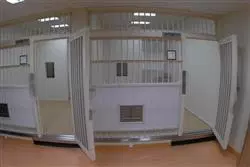
A Police Jail in Tokyo.

One of the major causes of wrongful conviction in Japan is definitely false confessions.

Why? Obviously, since a confession is still the “King of evidence” in Japan. And since the law permits a long period of detention (23 days!) before the formal charge (indictment) of a suspect, and since during this pre-charge detention period, there are lengthy interrogations by the police and prosecutors.

When and How Long can a Suspect be Detained?

In Japan, a suspect can be detained when there is a “reasonable cause” that he/she committed the crime, and there is a risk of flight or he/she might tamper with the evidence in the case. When a judge issues an arrest warrant and once the suspect is arrested (“Taiho“), the police has 48 hours to transfer the suspect and the case to prosecutors.

When prosecutors receive the suspect and if they think he/she should be detained further, they must ask a judge within 24 hours of receiving the case to issue a warrant for up to 10 days of additional detention (“Koryu“). This is when the suspect appears before a judge for the first time. Additional 10-day extension of Koryu is possible after the initial 10days. Judges almost always issue the arrest/ detention warrant. Less than 1 % of the warrant claim is denied. For violent crimes, it’s almost 0%.

To sum up, police and prosecutors can detain a suspect for up to 72 hours before the suspect has to appear before a judge, and then for additional 20 days before the formal charge (23 days in total!).

Interrogation During Detention

During this 23-day period, police and prosecutors usually interrogate the suspect for a long period of time. Conducting the interrogation is critical, even for prosecutors. Continue reading

The Exonerated Sound Wakeup Call on Abuse of Solitary Confinement

Clarence Elkins spent six and a half years in prison for a crime he didn’t commit, but the worst of it was the last three months leading up to the day he was exonerated and released. Because the true perpetrator of the crime that had stolen Elkins’s freedom was in the same prison, Elkins was placed in solitary confinement for his own protection. Solitary is sometimes used as a means of separating inmates. Even though Elkins had done nothing to deserve it, he was treated like any other person in solitary. It was a nightmare. Last week Elkins and five other exonerees reported their solitary confinement experiences in a written report to the Senate Judiciary Subcommittee on the Constitution, Civil Rights, and Human Rights.

I feel certain that the short but powerful report, here, would appall the vast majority of Americans.

Samplings from the report: “No blanket, no underwear, or pillow…no bed mat. Continue reading

Advocacy of State’s Conference of District Attorneys: A Disservice to North Carolina, Justice

North Carolina has added a new restriction to its compensation law for those wrongfully convicted: Those who plead guilty are no longer eligible. Denying compensation to those who “contributed” to their conviction by entering a guilty plea has been a common argument from those who seek to minimize the state’s responsibility in miscarriages of justice or deny compensation to those who have had years of their lives stolen through wrongful conviction. But, it’s an argument that should no longer have credibility. Continue reading

Tuesday’s Quick Clicks…

  • Winston Strawn associate in Chicago volunteered time to free James Kluppelberg, who was exonerated last week after wrongfully convicted of arson
  • After deciding that a fountain was too expensive, the city of Lubbock, Texas still determined to find a way to honor exoneree Timothy Cole; attorney offers to pay for bronze sculpture of Cole
  • Exonerees press hard for reform in New York at legislative session starts to wind down

Monday’s Quick Clicks…

  • Florida Governor puts innocence commission to death
  • New trial for George Gould, who was exonerated and then had his conviction reinstated by court of appeals, commences in Connecticut
  • In New York, a big push at the end of the legislative session to pass videotaped recordings and double blind lineup administration
  • News video story on the Alaska Innocence Project

Effort to Increase Compensation to Exonerees in Louisiana Falls Short

Henry James, 50, was released from a Louisiana prison last year after serving 30 years for a rape DNA proved he didn’t commit. If he successfully navigates the state’s compensation process, he’ll receive $8,333 compensation for each year of wrongful incarceration. As reported here, State Representative Herbert Dixon (D) had sought to increase the state’s compensation from the current cap of $250,000 to $500,000, but the effort has failed for a second time.

Exonerees in the state are paid in installments of up to $25,000 per year but first must file petitions for a judge’s eligibility order, then present the order to the Continue reading

Thursday’s Quick Clicks…

  • Video of Barry Scheck and several exonerees speaking out in favor of legislative reform in New York
  • U.S. Court of Appeals for the Seventh Circuit forces government agencies to turn over files in wrongful conviction lawsuit brought by exoneree Chaunte Ott
  • Petitions pouring in from across the U.S. in support of pardons for the Wilmington Ten
  • Illinois Innocence Project looks into arson case
  • New York Bar Association backs recorded interrogatons requirement and double-blind eyewitness identification methods pushed by the Innocence Project
  • New book about the Craughwell Prisoners-several men who were wrongfully convicted in Ireland more than 100 years ago
  • Man exonerated in Cambodia appeals to Prime Minister to make judicial reforms so that it doesn’t happen to others

Innocence Project, NY Bar, Rally Today for Law to Prevent Wrongful Conviction

The Innocence Project and the NY State Bar Association are rallying in Albany, NY, today to urge lawmakers to pass legislation requiring best procedural practices to reduce eyewitness misidentification and false confessions. Laws requiring or recommending best practices are in place in New Jersey, Connecticut, Texas, North Carolina, and Ohio, but have met resistance and failed to pass in New York and other states.

The Innocence Project is expected to release data showing that no police departments in NY have reported following recommended identification procedures. These reforms are frequently said to be “cost neutral” when compared to existing procedures. However, they arguably save and protect taxpayers, since the human and financial cost of convicting the innocent and permitting the guilty to continue lives of crime are enormous.

More on this here, here, and here.

Recent Developments in Eyewitness ID Reform

Courtesy of Professor Jacqueline McMurtrie of the Innocence Project Northwest.

Here is a recently published article in the ABA Journal on eyewitness ID.

Excerpt:

Gary Wells, an Iowa State University psychology professor who’s been studying problems with police lineup procedures for 35 years, says the progress made in the past few years “seems like a runaway train” compared with what he witnessed during the first 30.

In the past year:

• Texas became the 10th state to pass a law requiring police departments to adopt written lineup procedures designed to reduce the risk of faulty identifications.

• The New Jersey Supreme Court issued a landmark ruling on the use of eyewitness identification evidence at trial.

• A new field study of police lineup procedures confirms what scientists like Wells have long been saying.

• And the U.S. Supreme Court heard its first case on eyewitness identification evidence in 34 years.

“We still have a long way to go,” Wells says, “but we’re definitely making headway.”

Continue reading

Wednesday’s Quick Clicks…

Sunday’s Quick Clicks…

  • In Dekalb County, Georgia, 2 men proven innocent of murder, and others charged instead, but police have yet to completely clear and remove the cloud hanging over the innocent men
  • Documentary film Mississippi Innocence, co-produced by Mississippi Innocence Project Director Tucker Carrington, to air this week
  • Number of rape cases with DNA where the DNA has not yet been tested “a national problem”
  • Arkansas death row inmate given new hearing after Medill Innocence Project demonstrates that DNA testing used to convict him may have been flawed
  • Mom’s faith outlasts her son’s wrongful conviction
  • North Carolina exoneree Robert Wilcoxson receives more than $500,000 in compensation for his 11 years of wrongful conviction
  • Bill introduced in Louisiana would speed up compensation payments to exonerees; in the past, many exonerees have had to wait for years for their compensation to come through