Category Archives: Prosecutorial conduct (good and bad)

Illinois Prosecutor Creates Independent Case Review Panel…

From suntimes.com:

On his first day in office after being sworn in, new Lake County State’s Attorney
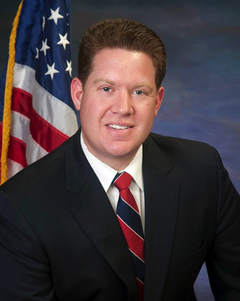
Mike Nerheim

Mike Nerheim

announced the members he is appointing to an independent Case Review Panel in Lake County who will be authorized to review criminal cases where there is a question about the wrongful conviction of the innocent, identify the causes of wrongful convictions, and recommend protocols for investigating and prosecuting criminal cases going forward.

“I have invited a talented group of legal professionals to tackle this important issue who bring a balance of experience including from outside of Lake County and who have been vetted for independence,” Nerheim said Monday. “This voluntary Case Review Panel will provide a fresh, unbiased perspective at no additional cost to taxpayers.” 

The panel is comprised of individuals with a diverse background of experience, including from outside of Lake County, who will look at cases in question and bring a fresh perspective, he said, adding the panel is being formed in response to recent exonerations and the public’s declining trust in the justice system in Lake County.

Members of the all-volunteer Case Review Panel will be sworn in as special assistant state’s attorneys and will take an oath of office with the protections and liabilities that come along with it, including the duty of confidentiality. The panel will be independent of the Lake County State’s Attorney’s Office and its staff, and will report its recommendations directly to Nerheim.

He said the Case Review Panel will meet quarterly or more often as needed, especially initially as work gets underway. The primary goal of the panel is to develop potential policies and procedures to reduce the possibility of conviction of the innocent in Lake County. The model is based on a similar program in place in North Carolina.

“It is my hope that based on the future success of our work in Lake County, that this will be the impetus to institute similar solutions across Illinois,” said Nerheim.


Tuesday’s Quick Clicks…

  • Hundreds rally in Ukraine in support of father and son, Serhiy and Dmytro Pavlychenko, who were convicted in October of murdering a judge.  Supporters claim the pair were wrongfully convicted.
  • Court of inquiry into alleged misconduct of prosecutor-turned-judge Ken Anderson in the Michael Morton case delayed until February 2013
  • In Massachusetts, the Innocence Program at the Committee for Public Council Services is on the verge of its first exoneration in the DNA murder case of Michael J. Sullivan

Victims try to prevent a wrongful conviction in Barbados

ImageTwo women from the UK are trying to prevent the conviction of a man in Barbados for their sexual assaults. Both victims are ‘absolutely convinced’ that the Barbados police have got the wrong man. The man ‘confessed’ to the crime, a confession he has now retracted. The Barabados police claim that there is a lot of other evidence to support the prosecution of the man for the attacks, but in the last 18months, have failed to reveal this other evidence. Both women are speaking out and have revealed their identities in the desperate hope that they can prevent this wrongful conviction. Read the full shocking story here….

Landmark Singapore Case: Muhammad bin Kadar and another v Public Prosecutor

This is a slightly delayed post on an important 2011 decision by the Singapore Court of Appeal which addresses the duties of investigators and prosecutors, and which will have important implications on the prevention of wrongful convictions.

In the case of Muhammad bin Kadar and another v Public Prosecutor [2011] SGCA 32, the Singapore Court of Appeal overturned the conviction of one of the accused, Ismil Kadar. Among others, the Court found that the investigator had failed to observe legal and administrative procedure without good reason when recording Ismil’s statements.

The Court was also critical of the Prosecution’s conduct, noting that it had failed to provide “vital” pieces of evidence to the Defence and the Court in a timely manner. It highlighted the important role played by the Prosecution:

“[…] the duty of the Prosecution is not to secure a conviction at all costs. Rather, the Prosecution owes a duty to the court and to the wider public to ensure that only the guilty are convicted, and that all relevant material is placed before the court to assist it in its determination of the truth.”

Pardon for Mid-Atlantic Innocence Project Client John Montgomery…

From WTVR.com:

Governor McDonnell just announced a conditional pardon of Johnathan Montgomery.

Tuesday marks twelve days since a judge ordered Jonathan Montgomery to be released from the Greensville Correctional Facility. After the governor’s pardon, Montgomery will be released Tuesday evening.

Montgomery served four years of a prison sentence for sex crimes his accuser now says he never committed. She was arrested on perjury charges, and is  currently out on bond.

Montgomery was serving a seven-year sentence, that began in 2008.

After the judge ordered Montgomery’s release the Attorney General’s Office blocked Montgomery’s release, saying he first must receive an official writ of innocence.

Governor Bob McDonnell was sent, on Monday, a request to pardon Montgomery.

The Innocence Project was working on Montgomery’s case and submitted the request for a conditional pardon.  [Editor’s note:  I believe this was the Mid-Atlantic Innocence Project]

An official release from the office of Gov. McDonnell stated that the governor Continue reading

Federal Judge Unsettled by D.A.’s Apparent Indifference in Wrongful Conviction

According to The Wall Street Journal (here), Federal Court Judge Frederic Block expressed frustration with the apparent indifference Brooklyn (NY) District Attorney Charles Hynes has shown in response to the “aberrational behavior” of one of his top prosecutors in a case that led to the wrongful conviction of Jabbar Collins in the 1994 murder of Rabbi Abraham Pollack.

Collins, a 10th grade drop-out with high school equivalency and some college, proclaimed his innocence and dedicated himself in prison to utilizing state and federal records laws to obtain information about his case. He bumped into Continue reading

Monday’s Quick Clicks…

  •  Worried about wrongful convictions, High Court in Bombay, India rules that a conviction cannot be based solely on a dying declaration
  • Federal judge criticizes a prosecutor for his role in a wrongful conviction case
  • Honoring the role of defense attorneys in New Zealand
  • Video of John Montgomery’s family thanking the Mid-Atlantic Innocence Project
  • Exoneree Jerry Hobbs’ lawsuit against Chicago area prosecutor continues to move forward
  • State Rep. Jamilah Nasheed urges Missouri AG to drop appeal of exoneration of George Allen
  • Discussion of recent symposium on false confessions held at Temple Law School and sponsored by the Pennsylvania Innocence Project
  • Erie County, New York District Attorney Frank A. Sedita III is looking into the possibility that a man who pleaded guilty six years ago to a double murder on Buffalo’s West Side was wrongfully convicted.  Sedita said he became aware of the possibility about a week ago, when he learned that federal authorities were charging three other men with the murders of Nelson and Miguel Camacho in 2004.  Josue D. Ortiz, the man originally convicted in the killings, has spent the past six years in prison.

George Allen Jr., Released Today after 30 Years; Case Continues

George Allen Jr.’s mother, Lonzetta Taylor, never doubted her son’s innocence. When asked why, she repeated what she said three decades ago: “Because he was with us at the time of the crime.” As reported and recorded (here), Taylor said that she was just “overjoyed” to see her son released today. She added, “I knew he’d get out in God’s time.”

Allen, 56, has served 30 years of a 95-year sentence after being convicted of the rape and murder of Mary Bell of St. Louis. A summary of the case was published earlier this month (here).

Cole County (MO) Circuit Judge Dan Green recently vacated Allen’s conviction based on the discovery that numerous pieces of evidence pointing to Allen’s innocence were not shared by the Continue reading

Unusual Exoneration Unfolding in Virginia Includes Arrest of False Accuser for Perjury…

Here’s an article about a strange exoneration unfolding in Virginia.  The article mentions a couple of unusual twists.  First, the admitted false accuser has been charged with perjury for her false claims against an innocent man.  Second, although no one seems to dispute that the David Montgomery is innocent, the AG of Virginia is appealing his exoneration on the ground that the trial didn’t have jurisdiction to exonerate him.

A Texas Prosecutor Faces Justice

From the New York Times:

In just about a month from now, Texas will witness a rare event: a former prosecutor is going to be held to account for alleged prosecutorial misconduct.

He is Ken Anderson, who for nearly 17 years was the district attorney in Williamson County, a fast-growing suburb of Austin. (In 2002, Gov. Rick Perry made him a district judge.) As Pamela Colloff writes, in a brilliant two-part series in Texas Monthly, Anderson was the kind of prosecutor who “routinely asked for, and won, harsh sentences and fought to keep offenders in prison long after they became eligible for parole.”

One of Anderson’s most high-profile prosecutions was of a man named Michael Morton. In 1987, Anderson prosecuted him for a heinous crime: His wife, Christine, was bludgeoned to death. Morton was then in his early 30s, with a 3-year-old son and a job at Safeway. He had never been in trouble. Yet the Williamson County sheriff, Jim Boutwell, from whom Anderson took his cues, was convinced that Morton had committed the crime.

Evidence that could be used against him — such as a plaintive note Morton wrote to his wife after she fell asleep when he was hoping to have sex — was highlighted. Evidence that suggested his innocence — most importantly, a blood-stained bandana discovered near Morton’s house — was ignored. Worst of all, Anderson’s office hid from the defense some crucial evidence that would Continue reading

Tuesday’s Quick Clicks…

Monday’s Quick Clicks…

  • Exoneree Julie Rea speaks at University of Illinois Springfield tonight
  • It appears that by wrongfully convicted Michael Morton, Texas law enforcement allowed the true perpetrator to commit an additional murder
  • Japanese official apologizes to Nepalese man, who was recently exonerated
  • Video of talk by Damien Echols of the West Memphis 3
  • Congressman writes letter to Missouri AG asking him to drop appeal in George Allen case
  • Exoneree Anthony Graves says solitary confinement is a form of torture

Texas Wrongful Conviction Continues to Reveal Tragic Human Costs

Yesterday, a Travis County (TX) grand jury indicted Mark Norwood on capital murder charges in the 1988 death of Debra Baker. Norwood is currently awaiting trial on murder charges in the 1986 death of Christine Morton. The apprehension of the man whose DNA is allegedly linked to both murders was delayed more than two decades by the wrongful conviction of Michael Morton, Christine’s husband, who served 25 years in prison for the crime he always said he did not commit.

The lesson is painfully clear: If Norwood is guilty of both murders, Debra Baker would likely be alive today had Norwood, and not Michael Morton, been Continue reading

In Virginia, Prosecutor Tied to Wrongful Conviction Loses Election…

From dailyprogress.com:

Allison Brophy Champion

Interim Culpeper County Commonwealth’s Attorney for eight months, Republican nominee Paul Walther earned broad support from the establishment in his bid Tuesday night for the permanent post of top prosecutor.

The people chose otherwise, however, selecting by more than 800 votes opponent Megan Frederick – Culpeper’s first female commonwealth’s attorney – in what is being called the county’s biggest political upset.

Approached election night for a comment, the ousted public prosecutor stoically declined, visibly shocked at losing after having spent more than two decades trying all manner of cases as part of the Culpeper County Commonwealth’s Office.

In a statement Wednesday, Walther did not concede the position lightly, starting with a legal comparison to drive home his displeasure.

“The electorate is similar to a jury and I can’t help but see the irony in the role played in the election by what I know to be gross misrepresentations,” he wrote Continue reading

Ohio Supreme Court Declines to Hear Prosecutor’s Appeal in Wrongful Conviction Case

Yesterday, Dean Gillispie, 47, the Ohio Innocence Project’s first client, had yet another court victory. The Ohio Supreme Court declined to hear Montgomery County Prosecutor Mathias Heck’s appeal of an earlier court decision that vacated Gillispie’s conviction and sentences.

Gillispie spent 20 years in prison for three 1988 rapes, which he always said he did not commit. His identification by victims in a photo line-up occurred two years after the crimes. No physical evidence connected Gillispie to the crimes.

In December 2011, U.S. District Magistrate Judge Michael R. Merz ordered Gillispie’s release after determining that he did not get a fair trial. Prosecutors Continue reading

New Scholarship Spotlight: Prosecutorial Conflicts of Interest in Post-Conviction Practice

Professor Keith Swisher has posted the above-titled article on SSRN.  Download here.  The abstract states:

Prosecutors, our ministers of justice, do not play by the same conflict of interest rules. Other attorneys should not, and cannot, attack their prior work in transactional or litigation matters; nor should other attorneys represent clients in matters in which the attorneys themselves face disciplinary, civil, or criminal liability. When prosecutors have likely convicted an innocent person, however, prosecutors are asked to review their own prior work objectively and then to undo it. But they suffer from a conflict between their duty to justice and their duty to themselves – their duty to seek the release of the innocent person and their interest in avoiding embarrassment and liability for themselves and their offices. After I show a variety of ways these conflicts cause problems, I show that they can be solved or mitigated by simply restructuring the post-conviction review process.


Tuesday’s Quick Clicks…

Missouri Judge Throws Out Rape/Murder Conviction After 29 Years

Cole County (MO) Circuit Judge Dan Green has thrown out the 1983 conviction of George Allen Jr., 56, who has served 29 years of a 95-year sentence for the rape/murder of Mary Bell of St. Louis.

The Innocence Project accepted Allen’s case in 2010. A diagnosed schizophrenic, Allen had confessed but Innocence Project lawyers argued the confession was Continue reading

Wednesday’s Quick Clicks…

  • Client of Illinois Innocence Project, wrongfully convicted of murder in Marion County, to be released today after taking Alford plea
  • Louisville, Kentucky’s police chief has ordered an investigation into what led to the wrongful conviction of Edwin Chandler 17 years ago.  Chandler was charged with fatally shooting a gas station clerk in 1993. He was exonerated in 2009, in part through new fingerprint technology that placed another man at the crime scene.  A lawsuit Chandler filed against the city was settled earlier this month for $8.5 million.  Former Detective Mark Handy has been accused of coercing a confession from Chandler by threatening his family.
  • Chicago exoneree Juan Rivera files suit against Lake County Sheriff
  • The Texas inquiry into alleged prosecutorial misconduct that led to the wrongful conviction of Michael Morton will be open to the public

Prosecutors Argue for Mainali’s Innocence

My previous post on Govinda Mainali’s Case here. This is a 1997 case where a Nepalese man was convicted of killing a woman in Tokyo.

 
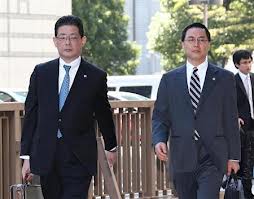
Prosecutors entering Tokyo High Court for the Mainali Retrial Hearing (From Sankei Shimbun News).

The retrial was held on October 29th at the Tokyo High Court.  The prosecutors argued for Mainali’s innocence, saying that Mainali was accused of a crime he did not commit. The court will hand down the ruling next week, on November 7th. The prosecution will not appeal the not-guilty ruling, and the decision will be finalized soon.

Mainali’s case will be the 8th case in Japan after WWII where the defendant was declared innocent after the retrial in a death penalty/ life imprisonment case.

Takayuki Aoki (Tokyo High Prosecutor’s Office) made a comment after the retrial. He said that the investigation and the first trial itself were not problematic. He did state that he is sorry that Mr. Mainali was wrongfully accused and detained for a long time as the perpetrator. However, there was no apology given from the prosecution at the retrial hearing. They still take the position that the their accusation was inevitable, and the circumstances have changed since the new DNA testing results became available.

Typical problems surrounding the Japanese criminal justice system were present during the course of the trial and the retrial of the Mainali case: lengthy detention during investigation, interrogations coerced by the police and prosecutors, prosecutors appealing the decision to grant retrial, and non-disclosure of exculpatory evidence by the prosecution. It is reported that the police and prosecutors will not hold a thorough investigation of what went wrong in this particular case. If we sincerely regret what happened and are determined to never let it happen again, shouldn’t we thoroughly examine the cause of wrongful conviction in each and every case?

Stories on Mainali’s retrial here and here (in English).