Category Archives: Prosecutorial conduct (good and bad)

Louisiana Considers New Bill that Would Force Prosecutors To More Openly Disclose Evidence…

From the Times-Picayune:

Louisiana, and New Orleans in particular, has a shameful record of so-called Brady violations: cases in which prosecutors failed to disclose favorable evidence in violation of defendants’ right to due process. In Orleans Parish alone, there have been at least eight murder cases in recent decades in which wrongful convictions were overturned or mistrials declared because of disclosure violations.

In some of these cases, the reversals came after years of wasteful and futile legal battles in which prosecutors tried to justify misconduct.

Yet New Orleans prosecutors have apparently not learned their lesson. Courts have ruled that District AttorneyLeon Cannizzaro‘s office didn’t disclose pertinent evidence in three separate murder cases — the most recent ruling coming earlier this month. This conduct can lead to grave injustices and erodes the public’s faith in the criminal justice system.

That’s why lawmakers should support House Bill 1070, which would make Continue reading

Can bar associations rein in prosecutors who cheat?

If prosecutors can’t be sued personally and the U.S. Supreme Court says their offices can’t be sued either, what do you do about prosecutors who cheat and lie to win a conviction?

Emily Bazelon tells here about how some attorneys are starting to file complaints against cheating prosecutors with state bar associations, claiming they’ve violated ethics rules. Two pending complaints in New Orleans, a hotbed of prosecutorial misconduct, could reveal whether this approach has merit.

Hundreds of convicted defendants weren’t told of FBI’s forensic flaws

In 2003, I was asked to investigate the 1988 murder conviction of a former Mansfield, Ohio, police officer who insisted he was innocent. While reviewing the case, I learned that the only physical evidence linking the officer to the crime was provided by FBI hair and fiber expert Michael P. Malone, who testified that two fibers found on the victim matched the carpet fiber in the squad car the officer drove the night the victim disappeared.

Malone’s crucial testimony concerned me. I had read the excellent book Tainting Evidence: Inside The Scandals At The FBI Crime Lab , which detailed numerous examples of how Malone had given false and misleading testimony in criminal trials. Records I obtained through the Freedom of Information Act revealed that the Mansfield case was one of them.

The records showed that the prosecutor’s office supposedly was notified of this, but word never reached the former officer in prison until he heard it from me. It turns out that this failure to notify the defendant that the testimony used against him had been determined to be false or misleading wasn’t unusual.

According to a report in The Washington Post today, the U.S. Justice Department has known for years that flawed forensic analysis by Malone and others might have led to convictions of potentially innocent people nationwide but didn’t notify the defendants or their attorneys.

“As a result, hundreds of defendants nationwide remain in prison or on parole for crimes that might merit exoneration, a retrial or a retesting of evidence using DNA because FBI hair and fiber experts may have misidentified them as suspects,” The Post says.

Tuesday’s Quick Clicks…

  • During post-conviction evidentiary hearing in Missouri in the case of Ryan Ferguson, witness recants and says prosecutor talked him into falsely implicating Ferguson
  • Decision on whether Michael Hash will be retried in Virginia awaits outcome of DNA testing initiated by the special prosecutor (more here)
  • Exoneree in the UK awarded 841,000 pounds in compensation for his ordeal (more here)
  • State of New York called out for failing to move on innocence reform
  • The Innocence Project of Florida will host its inaugural awards gala next week where it will honor Holland & Knight 
  • New Book: Falsely Accused:  former police officer explains the problems in the system that lead to wrongful convictions
  • Texas opens inquiry into Austin crime lab
  • Mid-Atlantic Innocence Project’s annual awards lunch will be honoring the lawyers and artists who helped the West Memphis Three gain their freedom and the Hunton & Williams legal team who helped secure the release of MAIP Client Michael Hash
  • Misdeeds by Texas judges are not released to the public

Recent Developments in 46 Year-Old Hakamada Case

Iwao Hakamada is a 76 year old death row inmate at Tokyo Detention Center, who was convicted of the 1966 murder of a family of four, a crime he claims he did not commit. He has been held in confinement for over 45 years.

Recent developments have given Hakamada and his supporters a beacon of hope. The result of a DNA analysis on bloodstains found on a T-shirt came back. The T-shirt was claimed to have been worn by Hakamada at the time of the crime and was a crucial piece of evidence at the original trial. Although the stains on the right shoulder of the T-shirt were alleged to have come from him at the original trial, the new findings by DNA experts stated that the DNA type did not match his.

Supporters for Hakamada claim that this finding very well supports the long claimed theory: the main pieces of evidence were planted by the prosecution during his original trial. The prosecutors say they reserve comment until they finish analyzing results.

Hakamada was sentenced to death in 1968 Continue reading

Lawyers in UK claim new rules to ‘speed up’ trials resulting in miscarriages of justice

A new policy, called ‘Stop Delaying Justice’, introduced to ‘streamline’ trials in the lowers courts in England and Wales (the Magistrate’s Courts), may be leading to an increase in miscarriages of justice according to lawyers. The strict time restrictions are forcing people to plead guilty without seeing the evidence against them first. In one case, a defendant was asked to plead guilty before seeing crucial fingerprint evidence. He refused, and the fingerprint evidence later proved his innocence. Read more about the investigation into such cases on the BBC:

Lawyers claim new policy causes miscarriages of justice

Megrahi Near Death…

Also knows as The Lockerbie Bomber, much controversy has surrounded his conviction in recent months (here here and here).

Story of his impending death here

Audio and Visual Recording of Interrogations by Public Prosecutors

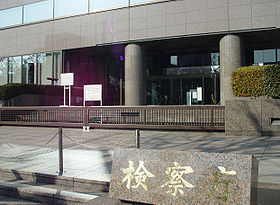
The Entrance of Public Prosecutors Office in Tokyo

The Entrance of Public Prosecutors Office in Tokyo

One of the critical tasks for the Japanese prosecutors is to interrogate the suspects themselves. I posted here about how police interrogations are partially recorded in some cases today. So what about interrogation by prosecutors? Are they recorded?

The answer is yes and no. Yes, they are sometimes recorded but only a few cases are recorded entirely, and most cases are not recorded at all.

In May 2006, the Supreme Public Prosecutor’s Office announced that they will start recording some interrogations on an experimental basis. Only serious cases were chosen, and the final part of the interrogation – the scenes where the suspect has confessed and signs the dossier – was recorded. It was up to the prosecutors’ discretion which cases and which part of those cases should be recorded.

Then there was an unprecedented scandal in 2009, involving a public prosecutor by the Special Investigation Division in Osaka Public Prosecutors Office . Continue reading

New York AG’s Office to Create Internal Wrongful Convictions Review Unit…

From the New York Times (full story here):

Eric T. Schneiderman, the New York State attorney general, is creating a bureau to investigate criminal cases across the state in which convictions have been called into question.

The Conviction Review Bureau represents the first statewide initiative by a law enforcement agency to address potential wrongful convictions, at a time when many in the state’s criminal justice system, including the chief judge, have been calling for changes like the videotaping of police interrogations and the use of new practices for eyewitnesses’ identifications.

“There is only one person who wins when the wrong person is convicted of a crime: the real perpetrator, who remains free to commit more crimes,” Mr. Schneiderman said in a statement. “For victims, their families and any of us who could suffer the nightmare of being wrongly accused, it is imperative that we do everything possible to maximize accuracy, justice and reliability in our justice system.”

The bureau will consist of one current assistant attorney general, who will be able to call upon investigators and assistant attorneys general as needed. A panel of seven senior lawyers in the office will advise the bureau.  To continue reading, full story here.

Professor Daniel Medwed Receives Well-Deserved Props…..

From the Salt Lake Tribune:

Fresh out of Harvard Law School, Daniel S. Medwed began his practice in tax, trust and estates.

“I knew I was in trouble when my girlfriend — now wife — asked me what I did during the day. I couldn’t remember,” said Medwed, now a professor at the University of Utah’s College of Law. “I knew then I had to go into criminal law. Even today she introduces me as a recovering tax lawyer.”

Since then, Medwed has blazed a unique trail in the field of criminal defense law. He’s a board member of directors for the Innocence Network and the Rocky Mountain Innocence Center. In 2008, the 43-year-old native of Cambridge, Mass., helped draft and pass a factual innocence bill for the state of Utah, which created a procedure for prisoners to prove their innocence even without DNA evidence. The law also Continue reading

Good Cop Kristen Ziman Doesn’t Know How Good She Is: Tunnel Vision About Tunnel Vision

Nancy Petro commented in her post yesterday about Aurora, Illinois, police commander Kristen Ziman’s editorial It Shouldn’t Be A Surprise When Cops Do the Right Thing, and I’d like to add a few words.  By way of background, I previously blogged here and in a post entitled Good Cops Warm the Heart, about the fact that Kristen Ziman’s department has taken affirmative steps when new information comes to light to open-mindedly look into old convictions to make sure that the right person is in prison.  In one instance, her department’s pro-active “second-look” policy resulted in the exoneration of an innocent man.  Thus, the national acclaim was quite justified.

Ziman’s recent editorial shows that she was surprised (and a little offended) that blogs like this one were so congratulatory of her department’s good deeds.  The reaction to her office’s conduct was offensive to her because it carries with it an implicit suggestion that her department’s conduct is not typical.  It carries with it an assumption that other police departments would sometimes fail to act on new evidence that shows an inmate might be innocent.

In defense of her profession, Ziman recognizes that there are a few bad apples in police departments here and there, but correctly notes that there are bad apples in all walks of life.  Thus, she suggests that police departments as a whole are perhaps not deserving of such criticism because of a few bad apples.  Accordingly, she says, police departments have a lot of work to make the public realize that its perceptions are unfair and do not match reality.

I agree with Ziman that most police officers (and prosecutors) are honorable and want to do the right thing.  I also agree with her that there are just a few bad apples in police departments and prosecutors’ offices here and there, and not at any higher ratio than in other professions or organizations (such as law schools or Innocence Projects or any other entities).

I believe, however, that Ziman has completely missed the point, as have most Continue reading

Monday’s Quick Clicks…

New Scholarship Spotlight: False Justice and the “True Prosecutor”

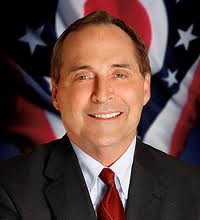
Jim Petro

Here is the final version of my latest article, which honors former Ohio AG Jim Petro and discusses the problem of prosecutorial tunnel vision and resistance to innocence claims…The abstract states:

This article is a review of False Justice: Eight Myths that Convict the Innocent by Jim and Nancy Petro. But this article is also a memoir, in that I tell the story, from my own perspective as Director of the Ohio Innocence Project, of how I have watched Jim Petro go from prosecutor and elected Attorney General of Ohio to a leading champion of the wrongfully convicted across the nation. The article is also a commentary in that, along the way, I address what makes Jim Petro so different from many prosecutors in this country. In this respect, I discuss problems in our criminal justice system that unfortunately lead some prosecutors, in far too many instances, to contest post-conviction claims of innocence in ways that I believe are contrary to our profession’s ethical standards. With this article, I hold out Jim Petro as a national model – an example that all other prosecutors should strive to emulate.

Nigeria: Plea Bargaining Your Way to Cheat Justice, is Prosecutorial Misconduct.

There is no doubting the original intendment of plea bargaining, as part of the mechanism for the administration of justice. In addition to a range of other factors, it helps prosecutors in a variety of ways to get at the root of crime. It helps to identify those ‘most responsible’ for heinous crimes, by inducing lesser accused persons to ‘snitch’ at the ‘big fish’; or, for the big fishes to break ranks and come clean with the level of their involvement in a crime. This way, large criminal rings, gangsters, the leading light of organised crime; and crimes of an endemic nature can be bursted, and those accused and successfully prosecuted are put behind bars for good. Unfortunately, in Nigeria, with organised crime like corruption – whether state and/or private sector led, or a combination of both like the Halliburton case – which is very secretive and goes right to the very top of organisations and government.

It is becoming increasingly difficult to shift when that balance is struck between when to accept plea bargaining by an accused person, and when to ensure that justice is done on behalf of society regardless. Prosecutorial powers in Nigeria lies in a number of agencies and statutory bodies, unlike in the United Kingdom where they rest squarely with the Crown Prosecution Service. This multiplicity and layers of bodies with prosecutorial powers, in a sense impacts the quality of evidence gathering; the decision to prosecute or not to prosecute; the quality, reach and extant powers of these bodies to deal with specific cases. However, only the Attorney General of the Federation have sole discretionary powers to enter a nolle prosequi. This is rarely ever exercised. And to be fair, when he does, the decision is more political than legal.

The level of corruption in Nigeria  is alarming and way beyond tolerable limits, even by Transparency International standards. The recent initiative by the Economic and Financial Crimes Commission (EFCC) – the ‘apex’ corruption body – to give legal muscle to its powers to prosecute, decline to and accept plea bargaining, and on what terms should be commended. The National Assembly must make this an urgent national matter and deal with the legislation timeously. Nigerians are unanimous that corruption is one single enemy of Nigeria. Getting this legislation to pass through parliament is one sure way of combating it, to avoid the sort of miscarriage of justice where accused persons put on the dock for the theft of tens of millions of dollars, end up plea bargaining and making paltry sums of money in exchange, whilst getting away with their loot. For prosecutors to continue to allow this is to happen, is clearly prosecutorial misconduct.  Read report about this here http://www.tribune.com.ng/sat/index.php/politics-today/7036-plea-bargain-and-corruption.html


The Shame of Lorain: The Nancy Smith/Joseph Allen Wrongful Conviction….

Nancy Smith

I’ve decided to post some materials from the Nancy Smith/Joseph Allen case (also known as the Head Start case) here for those who watch Dateline NBC or Anderson Cooper, and then get on the computer and do some google searches to learn more about the case.

Here is where you can sign a letter to Governor Kasich asking him to pardon Nancy.

Here is the full Dateline episode on Nancy’s case

Here is an important article on the case, The Shame of Lorain, that was published in 2005…

Here is the new pardon application that the Ohio Innocence Project and NYC law firm Davis Polk filed with Ohio Gov. Kasich this past Friday…

Here is the Fight for Nancy Smith facebook page

Here is the parole letter that the OIP filed for Nancy in 2007, outlining the reasons why she is innocent

And here is a digital version of the art book, Illustrated Truth, with Nancy Smith’s story and her painting about freedom.  You can purchase this beautiful and moving book for $30 by emailing Jodi at jodi.shorr@gmail.com.

This Sunday Dateline NBC to Air Episode About Day Care Hysteria that Led to Many Wrongful Convictions

Those involved in innocence work are aware of the day care molestation hysteria that swept the U.S. (and other countries) in the 1980s and 1990s that led to many wrongful convictions.  This Sunday at 7pm EST in the U.S. Dateline NBC will air a one-hour episode about one of these cases–the Nancy Smith/Joseph Allen case.  The Ohio Innocence Project and its students will be featured in the latter part of the show.

Many know Nancy from her attendance (and speaking roles) at the past few Innocence Network Conferences, and for her art contributions to Illustrated Truth:  Expressions of Wrongful Conviction…

Contributing editor Martin Yant was the investigator on the case who stayed with it over the years (he worked on it longer than anyone) and got the ball finally moving toward Nancy’s freedom…

Tune in Sunday night…this is an interesting case and should be a good show…


Hundreds Gather in Alaska to Protest Prosecutorial Misconduct

Full story here.  Excerpt:

Alaskans from both sides of the aisle are coming together to demand justice for the late Senator Ted Stevens after what they’re calling the Department of Justice’s corrupt handling of the investigation.

The group Alaskans For Justice held a rally asking for reform and accountability, and says justice should be blind, no matter who you are. Continue reading

Praise for a prosecutor

Overzealous prosecutors are a frequent topic of discussion on this blog, and justifiably so. Prosecutors who withhold exculpatory evidence or make misleading statements can cause immeasurable damage. Prosecutors do even more damage when they resist evidence that a person was wrongly convicted and ridicule or threaten to prosecute a witness who admits that they had given false testimony against someone charged with a crime.

It’s important to point out, though, that not all prosecutors are dishonest and that some have the courage to right wrongs even in the face of criticism. A good case in point is Prosecutor Sue Baur of Cowlitz County in the state of Washington.

After a thorough investigation, Baur concluded that a young woman who came forward to admit that she had falsely accused her father of molesting her a decade ago was telling the truth and dismissed the charges against him. The girl’s father, Thomas Edward Kennedy, was released from prison last week after serving nine years of a 15-year sentence. You can read about the case here.

Equally important, Baur said she would not charge Cassandra Ann Kennedy for lying because, according to an article here, it “might discourage others who might have lied in similar situations from coming forward to tell the truth.” Some vengeful people said Baur should be removed from office for her fair-minded approach and suggested that the accuser should go to prison herself for something she did as a confused and angry 11-year-old girl. In this quarter, at least, both Cassandra Ann Kennedy and Prosecutor Baur should be commended for having the courage to do the right thing.

Wednesday’s Quick Clicks…

Prosecutorial Ethics in Inquisitorial Systems…April 2012 Thoughts….

Anyone who does innocence work in the U.S. is familiar with prosecutorial tunnel vision, stiff prosecutorial resistance to innocence claims, and all the nasty and unreasonable responses we often get from prosecutors that we tend to chalk up as a by-product of our adversarial system of justice.

After reading Huff and Killias’ book Wrongful Convictions:  International Perspectives on Miscarriages of Justice, I became very interested in prosecutorial training and ethics in the inquisitorial justice systems of Western Europe.  Many of the articles in the book depict the inquisitorial systems of justice as ones in which prosecutors take very seriously their duty to remain neutral and seek justice over victories.  Anyone interested in this issue should read the Huff and Killias book, as they do a convincing job of highlighting some strengths in the inquisitorial systems.  This book, and conversations with some of the authors in the book, caused me to say in a forthcoming article:

In recent years, I have spent quite a bit of time outside of the United States helping attorneys and scholars set up the framework for innocence organizations in their home countries.  In Western European countries, where the systems are inquisitorial rather than adversarial, scholars tell me that the prosecutors are trained early on to seek the truth and to be as objective as possible.  This Continue reading