Category Archives: Prosecutorial conduct (good and bad)

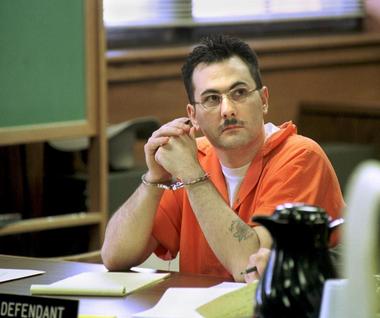
Breaking News: Prosecutor in Michael Hash Case Resigns…

As we’ve blogged, Michael Hash had his conviction overturned by a federal judge last week, thanks to the great work of the Mid-Atlantic Innocence Project and others.  The federal judge found egregious police and prosecutorial misconduct.  Now, the prosecutor involved in the case has resigned as a result of the revelations.  Details here.

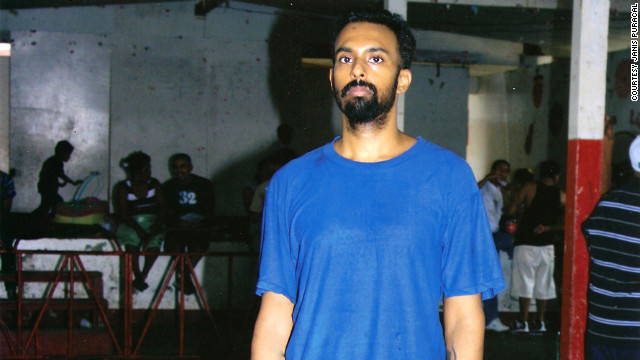
Are We Going to Let Jason Puracal Die in a Nicaraguan Prison?

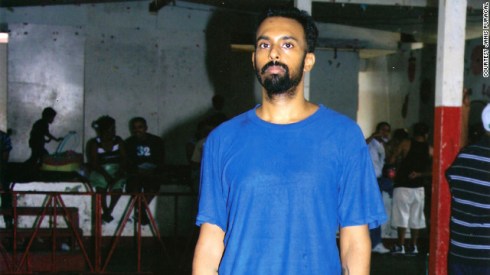
This past month, while hundreds of men burned in their cells in Tegucigalpa, Honduras, Jason Puracal lay on a concrete floor 150 miles away in Tipitapa, Nicaragua, where he shares a small, bug infested cell with seven other inmates.  Jason is trapped in that cell 7 days a week, 24 hours a day, except for one hour he gets to spend outside next to the prison’s open sewer system.  There are exposed electrical wires and no running water. There is a hole in the corner that serves as a toilet, a drain for bathing, and a sink for washing dishes.  Buckets of parasite infested water are carried in, and the only way to drink the water is to boil it with a makeshift heating system that caused Jason severe burns this past September.  The burns blistered and became infected.  The bugs chewed away at his wounds.  He has since developed an inflammatory condition in his bowels that makes it extremely difficult to eat.  He has lost a tremendous amount of weight and it is unlikely he will survive even a portion of his 22 year prison sentence.

The conditions that Jason lives under would be horrible for anyone.  What makes them shocking is that he is an innocent man, wrongfully convicted by a failed justice system.

Jason’s current reality is not the life he imagined when in 2002, after obtaining a degree in Zoology from the University of Washington, he moved to Nicaragua to serve in the Peace Corps.  He fell in love with the country and a beautiful Nicaraguan woman.  When his tour ended he stayed.  He married his girlfriend, had a son, and started a career as a realtor in the beach town of San Juan del Sur.  His life seemed like a dream.  He was even featured on HGTV’s House Hunters International with cameras following him around as he showed beach homes to enthusiastic Americans looking to invest in the “new Costa Rica.”

That life ended on November 11, 2010, when armed and masked Nicaraguan police forced their way into his office and his home without a warrant and seized all his computers and files.  No evidence of criminal activity was found.  Nonetheless, Jason was arrested and later charged with money laundering and drug trafficking.

Jason’s trial was a sham.  It was overseen by a 27 year old judge who was not even a licensed attorney.  His real estate office’s escrow account was used as alleged evidence of money laundering and Jason wasn’t permitted to call his accountant to explain the escrow process and document all of the money that had moved in and out of the account as a result of property purchases.  The key prosecution witness did not even know what an escrow account was.

No drugs were found in Jason’s home or office.  The only “drug evidence” was testimony by a police officer about a VaporTracer test that can detect microscopic traces of drugs, but has been widely panned by courts due to cross contamination of evidence.  In fact, initially Jason’s car and clothes tested negative, but after they were taken into custody, and likely came into contact with other evidence or officers who had been exposed to drugs, there was an alleged 70% reading.  That meant a 70% chance that his car and clothes came into contact with drugs.  This flimsy evidence was unsupported by documentation at trial and riddled with contamination problems.

In a United States court the evidence against Jason would never support a conviction, or even probable cause to hold him in jail pending trial.  In Nicaragua, it was enough for a conviction and 22 year prison sentence.  Yet, Jason’s family has faced an uphill battle in fighting for his freedom.  Even though the United States has condemned the recent elections in Nicaragua as riddled with corruption, with Hillary Clinton calling the elections a “setback for democracy,” Jason’s case has largely been treated by U.S. government officials as just another drug case where an American got caught up in international trafficking.  His case has not received the attention of political cases where injustice is obvious and this is very dangerous precedent.

If other countries know that all they have to do is call a case a drug case, even when there are no drugs recovered, all Americans become potential targets when they travel outside the country.  We should all be concerned for Jason.  He represents the treatment we are willing to accept when our fellow citizens are wrongfully arrested and convicted in foreign countries.

http://seattletimes.nwsource.com/html/opinion/2017712442_guest12brooks.html

www.FreeJasonP.com

http://www.cnn.com/2012/02/16/world/american-nicaragua-prison/index.html
Image

A Loud Call for Federal Discovery Reform in the U.S….

Yesterday The Constitution Project issued this report, signed by former federal prosecutors, federal judges and others, outlining a pattern of Brady violations by federal prosecutors, and calling for Congressional hearings to amend the federal discovery rules.  The report begins:

We, the undersigned, are current and former judges, prosecutors, law enforcement officers, defense lawyers and others, all with substantial professional experience within the criminal justice system. We call upon Congress to address the persistent problems with discovery in the federal criminal justice system by immediately enacting legislation that clarifies federal prosecutors’ obligations to disclose information to the defense and that provides appropriate remedies when prosecutors fail to do so.

Over the past few years, we have seen a troubling number of cases involving failures to disclose evidence to the defense pursuant to Brady v. Maryland and its progeny. Most notable was the prosecution of the late Senator Ted Stevens. The U.S. Department of Justice (DOJ) moved in April 2009 to Continue reading

Will Florida governor seek review of cases involving discredited witness?

Governor Rick Scott has formally apologized “on behalf of the state of Florida” for the 27 years William Dillon spent in prison for a crime he did not commit.  He has also signed a claims bill of $1.35 million.  It took another three years of Dillon’s life to navigate the process of getting compensation from the state. But Dillon remains unsettled over the thought of others wrongfully convicted by the now deceased John Preston, Brevard County authorities’ go-to witness whose German shepherd had quite a nose. Preston claimed he could pick up a scent in the middle of a lake Continue reading

Thursday’s Quick Clicks…

  • Judge in Mexico recommends release of French citizen Florence Cassez, who was convicted in Mexico of kidnapping.  Many French citizens believe Cassez was wrongfully convicted, and now it appears the judge has similar concerns
  • Two police officers in Aurora, Illinois did the right thing in following up leads that led to exoneration (more here)
  • Kansas exoneree Joe Jones relieved that CODIS DNA database entry of the DNA from his case results in a “cold hit” to the true perpetrator
  • Houston lawyer exposes the prosecutorial misconduct involved in the Michael Morton wrongful conviction case
  • Television drama about the Great Mint Swindle, a famous wrongful conviction case in Australia, airs Sunday night in New Zealand
  • Governor in Maryland considers clemency petition of Innocence Project client; prosecutor supports the petition, saying he would not have brought the charges if he knew then what he knows now
Gallery

U.S. Court of Appeals ruling extends prosecutorial immunity

A prosecutor’s Brady obligation to disclose exculpatory evidence remains until a case is final even if the prosecutor is no longer the lead attorney. The U.S. Court of Appeals for the Seventh Circuit ruled on February 28 that this and … Continue reading

Great Article in Forbes on How Prosecutors Get a Pass When it Comes to Misconduct…

an excerpt, full article here:

Over the years, there have been many instances where, after a criminal defendant was convicted, the defendant’s lawyer has discovered that the prosecution did not turn over either Brady material or Giglio material.  This has resulted in many guilty verdicts being set aside thanks to the hard work of the Innocence Project and similar organizations (like Centurion Ministries) which represent those who claim that they were unjustly convicted.  The success rate of these organizations is quite impressive, which is a testament to their professionalism and the lack thereof by prosecutors who obtained wrongful conviction through gross negligence or intentional misconduct.

The Times editorial caused me to reflect on the Continue reading

From Timbuktu to Kalamazoo, Microscopic Hair Comparison Still (Unfortunately) Has Adherents

Scott Baldwin, convicted of murder in 2002 and now represented by the Wisconsin Innocence Project

This story about a Wisconsin Innocence Project client Scott Baldwin (convicted in 2002 of murder in Michigan) discusses how the judge recently granted DNA testing of hairs that were found clutched in the murder victim’s hand (the evidence suggested there had been a struggle between the perpetrator and the victim).  What was striking to me in the article (although sadly, not surprising) is that the prosecutors opposed DNA testing of the hairs on the ground that the hairs had been microscopically examined at the time of trial, and determined to have come from the victim himself.  Thus, the prosecutors argued, there is no need for DNA testing to further confirm what we all already know.

If anything has proven to be unreliable junk science, however, it’s microscopic hair comparison (it’s perhaps up there with bite mark evidence in terms of unreliability).   We recently had a case in Ohio, for example, where the state’s Continue reading

New Scholarship Spotlight: Opening the Black Box: Democracy and Criminal Discovery Reform after Connick v. Thompson and Garcetti v. Ceballos

Professor Janet Moore of Cincinnati has posted the above-titled article on SSRN.com.  The article is forthcoming in the Brooklyn Law Review, and is available for download here.  The abstract states:

A leading cause of wrongful conviction and wasteful litigation in criminal cases is the nondisclosure of information beneficial to the defense by prosecutors and law enforcement as required by Brady v. Maryland. In Connick v. Thompson and Garcetti v. Ceballos, the Supreme Court weakened Brady’s enforceability by limiting the deterrent force of 42 U.S.C § 1983 liability. Connick highlights Garcetti’s Continue reading

Capital Murder Conviction Overturned in Federal Habeas in Virginia…

Congrats to Shawn Armbrust and the Mid-Atlantic Innocence Project on a big win in federal court yesterday.  The U.S. District Court for the Western District of Virginia threw out the 2001 murder conviction of Michael Hash, holding that the state had failed to turn over deals it had cut with States’ witness, and that Hash’ attorneys had been ineffective.  The 64-page decision is here.  News account of the case here.

Tuesday’s Quick Clicks…

New York Times urges open files in U.S. federal cases

A New York Times editorial yesterday properly urged that the Justice Department require federal prosecutors’ files be open to the defense. While Brady v Maryland requires disclosure of exculpatory evidence, too often prosecutors at all levels skirt this requirement and courts dismiss the undisclosed information as not “material,” a subjective call that can be flawed as revealed in many DNA-proven wrongful convictions.

As the editorial points out, 96% of federal cases are resolved in plea bargains. The lax application and court enforcement of Brady  puts defendants at the considerable disadvantage of not knowing the evidence against them in plea negotiating. The editorial advocates an open files federal rule, which would be an important example for the states.

Ohio and North Carolina were mentioned as two states that now have open files rules. At the state level this requires leadership; Ohioans can thank the late Chief Justice Thomas Moyer, who championed this rule change, adopted by the high court’s rules committee in July 2010.

Friday’s Quick Clicks….

  • Many believe wrongful convictions are sometimes caused by pressure on the cops to solve high-profile cases.  This pressure has caused the D.C. police to come up with some creative accounting to claim a 94% closure rate in homicide cases.
  • Major League Baseball’s MVP Ryan Braun exonerated from a wrongful suspension for using steroids…Green Bay Packers QB Aaron  Rodgers says Braun is an innocent man, although MLB execs say Braun is guilty and vehemently disagree with the ruling.  Do MLB execs have tunnel vision?
  • After an exoneration and release in Bangladesh, the society struggles with questions like how did it happen, and will the exoneree be compensated?  Sound familiar?
  • All remember Mike Nifong, the infamous D.A. from Durham, NC in charge of the Duke Lacrosse Case.  His successor Tracey Cline is now under fire for allegedly being overzealous, attacking a sitting judge, and not always having the facts to back up her allegations.  More here.
  • The State of Utah has appealed the exoneration of Debra Brown, a woman exonerated last year by the Rocky Mountain Innocence Center.
  • Wrongful conviction in the States is impacted by the trend of mass incarceration.  Here’s an interesting new article from The New Yorker attempting to explain America’s mass incarceration.
  • A retrospective on a famous case of alleged wrongful conviction in Australia of a man named Darryl Beamish.
  • Apparently in Kathmandu, like in the U.S., there’s rarely punishment for public officials like judges whose conduct leads to gross miscarriages of justice.
  • The disciplinary charges against a Texas attorney for making millions representing exonerees in state statutory compensation claims (my understanding is that the state statutory claims involved not much more than filing paperwork to obtained undisputed amounts) was dismissed.  The disciplinary committee plans to appeal, calling the contingency-type fee “unconscionable” in this type of case.  We have, unfortunately, had this problem in Ohio as well.

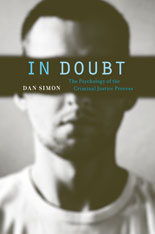
In Doubt: The Psychology of the Criminal Justice Process

Here’s a new book that looks interesting and on-point entitled In Doubt:  The Psychology of the Criminal Justice Process by Dan Simon, a professor of psychology at the University of Southern California.  The abstract reports:

The criminal justice process is unavoidably human. Police detectives, witnesses, suspects, and victims shape the course of investigations, while prosecutors, defense attorneys, jurors, and judges affect the outcome of adjudication. In this sweeping review of psychological research, Dan Simon shows how flawed investigations can produce erroneous evidence and why well-meaning juries send innocent people to prison and set the guilty free.

The investigator’s task is genuinely difficult and prone to bias. This often leads investigators to draw faulty conclusions, assess suspects’ truthfulness incorrectly, and conduct coercive interrogations that can lead to false confessions. Eyewitnesses’ identification of perpetrators and detailed recollections of criminal events rely on cognitive Continue reading

U.S. Federal Judge Denies Prosecutorial Immunity

Federal Judge Elaine Bucklo has denied prosecutorial immunity to former Illinois Assistant State Attorney Mark Lukanich in a law suit brought by Ronald Kitchen who spent 21 years in prison for a crime he didn’t commit. Kitchen’s confession was extracted during the reign of disgraced imprisoned former Chicago Police Commander Jon Burge, notorious for torturous interrogations. Kitchen says that Lukanich was aware of his torture because he was nearby during the interrogation. The judge has ruled that Lukanich’s alleged role was part of the investigative part of the case and therefore not covered by prosecutorial absolute immunity.

Nearly a year ago, as reported by the Chicago Tribune, Judge Bucklo wondered aloud why the City of Chicago had sent an army of lawyers to fight the law suit brought by Kitchen. “I don’t understand this case. Why don’t you settle? [Kitchen] was declared innocent. Burge is in jail. Have you tried to settle this?” she asked. The Tribune editorialized that the longer Chicago refuses to settle multiple cases relating to the coerced confessions, the more the reputation of the city would suffer.

Gallery

New Brady Decision from SCOTUS Today….

This gallery contains 1 photos.

The United States Supreme Court decided a new Brady case today, Wetzel v. Lambert, 565 U.S. ___ (2012), which might be relevant to innocence lawyers litigating the failure of the state to disclose impeachment material.  In Lambert, SCOTUS overturned the 3rd Circuit’s … Continue reading

Gallery

Wrongful Conviction in a Financial Crimes Case?

It appears there may have been a wrongful conviction in a U.S. federal financial crimes case involving a Goldman Sachs computer programmer.  You don’t see claims of wrongful conviction too often in financial crime cases.  The 2nd Circuit federal appellate … Continue reading

Monday’s Quick Clicks….

  • Northern California Innocence Project client Maurice Caldwell adjusts to life on the outside one year after being exonerated…..
  • the Supreme Court of India has ruled that mere “procedural errors” alone cannot be a basis for overturning a criminal conviction…there must also be a miscarriage of justice in the case before the conviction can be quashed….
  • Amanda Knox signs a multi-million dollar book deal….
  • a former prosecutor (now a judge) in Texas faces an inquiry for allegedly hiding exclulpatory evidence in a case….related commentary by Nancy Petro here….
  • Mississippi Innocence Project Director Tucker Carrington is a featured speaker at the University of Arkansas….
  • Geography–the rural/urban divide–impacts quality of justice in South Africa…
  • a documentary film on the West Memphis 3 wrongful conviction case nominated for Academy Award….
  • Massachusetts passed bill giving inmates access to DNA testing to prove their innocence….
  • this week is Innocence Week at Cardiff Law School in Wales….
Gallery

Tipping Point: Is America finally saying no to prosecutorial overreach?

This week Texas Supreme Court Chief Justice Wallace Jefferson ordered a special “court of inquiry” into former Williamson County District Attorney Ken Anderson’s alleged misconduct in his prosecution of Michael Morton, proven innocent of murdering his wife after he served … Continue reading

Gallery

American Indian Injustice

This gallery contains 4 photos.

American Indian reservations are, to a certain extent, a world unto themselves. Tribal councils, rather than the U.S. government or state governments, generally control what happens on America’s 300-plus reservations on which many native Americans still live. But not when … Continue reading