Category Archives: Recantations

Journalists Never Gave Up on Haunting Case of Innocence

On June 28, 2013, Daniel Taylor, 38, walked out of prison after serving more than 20 years for murders he did not commit. He couldn’t have committed the crimes. Taylor was in jail the night of the murders. He’d been arrested and held there following a fight in a park. But despite his unique and compelling alibi, police and prosecutors used his false confession to convict him and others. Taylor might likely still be in prison if it weren’t for his letter written to Steve Mills, a reporter at the Chicago Tribune. He and his reporting partner on articles about wrongful conviction, Maurice Possley, a Pulitzer Prize winning journalist, were not only intrigued, they became committed to proving Taylor’s innocence. But they never imagined it would take twelve years. Read this remarkable story of determination, hard work, and patience (here) in The Atlantic.
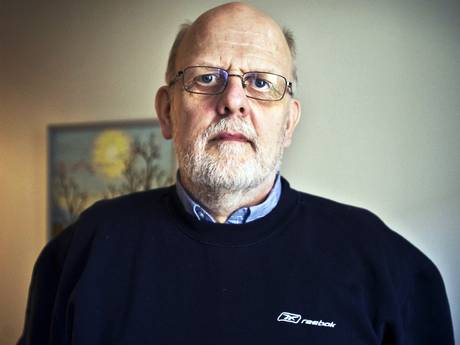

Sweden’s worst miscarriage of justice?

Sweden, often looked upon as an aspirational model for criminal justice reformers, looks set to finally admit that it has wrongly convicted a mentally ill psychiatric patient of a series of murders after he confessed to the crimes. Bergwall, now 63 years, ‘confessed’ to dozens of macabre killings (including cannibalising his victims) during the 1990s. He was convicted - with apparent ease - of at least 8 murders, despite little or no evidence beyond his detailed confessions. Now, the authorities are dropping all charges against him, after he retracted all of his confessions in late 2008. The Swedish Attorney General has admitted:

“That a person has been convicted of eight murders and later been declared innocent, that is unique in Swedish legal history…It has to be considered as a big failure for the justice system.”

The story is receiving international attention, being reported as far afield as China and Auspg-32-sweden-aptralia. Read more here….(Incl. a GQ magazine article)

The Serial Killer Has Second Thoughts: The Confessions of Thomas Quick

Swedish serial killer who raped and ate his victims to be freed – because he made it all up

Swedish ‘serial killer’ cleared of all charges despite confession

Monday’s Quick Clicks…

click

A Tale of Two Moms

Alice Leong and Leomia Myers have something in common. They both have suffered the pain of watching their sons wrongful convictions. For one of them, the suffering is over. Her son, Brian Banks, is now an NFL linebacker. The other still suffers everyday with her sons wrongful incarceration http://www.takepart.com/article/2013/05/14/california-innocence-project-marches-for-mothers-of-wrongfully-convicted
innocencemarch.aliceandleomiebrian and his mom

Friday’s Quick Clicks…

click
  • Actor Martin Sheen said Thursday he won’t stop backing a man’s bid to be exonerated in a 1998 killing, although prosecutors have concluded the case was sound. Sheen said in a statement he was outraged by the Manhattan district attorney’s recent decision in the case of Jon-Adrian Velazquez, who was convicted of killing a retired police officer. Some witnesses have since backtracked, but prosecutors say an 18-month-long review didn’t turn up enough proof to clear Velazquez. “I promised Jon-Adrian that I would not give up the fight to see him walk out of prison a free man and I repeat that promise today,” Sheen said in the statement, provided by Velazquez’ lawyers, who filed papers Thursday asking a judge to dismiss the case. “He is an innocent man, wrongfully convicted. May justice prevail,” Sheen added.
  • A central New York man who spent nine years in prison after being wrongfully convicted of trying to kill his wife has won $5.5 million in damages from the state. Syracuse-area media outlets report a state Court of Claims judge ordered the payment to 46-year-old Daniel Gristwood of Pennellville. The judge ruled in 2011 that state police coerced him into falsely confessing in 1996. Gristwood was released from prison in 2005 after another man admitted attacking the sleeping Christina Gristwood with a hammer.
  • A review of Amanda Knox’ new book
  • After wrongful conviction in Nicaragua, Jason Puracal wants to work to change the system

Justice System Should Heed Victim’s Views in False Accusation Case

The past five years have been an unthinkable nightmare for Johnathon Montgomery and his family. Montgomery was sentenced to 60 years in prison after a young woman in her late teens accused him of sexual assault, which she said occurred years earlier when Montgomery was 14 and she was 10 years old. Montgomery spent four years in a Virginia prison before the woman recanted and admitted the crime never happened. False accusation and false witness are not new to those who have studied DNA-proven wrongful convictions, but how our system responds to one who recants such a damaging lie deserves thoughtful consideration. Continue reading

Court of Appeals Orders Release of Imprisoned Chicago Mother

As reported (here) in the Chicago Tribune, Nicole Harris will be freed no later than noon on Monday from Dwight Correctional Center as a result of two court actions. She’s served seven years of a 30-year sentence after being convicted of murder in the death of her four-year-old son, Jaquari. As reported on this blog and the Chicago Tribune (here), last October a federal appeals court, ruling that Jaquari’s older brother, Dante—five at the time—should have been permitted to testify, reversed Nicole’s conviction. On Wednesday, the 7th Court of Appeals ordered Harris’s release from prison. Continue reading

NCIP Scores Exoneration in Oakland…

The Northern California Innocence Project is on the verge of an exoneration in Oakland….

From SFgate.com:

A man who has spent nearly seven years in prison for a shooting in West Oakland is on the brink of being released after his attorneys argued he was the innocent victim of shoddy police work and lying witnesses who have since recanted.

Alameda County prosecutors, who put 51-year-old Ronald Ross in state prison for attempted murder and assault with a firearm, conceded Friday that his conviction should not stand and said they would ask a Superior Court judge to free him.

“The district attorney doesn’t have confidence the verdict was fully supported given all of the circumstances,” said Assistant District Attorney Micheal O’Connor.

Friday’s developments mean that Ross, who has been serving a sentence of 25 years to life at San Quentin State Prison, is probably days away from the end of an unusual and lengthy legal saga.

Ross, who had no record of violence, was arrested by Oakland police after the shooting victim, Renardo Williams, picked him out of a lineup of six photos, Ross’ attorneys said.

Bedside lineup

They said police showed the lineup to him at his hospital bedside three days after he was shot in front of his apartment at the Campbell Village complex on April 15, 2006.

Ross’ attorneys said he had been included in the lineup because of a loose connection - his mother had, years earlier, lived in the same building as a woman Continue reading

Can Ohio Handle the Truth About the Tyrone Noling Case?

From The Atlantic:

There are four hard truths in Tyrone Noling‘s unenviable life. The first three form a part of his past that he can never get back: bad choices and decisions he made, or that were made for him, which have put him where he is today. The fourth truth is the biggest part of his present, and will surely determine his future — or whether he even has a future. Noling is on Ohio’s death row, and has been since 1996, for a crime he says he didn’t commit; a crime to which he is linked by so little reliable evidence that a federal appeals court last year went out of its way to express “concern” about the accuracy of Noling’s conviction.

The first truth in Tyrone Noling’s life is that an elderly couple named Cora and Bearnhardt Hartig were murdered in their home in 1990. The second is that Noling, then a teenager, was convicted of the murders despite passing a lie detector test — even though there was no physical evidence linking him to the Hartigs and the witnesses against him, co-defendants, were so unreliable that prosecutors initially dropped the charges against him. The third truth about Noling is that Ohio won’t allow his attorneys to DNA test a cigarette found at the scene, evidence, the defense suggests, which might determine who might have killed the couple.

The fourth truth is unfolding now. Last Tuesday, for about half an hour, the Supreme Court of Ohio heard oral argument in the Noling case. His lawyers are asking the justices to recognize a broad application of a new state law designed to encourage DNA testing in cases like these. Prosecutors, claiming the butt is Continue reading

Michael Hash Sues Current and Former Public Officials after Wrongful Conviction

Michael Hash, who served nearly 12 years in prison before U.S. District Court Judge James C. Turk granted his release on a Habeas Corpus ruling, has filed a lawsuit in federal district court in which he is seeking damages to be awarded—as reported in The Free Lance-Star of Fredricksburg (here)—“in such amounts as the Court and jury find fair and reasonably supported by the evidence and that will deter such conduct by defendants in the future.” Hash has asked for a jury trial.

The defendants named in the lawsuit are former Culpeper (VA) County Commonwealth’s Attorney Gary Close; three Culpeper Sheriff Continue reading

Plea bargains deserve greater attention

A 60 Minutes report Sunday on the prevalence of false-confession cases in Chicago has garnered the issue renewed and much-deserved attention, as reported by Mark Godsey here and Phil Locke here.

Questions about how false confessions happen — and continue to happen no matter how many cautionary cases are brought to light, is an ongoing mystery. As noted in this excellent explanation of the issue in The Jury Expert, false confessions in North America date back to at least 1692 and the Salem Witch Trials.

Unfortunately, a more prevalent form false confession — guilty pleas by innocent defendants — gets far less attention. Some nations prohibit plea bargains to prevent this problem, but they are integral part of the criminal-justice system in the United States, where more than 90 percent of cases end with guilty pleas. As Danny Weil argues in a pointed essay here, the growth of pea bargains in the Unites States has become ”a historical canker sore on the judicial system” that has helped foster America’s mushrooming incarceration rate over the past three decades.

Even worse, when evidence of innocence of a person who pled guilty later surfaces, court rules make it extremely difficult to get a conviction reversed. For every guilty person like former football star Brian Banks who is allowed to clear his name, dozens of others are denied the opportunity because of the system’s strict rules against reopening cases that ended in guilty pleas. This is an issue that deserves much more attention.

Thursday’s Quick Clicks…

  • clickCalifornia Supreme Court holds that, in post-conviction, recantation of an expert based on new scientific advances carries more weight than recantation of a lay witness. Summary here, decision here
  • A jury in Iowa is still trying to decide whether two Omaha, Neb., men should be paid millions of dollars for spending 25 years in prison on murder convictions later overturned.Jurors began deliberating Friday afternoon after 21 days in the courtroom. They spent eight hours Monday and six hours Tuesday working on the case. They must decide whether Terry Harrington and Curtis McGhee should be paid by the city of Council Bluffs and two retired police officers who worked to convict them in 1978.

Lawmakers Need to Heed the Lessons of Wrongful Conviction

Last week Virginia’s Governor and the state’s Attorney General scrambled to find a legal way to release Jonathan Montogmery from prison after his accuser admitted the sexual assault—for which he had served four years—never happened. The Washington Post railed against “balky officials in Richmond who will not move off the dime to free him” in a published opinion (here). However, the editorial also properly identified the “root problem”: Virginia’s 21-day rule.

In states across the country existing laws indicate an unacceptable lack of awareness or concern over the lessons of wrongful conviction. Continue reading

Lawyers, Officials, Work Through Legalities to Free Innocent Man

Mid-Atlantic Innocence Project lawyers are working through this weekend to prepare a request of Virginia Gov. Bob McDonnell for a conditional pardon for Johnathon Montgomery, 26. Montgomery has served four years in prison following his 2008 conviction of sexual assault. The crime allegedly happened eight years earlier, in 2000, when Montgomery was 14 and the victim was 10. Montgomery was convicted on the testimony of the victim who was 17 at the time she raised the accusation. Now 22, Elizabeth Coast has recanted her testimony and admitted the assault never happened.

Coast says she made up the assault as a defense and explanation to her parents who discovered her looking at sexually explicit sites on the Internet. The Daily Press first reported on this case. This ABC report also indicates that Coast is being charged with perjury for the false accusation. Continue reading

Unusual Exoneration Unfolding in Virginia Includes Arrest of False Accuser for Perjury…

Here’s an article about a strange exoneration unfolding in Virginia. The article mentions a couple of unusual twists. First, the admitted false accuser has been charged with perjury for her false claims against an innocent man. Second, although no one seems to dispute that the David Montgomery is innocent, the AG of Virginia is appealing his exoneration on the ground that the trial didn’t have jurisdiction to exonerate him.

Wednesday’s Quick Clicks…

  • Detailed article about the San Antonio Four, four women who the Innocence Project of Texas say were wrongfully convicted of child molestation as a result of false statements coerced from children
  • Should someone exonerated in a murder case be compensated by the state if he would have been in prison during the same time period anyway due to other crimes even if he had not been wrongfully convicted?

Thursday’s Quick Clicks…

  • A review of the film West of Memphis, on the West Memphis 3
  • A Montana man seeking a new trial for a 2002 rape conviction faced his male accuser in court here Wednesday for the first time in 10 years – and heard the accuser take back an earlier recantation he made to officials with the Montana Innocence Project. The alleged victim – now a 24-year-old prison inmate – said he falsely told Innocence Project officials in 2009 and 2010 that the jailhouse rape never occurred because he wanted them to quit bothering him about it.
  • Ohio Supreme Court will hear arguments in case in which Ohio Innocence Project has been denied DNA testing for a man on death row
  • Exoneree Arthur Whitfield pleads guilty to domestic violence offense
  • New documentary film about an alleged wrongful conviction called Incident at Devils Lake
  • The Arson Project releases two new reports about cognitive bias in arson investigations here and here

The Passing of a Forgotten (Wrongfully Convicted) Man

George Whitmore Jr. “never saw himself as a race activist. In the 1960’s and 1970’s, from prison and on the streets, he watched the civil rights movement and the Black Power Movement at a wary distance. He did not judge people by the their skin color. He knew he had been the victim of a grave injustice, but he did not assume that the detectives who framed him, or his slow torture at the hands of a rigged system, were motivated by racial prejudice.” Thus writes, T.J. English in his New York Times piece (here), “Who Will Mourn George Whitmore?”

According to English—who befriended Whitmore and has written The Savage City: Race, Murder, and a Generation on the Edge about Whitmore and his times—in April, 1964, Whitmore, at 19 years old, was picked up by New York City detectives and interrogated for 22-hours before signing a confession to Continue reading

Friday’s Quick Clicks…

  • Two of the Beatrice 6 awarded compensation in Nebraska
  • Innocence Project Northwest wins new trial in the murder case of Jeramie R. Davis; prosecutor says will retry
  • Eyewitness identification reforms kicking in in Texas
  • Group called “Innocence Matters” gets exoneration today in California based on recanting witness
  • NPR on the crime lab scandal rocking Massachusetts

The Al Cleveland Case in Ohio…

I blogged last week about the Ohio Innocence Project’s victory in the 6th Circuit court of appeals in the Al Cleveland case. Here’s a great story about the case written by a reporter who got to know Al over the years:

CLEVELAND, Ohio — The phone on my desk rang, and a deep, gruff voice came on the line.

The private investigator with a Chicago accent so thick you could cut it with a knife wanted to talk about the murder conviction of Lorain’s Alfred Cleveland.

I knew Cleveland. I’d hired him to help illustrate a graphic novel that I wrote. Cleveland did the work quickly and expertly — from a cell in the Mansfield prison.

I told Cleveland our relationship was strictly artist and writer, that I would not report his story in the newspaper, even though he professed his innocence. I started to say that to the guy on the phone. He had other ideas.

“Shut up,” he growled.

I did.

“My name is Paul Ciolino,” he said. “Google me. I’ll wait.”

My jaw dropped. I found story after story about how this detective’s work got five men off Illinois death row who were wrongfully convicted, and how he worked with the celebrated “Innocence Project.”

This was someone to listen to. What he said in this 2006 call made me delve into Cleveland’s case and follow leads that Ciolino had uncovered, including an interview with the witness whose testimony put Cleveland behind bars. Testimony the witness said he made up.

It led to other questions about whether Cleveland was even in Lorain the night of the murder.

Last week a federal appeals court, citing the same issues I found, ordered a lower-court judge to reconsider Cleveland’s request for a new trial. The judges suggest Cleveland could be acquitted. The prison artist might soon be a free man.

My first contact with Cleveland, now 43, was in 2002. He sent me copies of his artwork after reading my weekly comic book column in The Plain Dealer. The art was impressive.

Even more impressive was that Cleveland honed his talent in his cell in the Richland Correctional Institution, where he has been serving a life sentence for the murder of a Lorain prostitute in 1991. He and three other men were convicted of the crime in 1996.

Through letters and occasional telephone conversations, I encouraged Cleveland to keep drawing and painting. Over the next few years, he sent copies of other works.

I mailed him a copy of my first comic, “Phantom Jack,” about a newspaper reporter who used invisibility powers to right wrongs. Cleveland soon responded with a cassette tape that had a Phantom Jack theme song. In the accompanying note, he said he had access to a full music studio and recorded the song by layering music and vocals.

The cassette stunned me. It was so professional that I thought perhaps he had taken an existing song and added a vocal track.

Cleveland called and asked how I liked the tape. I said it was amazing and asked if it was original or made by sampling other artist’s compositions.

He seemed insulted.

“I did that all myself,” he said.

shaw1.jpg
The first panel of Al CLeveland’s art that appeared in ‘Tales of the Starlight Drive-In.”

It was the last time I underestimated his talent.

After I got to know him, the idea that he was a convicted killer seemed less and less real.

By 2005, I was assembling artists to illustrate a graphic novel I was writing for Image Comics called “Tales of the Starlight Drive-In.”

It’s a series of connected stories set in a drive-in theater that had an original story Continue reading