Category Archives: Reforming/Improving the system

One of ‘Angola 3’ Dies Days After Release

Herman WallaceHerman Wallace, one of the Angola 3, died October 4, just three days after release from 41 years in solitary confinement.

The Angola 3 were three young black men who tried to raise awareness of the horrific, disgusting conditions that prevailed at Angola state prison in Louisiana in the early 1970’s – known at that time as “Bloody Angola.”  You can read the background story here.

As a consequence of their actions, they were singled out for retribution, and were framed for the murder of a prison guard.

You can read coverage here and here.

The Shame of Lorain – Redux

Smith & Allen

The case of Nancy Smith and Joseph Allen of Lorain, OH is a tragic tale of a badly broken justice system gone haywire.  Their story has been reported on this blog here and here.  And the fact that this sordid tale involves the Ohio Supreme Court makes it even worse.  They both spent almost 15 years in prison until a judge confirmed the charges against them were bogus, and had them released.  But the prosecution wouldn’t acknowledge this, and wouldn’t give up.  The Ohio Supreme Court ruled that the judge didn’t have jurisdiction, and another judge was assigned to the case.  The outcome was that “deals” were struck by the defense and the prosecution, and the results of those “deals” are reported below.

Any rational person who examines the facts of this case will conclude that Nancy and Joseph are absolutely innocent.  However, to avoid being sent back to prison after initial release, Nancy had to plead to a lesser charge and was given credit for time served, but had to give up any future possibility of exoneration.  Unfortunately, Joseph did not have even this option.  He is being sent back to prison and has to give up his right to further appeals.

You can read the story by Bob Chatelle here.

Ladies and gentlemen, this is shining example of the fact that for (most) prosecutors, it’s not about justice, it’s just about winning; and doesn’t that just suck.

Update on the National Registry of Exonerations

In Mark Godsey’s ‘Quick Clicks’ yesterday, there was a piece titled “an update from the National Registry of Exonerations,” which currently has logged data on 1,219 exonerations nationwide so far.  I hope you were able to check it out, and were able to navigate through the Registry’s updated website.

To me, the most important value of the Registry is that it’s a rich source of real, hard data on the occurrence of wrongful convictions – something that we have historically not had.  The registry has been able to publish a statistical analysis of 873 exonerations from 1989-2012, and you can see that report here.

I am a self-admitted data junkie, and when I saw the Registry’s new site, was thrilled to see that they have presented data in graphical form that will be continuously updated.  I thought I would highlight two examples for you here.

NatRegExon Charts

And congratulations to both Nancy and Jim Petro on being named to the Registry’s Advisory Board.  I’m sure you’re aware that Nancy is a contributing editor to this blog.

Rob Warden to Continue the “Good Fight”

Warden

As previously reported here on this blog, Rob Warden, co-founder and director of the Northwestern Law Center on Wrongful Convictions has set a retirement date.

However, his efforts and his impact on the innocence movement won’t end there.  This recent article from the Chicago Tribune talks about his post retirement plans.

One of the things in the article that I found “of interest” was the comment by the office of Cook County State’s Attorney, Anita Alvarez:  “It is our hope that the new leadership there will display a more respectful and fair-minded view of the work of the prosecutor, rather than the cynical ‘Us versus Them’ theory disseminated by Mr. Warden throughout the course of his tenure.”

Now, I ask you; is this not the pinnacle of hypocrisy?

Chilean Prisoners: Denied Human Rights and a Voice

Image

Chile has one of the highest incarceration rates of Latin America. However, according to the 2012 Human Rights Report from the University of Diego Portales, the country has the lowest number of violent crimes in the region.

This problem manifests in two ways: many basic needs of prisoners are ignored; meanwhile, they are unable to voice their concerns. It has become a public interest concern. For instance, on August 14 twenty-four prisoners were injured in a fire at the Penitentiary in Quillota. Three years earlier, a fire in San Miguel killed eighty-one.

The problem persists because the government does not recognize its fundamental role to protect all citizens, including incarcerated ones. In 2012, President Sebastián Piñera promised to build more jails in order to circumvent the evident prison overcrowding. Nevertheless, the treatment of the convicts themselves has improved little.

Prisoners are subject to torture, cruel and inhumane treatment. Any sense of rehabilitation is far from reality for Chilean inmates.

On the other hand, the 16th and 17th amendments of the Chilean constitution prohibit detainees from participating in the voting process. Thus, they lack a vehicle to improve their conditions—53,410 citizens are being disregarded. This is not the case in countries such as Canada, Iran, South Africa, and Ukraine.

It is evident Chile is not facilitating the successful reentry of its inmates into society. Not only are they being discriminated against, but they are often from the most marginalized areas of the country to begin with. Though these individuals may deserve to have their liberty restricted, it is indefensible to strip them of their dignity.

Follow me on Twitter @justinobrooks

Professor Justin Brooks
Director, California Innocence Project
California Western School of Law
225 Cedar Street
San Diego, CA 92101
jpb@cwsl.edu
www.californiainnocenceproject.com

For more information from the original article: http://www.elquintopoder.cl/justicia/la-indolencia-con-los-privados-de-libertad/

This photo is taken from: http://www.pulsamerica.co.uk/2010/12/12/chile-this-week-4/

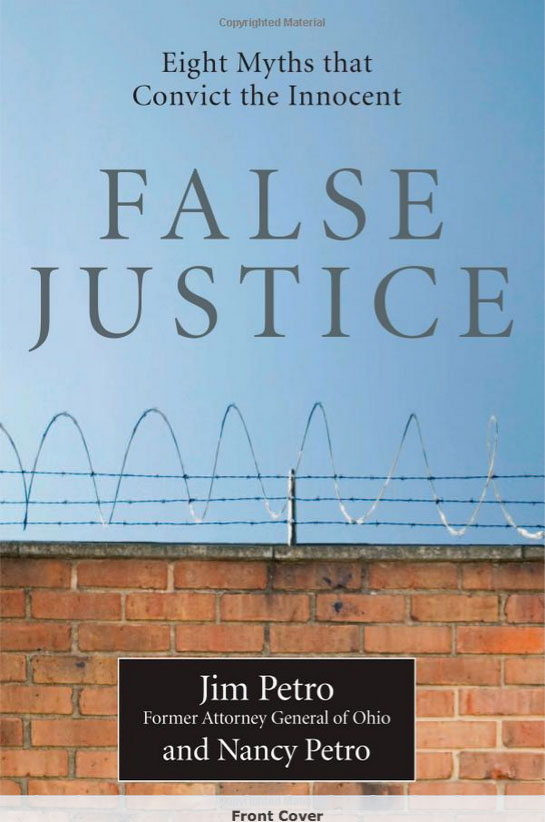
‘False Justice: Eight Myths That Convict the Innocent’ – Why Did They Write It?

FalseJusticeI hope that you’re all familiar with, and in fact have read, the book by Jim and Nancy Petro, False Justice: Eight Myths That Convict the Innocent.

Jim&Nancy

.

.

.

.

Jim is a former Attorney General of the state of Ohio, and Nancy, among her many other endeavors, is also a contributing editor to this blog.

I recently just happened across this interview with Jim and Nancy at the Columbus Metropolitan Club in 2010.  They talk about what brought them to write the book.

It’s about an hour long, and I found it both fascinating and illuminating.  Definitely worth a watch.

Conviction Error Demands Reexamination of Death Penalty

The following opinion piece with the title “Jim Petro: An intolerable rate of wrongful convictions” was published today in The Akron Beacon Journal (here).

Would you get on an airplane if there were a 2.3 percent chance it would crash? The equivalent of this “worse case” outcome in criminal justice is convicting an innocent person. There’s a special horror in convicting an innocent person of a death penalty crime. Well-documented research has found that our criminal justice system’s error rate in capital cases is at least 2.3 percent. This troubling record was underscored recently when senior U.S. District Judge Anita Brody overturned the conviction of James Dennis, who spent 21 years on death row. As reported by the Associated Press, the judge called the case “a grave miscarriage of justice” and said Dennis was convicted on “scant evidence at best.” Continue reading

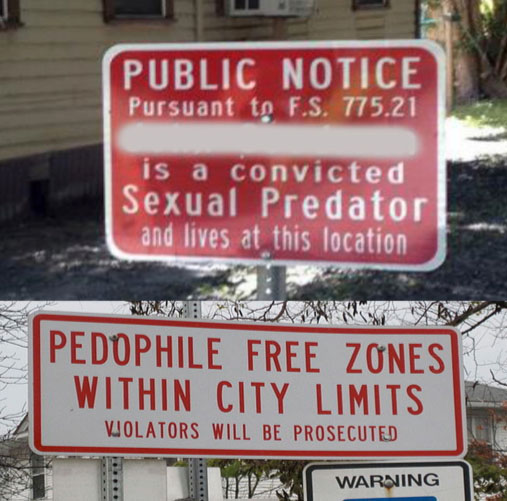
The Wrongfully Convicted Sex Offender

RSO

(Editorial Note:  In no way do I want to minimize the issue of violence against women or children.  Rape is clearly a crime of violence, and must be dealt with appropriately.  Pedophile predation is abhorrant, and must also be dealt with sternly and appropriately.  But I think the issue has become – what actually is appropriate for dealing with the range of sex offenses, and in some cases, have we gone too far; and what does this mean for the wrongfully convicted?  It begs the age old question – does the punishment fit the crime?)

Woe be to the wrongfully convicted sex offender, because you’re not just a wrongfully convicted ‘felon.’  You’re a wrongfully convicted ‘sex offender,’ and the state makes sure you get some extra special attention.  Note that I’m careful to use the qualifier “wrongfully convicted” here, because in the case of sex offenders, when the justice system “gets it wrong,” the injustice gets amplified.  I’m not saying we should let actually guilty sex offenders off the hook, but the punitive measures have become so severe, that when someone is wrongfully convicted of a sex offense, the consequences they are forced to endure magnify the injustice.

Continue reading

Top Chinese Forensic Scientist Quits in Protest Over Miscarriages of Justice

Following hot on the heels of previous posts about the rising awareness of wrongful convictions in China (see here… and here…. and here…), one of the leading forensic scientists in the country has now resigned in protest at the mishandling of evidence in criminal cases and a series of miscarriages of justice:

1573238303

Wang Xuemei, the vice-president of the government-administered Chinese Forensic Medicine Association, said she could no longer be involved with an organisation that routinely serves up “ridiculous and false expert conclusions”

Defence solicitors have commented that the judiciary in China remain under the control of the Communist Party, and cannot be independent. Such comments, and a high profile resignation, should serve as clarion calls for reformers in China to work to bring about urgent reforms, and those in the international innocence movement must continue reaching out to our Chinese colleagues, to ensure that exonerations can be secured. Read more here…

Top Chinese forensic scientist quits over mishandled cases

Neil Heywood case: forensic scientist who raised doubts over conviction quits

Ahead of Bo Xilai trial, a top China forensic scientist quits

Obama’s poor clemency record under attack

The ultimate safety valve for miscarriages of justice in the United States, be they wrongful convictions or unjust sentences, is the clemency process. But as politicians escalated the ”war on crime” over the past 40 years, the number of convicts receiving pardons or commuted sentences at both the state and federal level has plummeted.

President Barack Obama’s promise to change the skyrocketing incarceration rate during his 2008 campaign never materialized in his first term. While the recent promise of Obama’s attorney general, Eric Holder, to reduce the federal incarceration rate by not pursuing as many stiff sentences offers hope, Radley Balko notes here that Obama could easily help correct injustices by issuing commutations, but his record is depressingly dismal.

Balko quotes a ProPublica report that while an applicant for commutation’s chance for success under Presidents Reagan and Clinton was 1 in 100, it fell to 1 in 1,000 under President George W. Bush and is only slightly less than 1 in 5,000 under Obama. It may be time for Obama to walk the walk and not just talk the talk.

Miscarriages of Justice in China Prompt New Guidelines

Unknown-1

China has recently been uncovering a raft of miscarriages of justice. The latest case sees a man released after spending 17 years in prison for the murder of his wife. This latest case, and the many that have recently hit the headlines have led to new guidelines from the ruling Communist Party, regarding prosecution policy and procedures. The guidelines reaffirm the presumption of innocence, and makes police and prosecutors ‘responsible’ for erroneous convictions – removing the previous ‘conviction target’ system of appraising performance simply through numbers of convictions. Read more here:

Chinese man innocent after 17yrs in jail

Lifelong Responsibility

Australasia: New calls for criminal cases review body

New Zealand media are again focussing attention on the case of Teina Pora (read about his case here) , a man convicted 21 years ago of a rape and murder that he maintains he did not commit. Pora is now awaiting a pardon, having lost all his appeals and reached the end of the line. Many groups including politicians and police support his claims of innocence. However, the Premier of New Zealand (John Key) is rejecting calls for the government to set up an inquiry into the conviction. Instead, the case may (if refused a pardon) have to go to the Privy Council in London.

SCCZEN_A_110413SPLPORA1_220x147

Read more here:  Key, Collins shy off action on Pora case

The case is attracting sufficient criticism that it is heightening calls for a criminal case review body specifically created to look at potential miscarriages of justice. Commentators are looking to renew previous calls in New Zealand to set up a review bodysimilar to the CCRC in the UK. With Pora’s case featuring so heavily in the news, the calls may get greater political and public support.  Read more here: Criminal conviction review system long overdue

Meanwhile, similar calls are being made just across the Tasman Seain Tasmania (a state of Australia). They too are demanding new appeal rights for those alleging a miscarriage of justice. Similar to many of the States in Australia, once you have your appeal in Tasmania, 

Unknown-1

you cannot have a subsequent one, even if new evidence is produced. Civil Liberties Australia are now calling for greater appeal rights in Tasmania, a call that could similarly be made all across Australia. Read more here:  Calls mount for retrial ruling

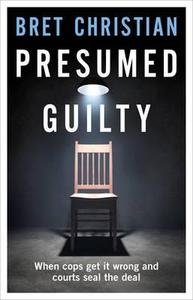
Australia: Call for end of juries in new book: ‘Presumed Guilty’

A veteran reporter in Western Australia, Bret Christian, has written a new book entitled ‘Presumed Guilty’. In promoting the book, he has given an interesting radio interview where he calls for the abolition of juries. He claims that having covered many miscarriages of justice, this may prevent further occurring. You can listen to the interview here….   

More details on the book are available here:

Presumed Guilty

Bret Christian506782

The Untouchables: America’s misbehaving prosecutors, and the system that protects them

Radley Balko, a longtime critic of the American justice system, has just posted a lengthy article on prosecutorial misconduct here.

A New Twist to False Confessions – The Pharmacological Factor

RxWe’ve reported before on this blog about how police interview & interrogation tactics and techniques can contribute to false confessions.  See previous posts herehere, herehere and here.  One aspect of false confessions that we have not previously covered is the situation in which a subject is interviewed or interrogated while under the influence of medically supervised mind altering drugs.  Recently, two prominent researchers in this area have undertaken a collaboration on this very subject with the intent of educating attorneys about the pharmacological and psychological factors that may affect how a suspect responds to the pressure of interrogation.

Dr. David Benjamin (medlaw@doctorbenjamin.com) is a Clinical Pharmacologist and Forensic Toxicologist, and Adjunct Associate Professor in the Pharmaceutical Sciences Department of Northeastern University School of Pharmacy in Boston, MA.  Dr. Brian Cutler is Professor of Forensic Psychology and Associate Dean of the Faculty of Social Science and Humanities at the University Of Ontario Institute Of Technology, Oshawa, Ontario, Canada (briancutler@mac.com).  Both have extensive experience as educators, consultants, and expert witnesses.

Dr. Benjamin has authored numerous papers, some of which are available on his website,  www.doctorbenjamin.com.  He also conducts a seminar on “Developing Active Listening Skills” which is intended to raise the awareness of testifying expert witnesses to the rhetorical ploys, subterfuge, forms of questions and other attempts to gain concessions used by prosecutors during depositions or during cross examination.  Dr. Cutler has co-authored, with Prof. Timothy Moore, the article titled “Mistaken Eyewitness Identification, False Confession, and Conviction of the Innocent,” and you can read that article here:  Cutler & Moore

As part of their mission to educate attorneys on interrogation and false confessions in general and pharmacological issues in particular, Dr. Benjamin and Dr. Cutler have proposed a workshop on the topic to the National Association of Criminal Defense Lawyers (NACDL) and the American Bar Association (ABA).  The workshop proposal is under review, and the abstract is provided below.  Regardless of the outcome of the review processes, Drs. Benjamin and Cutler aim to pursue educational opportunities for attorneys and are open to presentation, publication, and other methods of reaching out to attorneys about this timely and important topic.

False and Coerced Confessions: Causes and Cures by David M. Benjamin Ph.D. and Brian L. Cutler Ph.D.

Continue reading

How sloppy fire investigations send innocents to prison

Excellent commentary from http://www.thecrimereport.com

By Paul Bieber

For George Souliotes, this 4th of July was an Independence Day like no other. It was his first full day of freedom, after 16 years behind bars in California for crimes he did not commit.

Seventeen hundred miles away in Texas, Ed Graf spent his 4th of July in the same manner he has for the past 27 years—an innocent man confined in a state prison. His celebration of freedom will have to wait.

George Souliotes and Ed Graf do not know each other, but they share an unenviable bond: they were both wrongfully convicted of arson and murder and were both sentenced to life without parole.

Souliotes was tried in Modesto, CA for a 1997 blaze in his rental property that killed a mother and her two young children. Graf went to court in Waco, TX for a 1986 fire in his backyard shed that killed his two step-sons. In each case an amateurish fire investigation quickly escalated into a full-fledged witch hunt.

Fire investigators testified with absolute certainty in both cases that deep charring, holes burned into the wooden floors and “pour patterns” could only have been caused by an ignitable liquid, such as gasoline or paint thinner, intentionally used to start the fire. They also testified that each fire burned “abnormally hot,” further suggesting to investigators that the fires were fueled by a liquid accelerant.

The forensic expert testimony in these cases has been shown to be fundamentally unreliable.

The 1992 publication of NFPA 921 Guide for Fire and Explosion Investigation warns investigators not to rely on burn pattern analysis as proof of the presence of an ignitable liquid. A 1997 study by the United States Fire Administration demonstrated that the suspicious burn patterns listed above are created in any fully involved compartment fire, regardless of ignitable liquids, and that the heat of a fully developed fire has nothing to do with the use of a liquid accelerant.

More recently, blind study research by the Arson Research Project has shown the accuracy of experienced fire investigators in determining the presence of a liquid accelerant under these circumstances to be no better than a random guess.

Unreliable burn pattern analysis was so prevalent in the 1980s and 1990s that the Texas Forensic Science Commission recently recommended that all arson convictions in Texas be reviewed in order to determine which of the convictions are based on unreliable forensic evidence. The Texas Innocence Project took up the call and in conjunction with the Texas State Fire Marshall’s Office has reviewed hundreds of the state’s arson convictions.

The review has narrowed the field to less than a dozen cases, among over a thousand Texas arson convictions, where the presence of unsound forensic fire science is mixed with strong claims of actual innocence.

While fire investigators across the country slowly came to grips with the reality that many previous conclusions might have landed innocent people in prison, the Souliotes and Graf cases moved through the crushingly slow process of appellate review.

With the tenacious efforts of the Northern California Innocence Project and pro bono attorneys, Souliotes’ case found its way through state and federal courts. It landed in an evidentiary hearing in front of U.S. Magistrate Judge Michael Seng, who concluded that “no reasonable jury would have found him guilty beyond a reasonable doubt.” In a confirming opinion, U.S. District Judge Anthony Ishii said that Souliotes had shown “actual innocence.”

Late last month, the independent Texas fire review panel convened by the State Fire Marshal’s Office concluded that the original determination of arson by Texas fire investigators in the case of Ed Graf was mistaken. Speaking of the Graf case, Texas State Fire Marshal Chris Connealy said the original investigators “failed to meet the present day standard of care.”

The Souliotes and Graf cases represent far more than simply not meeting a basic standard of care. They represent a nationwide travesty: accidental fires continue to be misidentified as arson leading to wrongful convictions and at least one execution.

Convicted of arson and murder for the 1991 fire that killed his three young children in Corsicana, TX, Cameron Todd Willingham was executed in 2004. His conviction was based on the same discredited evidence present in the cases of Souliotes and Graf. Review of the Willingham case by the Texas Forensic Science Commission and independent experts has confirmed that the fire leading to his conviction was almost certainly accidental, not arson, and that the forensic determinations of the state’s experts were not based on science.

In the case of Willingham, sloppy fire science, mixed with a good dose of bias and speculation, led to the execution of an innocent man.

In spite of the presence of undisputedly flawed forensic evidence, a complete lack of reliable evidence to support a determination of arson, and strong showings of actual innocence, local prosecutors in California and Texas promised to go forward with retrials in both cases.

After protracted negotiations with Souliotes’ attorneys, on the eve of trial the Stanislaus County District Attorney agreed to drop the charges of arson and murder in exchange for a no-contest plea to involuntary manslaughter for failure to maintain the smoke detectors in the rental property where the fire occurred.

Under the terms of the plea, Souliotes did not admit guilt; but he did acknowledge that prosecutors had sufficient evidence to prove their allegation that the smoke detectors were not properly maintained.

The re-trial of Ed Graf is scheduled to begin in Waco in the coming weeks.

Two things must be done. First, charges should be dropped against Ed Graf and he should be immediately and unconditionally freed. Like George Souliotes, Ed Graf has been in prison for dozens of years for a crime that was never a crime at all.

Second, the same type of arson review conducted in Texas should be performed in arson cases nationally. The Texas Innocence Project and State Fire Marshal’s Office are proactive and forward thinking in their review of Texas’ arson convictions. Convictions outside of Texas deserve no less.

On Wednesday afternoon, July 3rd, George Souliotes walked through the lobby of the Stanislaus County jail towards the front doors that separated him from his first steps of freedom. After hugging his family and defense attorneys, while wiping tears from his eyes, he pointed through the glass of the front door.

“I see the sun,” he said. “It’s beautiful”.

It is time for Ed Graf and others languishing in prison on wrongful arson convictions to see the sun.

Paul Bieber is a private investigator specializing in indigent defense investigation and the founder and director of the Arson Research Project. He welcomes comments from readers

The ‘Catch 22’ of Parole for the Wrongfully Convicted

gojfc

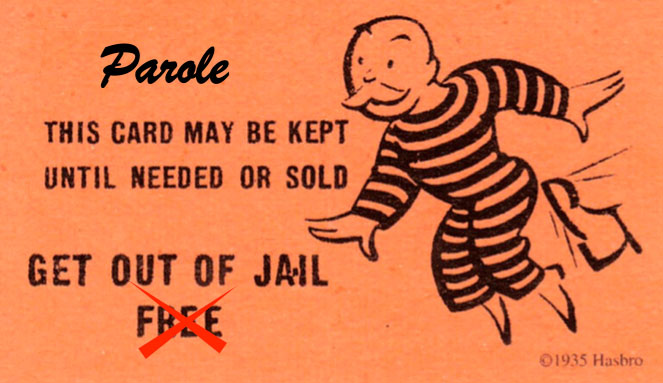
Parole.  Parole is the release from prison, prior to completion of full sentence, under supervised conditions.  The parolee is still considered to be serving his/her prison term.  The granting of parole is determined by a parole board, whose members are typically appointed by the governor of the state.  Currently, sixteen states have abolished parole completely, and four more have abolished it for violent felons.  This leaves 30 – 34 states where parole is still a potential path to early release for inmates.  The preconditions for parole are generally:  good behavior in prison, having achieved sufficient rehabilitation, believed not to be a danger to society, and means of support and a place to live after release.

Parole systems tend to operate in the “shadows” of the justice system.  Parole system activities rarely attract media coverage, unless it involves a very high profile case, like Charles Manson, and even then, the only coverage is “was parole granted or not?”  Parole boards cannot, and do not, determine innocence or guilt.  They absolutely presume guilt, and based upon that, can only determine whether a prisoner is suitable for early release.  I expect that the general public is largely clueless about how parole systems operate.  And as far as I can tell, parole boards are subject to no oversight, and have no accountability.

One of the less recognized aspects of the conditions required for grant of parole has to do with “having achieved sufficient rehabilitation.”  Parole boards commonly require that a prisoner “admit guilt and express remorse” before they will grant parole.  The parole officials in some states will insist that admission of guilt is not a precondition.  California law prohibits “admission of guilt” as a precondition for parole, and New Jersey parole board officials insist that “admission of guilt” is not a precondition for parole to be granted.  But it seems that this is an area where “theory” and “practice” do not necessarily agree.  And as I mentioned above, as far as I can tell, parole boards have no accountability or oversight to ensure that “admission of guilt” is, in fact, not a precondition.

Now, here’s the Catch 22.  An actually innocent, wrongfully convicted person serving a long prison term will, more likely than not, have to admit guilt and express remorse to be granted parole.  Not only does this mean that the innocent person would have to compromise his or her principles, and admit to a crime they did not commit, but in admitting guilt he or she also closes out any options they may have for eventual exoneration.

Continue reading

Fourth of July Celebration Should Embolden Policy Advocates

To all Americans: Happy Fourth of July!

Americans love our Independence Day celebration in summer’s glow, and we don’t lose sight of it’s meaning amidst the holiday fun. A giant waving American flag silhouetted by cracking fireworks and accompanied by favorite patriotic songs punctuate a genuine celebration of a great, unique, and wondrous nation.

Like America itself, our celebration is brash, bold, and colorful. There’s a touch of rebellion in the in-your-face young men and women playing to the camera crew during live coverage of the fireworks, but we know young faces like these have always responded to threats to the freedoms we celebrate today. Continue reading

Shaken Baby Syndrome: Perspectives on a Controversial Diagnosis

The Medill Justice Project at Northwestern University has recently produced a video featuring a number of notable participants in the current SBS debate.  The title is Shaken Baby Syndrome: Perspectives on a Controversial Diagnosis.

You can see that video here.

Thanks to Sue Luttner at OnSBS.com for the notice about this video.

The NAS Report – Aftermath

NASIt’s been four years since the National Academy of Sciences published its landmark study of forensics in the US —  Strengthening Forensic Science in the United States – A Path Forward (commonly known as ‘the NAS report’).  The report was nothing short of a “bombshell,” detailing the substantial scientific deficiencies of essentially all forensic disciplines, with the exception of DNA.  A report by the National Registry of Exonerations, covering 873 wrongful convictions from 1989 to 2012, shows that “false or misleading forensics” was a contributing cause in 24% of those cases.  The NAS report has been previously covered on this blog here and here.

The NAS report was met with “stonewall” and dismissive resistance by the extant forensic community, as well as the National Association of District Attorneys.  This is not surprising, since the members of these groups have much personally invested in the existing (but scientifically invalid) methods of forensics – not the least of which is careers.  The inertia to be overcome in “fixing” forensics is monumental, and for this reason, many of us in the innocence world (this editor included) feared that the NAS report would languish on the bookshelves of the legislators.

I am happy to report, however, that a significant first-step action is now underway at the federal level.  The Justice Department has announced that, in cooperation with the National Institute of Standards and Technology (NIST), it is forming the National Commission on Forensic Science.  The commission will have responsibility for developing guidance concerning the intersections between forensic science and the courtroom and developing policy recommendations, including uniform codes for professional responsibility and requirements for training and certification.

Now, before jubilation sets in, note that the commission’s responsibilities are described as “guidance” and “recommendations.”  The commission has not been endowed with the powers of oversight, enforcement, or establishing standards.  So, clearly, this is just a first step in the journey toward “fixing” forensics.  But as the old proverb says, “A journey of a thousand miles begins with but a single step.”  Nothing is going to happen quickly, but it is a start, and we’ll take it.

Continue reading