Category Archives: United Kingdom

Victor Nealon’s compensation claim turned down by British Ministry of Justice

Victor Nealon’s conviction was overturned by the British Court of Appeal last year, but his compensation claim for 17 years of imprisonment has been turned down by the British Ministry of Justice.

The Guardian reports that the “MoJ told Nealon’s lawyers that the justice secretary, Chris Grayling, had reviewed the information and ‘concluded that your client has not suffered a miscarriage of justice as defined by section 133 of the 1988 Act’.” (read the full Guardian piece here)

“[…] in turning down Mr Nealon’s claim for compensation, the MoJ said the owner of the DNA could not be identified, and added it could not be established that it ‘undoubtedly belonged to the attacker’.” (read the BBC report here)

This case was previously blogged about on this blog here and here.

UK Supreme Court Rule on Access to Evidence Post-Appeal

400px-uk_supreme_court_badgeThe Supreme Court of England and Wales has today ruled in the case of Kevin Nunn, an important ruling concerning the right of a convicted prisoner to access evidence in his case after he has been tried, and lost an appeal. Nunn had applied to the CCRC, claiming to be innocent of the murder of his girlfriend in 2005. Nunn is serving a life sentence for the murder. The CCRC denied a request to DNA test fluids found on the victim’s body. Nunn then applied through the Courts to gain access to the evidence in his case to have it re-tested (at his own expense). The Supreme Court this morning were ruling on whether he had the right to demand this evidence from the police and Crown. The full ruling (of just over 9 minutes) can be watched on YouTube here…. There has been some reporting of this morning’s judgement here…

Supreme Court rejects Kevin Nunn’s evidence release plea

Kevin Nunn: Lifer loses forensic tests fight eight years after murder conviction

There has also been a blog post, expressing unease – particularly as it lays a heavy burden upon the CCRC, who have not been known in the past to always make the right decision with regard to the re-testing of evidence. see here….

Kevin Nunn Case – Supreme Court application dismissed

I have jotted down a very quick summary of the main points of the unanimous judgement (which was mercifully short).

This appeal concerns the extent of disclosure duty AFTER the close of the case and any appeal. Police declined to keep going back to the evidence. Were they allowed to take this stance? Were they under the same duty of disclosure?

Unanimous decision that duty of disclosure does NOT continue unaltered after the trial. Up until end of trial he is presumed innocent. Once convicted he is no longer presumed innocent, but rather is proven guilty.

There remains a public interest in any flaw in his conviction being exposed. No-one ought to remain convicted if the conviction is unsafe. BUT also an important public interest in the finality of the process, for the family, witnesses etc. but also because of resources. There should not be indefinite re-investigations take resources away from new investigations.

There is a duty of disclosure but it is now more limited after trial. Guidelines issued by AG set out rules. Police and prosecutors must provide defendant with anything new if it casts doubt on the safety of the conviction. They must cooperate in further inquiry if the new inquiry has a real prospect of casting doubt. Not speculative reinvestigation simply because the defendant does not accept the decision of the jury.

In England and Wales, and Scotland, there is a specialist body charged with investigating suspected miscarriages of justice (CCRC). The existence of this body is another reason why there is no occasion for the Crown’s duty of disclosure to continue unaltered after conviction. If there is a proper inquiry on a topic where these is a real prospect that the conviction might be shown to be unsafe, the police and prosecution ought not to wait for an approach from the CCRC, but should cooperate in the inquiry.

If DNA retesting had a real prospect of showing that someone else committed the crime, then the continuing duty of disclosure would apply to it. on the facts of this case, it would not. It was known at the trial that the fluid could not have come from the defendant. Retesting in this case would not eliminate the defendant. A request for DNA testing should be dealt with according to the principles set out under the AG Guidelines.


Friday’s Quick Clicks…

Tuesday’s Quick Clicks…

Friday’s Quick Clicks…

Friday’s Quick Clicks…

Monday’s Quick Clicks…

Wednesday’s Quick Clicks…

Fingerprint identification based on flawed assumptions

From The (London) Telegraph

By Sarah Knapton, Science Correspondent

Fingerprint evidence linking criminals to crime scenes has played a fundamental role in convictions in Britain since the first forensic laboratory was set up in Scotland Yard in 1901.

But the basic assumption that everyone has a unique fingerprint from which they can be quickly identified through a computer database is flawed, an expert has claimed.
Mike Silverman, who introduced the first automated fingerprint detection system to the Metropolitan Police, claims that human error, partial prints and false positives mean that fingerprints evidence is not as reliable as is widely believed.

Nobody has yet proved that fingerprints are unique and families can share elements of the same pattern.

And there are other problems, such as scanning fingerprints of the elderly as their skin loses elasticity and in rare conditions leaves some people with smooth, featureless fingertips.

Mr Silverman, who was the Home Office’s first Forensic Science Regulator, said: “Essentially you can’t prove that no two fingerprints are the same. It’s improbable, but so is winning the lottery, and people do that every week.

“No two fingerprints are ever exactly alike in every detail, even two impressions recorded immediately after each other from the same finger.

“It requires an expert examiner to determine whether a print taken from crime scene and one taken from a subject are likely to have originated from the same finger.”
However there are numerous cases in which innocent people have been wrongly singled out by means of fingerprint evidence.

In 2004, Brandon Mayfield, was wrongly linked to the Madrid train bombings by FBI fingerprint experts in the United States.

Shirley McKie, a Scottish police officer, was wrongly accused of having been at a murder scene in 1997 after a print supposedly matching hers was found near the body.
“What both cases clearly demonstrate is that, despite the way fingerprint evidence is portrayed in the media, all comparisons ultimately involve some human element and, as a result, they are vulnerable to human error,” said Mr Silverman who has recently published his memoirs ‘Written in Blood’ and now works as a private forensic consultant.

“And the fingerprint often isn’t perfect, particularly at a crime scene. It might be dirty or smudged. There are all sorts of things that reduce the accuracy.
“I think it is important that juries are aware of this. Too often they see programmes like CSI and that raises their expectations. What you see on CSI or Silent Witness simply doesn’t exist.”

Unlike other forensic fields, such as DNA analysis, which give a statistical probability of a match, fingerprint examiners traditionally testify that the evidence constitutes either a 100 per cent certain match or a 100 per cent exclusion.
Previous studies have shown that that experts do not always make the same judgment on whether a print matches a mark at a crime scene, when presented with the same evidence twice.

A study by Southampton University found that two thirds of experts, who were unknowingly given the same sets of prints twice, came to a different conclusion on the second occasion.

It was Scottish surgeon Dr Henry Faulds who first discovered that fingerprints might be useful for identification purposes. He published a paper in the journal Nature in 1880 and offered the idea to the Met Police, but at the time the force was not interested.
Undeterred, Dr Faulds approached Charles Darwin who passed the concept on to his cousin Francis Galton. Galton published a book on the forensic science of fingerprints and claimed that the chance of two people having the same prints was about one in 64 million.
On the back of his work and later research Fingerprint Bureau was founded at Scotland Yard in 1901 and eventually the national Forensic Science Service (FSS) was founded with provided services to all UK forces.

However in 2010, the service was closed and forensic work is now carried out by the private sector, although the Met Police recently re-established its own lab.
Mr Silverman, whose opinion was sought on the murder cases of Damilola Taylor and Rachel Nickel, believes the closure of the FSS could lead to miscarriages of justice in the future.

“Police forces have to slash their budgets and the easy thing not to spend money on is forensic services,” he said.

“You have to ask yourself what price you put on justice.”

Thursday’s Quick Clicks…

Police lying: an endemic international problem?

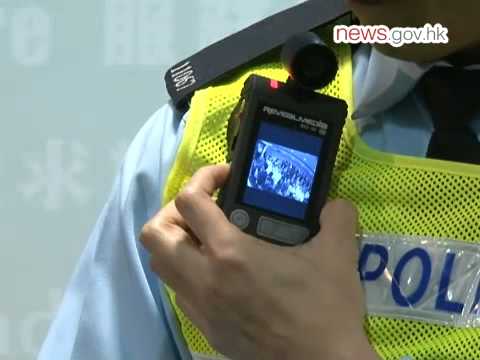
It is starting to feel in the UK like ‘another day, another story of police lies’. In what feels like just a few months we have had media coverage of (to mention just a few) scandals where, for example, police have been caught falsifying reports of an altercation that they ‘witnessed’ when they were not present (see Plebgate scandal...). We have the ongoing revelations over police lies and their coercion of others to lie in the Hillsborough disaster cover-up (see Hillsborough inquiry...). It is suspected that these tactics were honed during the Miner’s Strike when striking miners were ‘fitted up’ (see Miners Strike….). Such tactics clearly have continued for years with many undercover police officers lies leading to convictions  (see undercover policing....) as well as the recent revelation that high profile victim Stephen Lawrence’s family were put under police surveillance during the inquiries into the police failures after Stephen’s murder (to try and discredit the family and their campaign for justice). This all comes on top of the almost run-of-the-mill stories of police ‘collusion’ with one another after fatal police shootings, with the introduction of body-worn cameras to enable the police to be ‘more transparent’ about fatal shootings. In fact, the introduction of police body-worn cameras has been posited as a boon for police as it will cut down on false allegations from the public. However, is it perhaps more likely that police body-worn cameras may serve to make the police more honest? Will they be able to lie with camera footage of the real altercation readily available?

0In Omagh, Northern Ireland, the introduction of CCTV cameras in the town has led to the uncovering of police lies leading to miscarriages of justice – with solicitors claiming that miscarriages may be ‘endemic’: increasingly, CCTC footage is being shown to demonstrate that the police account of events is unreliable – even untrue (see story here…) Of course this has not been a good week either for police south of the border in Ireland, having been found to have been illicitly tape recording phone calls made to police stations (see here…). The other side of the world, in New Zealand, they are calling police lies and false evidence which have led to convictions as ‘failings’ and ‘sloppy police work’ (see here…Police failures led to wrongful conviction).

We have all known for years that there are ‘rotten apples’ and that wrongful convictions have often had police misrepresentations, if not outright corruption and lying, at their heart. However, the question must surely now be asked: is lying among the police an endemic international problem? If so, what can be done about it? These questions are already beginning to be murmured in corners of the UK, I think it is now time to get such questions out in the open. These are challenging times for the police, and if we are not to lose trust in them completely, I believe some hard questions must be asked and answers demanded.


Monday’s Quick Clicks…

Tuesday’s Quick Clicks…

Monday’s Quick Clicks…

  • Birmingham Six member Paddy Hill has claimed that police sent secret letters promising immunity to two of the men responsible for the 1974 pub bombings.  The miscarriage of justice campaigner, who received a life sentence for the terrorist atrocity but was released from prison and cleared after his conviction was quashed, believes two of the pub bombers were told they would not face prosecution for IRA crimes.  The 68-year-old, who now lives in Scotland, said he has been told IRA members previously admitted that five people carried out the bombings at the Mulberry Bush and the Tavern in the Town.  He said that two of the five have since died, two were promised immunity – but a fifth bomber has not received any assurances that he could escape prosecution.  Nobody has ever been brought to justice for the mass murder of 21 innocent people on the streets of Birmingham on November 21, 1974, which left 182 injured. Full article here
  • Nebraska exoneree Troy Hess has compensation claim rejected by Nebraska Supreme Court
  • In Canada, a judge has allowed former Vancouver real estate developer Tarsem Singh Gill to withdraw his guilty pleas in connection with a $40-million mortgage fraud.  In a ruling Friday, B.C. Supreme Court Justice Terry Schultes said that the possibility of a “miscarriage of justice” loomed large if he denied Gill’s application to withdraw his pleas to two counts of fraud.  Full story here….
  • Exoneree Edgar Coker discusses life on the sex offender registry.
  • Article about the Uriah Courtney exoneration in California

Friday’s Quick Clicks…

click

UK Parliamentary debate on definition of a ‘miscarriage of justice’

There have been recent moves by the government in the UK, to severely restrict access to compensation for victims of miscarriages of justice. There has rightly, been (muted) outrage about the proposed requirement that the person claiming compensation had to prove their ‘innocence’ to be eligible for compensation. (see post here…)

Unknown-2

“A statutory definition was first attempted by the government as part of the Anti-social Behaviour, Crime and Policing Bill, which originally stated a miscarriage of justice has occurred if new evidence must “show beyond reasonable doubt that the person was innocent of the offence”. When the bill progressed to the House of Lords, peers voted to defeat the government and change the wording so that the new evidence “shows conclusively that the evidence against the person at trial is so undermined that no conviction could possibly be based on it”.

The debate on the amendment and the definition of a ‘miscarriage of justice’ is available here….  For those of us involved in miscarriages of justice in the UK, this is essential viewing – and those interested in how authorities approach these issues. It is a long debate, but very very interesting! There has been limited reporting so far of the debate – but you can see one article here…

Wrongly jailed in UK may not get redress

Wednesday’s Quick Clicks…

click
  • The unintended consequences of compensating the exonerated
  • Canada’s system for reviewing alleged wrongful convictions “failing miserably”
  • West Virginia University Law Innocence Project pushes interrogation recording bill
  •  What does a record number of U.S. exonerations in 2013 tell us?
  • ESPN video on the wrongful accusation against Richard Jewel for the 1996 Atlanta Olympics bombing
  • Ex-cop exonerated after 20 years in prison awarded $9 million
  • Mexican lawyers turned filmmakers win civil suit against them brought by family of victim in wrongful conviction case they exposed through the documentary Presumed Guilty
  • Planned changes in UK’s compensation laws for exonerees will make it nearly impossible to obtain compensation after wrongful conviction
  • New Zealand Innocence Project re-ignites debate about the need for a wrongful convictions commission
  • Idaho Innocence Project client Sarah Pearce may soon be released—settlement discussions ongoing

Tuesday’s Quick Clicks…

click

Friday’s Quick Clicks…

click

Wednesday’s Quick Clicks…

click
  • Innocence Project of South Africa now officially a member of the Innocence Network
  • In the UK, new law could limit compensation to exonerees who can conclusively prove innocence
  • Nearly 350 years after his execution, a french jew is exonerated and declared a martyr
  • Almost 70 years after a 14-year-old African American was executed in South Carolina following the slaying of two young white girls, family members asked a local judge on Tuesday to order a retrial and correct what they called a long-ago miscarriage of justice.  Continue reading….