Thursday’s Quick Clicks…

Clinton-era bill makes it harder to reverse wrongful convictions, writer says

Critics of how the 1994 crime bill spurred mass incarceration have overlooked another Clinton era bill that had an equally damaging effect on the U.S. criminal justice system, Liliana Segura writes in The Intercept.

Segura says the politically motivated Antiterrorism and Effective Death Penalty Act of 1996, or AEDPA, merits debate because of how it “has shut the courthouse door on prisoners trying to prove they were wrongfully convicted.”

“Americans are mostly unaware of this legacy, even as we know more than ever about wrongful convictions,” she says. You can read her article here.

You can read about the Wrongly Convicted Group’s petition urging the AEDPA’s reform here.


Lack of understanding, overconfidence lead to investigative errors, researcher says

Why do police make the same false assumptions and continue to use outdated investigative techniques even after the mounting number of exonerations proves them wrong?

British researchers Julia Shaw and Chloe Chaplin conducted a survey to find out. They discovered that police officers are just as ill-informed on important policing issues as everyone else but “exhibited higher confidence in their judgements than the general public, making them more confidently wrong.” You can read Shaw’s examination of this problem here.


Quattrone Center issues national report on best practices for Conviction Review Units

The University of Pennsylvania Law School has issued the following press release announcing the publication of Conviction Review Units: A National Perspective a report put together by it’s Quattrone Center for the Fair Administration of Justice…

The Quattrone Center for the Fair Administration of Justice at the University of Pennsylvania Law School has released the first national review of Conviction Review Units (CRUs, sometimes called Conviction Integrity Units), a growing trend in criminal justice reform. The publication,“Conviction Review Units: A National Perspective,” provides recommendations for best practices by CRUs.

Conviction Review Units are units within a district attorney’s office that exist to review plausible claims made by a convicted inmate that he or she is actually innocent of a crime. Americans have grown more aware of the number of individuals across the country who have been convicted of crimes they did not commit. As of April 18, 2016, the National Registry of Exonerations has identified 1,773 exonerees in the United States.

The recommendations in the Quattrone Center’s report will help jurisdictions with existing CRUs learn from their peers on ways to improve the operations of the Unit; help jurisdictions interested in starting a CRU consider the best structure, staffing, policies, and procedures for the Unit; and help communities advocate for high-quality CRUs that provide measurable and impactful reforms.

There are now over 25 CRUs across the United States, making them an increasingly important part of the criminal justice system’s response errors in the administration of justice. More than half of these CRUs have been created in the last two years, and because each unit has been an independent creation, there has been no guidance on how a Unit can best be constructed and operated to achieve its goals.

“It is encouraging that so many jurisdictions have declared a public commitment to conviction integrity,” said John Hollway, executive director of the Quattrone Center. “More and more DAs are accepting their role as ministers of justice. Beyond enforcing the laws, they are acknowledging the potential for human errors in the work they do, and using CRUs as part of a constant and ongoing commitment to accuracy in determinations of guilt and innocence. Our report hopes to enhance the work of these important organizations, and improve confidence in the criminal justice system.”

The report recommends that Conviction Review Units emphasize independence, flexibility, and transparency in their daily operations.

CRUs should ensure their independence by reporting directly to the District Attorney, installing leaders with firsthand prosecutorial and criminal defense experience who are respected within the jurisdiction’s criminal justice community, and including objective review participants from outside the DA’s office.

In addition, CRUs should have flexibility to deal with a wide variety of claims of innocence, providing procedural support for fact-based case reviews, reviewing each petition on its factual merits, and allowing for resubmission of a petition whenever additional credible evidence is brought to light.

Finally, CRUs should operate transparently, sharing information about its policies and procedures and decision-making criteria with the public and reporting in a regular and timely fashion on decisions made in cases that are granted review, as well as cases that may not be suitable for review.

“While I don’t believe that any CRU has embraced all of the best practices listed in the Quattrone Center’s report, it’s important that we as prosecutors share our experiences with conviction review and learn from each other, and this report provides unique insights into what is useful, and what may be difficult, in launching and running a CRU,” said Brooklyn District Attorney Ken Thompson. Under District Attorney Thompson’s leadership, Brooklyn’s CRU has vacated the convictions of 19 people since Thompson took office in 2014.

“Good faith CRUs that operate with independence, flexibility, and transparency,” the report states, “can build bridges across what is too often a bitter ideological divide between prosecutors and defense counsel, and between law enforcement and the communities they serve, and restore the community’s faith that each part of the system is operating to ensure that perpetrators of crime — and only perpetrators of crime — are held accountable for their acts in ways that preserve the constitutional freedoms of all.”

The Quattrone Center is a national research and policy hub created to catalyze long term structural improvements to the U.S. criminal justice system. The center takes an interdisciplinary, data-driven, scientific approach to identifying and analyzing the most crucial problems in the justice system, and proposing solutions that improve its fairness for the long term benefit of society. Its research and programs are independent and unbiased, engaging all parties — academia, judiciary, law enforcement, defense and prosecution, legislative, forensic and social scientists, media, and other participants — required to effect substantial change for the better.

Monday’s Quick Clicks…

Wednesday’s Quick Clicks…

Monday’s Quick Clicks…

Jack McCullough Exoneration – The Continuing Update

We’ve been posting here about the exoneration of Jack McCullough in the 1957 abduction and murder of then 7-year-old Maria Ridulph in Sycamore, IL. The current DeKalb County prosecutor, Richard Schmack, felt ethically compelled to review the case, and determined that evidence proved Jack could not be guilty.  Consequently, he filed a motion with the court to dismiss charges with prejudice; meaning that Jack could not be charged and tried for the crime again. For previous posts, please see here, here, here, and here.

Judge William Brady did dismiss the charges, but declined to do so “with prejudice.” This now leaves Jack vulnerable to being re-charged and re-tried. See the latest CNN story here.

And so grinds the justice system. And now with the decision by the judge not to dismiss with prejudice, there is a petition going around Sycamore, IL calling for the appointment of a “special prosecutor.” Despite facts, logic, and reason, people will just not give up their biases, beliefs, and prejudices. And just as an aside, prosecutor Schmack can probably ‘kiss goodbye’ to any chance of being re-elected – all because he did the right thing. Such is politics, and such is the justice system. And we can only speculate about how politics in this ultra-high-profile case may have influenced the decision of the judge.


Wrongly Convicted: Arson or Accident?

Originally posted  to the Huffington Post Crime Blog on Feb 1, 2016

by Jessica S. Henry 

In December 2015, four men convicted of murder and arson in two completely unrelated cases were exonerated.

In Virginia, in 1989, Davey Reedy was convicted of deliberately setting his house on fire. His two children died in the fire. At his trial for murder and arson, fire science experts testified about evidence that they said proved that Reedy committed arson.

In New York, in 1981, Raymond Mora, Amaury Villalobos, and William Vasquez were convicted of deliberately setting a fire that caused the 1980 death of a young mother and her five children. At their trials, experts testified that they fire was intentionally set.

When modern fire science experts finally reviewed the cases, they conclusively agreed that the fire “science” used to convict all four men was invalid. Faulty. Incorrect.

And that the so-called arson was not arson.

Small comfort for each of the men who had been convicted. Reedy served over twenty years in prison for killing his two children. Villalobos and Vasquez, who went blind in prison due to untreated glaucoma, each served over thirty years in prison; Mora was only 8 years into his life sentence when he died in prison in 1989.

Each man lost decades in prison, serving time for crimes they did not commit.

For crimes that were not in fact crimes.

And these recent exonerations are just a sampling of cases involving convictions based on bad fire science.

Take David Lee Gavitt, who spent 26 years in a Michigan prison for the 1985 killing of his wife and baby girls in a blaze that was erroneously labeled arson. Decades later, the fire was ruled an accident; Gavitt was exonerated in 2014.

Cameron Todd Willingham was not so lucky. Willingham was executed in Texas for the arson-murder of his three children. Scientists agree now that the “evidence” of arson cited by fire experts at the time was just junk science. He died proclaiming his innocence.

Advances in fire science have revealed that factors once thought to prove a fire was intentionally started also are present when fires are the accidental. This has prompted the re-examination of some older arson convictions from around the country.

And that is good news.

Because while it is unspeakably awful to be wrongly convicted of a crime, it’s got to be that much worse to be wrongly convicted of a tragic event that was never a crime in the first place.

Follow Jessica S. Henry on Twitter: http://www.twitter.com/jhenryjustice


“The Culture of Conviction” (aka – The Culture of Prosecutors .. or .. The Culture of ‘Winning’)

In our recent post about the exoneration of Jack McCullough (see here), we made special note of the fact that a prosecution is not supposed to be just about ‘winning’ for the prosecutor. It’s supposed to be about seeing that true justice is done. A new article by Radley Balko in the Washington Post is an excellent follow-on to that post.

Please see the recent piece by Radley Balko in the Washington Post here:

https://www.washingtonpost.com/news/the-watch/wp/2016/04/18/the-culture-of-conviction/


Monday’s Quick Clicks…

Colorado Prosecutors Practice ‘Spin’ and Deceit

I have long been dismayed by the state of ethics within the prosecutorial community. Here is just one more example of why. This one stretches the limits of credibility to the point of being sadly laughable.

Between 2010 and 2014, prosecutors in Colorado conducted what was called the “Justice Review Project,” which was federally funded for $2.6 million. The objective was to review over 5,000 convictions to determine if DNA testing could prove any of the defendants actually innocent.

The “Project” consisted entirely of prosecutorial staff, with the exception of the “Review Board,” which did have representation from the legal defense community. However, there was only one case that ever came before the review board, and that case was imposed upon the “Project” by outside defense counsel, which had already paid for independent DNA testing. This one case was also the only one out of over 5,000 that the “Project” determined was suitable for DNA testing. The “Project’s” selection criteria had been set up to allow off-hand disqualification of essentially every case.

The prosecutors then went on to claim (boast) that the “Project” proved that the Colorado justice system is infallible, and that Colorado prosecutors “get it right the first time” all the time. Not only that, but they also had the unmitigated gall to state in their final report on the “Project” that the one case in which DNA was tested (which they had forced on them), and proved innocence, was their “crowning achievement.”

Now the prosecutors are refusing to release (hiding) records of the “Project.” So, the Exoneration Project is suing in Denver District Court to have the records released.

See the Colorado Independent story here.


More on the Jack McCullough Exoneration

Jack

Photo: Chicago Sun-Times

See our recent post on this case here.

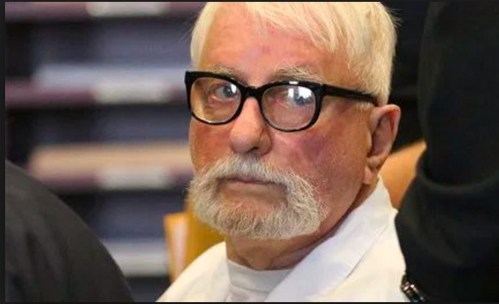
An Illinois judge has freed Jack McCullough from prison, and ordered a new trial. Jack was convicted in 2012 of the 1957 abduction and murder of 7-year-old Maria Ridulph in Sycamore, IL. Jack was a neighbor of the Ridulph’s at the time. This used to be called the coldest case ever “solved.” And I guess we can now call it an “exoneration,” since the prosecutor has indicated his intention to have the charges against Jack dismissed with prejudice; meaning Jack can never be brought back into court for this crime again.

CNN just published an article that includes an interview with Jack. This very insightful comment from that interview:

“People have to realize, it’s not about winning. It’s about justice. And this brave man — I probably shouldn’t talk about him at all — but he put his career on the line for me,” McCullough said. He thought a moment and carefully chose the words that followed:

“It isn’t about winning a case, it’s about justice. And God bless the man who stood up for justice. He’s probably going to pay a penalty for that because to everyone else it’s about winning. But it’s not about winning. It’s about doing the right thing.”

Let me add the editorial note that this is where politically ambitious, politically elected prosecutors get it wrong. It’s not supposed to be about “winning.” It’s supposed to be about seeing that justice is done. But … winning is much more important for your political record than is providing true justice. The prosecutor in this case is a rare and marvelous exception to that rule.

See the CNN story with the interview here.

The Oldest Cold Case Ever “Solved” is Now Still Unsolved. Jack McCullough’s Conviction Overturned.

We have reported on the case of Jack McCullough here before.  Please see:  https://wrongfulconvictionsblog.org/2016/03/25/illinois-prosecutor-says-man-convicted-in-oldest-cold-case-is-innocent/

An Illinois judge has recently overturned Jack’s conviction in the 1957 abduction and murder of 7-year-old Maria Ridulph in Sycamore, IL.

See the CNN story here.


Wednesday’s Quick Clicks…

Another Indigenous Miscarriage of Justice for Australia?

It is a well established fact that indigenous populations across the world are more likely to be ill treated by their justice system. Australia has for decades acknowledged the systemic problems that their Aboriginal people face when coming into contact with the legal system. Abuses, deaths in custody, wrongful convictions, all are more likely to have Indigenous people as victims. Now it seems there is yet another miscarriage of justice to be overturned by the appeal courts.

The brutal beating of a young white man, Josh Warneke on a highway in 2010 led to the arrest of Gene Gibson. From the remote Kiwirrkurra Aboriginal Community, Gibson pleaded guilty to manslaughter, after murder charges were downgraded after the video recordings of his police interrogation were ruled inadmissible when they had been conducted without an interpreter or lawyer present. Indeed the entire police investigation  was the subject of an official inquiry, which led to 11 police officers facing action over their conduct. Gibson was sentenced to 7 and a half years in prison. Gibson’s lawyers are now seeking an appeal after more evidence was uncovered. Read more here….

Justice concerns spark Warneke killer appeal.

National Registry of Exonerations Launches Mobile App

The National Registry of Exonerations has just launched a free mobile app that notifies users each time an exoneration is added to the registry. It also provides mobile users with access to the exoneration counter and recently posted exoneration stories. The app is available for both iOS (iphone, iPad, etc.) and Android devices, just search “exonerations” in the App store and  Google Play.

Yet more woeful compensation news from the UK

In the past week, there have been two painful reminders that it is now almost impossible for people who have suffered a miscarriage of justice in the UK to obtain compensation. In two separate cases, in England and in Northern Ireland, men who have served years in prison before having their convictions overturned have been refused compensation by the State. These men have now had these decisions confirmed by the high courts.

In Northern Ireland Gerard Magee lost an appeal against being denied compensation. Convicted of involvement with an IRA bombing in 1988 and sentenced to 20 years, the European Court of Human Rights ruled in 2000 that his right to a fair trial had been breached after his admissions to police were made without seeing a solicitor for two days. The Northern Ireland courts subsequently overturned his conviction (he had served 10 years before being released under the Good Friday agreement). The courts have now ruled that because there were no ‘new facts’ in the case, his case does not merit compensation. To add insult to injury, he is now facing paying the legal costs of the Dept of Justice as well as his own. During the ruling Mr Justice Deeny said: “It seems clear to us that the Department of Justice was correct in arriving at the conclusion that there was no new or newly discovered fact… The Department was therefore entitled to refuse the application for compensation without going on to consider whether, in any event, there could be said to be a miscarriage of justice where the defendant had subsequently admitted to the truth of the statements which he had made admitting the offences.” Read more here…. Man wrongly jailed for IRA bombing loses appeal over compensation

Meanwhile, in England and Wales, Victor Nealon and Sam Hallam (read more about their cases here…. and here….  and in various earlier posts regarding UK compensation on these blog pages)  have lost their appeal against the Ministry of Justice decision to not award them compensation for the years they spent behind bars for crimes they did not commit. After the passing of an Act in 2014, exonerees in the UK now essentially have to prove their complete innocence in order to be compensated. Simply having their conviction ruled ‘unsafe’ and overturned by the appeal courts is insufficient. For an insight into the case and the shocking state of the law in this area, read a post on the appeal and the law on compensation by Victor Nealon’s solicitor Mark Newby here… ‘Without recompense for the wrongfully convicted, the integrity of our justice system is in question’

One can only hope that their fight will now continue to the Supreme Court, who may be persuaded that the laws governing compensation for miscarriages of justice in the UK not only breaches our human rights obligations, but brings shame upon our justice system internationally.


2016 Innocence Network Conference San Antonio

Over 500 hundred people attended this year’s conference in San Antonio, making it the most attended conference in the history of the Innocence Network. Below are a couple highlights from the conference.

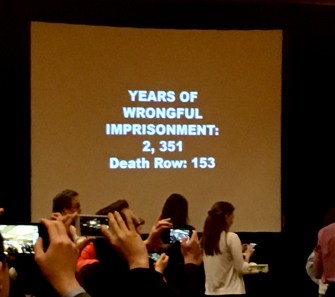
2,351 Years of Wrongful Imprisonment: 2016 Exoneree Induction Dinner

IMG_2113

Of the 500 attendees,  150 were exonerees who together served 2, 351 years in prison and 153 years on death row for crimes they did not commit. This year’s induction ceremony saw the addition of 31 newly exonerated men and women, including Marvin Roberts, George Frese, Kevin Pease, and Eugene Vent, better known as the “Fairbanks Four,” whose release in 2015 after 18 years of wrongful incarceration gave The Alaska Innocence Project its first victory.

The remaining 27 inductees came from all over the country representing years of dedication and hard work by attorneys and students from several projects in the network:

Expansion of International Innocence Movement Continues…

IMG_2194

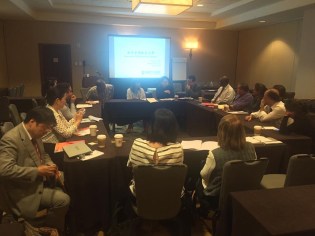
Members of the International Innocence Network meet in San Antonio to discuss expansion

Representatives from Canada, U.S., Israel, Argentina, Switzerland, Italy, Taiwan, Thailand and Japan met in San Antonio to discuss developments in the International Innocence Movement and the creation of Innocence Networks on other continents.

IMG_2193

The 2017 Innocence Network conference is scheduled to be held in San Diego. See you all there!


Catch-22, Texas-style

How can you use DNA to prove your innocence when there is no DNA because there was no crime? That’s the dilemma Fran and Dan Keller, whose 1990s convictions in an absurd satanic ritual abuse case in Texas were overturned a few years ago. Despite that, the prosecutor in the case refuses to clear the couple without DNA evidence.

“That, of course, is absurd and impossible — and distressing to the Kellers and their supporters,” Jordan Smith reports here. “There is no physical evidence, like DNA, linking the alleged crime to anyone else, because, simply, there was no crime.”