Yearly Archives: 2013

2013 Innocence Network Report Released…

Download here….

Network press release:

A report released today by the Innocence Networkreveals that 29 people in the US and 2 people in the Netherlands were exonerated for crimes they didn’t commit by Innocence Network members in the past year. This is the largest number of exonerations that the Network has secured in the five years that it has reported its exonerations.

The report, “Innocence Network Exonerations 2013,” details each of this year’s exonerations. DNA contributed to the exonerations of 14 people. The other 17 were exonerated by other means. The 31 people exonerated served a combined 451 years behind bars (and an average of 14.5 years each). Two men served more than 3 decades. Three women were exonerated this year, also a record for the Network.

“Although it is painful to read about these tragic injustices, this year’s report does signal that the innocence movement that began two decades ago is gradually making progress in improving the system,” said Keith Findley, President of the Innocence Network and Co-Director of the Wisconsin Innocence Project. “There were two people who were exonerated by new laws that were passed to make it easier to overturn wrongful convictions. We also saw how new technology is helping to correct injustice.”

Debra Brown of Utah, who served 17 years for a murder she didn’t commit, was the first person to be exonerated through a 2008 law passed by the Utah Legislature that makes it easier to overturn a conviction where there is no DNA evidence. Andrew Johnson, who wrongly served 23 years for rape, was the first person in Wyoming to be exonerated based on post-conviction DNA testing that was possible because of a law that the state passed in 2008. With the passage of a law in Oklahoma in May, all 50 states now have laws that guarantee access to DNA testing to overturn wrongful convictions.

The Knoops Innocence Project in the Netherlands saw its first exonerations this year. Nozai Thomas and Andy Melaan, who were convicted of murder and served 5 and 8 years respectively, were exonerated based on the testimony of a digital forensics expert who produced evidence that Thomas was at his desk downloading music at the time of the murder and that Meelan had used his cell phone on the other side of the island when the crime occurred.

“The report also serves as a stark reminder of the flaws that plague the system,” added Findley. “Misidentification continues to be the leading contributor to wrongful convictions, followed closely by false confessions and bad forensic practices. But this year we also saw numerous instances of police and prosecutorial misconduct and the tragic results of relying on incentivized informants.”

In addition to helping overturn wrongful convictions, Innocence Network organizations worked to bring substantive reform to the criminal justice system. Last year, Network member organizations lobbied statehouse across the country for reforms to improve identification procedures, reduce false confessions and compensate the wrongly convicted.

The Innocence Network is composed of 63 member organizations— 52 members in the US and 11 members in other countries. Each organization operates independently but they coordinate to share information and expertise.

Innocence Network members range from successful clinics that have operated for many years at some of the most respected universities to full-fledged nonprofit organizations with a solid staff and base of funding to small clinics at law schools that are still setting up a process to review cases. You can learn more about the Innocence Network or find an organization near you at www.innocencenetwork.org.

Holiday Quick Clicks…

  • clickIn Wisconsin, the governor says he’ll issue no “innocence pardons” because it is too hard to pick and choose who deserves attention and who doesn’t
  • Why is a Texas prosecutor still practicing law after having been found to have committed egregious misconduct to wrongfully convict Anthony Graves?
  • Philly police to implement sweeping interrogation reforms January 1, 2014
  • Virginia man Jonathan Montgomery says exoneration is “best Christmas present ever.
  • Details about the Little Rascals Daycare case in North Carolina, another of the alleged daycare hysteria wrongful conviction cases
  • Nora Wall, wrongfully convicted Irish nun, in talks with Irish government about compensation
  • Connecticut federal judge finds that Scott Lewis was wrongfully convicted as a result of Brady violations

Exoneree, LaMonte Armstrong, Receives Full Pardon

LaMonte Armstrong was exonerated in North Carolina in 2012 for a murder he did not commit. He wrongfully spent 17 years in prison. His exoneration came largely as a result of the efforts of professors Theresa Newman and Jim Coleman and the Duke Law Wrongful Convictions Clinic.

Yesterday, LaMonte received a call from NC Governor Pat McCrory telling him that he had been granted a full pardon. This will allow LaMonte to seek up to $750,000 from the state of North Carolina for his wrongful imprisonment.

Read the full Raleigh News & Observer story here. And you can see the WFMY TV news story here.

Wrongfully Convicted Man Released After 10 Years in Washington State

Congratulations to Brandon Olebar and to the Innocence Project Northwest!

From the Seattle Times:

December 23, 2013 at 11:28 AM

Wrongly convicted King County man released after 10 years in prison

Posted by Mike Carter

A man who spent 10 years in prison for robbery and burglary has been released after the Innocence Project Northwest persuaded King County prosecutors to re-examine the man’s conviction, which was based solely on eyewitness testimony.

The case of Brandon Olebar came to the attention of the Innocence Project Northwest (IPNW), based out of the clinical law program at the University of Washington Law School, in 2011. The project said two students “developed a body of evidence” that showed Olebar was not among the assailants who in February 2003 broke into the home of Olebar’s sister’s boyfriend, pistol-whipped and beat him unconscious and then stuffed him in a closet. The victim said as many as eight attackers beat him for more than 10 minutes, during which time he recognized Olebar’s sister as one of them. He told police the attackers had “feather” facial tattoos.

Two days after the beating, the victim identified Brandon Olebar from a photograph montage. Despite the fact that he does not have a facial tattoo and that he had an alibi, Olebar was charged with burglary and robbery, convicted by a King County jury solely on the basis of eyewitness testimony, and sentenced to 16 1/2 years in prison.

IPNW Director Jacqueline McMurtrie said two law students, Nikki Carsley and Kathleen Klineall, tracked down and interviewed three of the assailants, who signed sworn statements admitting their involvement and denying that Brandon Olebar was present. Working with IPN attorney Fernanda Torres, they presented the new evidence to Mark Larson, the chief criminal deputy prosecutor to King County Prosecutor Dan Satterberg. Continue reading

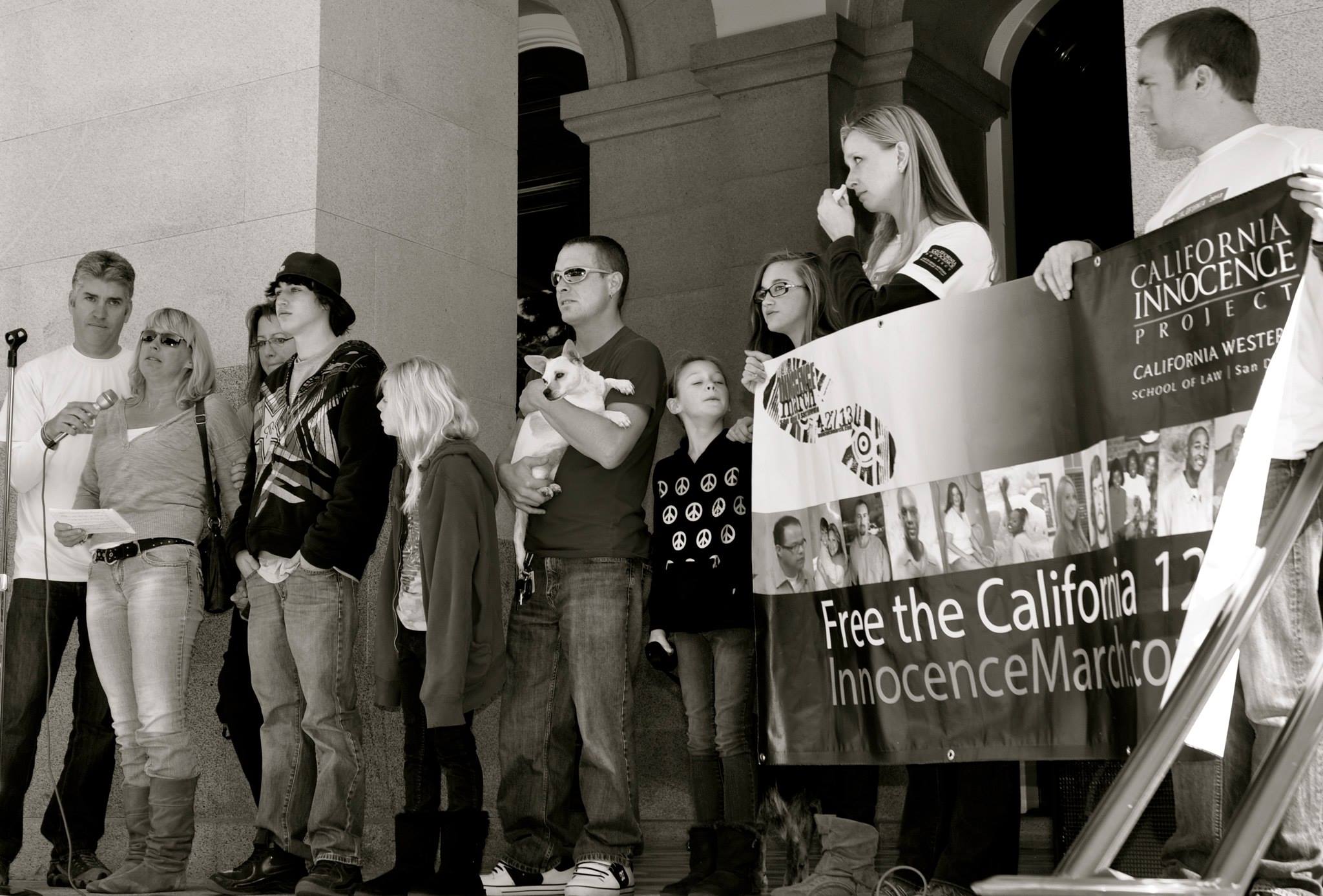
Innocence March Returns to Sacramento to Ask Governor Brown for 12 Christmas Presents

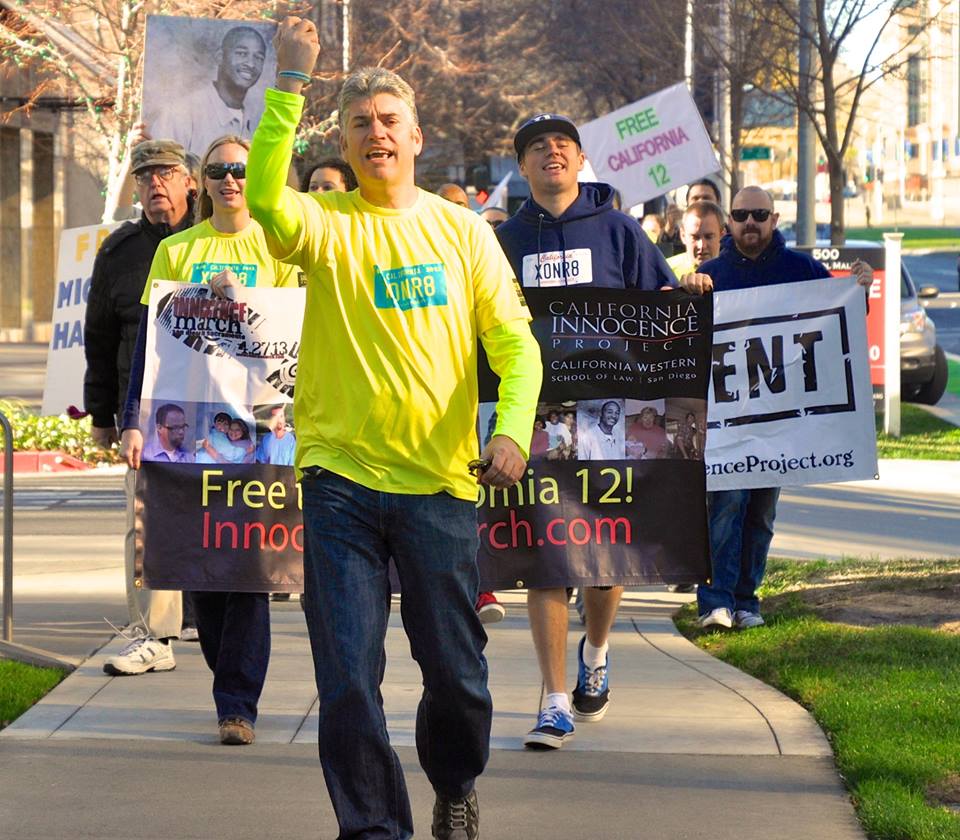
Justin Brooks leading the march.

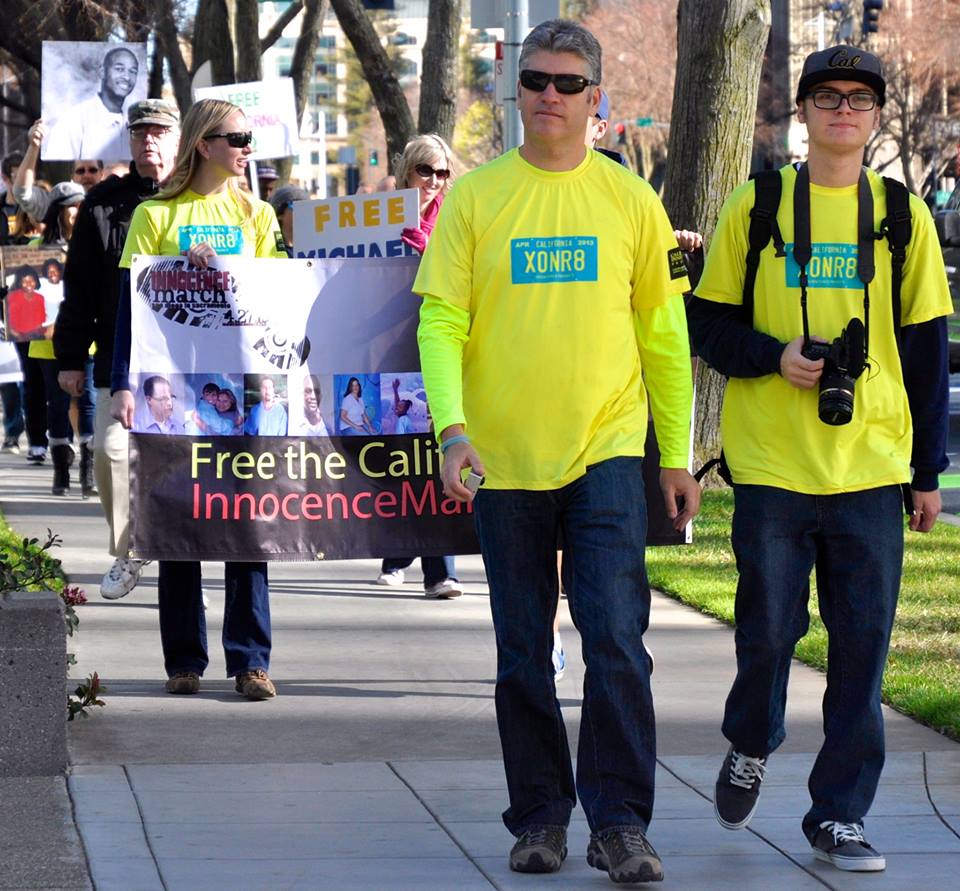
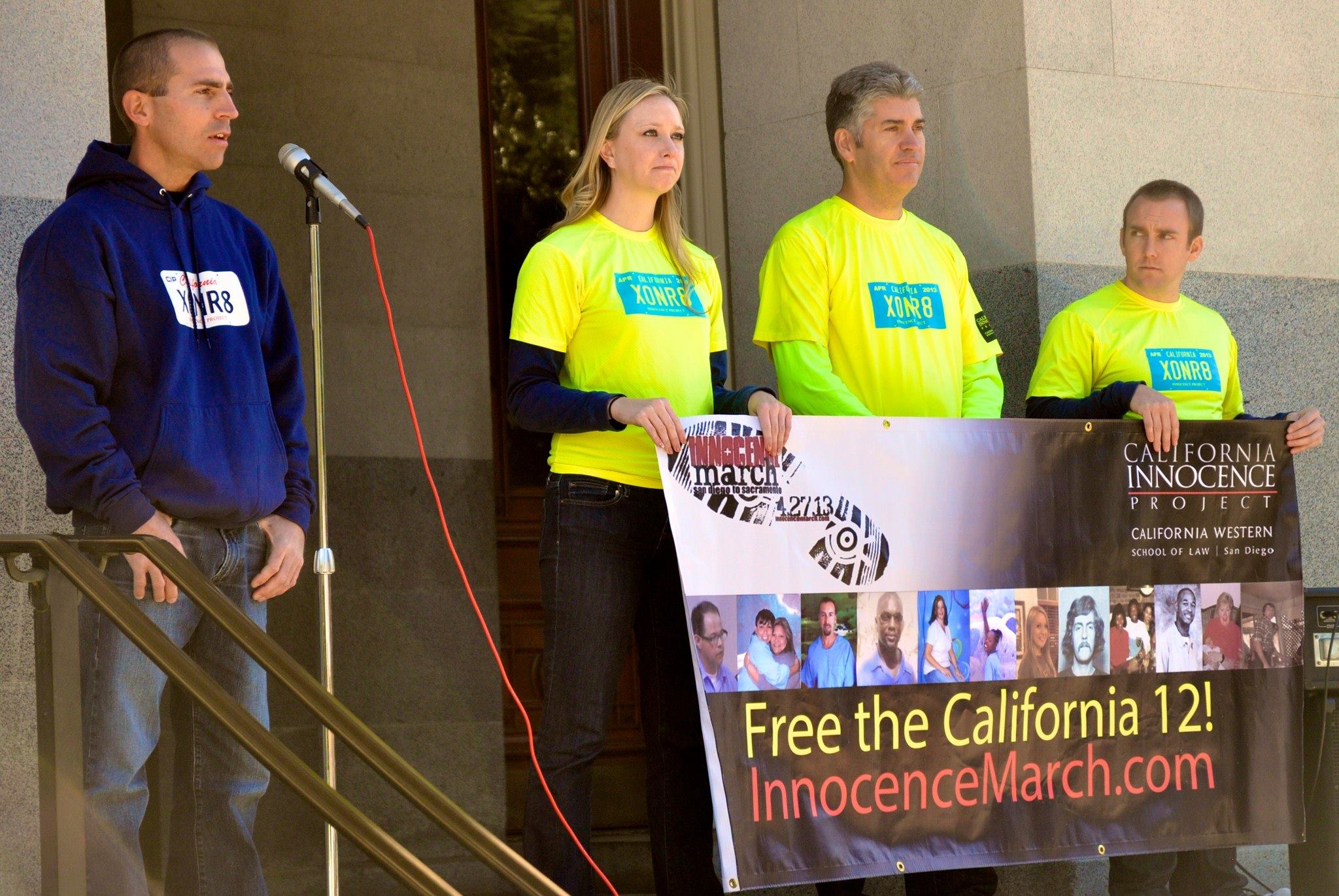
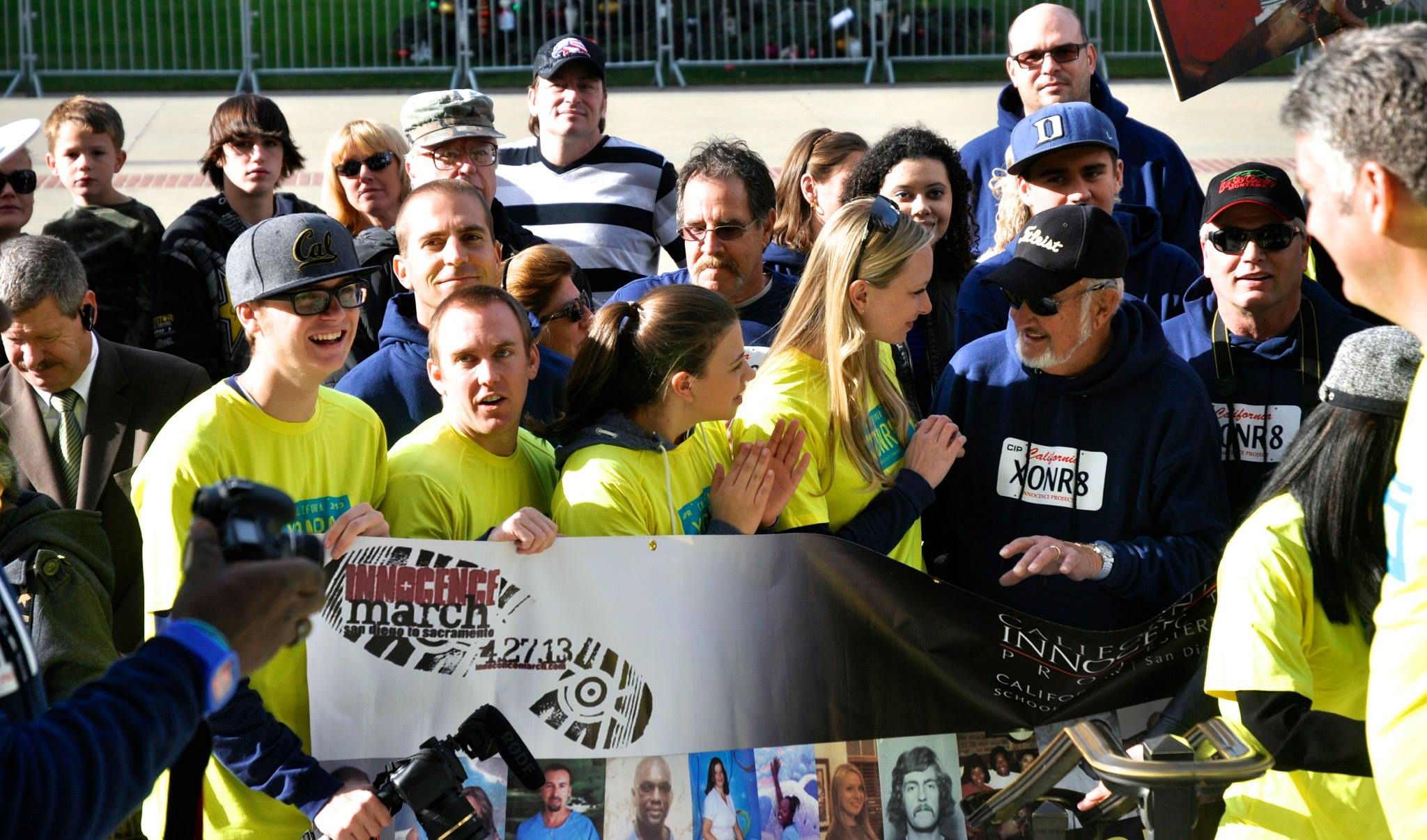
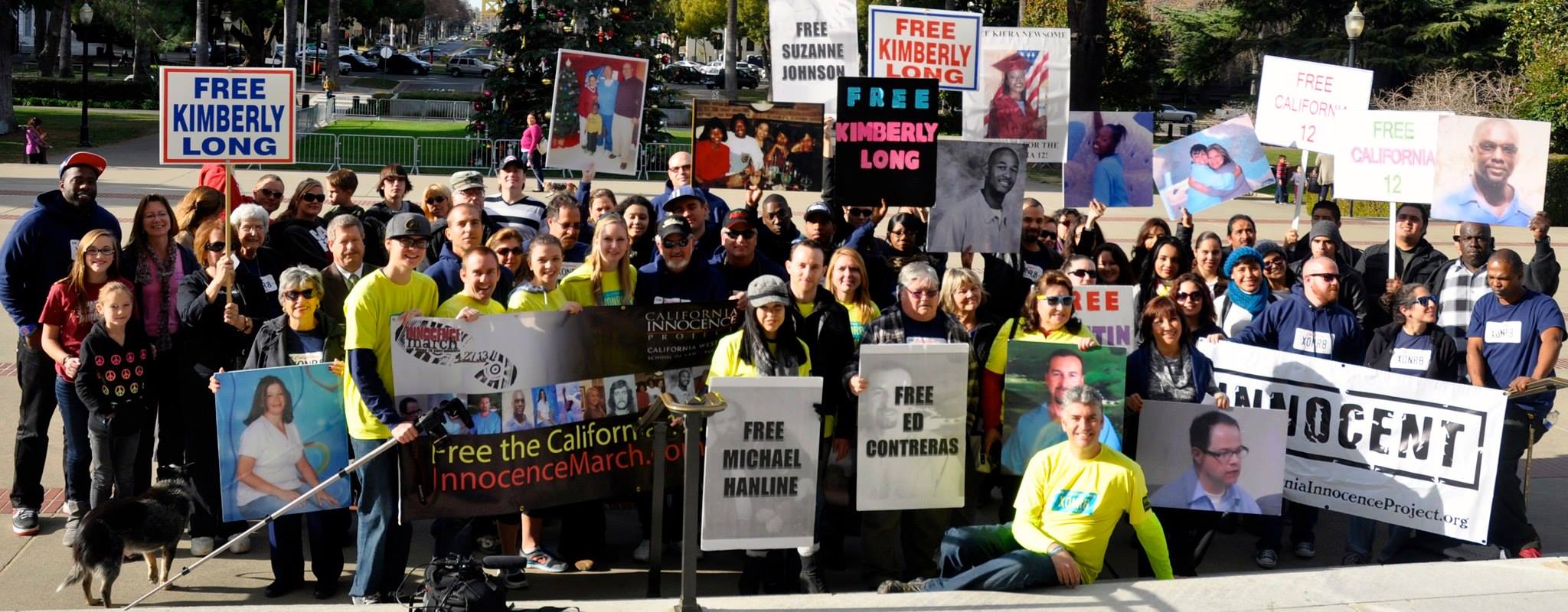
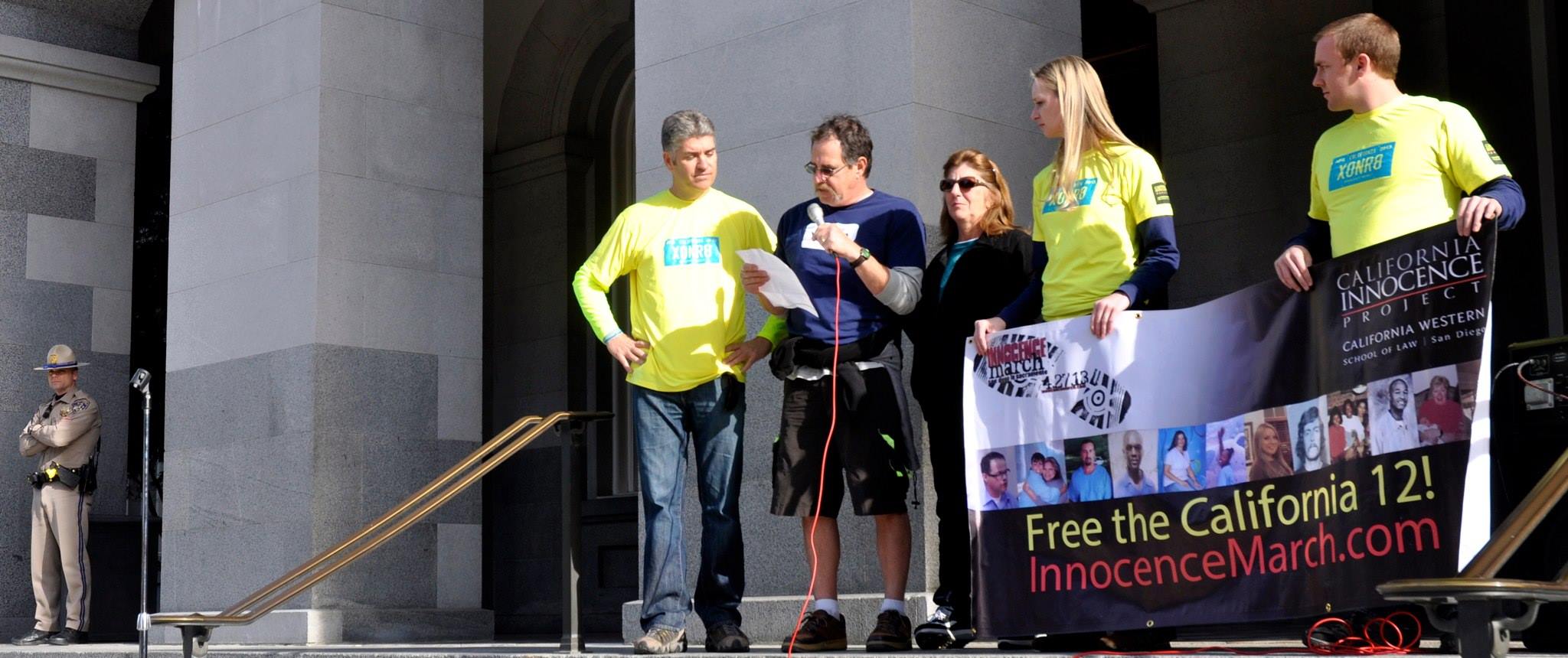
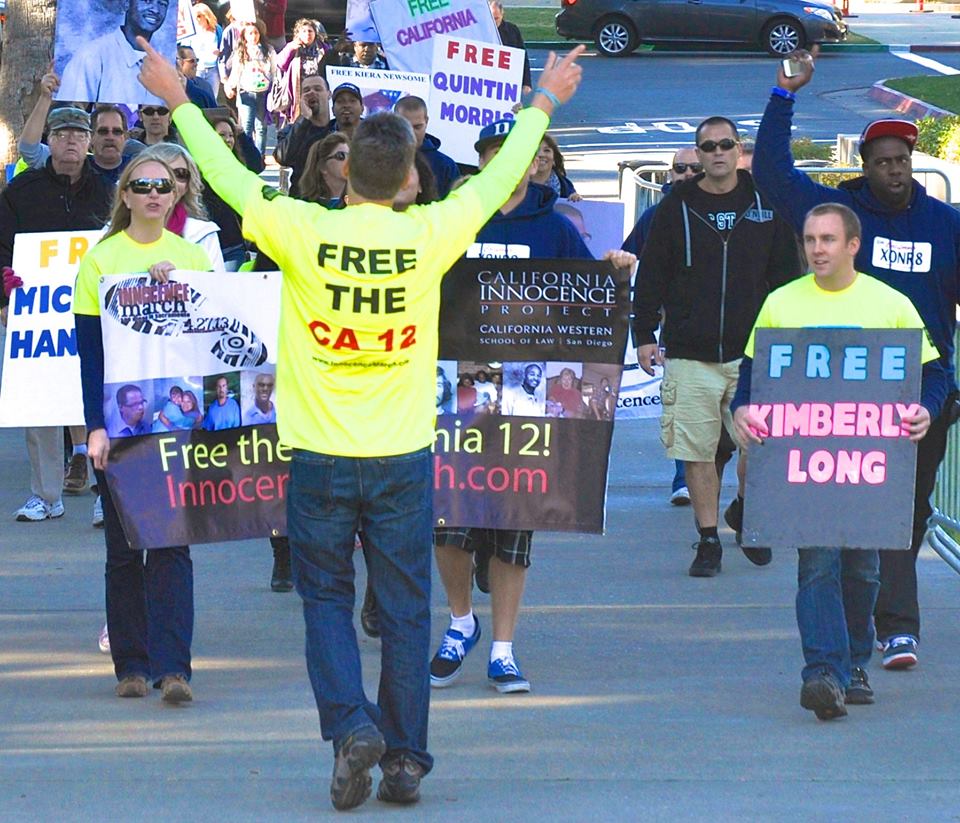
On December 20th, 6 months after the 712 mile Innocence March, families and friends of the California 12 returned to Sacramento to once again ask for clemency and remind the Governor that their loved ones still sit behind bars this holiday season. As many of you know, this time of year is the toughest to be in prison, especially when you are innocent. The Governor has been known to grant “Christmas Clemencies.” Please check out the stories of the California 12 at www.innocencemarch.com and email the governor at http://bit.ly/JVtxrd to respectfully ask him to grant clemency to the 12 so they can be home with their families this Christmas. The simple act of sending this email might be the best present you give this year! Please ask your friends to do the same! Happy Holidays!

Justin Brooks and Brian Banks

Justin Brooks and Brian Banks


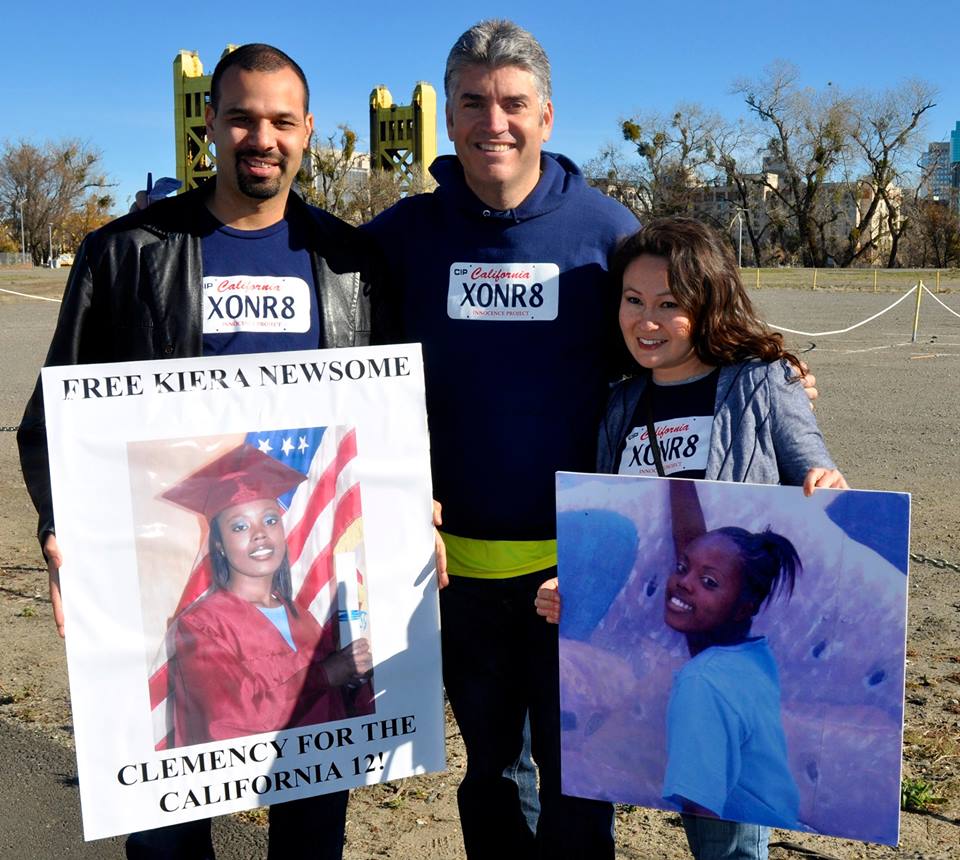
Justin Brooks and supporters of Keira Newsome.

Justin Brooks and supporters of Keira Newsome.


Exoneree Uriah Courtney with CIP Attorneys Alissa Bjerkhoel, Justin Brooks, and Michael Semanchik

Exoneree Uriah Courtney with CIP Attorneys Alissa Bjerkhoel, Justin Brooks, and Michael Semanchik


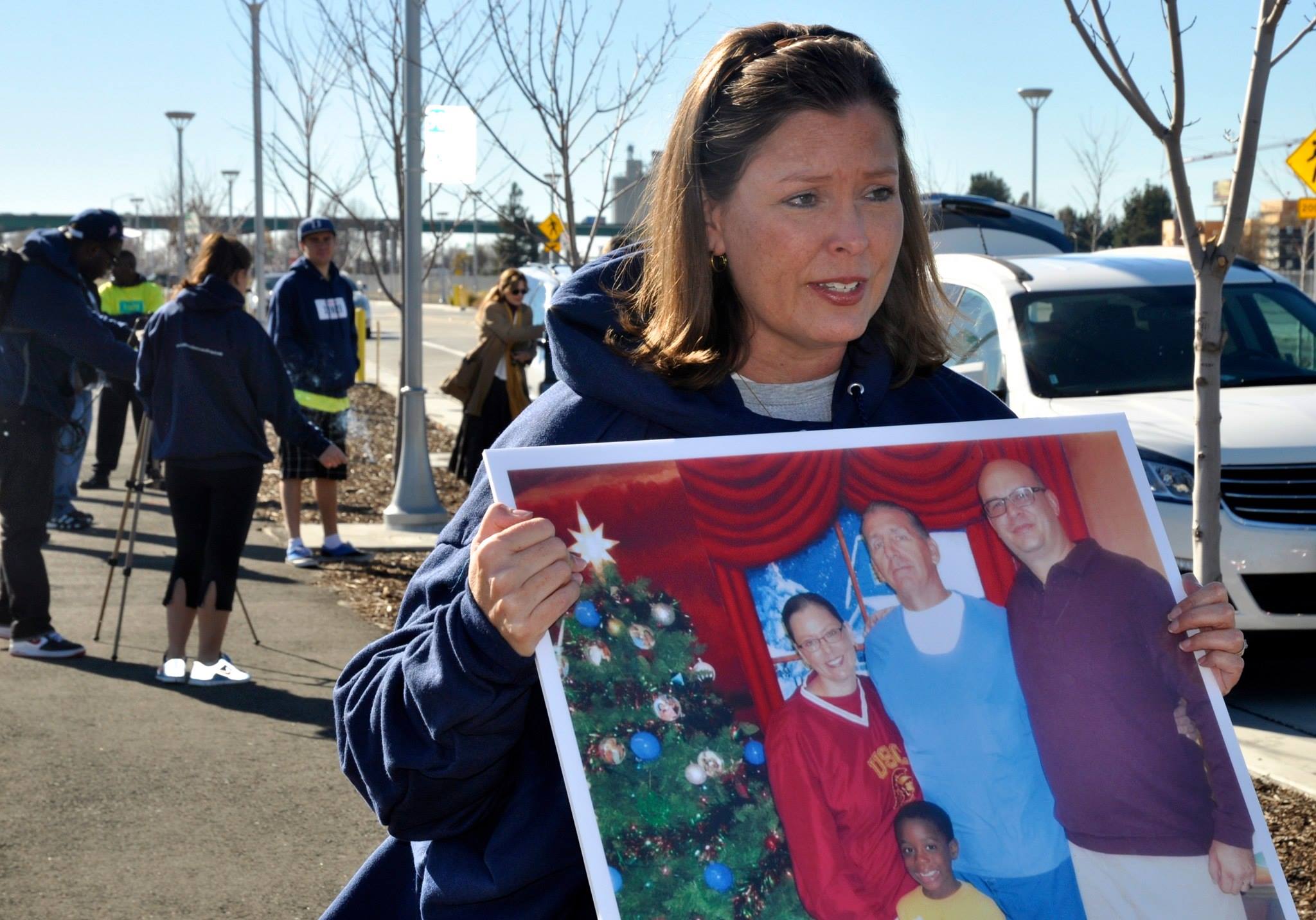
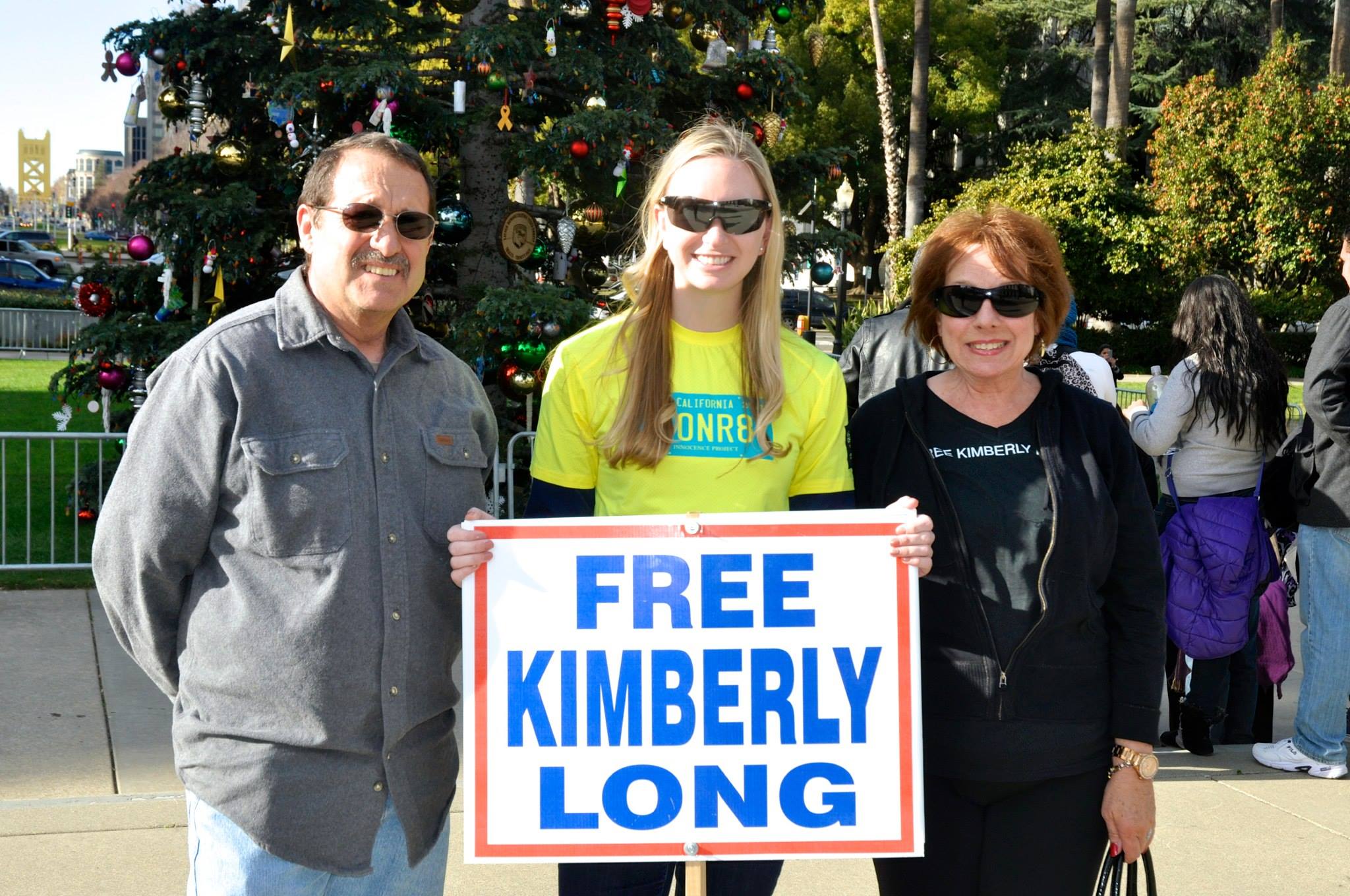
Alissa Bjerkhoel with the parents of Kimberly Long

Alissa Bjerkhoel with the parents of Kimberly Long

Parents of Uriah Courtney, CIP Exoneree

Parents of Uriah Courtney, CIP Exoneree

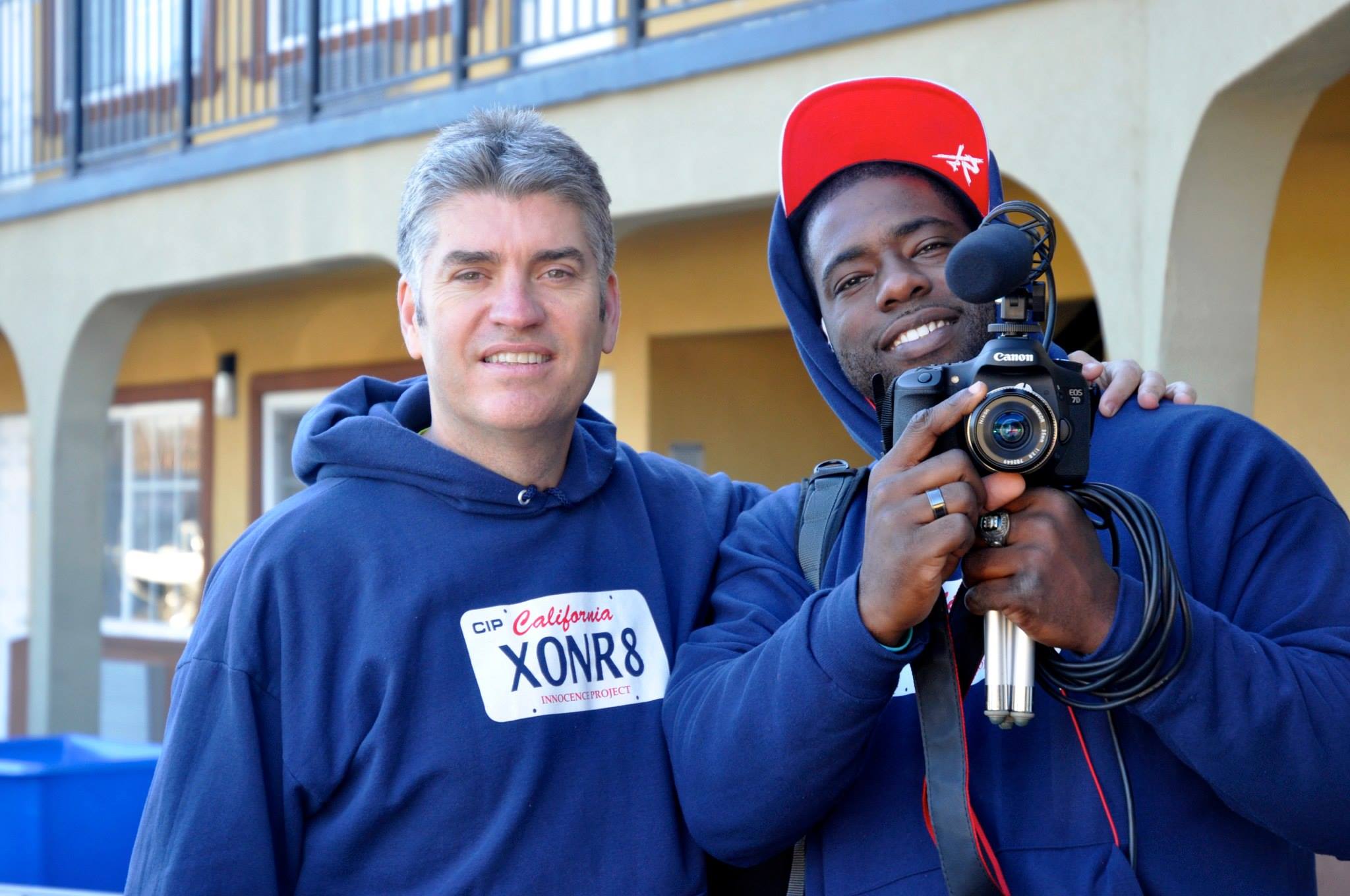
CIP Attorneys Justin Brooks, Alissa Bjerkhoel, and Michael Semanchik.  All marched the 712 miles for the Caliofornia 12.

CIP Attorneys Justin Brooks, Alissa Bjerkhoel, and Michael Semanchik. All marched the 712 miles for the Caliofornia 12.

Exoneree Uriah Courtney with CIP Attorneys Alissa Bjerkhoel, Justin Brooks, and Michael Semanchik

Exoneree Uriah Courtney with CIP Attorneys Alissa Bjerkhoel, Justin Brooks, and Michael Semanchik


Follow me on Twitter: @JustinoBrooks

Professor Justin Brooks
Director, California Innocence Project
California Western School of Law
225 Cedar Street
San Diego, CA 92101

Chinese saga of wrongful conviction finally ends after 16 years

A Chinese man who was sentenced to death and spent 12 years in prison for the rape and murder of a child was awarded US$160,000 compensation after his conviction was overturned, a court said. Li Huailiang stood trial seven times and was given three different sentences for the rape and murder of a 13-year-old girl in Pingdingshan in August 2001, Xinhua reported.

The farmer was condemned to death, then death with a two-year reprieve – a sentence normally commuted to life in prison – and after that, 15 years in jail.
Each time, the verdict was subsequently overturned “due to lack of evidence,’’ but he was not formally acquitted until April this year, when he was released from prison, Xinhua said. The Intermediate People’s Court in Pingdingshan, in central Henan, granted him 780,000 yuan (US$130,000) for the loss of “personal freedom’’ for 4,282 days spent in prison and a further 200,000 yuan for “psychological damage,’’ a statement posted on its website said.
Li had claimed 3.79 million yuan in total, the statement added.

Death Penalty Information Center’s 2013 Annual Report: Use of Death Penalty Declining

Today, December 19, 2013, the Death Penalty Information Center (DPIC) released its annual report on the latest developments in capital punishment in the United States. Read the full report, “The Death Penalty in 2013: Year End Report” (here).

According to Richard Dieter, DPIC’s Executive Director:

“Twenty years ago, use of the death penalty was increasing. Now it is declining by almost every measure. The recurrent problems of the death penalty have made its application rare, isolated, and often delayed for decades. More states will likely reconsider the wisdom of retaining this expensive and ineffectual practice.”

Highlights of the 2013 Death Penalty Information Center annual report include: Continue reading

Video

An Epidemic of ‘Brady’ Violations (Prosecutorial Misconduct)

Posted on December 18, 2013 by Phil Locke

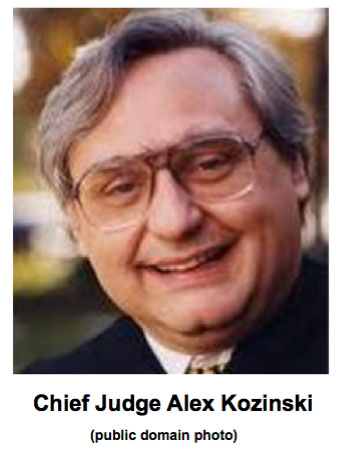
An epidemic of Brady violations - those are not my words. They are the words of Alex Kozinski, Chief Judge of the US 9th Circuit Court of Appeals in a recent decision in the case of US vs. Olsen.

Kozinski

If you don’t know what a ‘Brady’ violation is — it’s when the prosecution fails to turn over exculpatory evidence to the defense. The US Supreme Court ruled in the case of Brady vs. Maryland (1963) that suppression of evidence by the prosecution violates the defendant’s due process rights. Note, however, that the ruling does not specify sanctions for prosecutors who fail to comply with Brady disclosure. It only stipulates that the defendant’s due process rights have been violated, thus making a Brady violation potential grounds for post-conviction relief.

Read the Huff Post story about Judge Kozinski’s opinion here.

This quote from judge Kozinski’s opinion: “There is an epidemic of Brady violations abroad in the land. Only judges can put a stop to it.” Kozinski’s statement is interesting, because it is recognizing that there is nothing in the law that punishes (sanctions) prosecutors for this unethical behavior. They are supposedly subject to sanction from their bar association, but guess what - this just about never happens.

Continue reading

Sweden’s Most Infamous Wrongful Conviction Case…

From the Local:

It is probably Sweden’s worst miscarriage of justice. On Monday, officials decided that Thomas Quick will continue to receive mental treatment but with less restrictions. The Local contributor David Lindén explains how a self-confessed serial killer went on to be cleared of all eight murders.

The National Board of Forensic Medicine (Rättsmedicinalverket) has decided that Quick, who has reverted to his original name Sture Bergwall, will keep receiving treatment but not in a mental hospital. But in order to understand why he ended up standing trial for eight murders that he later said he did not commit, we need a short recap.

From 1992, the already incarcerated Bergwall began to confess to a series of unsolved murders that he, after being in therapy at Säter Mental Hospital - part of Sweden’s correctional services - remembered committing. At the time, he was taking plenty of benzodiazepines, a strong form of psychoactive drugs, to which he said he became addicted. He realized that he would get his hands on more of the drug if he confessed to further atrocities during the therapy sessions. Not all the cases were “strong” enough to go to trial. There was a score of confessions, but some would never make it to the courtroom. Bergwall, who had adopted the name Thomas Quick - a combination of Thomas Blomgren whom he “killed” in 1964 and the maiden name of his mother - was in the end convicted of eight murders.

One detail apparently failed to be examined. Bergwall could not have killed Blomgren. Bergwall was attending his Christian confirmation at the time of Blomgren’s murder. This fact, in combination with Bergwall’s drug abuse, could have illuminated the weakness of the entire case. But it would land on Bergwall’s shoulders to clear his name, not on the justice system’s.

After he quit his medication, Bergwall withdrew all his confessions. Swedish prosecutors cannot prosecute without enough evidence to reasonably secure a verdict. Without the confessions, the cases crumbled and the charges were withdrawn. This summer, prosecutors dropped the eighth and final murder charge. Bergwall has since been fighting to get a new assessment of his mental state, and said he hopes to walk free. The saga took one of its last twists this week, as the Forensic Medicine Board allowed him to receive therapy in a more open form.

For an outsider, it can seem rather strange that a junkie addicted to pills could be convicted of eight murders with the help of “hidden memories,” only accessible by therapy. There was no shortage of critics during the time the confessions played out either. Retired criminology professor, TV personality, and Sweden’s in-house crime sage Leif G.W. Persson bluntly questioned Bergwall’s supposed modus operandi, saying it would be impossible for one man “to go around like a bloody slaughter machine all over Scandinavia.”

Another critic was psychologist Ulf Åsgård, who had helped the Swedish police catch a real serial killer - “Laser Man” John Ausonius who terrorized Stockholm in 1991-1992 by shooting foreign-born Swedes with a laser-sight rifle.

Yet Persson and Åsgård were ignored.

So how could the Sture Bergwall/Thomas Quick scandal happen?

Let us speculate that there was something in the air in Sweden that made society ready for such a grizzly tale. The shelves of book stores were being filled with foreign gore (this was before the proper birth of the domestic Nordic Noir genre) - Brett Easton Ellis’ novel American Psycho, with its yuppie freak Patrick Bateman, had recently been translated to Swedish (Bergwall would later cite American Psycho as “inspiration”). Cinema-goers, meanwhile, were gripping their velvet-clad seats as Jodi Foster and Anthony Hopkins faced off in Silence of the Lambs. Reality offered its ready examples too. In 1994, British police arrested serial killer couple Fred and Rosemary West - a case widely reported on in Swedish media.

Put simply, Sweden in the early 1990s was ready for a serial killer of its own. In Thomas Quick, there was enough material to fill several horror novels: childhood abuse, necrophilia, and cannibalism. The media lapped it up.

The Swedes were also rather blue at the time - suffering a financial crisis that was considerably worse than the one that would come in 2008. So in that sense, a “real” serial killer provided a form of psychological relief, and excitement. I would argue that the Swedes were almost envious of other countries’ psychos, and wanted their own.

You cannot, however, use culture and sentiment as an excuse for what happened. What was unfurling would become one of the worst legal scandals in Swedish history. Police officers, therapists, and lawyers misinterpreted, ignored and cheated their way through the evidence-gathering, blatantly putting aside the bits that spoke against Bergwall’s own version of events. The media also played an important part in the massive hoodwink, because reporters took all the “official” truths for granted. Few were the journalists who questioned the “perfect story.”

An important question is who will pay, if at all, for allowing this to happen?

Sweden’s Justice Minister Beatrice Ask has appointed “The Quick Commission”, headed by political science professor Daniel Tarschys. He is a former member of the Riksdag and a professor of political science - he is thus not a lawyer. This could mean that that case is investigated from a political and not a legal point of view. It is unlikely that the commission will yield true power to change any structural weakness it finds to lay behind the many ill-made decisions that saw Bergwall wrongfully convicted of eight murders.

David Lindén is a PhD student in history at King’s College London and is currently a liberal political commentator for Borås Tidning (BT). Previously he was a visiting scholar at University of North Carolina. Follow him on Twitter here.


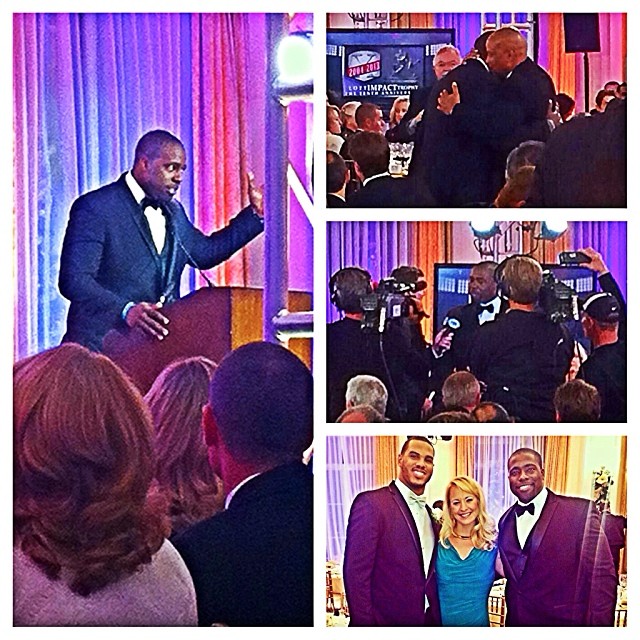
Exoneree Brian Banks Receives Honorary Lott IMPACT Trophy

This past week, a tuxedo-clad Brian Banks walked on a red carpet, along with his amazingly supportive mother, to receive an honor he could not have imagined when he was sitting in prison for 5 years, wrongfully convicted of rape. When it was his turn to speak, a room full of some of the best current and past college and pro football players gave him a standing ovation. Then, they listened to Brian give an inspirational speech, committing to a life helping others who have been wrongfully convicted as he held the Lott IMPACT Trophy ®. , an honor given to defensive football players with both incredible personal character as well as athletic performance.

lott trophy

Prior winners have included David Pollack, Demeco Ryans, Daymeion Hughes, Glenn Dorsey, James Laurinaitis, Jerry Hughes, J.J. Watt, Luke Kuechly, Manti Te’o, and Anthony Barr, all great athletes, but none with a story as compelling and heartbreaking as Brian’s.

Before he was falsely accused of rape, Brian was one of the most highly recruited high school football players in the country. Before his senior year, he had already committed to play for Pete Carroll at USC, a path most likely to lead directly to the NFL. Instead, the false accusation led to five years in prison and five on parole as a convicted sex offender.

After his exoneration, Brian fought to get back his dream of playing in the NFL. I personally watched him work out day after day, determined to prove himself worthy to each team that gave him a tryout, making the most of every chance he had to get back to the game he loved. That dream was fulfilled this past Fall as he played throughout the preseason for the Atlanta Falcons.

The trophy Brian received this past week was named in honor of Ronnie Lott, a two time All-American USC football player and College Football Hall of Fame inductee. Ronnie won four Super Bowl rings with the San Francisco 49ers, took ten trips to the Pro Bowl, and earned a spot in the Pro Football Hall of Fame. He was known for his character both on and off the field.

Who knows what path Brian’s life would have taken had he not been wrongfully convicted. He might hold NFL records and titles like Ronnie, instead of holding the trophy named after him. Regardless, the past is the past and Brian’s future is bright. He is on a path with a higher calling beyond individual glory. He has already helped in two exonerations beyond his own and he will continue to help others whose lives have been taken away by our justice system.

Follow me on Twitter: @JustinoBrooks

Professor Justin Brooks
Director, California Innocence Project
California Western School of Law
225 Cedar Street
San Diego, CA 92101
jpb@cwsl.edu

For more information please see: http://lottimpacttrophy.org/about-the-trophy/, http://californiainnocenceproject.org/read-their-stories/brian-banks

Are There Geographic “Hotspots” for Shaking Babies? Shaken Baby Syndrome.

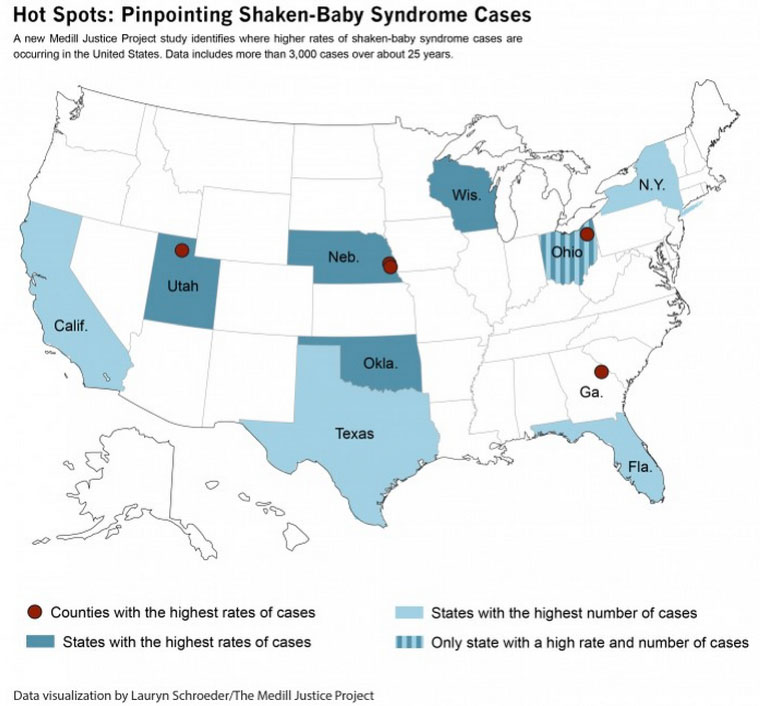
The Medill Justice Project, in its now year-long effort to build a database of SBS cases, has published a portion of that data relating to the geographic occurrence of SBS. The report identifies several SBS geographic “hotspots.”

Medill Map

What could cause this? As Innocence Project co-founder Barry Scheck has jokingly suggested, maybe it’s “in the water.” But this data does NOT support a theory that certain localities have higher percentages of more violent people who are more likely to shake their babies. It DOES, however, support a theory that certain localities have higher concentrations of aggressive and dogmatic prosecutors and child abuse pediatricians* who ARE more likely to (wrongfully) accuse and prosecute someone for shaking their baby. And given this, it raises serious questions with respect to the concept of “equal justice.” What I mean by this is - if your baby experiences a short fall, and you take it to the hospital, and the baby presents with any or all of the triad symptoms, you are much more likely to go to prison if you live in Summit County, Ohio than if you live in Kane County, Illinois - even though you did NOT shake your baby.

You can read the Medill report here.

Sue Luttner has posted an article looking at this geography lesson on her blog OnSBS. She has done a little more research on how rate of occurrence relates to geography. You can read it here.

* (More about child abuse pediatricians in a future post.)

Victor Nealon’s conviction overturned by UK Court of Appeal after his spending 17 years in jail

Carole McCartney previously blogged about Victor Nealon’s case here and the set-backs he and his lawyer had encountered trying to get his conviction referred to the UK Court of Appeal via the UK Criminal Cases Review Commission (CCRC), the latter which had repeatedly refused Nealon’s request for DNA testing. Subsequently, independent DNA testing commissioned by Nealon’s lawyer found new DNA evidence belonging to another unknown man on the victim’s clothes. The Court of Appeal finally heard Nealon’s case today and ordered his release. Nealon has spent 17 years in jail. Read the Guardian’s write-up of the case here.

Illinois Inmate Released After 30 Years in Another Coerced Confession Case

Breaking update: According to The National Registry of Exonerations (here), the Cook County State’s Attorney’s Office dismissed the charges against Stanley Wrice today, Thursday, Dec. 12, 2013. Wrice is the most recent of 1,260 exonerations since 1989 now documented on the Registry.

Cook County Judge Richard Walsh has ordered a new trial for Stanley Wrice, 59, who was released from prison on Wednesday after serving 30 years for a 1982 sexual assault he has always claimed he did not commit. He is one of many inmates, mostly black, who said that they were tortured by Chicago police working under former Lt. Jon Burge.

According to an AP report filed by Don Babwin and M. Spencer Green (here), Wrice, who was sentenced to 100 years in prison, claimed officers beat him in the groin and face with a flashlight and a 20-inch piece of rubber to force his Continue reading

Prosecutorial Misconduct “Double Feature”

Thanks to E. Everett Bartlett of the Center for Prosecutor Integrity for passing this along.

Here is a link to an Anderson Cooper 360 web page that contains two video’s.

The first tells the story of New Orleans exoneree John Thompson, and how the prosecutor withheld critical evidence in his case that eventually freed him from death row.

The second is a “debate” between a criminal defense lawyer and a former federal prosecutor about the issue of prosecutorial immunity.

Man Paroled after 18 Years in Prison; Another Brooklyn Murder Conviction Unravels

Sundhe Moses, 37, was granted parole on October 31, 2013, without meeting the usual requirements. Moses didn’t acknowledge guilt, take responsibility, or express regret for the crime for which he was convicted and imprisoned for the past 18 years. Instead, he said he was innocent. While it’s very unusual for a claim of innocence to be an effective parole argument, the evidence supporting his claim was convincing enough for the parole board to grant Moses’ release. Continue reading

Indian man freed by Delhi High Court after 14 years in prison

Bhupender Singh walked free on Friday after the Delhi High Court acquitted him of the 1999 murder of the wife of his former employer. Singh had been convicted in 2006, after fingerprints were found in his employers house. The fingerprint evidence was highly contentious, and never dealt with satisfactorily, but the High Court has now decided that Singh can go free, because there was not sufficient evidence for the conviction.

Read more here… HC acquits man of murder 14 yrs after he was jailed

Monday’s Quick Clicks…

click

When is a Lawyer not a Lawyer?

We’ve written before about how bad defense lawyers are responsible for as many wrongful convictions as anything else (see the section on “bad lawyers” in Why I Think the US Justice System is Broken - and Why It’s Not Getting Fixed). But what about on the prosecution side? The thought of legally unqualified prosecution attorneys - and this includes staff - is scary.

So this brings us to the question - when is a lawyer not a lawyer? Apparently, the answer may be - when they practice in Arizona. Get this — it’s actually not illegal to practice law in Arizona without a license.

Karyl Krug is a highly regarded Texas attorney who was transplanted to Arizona. What she encountered in the Arizona legal system was cause for profound dismay. She tells her own story here.

CNN Premier of Michael Morton Documentary Rescheduled

News coverage following the passing of Nelson Mandela has prompted the rescheduling of “An Unreal Dream,” the true account of Michael Morton’s wrongful conviction of the murder of his wife, Christine; his 25 years of wrongful incarceration; and his exoneration. The documentary will premier instead this Sunday evening, Dec. 8, at 9:00 p.m. ET/PT on CNN TV. See details here.

As part of its focus on the Morton case, CNN reports on five cases identified as “high-profile exonerations” (here). In addition to the case of Michael Morton, the article highlights the exonerations of Brian Banks, Douglas Prade, Clarence Harrison, and James Bain.

Misbehaving Prosecutors Almost Always Get Off Scotfree

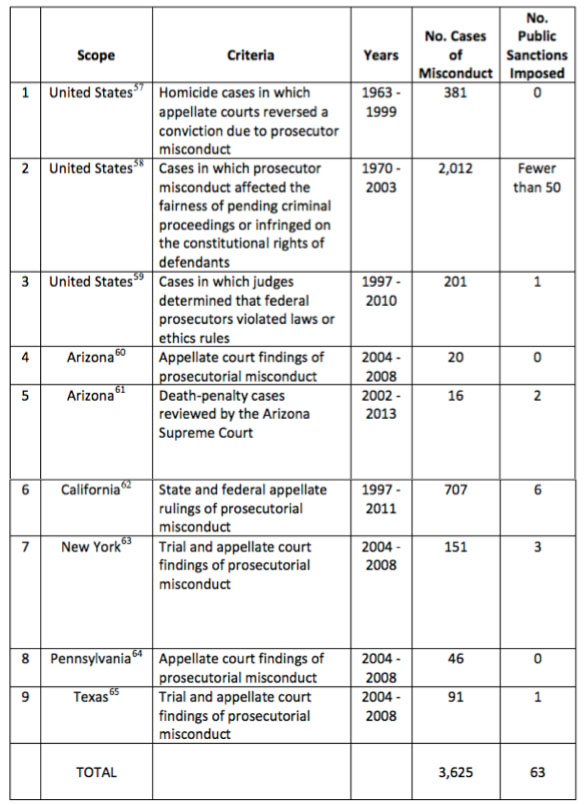
The Center for Prosecutor Integrity, in December 2013, published a white paper titled An Epidemic of Prosecutor Misconduct.

Appendix B from that paper is a table listing documented cases of prosecutorial misconduct and in how many of those cases sanctions were imposed.

Appendix B

(For the sources footnoted, please refer to the paper.)

Out of 3,625 documented cases of prosecutorial misconduct, sanctions were imposed in only 63 of them - 1.7%.

Isn’t it about time for some prosecutorial accountability and sanctions for misconduct?