
While those of us in the US or UK may be taking a chance to relax or spend time with friends and family (28th May 2012 being Memorial Day, or Spring Bank Holiday in the UK), it is trite to point out (and for many of us, guilt-inducing) that many more will be continuing their struggles to improve the lot of humankind, or will be imprisoned, or lost to their loved ones. Today also marks the anniversary of the publication of the letter ‘The Forgotten Prisoners’ in The Observer newspaper in 1961, authored by Peter Benenson. Benenson’s call to arms to write letters of support for those whose human rights are breached is credited with starting the organization Amnesty International. The fight to uphold human rights is continued by millions around the world today and there are a plethora of blogs reflecting an interest in such human rights campaigns. (see list of some here)
Some of the more essential blogs for those interested in human rights, in the US, see this. Australian human rights lawyers are meanwhile well served by the great blog at the Castan Centre. UK lawyers should not go past The Human Rights Blog or the blog out of 1 Crown Office Row.
My interest in ‘injustice’ focuses on the criminal justice system and failings therein. Justice is about distributions – according persons their fair shares and treatment. The primacy of individual autonomy and rights is central to the ‘due process model’ of criminal justice, recognising that human fallibility and systemic failures can yield grave injustice. Embracing an ‘encompassing’ model of miscarriages of justice can stir debate over the proper focus of researchers and campaigners alike, with some claiming that an exclusive focus on the ‘innocence’ is vital. They prefer the term ‘wrongful conviction’ (although this too can have wider meaning, to include the factually and legally innocent as well as those convicted through unjust procedures), to distinguish those convicted but innocent, from those unjustly convicted.
The debate over taxonomy continues but does not detract from the work of many globally, trying to address the injustices caused by the criminal justice system. In the UK, many legal professionals and investigative journalists, have worked tirelessly alongside campaigners, to bring miscarriages of justice to light. Pressure groups such as Justice and Liberty have now pretty much abandoned this area, leaving it to smaller, largely unfunded organisations such as MOJO (Miscarriages of Justice Organisation) and Innocent (who maintain a wonderful resource rich website covering almost all the miscarriages of justice in the UK since 1993). An international source of information and links, originated in Australia, is ‘Networked Knowledge’, by Robert N. Moles. Single campaigns of course continue, with some great examples of webpages highlighting their cases, such as: Simon Hall and Sam Hallam (exonerated last week). University based Innocence Projects are also working tirelessly in the UK on alleged miscarriages of justice, (see Universities of Cardiff and Leeds for just two examples. This model is replicated from those Innocence Projects so successful in the US, and now expanding internationally.
 The original Innocence Project in New York continues to be a source of inspiration and information. The work of the Innocence Project and the Innocence Network now has its own global dimension with The Center for the Global Study of Wrongful Conviction at the University of Cincinnati College of Law. Their blog is new but rapidly growing in prominence. Whilst covering breaking news, in terms of exonerations and legislative or political manouvres, it also features some great contributions on the causes of wrongful convictions. Many other individual Innocence Projects maintain great websites and blogs that are worth following, such as Northwestern Law Center on Wrongful Convictions. The University of Texas at Austin has an ‘Actual Innocence Awareness Database’ while Northwestern University and Michigan University have also launched a National Registry of Wrongful Convictions, a vital research tool for anyone interested in wrongful convictions in the US or elsewhere.
 Of course, the ‘Innocence’ movement would not be what it is today without the advent of forensic DNA profiling, leading to the exoneration of many, and proving without doubt their innocence. Yet, while forensic science is acclaimed in the media, it has a blemished history in reality. Many infamous miscarriages of justice have had at their core, scientific evidence that was not disclosed, flawed, or misrepresented in court. This is not to assert that ‘scientific’ methods of identifying criminal perpetrators in particular, have not advanced dramatically. Lessening reliance upon inherently flawed eyewitness or other evidence has undoubtedly saved many innocent individuals from investigation or possibly, wrongful conviction. It is simply to concede that such ‘scientific’ methods of identification are not infallible. This is a focal point of my research, the contribution of ‘science’ to (in)justice. As such, there are a wealth of ‘forensic’ blogs to keep up with if one is to keep anywhere near ‘on top’ of developments in forensics.
Many, if not most, are maintained by forensic departments in universities, such as the Florida University Forensic Science Blog or by keen individuals (the

‘father’ of forensic blogging is ‘Zeno’. Forensic Suite 101 has a wealth of reading materials and great videos for those with strong stomachs. Some more recent newcomers include the Forensics Guy and one aimed at criminal defense lawyers, The Truth About Forensic Science. Covering forensic science and news about injustices and wrongful convictions, the blog by Peter Tillers also does a great job on discussing issues relating to evidence, while David Kaye, author of ‘The Double Helix and the Law of Evidence’ blogs at Double Helix Law on all things ‘DNA’ and law and also blogs on Forensic Science, Statistics & the Law. ‘The Charles Smith Blog’ blog was named after the infamous pathologist, responsible for much injustice in Canada. Maintained by a retired journalist, the blog now covers fascinating news on all things ‘criminal injustice’ related and is a must read.
The scale of injustice perpetrated by the criminal justice system itself may never be agreed upon. “How Bad Is The U.S. Wrongful Conviction Problem?” asks Brian Evans on the Human Rights Now Blog of Amnesty USA. However, it is easy to see that the issue coming to the fore globally now, more than ever. The work of the Innocence Network is unrivaled in this respect, but so too is the most often thankless (and costly) work done by individuals and campaigners, including criminal lawyers, working on cases and trying to bring about reform. Without the development of forensic DNA profiling, who knows whether this explosion of interest would have happened, or could have been maintained. While they may be sometimes at fault, it is good to see some great examples of forensic scientists also working hard to remedy injustices, and work to ensure the prevention of many more. Long may these individuals and organisations, which look out for our human rights, have our support.
We begin this week’s Blawg Review #323 at the Innocence Blog, where the Innocence Project honors the wrongfully convicted who had served in the military. Perhaps more to be honored on Veterans Day, former Army Sergeant Dennis Maher served almost six years on active duty before he was wrongfully convicted in 1984. Exonerated through DNA testing in 2003, Maher says  “Because of my wrongful conviction, I missed the opportunity to serve my country because I was going to be a career soldier. I think about that on Memorial Day.”
Returning to the anniversary of Amnesty International, #AmnestyReport2012 – an overview of state of human rights worldwide – is now available in full online here. Apparently, the US Department of State submitted the report to Congress, except the part about the USA noting, “The focus of the Human Rights Reports is on the human rights performance of other governments. We note that the United States does examine its own human rights record against its international commitments and obligations in many other fora. For example, in December, the United States submitted a lengthy report to the U.N. Human Rights Council on U.S. implementation of the International Convention on Civil and Political Rights. The United States also engages in the U.N. Universal Periodic Review process, through which the human rights records of the U.N.’s 193 Member States are reviewed and assessed once every four years. These reports are available on HumanRights.gov.”
 “The military trial of the WikiLeaks suspect Bradley Manning is being conducted amid far more secrecy than even the prosecution of the alleged 9/11 plotters in Guantanamo, a coalition of lawyers and media outlets protest,” writes Ed Pilkington for the guardian in New York.
Kenneth Roth, Executive Director, Human Rights Watch, on Twitter points us to an editorial of the New York Times alleging a court covers up that concludes, “The judges should have given the government’s overwrought claims of national security and secrecy special scrutiny, not extreme deference.”
Daphne Eviatar reports on HuffPost that “perhaps the most closely watched Guantanamo-related case since the Supreme Court confirmed detainees’ right to judicial review in Boumediene v. Bush in 2008, Latif v. Obama raises a critical issue that goes to the heart of whether U.S. prisoners have a meaningful opportunity to challenge their detention. Must a court presume the accuracy of a government document introduced against a Guantanamo detainee, even if it’s not clear how that document was produced?”
Focussing upon a particularly pernicious abuse of human rights, The Renditon Project website was officially launched. UK legal action charity, Reprieve, issued a press release, in which Clare Algar, Executive Director of Reprieve said, ‘The Rendition Project will be an important tool in bringing the tangled web of the CIA’s illegal rendition programme to light. It is essential that we get to the bottom of what was one of the worst human rights abuses of the ‘War on Terror’ – including the involvement of the UK, a number of other European states, and major corporations.
A Pakistani doctor was sentenced to 33 years in prison Wednesday for helping the Central Intelligence Agency (CIA) locate Osama Bin Laden reported JURIST news. “After a trial lasting two months during which Shakeel Afridi was not afforded the opportunity to defend himself, a tribal court convicted him of treason and spying.” Glenn Greenwald, in a provocative op-ed post on Salon.com says that “American rage at Pakistan over the punishment of a CIA-cooperating Pakistani doctor is quite revealing of The Imperial Mind.”
One of the most common human rights concerns in the USA, wrongful convictions, is reported by The Wrongful Convictions Blog and the ABA Journal as well as other media this week. The first-ever published report (PDF) of the National Registry of Exonerations, assembled by the University of Michigan Law School and the Center on Wrongful Convictions at Northwestern University School of Law, “highlights grave questions about the legitimacy of the legal justice system.”
On the Huffington Post Chicago, the president of the Chicago Innocence Project, David Protess, introduces the exonerated.
 More than 200 men and women have been wrongfully convicted of serious crimes in California, six of whom were sentenced to death. Here on Death Penalty Focus are some of their stories.
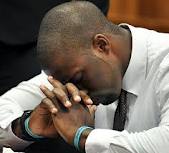 Brian Banks, former football star and USC Trojan recruit, was exonerated this week, as reported here on The Wrongful Conviction Blog. The “victim” recanted and admitted she lied at trial (the sex was actually consensual). She did not come forward earlier because she didn’t want to “give the money back”–meaning the settlement that she obtained from the school where the rape allegedly occurred.
The Innocence Blog points to a story on Salon.com that describes The Long Road From Exoneration to Compensation for the wrongfully convicted.
Meanwhile, on the other side of the Atlantic, there was an important victory for prisoners (and the public) in the European Court of Human Rights, with the Court RE-affirming earlier decisions, that there should not be a blanket rule disenfranchising prisoners. On the UK Human Rights Blog, Reuven Ziegler writes about the case for letting prisoners vote. Charon QC notes the latest prisoner votes case from Europe on his blog, “The case is important. For my part, I have no problem whatsoever with prisoners voting. I rather hope that prisoners will return to society improved for paying their debt to society and be part of society. Pie in the sky for recidivists… but an ideal to which we should aspire? I am, I suspect, in a sizeable minority.”
However, as the honest among us would readily admit, on the whole, our prison system does little to rehabilitate, in fact, as Alisa Roth on the ACLU Blog of Rights argues prisoners subjected to solitary confinement in particular are ““more broken than when they went in”. Meanwhile, Gideon, a public defender, looks at some reactions to the death penalty repeal in CT and tells the tale in a post titled, Idiocracy.
A topic comes up time and again on the Wrongful Convictions blog, Conrad Black points to cases of prosecutor misconduct and asks, “How Many Wrongful Convictions Will the Public Stand for?”
“Facing the truth is hard to do, especially the truth about ourselves,” says Bill Moyers. “Not surprising, Americans have been sorely pressed to come to terms with the fact that after 9/11 our government began to torture people and did so in defiance of domestic and international law. It’s no secret such cruelty occurred. It’s just the truth we’d rather not think about. But Memorial Day is a good time to make the effort because, if we really want to honor the Americans in uniform who died fighting for their country, we’ll redouble our efforts to make sure we’re worthy of their sacrifice. We’ll renew our commitment to the rule of law. For the rule of law is essential to any civilization worth dying for.”
Blawg Review has information about next week’s host, and instructions how to get your blawg posts reviewed in upcoming issues.




























 Wrongful Convictions Blog