Author Archives: Daniel Ehighalua

Is it ever Possible to Undo the Damage Wrought by Wrongful Conviction?

Would you prefer to be declared ‘not guilty’ rather than being ‘factually innocent’? Before you rush to judgement, there is a marked difference between both terms beyond semantics. Assistant Professor Christopher Sherrin of the University of Western Ontario, Canada successfully engaged with the differences and nuances of both terms in his article entitled – ‘Undoing the damage of wrongful convictions’. In Canada, it appears the best an erroneously accused person can hope for is an acquittal.

He opines that: ‘The primary concern has been that by declaring some people more than not guilty, we would diminish the verdicts given to the remaining acquitted. Not guilty for them would come to mean just not proven to be guilty, and thus probably guilty’. He however concludes that: ‘The real debate should focus not on whether we should declare innocence, but on how we should most wisely do so, in order to offer all innocent accused a fair chance at leaving their erroneous prosecution truly in the past’. Read fuller analysis herehttp://canadian-lawyers.ca/Understand-Your-Legal-Issue/Criminal-Law/Undoing-the-Damage-of-Wrongful-Convictions.html

David Protess Reviews some of the Stunning Wrongful Conviction A-List Movies

David Protess, President Chicago Innocence Project in this Chicago Huffington Post, reviews and lays bare, the synopsis of what he considers the top ten list of wrongful conviction films and documentaries. He states that:

‘In the last two decades, wrongful convictions have become a particualarly popular subject of feature films and documentaries, prompted by the seemingly endless stream of high profile exonerations. A-list actors, directors and producers have jumped on the bandwagon to tell their stories. Despite the Hollywood firepower, however, the results have been mixed. Some movies about wrongful convictions have been stunningly good. Others, not so much’

Read full review here and may be you might be minded to make out time to buy the ones that catches your fancy.http://www.huffingtonpost.com/david-protess/wrongful-conviction-best-films_b_1156689.html

Ex MP Chris Mullin, Mauls over the Plight of the Innocent and Wrongfully Convicted

Chris Mullin is a mercurial British politician. He is passionate about the plight of the innocent, and those wrongfully convicted by the system. He writes about this in his blog entitled – Miscarriages of justice in the UK. He not only gives a personal account of his experiences with victims, and how in his own little way he interceded on their behalf; but identifies the problems, progress made thus far, and solutions. He says for instance that -‘In the long run only a complete overhaul of the recruitment, training and disciplinary codes of the police will make any difference. In the meantime it must be obvious that the single most useful reform that could be made is to outlaw convictions on the basis of uncorroborated confession. The only admissible confessions should be those recorded in the presence of a qualified solicitor’.

He lampooned the police; the judiciary and Judges; the Home Office; the state of forensic science  and concluded thus: ‘Locking up the wrong people is also very expensive. Tens of millions of pounds of public money has been wasted on apprehending, imprisoning and in due course compensating innocent people. Even those who do not care about the ruin of innocent lives, might at least reflect in these other aspects of a miscarriage of justice. Above all, however,  wrongful convictions rot public confidence in our system of justice and that ought to concern all of us who care about upholding it’ Read entire commentary herehttp://www.chrismullinexmp.com/speeches/miscarriages-of-justice

Africa: Judges hold the Aces of Justice

There is no gainsaying that the quality of the bench plays a pivotal role in the fair dispensation of justice. While we rant against prosecutorial tunnel vision; bad lawyering et al, a strong and independent bench is a sine qua non. Judges ultimately decide the ‘fate’ of an accused person. We have known for a long time that the process of appointment of judges in Africa is fraught with nepotism, incompetence; of those who are handmaids and willing tools of the executive branch of government. That situation is about to change in Kenya with the sacking of 4 senior Judges.   http://www.nation.co.ke/News/politics/Four+senior+Kenyan+judges+sent+home/-/1064/1393432/-/4fsec8z/-/index.html

An independent judiciary and bench is central to the prevention of wrongful convictions and miscarriage of justice, indeed, a judge who is impervious to change, will certainly be unwilling to look at evidence, either afresh or with an open mind. I commend the lead taken by the Kenyan authorities to other African countries, particularly the Nigerian judicary that is constantly embroiled in crisis.

Africa Illegal Detention:Two Innocent Men Set Free in Kenya

After spending 75 days ‘unlawfully’ in prison, Shadrack and Joseph regained their freedom on April 18th, 2012. Thanks to the work of the International Justice Mission in Kenya, the organisation that worked tirelessly, against all odds to secure their release. This brings to the fore the notoriously sluggish machinery of justice in Africa, that an accused person can be made to suffer scorn and odium, for an offence he did not commit. As their lawyer said: ‘There is much more to be done to set the innocent prisoners free’.

One can only hope that the lawyer can go the whole hog to sue the relevant authorities for false imprisonment; deprivation of liberty; loss of income and consequently, make a claim for monetary compensation. ‘Exemplary’ and ‘aggravated’ damages might not be too far-fetched a claim to allege. As the maxim goes, for every right there is a remedy. Read  herehttp://www.ijm.org/news/after-75-days-prison-two-innocent-men-are-set-free-kenya

How Your Right to Presumption of Innocence, Can Lead to Your Wrongful Conviction: Reality v. Theory

The above title is the fulcrum of Dr. Michael Naughton’s argument in his very illuminating article, in the Irish Journal of Legal Studies. He used the United Kingdom as his case study. He formulates his argument this way:

‘ — that the presumption of innocence and the burden of proof on the prosecution to prove its case beyond a reasonable doubt act in reality against the interests of those who might be innocent at every stage of the criminal justice process. This is because the presumption, in effect, render suspects of crime passive, which simultaneously justifies minimal resources to the defence, whilst the burden places pressure on, and directs the bulk of the resources to the police and the prosecution to chip away at the presumed innocent status and construct cases from only incriminating evidence that might obtain a conviction, rendering innocent victims vulnerable to wrongful convictions’

He then goes on to say –

‘As a result, the defence side of the adversarial equation, widely thought to be the key safeguard against wrongful convictions, is largely ineffectual as it is resource poor and reliant on police and prosecution evidence that is not suitable for defending against cases constructed from such evidence’

His thesis, at first, appears to be an attempt to stand the law on its head, but the article successfully wrestles with, and strive to undermine centuries of long held legal maxim, that now appears to be, either ‘obsolete’ or, at best obscures the search for justice. Read the full article here and come to your own conclusion(s)http://www.ijls.ie/Articles/IJLS_Vol_2_Issue_1_Article_4_Naughton.pdf

Prisons in Africa: An Evaluation from a Human Rights Perspective

http://www.surjournal.org/eng/conteudos/getArtigo9.php?artigo=9,artigo_sarkin.htm In this article, Jeremy Sarkin makes a poignant argument for prison reforms in Africa. One constant theme dominates his discourse: the debasement, abuse and violation of the individual rights of prisoners. In almost all of the countries in Africa he cited, the anecdotal evidence clearly suggest the need for a different pathway to dealing with the question of prison reform, from a human rights perspective. In Uganda, he states – ‘For instance, two-thirds of the 18,000 inmates in Uganda have yet to be tried’.  Ditto for South Africa, where as he contends; in South Africa Johannesburg prison, some inmates have not seen a judge in as many as seven years. In Nigeria, the situation is not any different, if not worse. He identifies the consequences of this parlous situation leading to – prison overcrowding; violation of pre-trial detention rights; dearth of prison resources and governance. He then concludes with solutions, which he narrows down to – alternative sentencing; the vigorous enforcement of prisoners’ rights vide the African Commission on Human and Peoples Rights; and the unique role of a Special Rapporteur on Prisons and Conditions. In conclusion, violation of prisoners’ rights is one veritable source, around which issues of wrongful convictions and the fight for the innocent, can be located, particularly in skewed systems in Africa, as highlighted by this article.

The Trajectory of Patrick Obinna Okoroafor’s Death Sentence

Patrick’s case is quite tragic. He was evidently a minor when he was ‘alleged’ to have commited the robbery and kidnapping for which he received a death sentence on May 30, 1997. His case is symptomatic of the essential nature of the justice system in Nigeria: from poor investigative techniques and skills of the police, to the poor representation by counsel. Indeed, it is difficult to exculpate the bench going by Amnesty International report. Why would the initial trial judge proceed to try a minor as if he were an adult? This case is just so confusing that you wonder if Amnesty International told the ‘whole truth’. I have no iota of doubt that they did. Now, the sensible thing is for the Governor to unconditionally grant Patrick clemency in exercise of his prerogative of mercy. Read full report here http://www.amnestyusa.org/our-work/cases/nigeria-patrick-okoroafor  including background information on Patrick Okoroafor; prison conditions; and Nigeria’s normative international human rights obligations herehttp://www.amnestyusa.org/our-work/cases/nigeria-patrick-okoroafor/background-information-on-patrick-okoroafor.

The Amnesty International report concludes thus ‘Nigeria’s current prison system and legal proceedings are corrupt and inhumane. Individuals are being arrested arbitrarily and prisoners are being denied basic human rights. It is not uncommon for Nigerian citizens to be convicted of a crime they did not commit, presumed guilty before they stand trial or be denied an appeal processes. In some Nigerian states, the police and legal systems have devolved into corrupt bribery motivated networks’

Canada’s Path to Justice:Preventing Wrongful Convictions

‘No criminal justice system is, or can be, perfect. Nevertheless, the manner in which a society concerns itself with persons who may have been wrongly convicted and imprisoned must be one of the yardsticks by which civilisation is measured’

The result of the extensive and nationwide consultation about prevention of  wrongful convictions in Canada, led to the production in the fall of 2011, of a report entitled -Path to Justice: Preventing Wrongful Convictions. The report acknowledges the key drivers of wrongful convictions to include tunnel vision; eye witness identification and testimony; false confessions; in-custody informers; DNA evidence; forensic evidence and expert testimony. It concludes with pertinent recommendations. Read herehttp://www.ppsc-sppc.gc.ca/eng/pub/ptj-spj/toc.html . Reading the report as a whole, it holds out promise of tackling the scourge of wrongful convictions, in a pro-active way.

How Bad Lawyering Advances Wrongful Conviction: The Case of Jamel Parker

We place tremendous emphasis on prosecutorial tunnel vision, and rightly so. However, bad lawyering by defense counsel rarely ever attract the same condemnation. Bad representation contribute significantly to incidences of wrongful convictions or miscarriage of justice, except that it hardly get mentioned. As Jamel Parker picks up the pieces of his appeal and plans to challenge his conviction, an important lesson needs to be learnt: that good representation is key to the fair dispensation of justice. I think this is a shared responsiblity. It lies not only with the accused person, it behooves the bench at every stage of the trial to ensure that an accused person is getting the best at every stage of the trial. Again, lax professional conduct rules; the failure of disciplinary boards to take seriously complaints by clients of bad lawyering, play a major role.  We hope that Jamel’s second bite of the cherry (his proposed appeal) will ensure that all the facts and law are properly placed before a judge and jury. Read more herehttp://www.thepetitionsite.com/1/free-jamel-parker-wrongful-convicted/

Forensic DNA Technology has Stagnated in Africa

Forensic DNA technology has grown in leaps and bounds elsewhere in the world, except Africa. Whilst there is no doubting the utility of this technology to solving complex criminal investigation, African countries are still very reluctant to embrace it. There is only one forensic laboratory in Nigeria. It is located in Lagos and managed by the Nigerian Police Force. Given the serious credibility deficit by most government agencies, it is not unusual for serious applicants and accused persons to seek experts and expertise from outside Nigeria, in analysing forensic evidence. In Nigeria, post election appeals have tended to be heavily reliant on forensic evidence to determine or prove electoral fraud. And in almost all cases, the experts are imported from abroad. For more examples of how DNA could be used in Africa readhttp://www.forensicmag.com/article/dna-4-africa?page=0,0

‘An Eye for an Eye Leaves The Whole World Blind’

This epigram is famously associated with Ghandi and his teachings on non violence. Can justice ever cohere or be coterminous with this saying? What does it really convey jurisprudentially in the context of western style or Islamic/Sharia criminal law?  Can a literal interpretation of the term truly serve the ends of justice? In countries like Nigeria with a dualist criminal law and procedure i.e. Sharia law operating side by side with western style criminal code, striking the right balance continue to pose problems at the level of interpretation and execution. It’s a different ball game with ‘theocratic’ Middle Eastern states, for instance – Iran, Saudi Arabia. The famous case of Ameneh Bahrami – who was blinded when a spurned suitor threw acid at her and she asked for the same to be inflicted on him – highlights the dilemma.  Read her story  http://www.guardian.co.uk/world/2011/may/13/iran-blind-criminal-acid             

It compels us to ask, what is the purpose of crime and punishment in society? Reformation. Restitution.  Or, to reach out for the eye of the convict. Each society must make that decision for itself to suit the mores, values, religion and culture of it’s people. I guess it is safe to say that, an eye for an eye should be at the lower end of that decision scale.

Criminal Justice Reporting and Crime Reporting Distinguished: The Proper Role of the Media.

In light of the recent media blitz in the Trayvon Martin case, and indeed, more recent ones before it, like the Casey Anthony and Amanda Knox cases; it’s absolutely important that we properly contextualise the role of the media. In this connection, I find the article by two distinguished Attorneys – William R. Montross, Jr & Patrick Mulvaney – very apposite in understanding the polemics the media deploys in such situations. Both Attorneys deliberately set out to make a nuanced distinction, and rightly so, between ‘justice reporting and crime reporting’. Read this: ‘Where crime reporting purports to answer the questions, Who? What? When? and Where? criminal justice reporting attempts to initiate conversation and debate about the far harder question of Why? Why is the man on death row? Why are people who kill a white person 400 to 500 percent more likely to receive the death penalty than people who kill a black person. Why do courts seem more concerned with protecting a death verdict than ensuring that justice was done? Criminal justice reporting is the opposite of crime reporting. Where crime reporting is salacious, criminal justice reporting is reasoned; where crime reporting ignores nuance,  criminal justice reporting is full of complexity. Crime reporting appeals to a limited range of base emotions; criminal justice reporting elicits a far more complex emotional response, and, more importantly, it engages the intellect.

Read their full treatise in Volume 61, Issue 6 in the Stanford Law Reviewhttp://www.stanfordlawreview.org/sites/default/files/articles/Montross-Mulvaney.pdf. The article goes on to provide anecdotal evidence of these as it appears in the media. They were also scathing of Texas’ ignoble epithet of being America’s most notorious killing state.

‘Bloodiest Prison in the South’: The Angolan 3

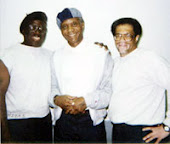
The case of the Angolan 3 continues to interrogate and question the reach of the criminal justice system in America. I am sure you will find this link a compelling read.http://www.angola3.org/thecase.aspx.  The narrative centers around the murder charges leveled against Herman Wallace,  Albert Woodfox and Robert King. It provides you with different dimensions to their odyssey and struggles finding justice; the twists and turns of over 4 decades. The lesson it teaches: why we must continually seek to reform and re-engineer the machinery of justice, for, it is better to set a thousand guilty persons free, than to allow one innocent man suffer miscarriage of justice.

Twists and Turns to the Trayvon Martin Saga

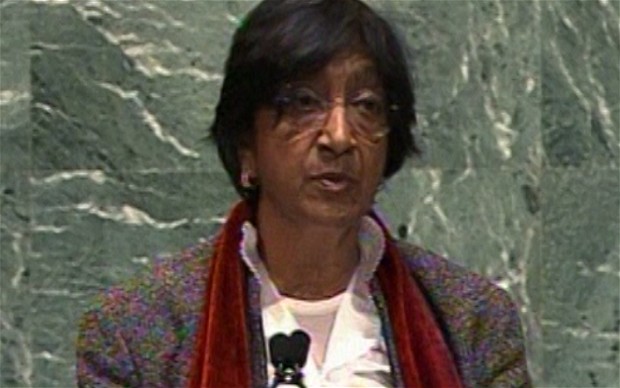
Now, the UN High Commissioner for Human Rights has descended into the fray. She wants an ‘immediate investigation’ of not only this, but similar cases that calls into question the quality of justice delivery. Read http://www.telegraph.co.uk/news/worldnews/northamerica/usa/9189884/Trayvon-Martin-killing-UN-human-rights-chief-calls-for-investigation.html. Some would charge that this is presumptuous, since the matter is still under investigation. The question in retort is, for how long should this investigation drag?

Although some media networks have attempted to unduly hype, and in some cases ‘tweak’ the facts -an MSNBC reporter was recently relieved of his job for doing just that – the point remains that the due process has been sluggish. It appears the Special Prosecutor will be undermining convoking a grand jury and proceed to make her report/opinion public soon, after reviewing all of the facts. She will then decide one way or the other, whether to cause Zimmerman’s arrest and prosecution and/or instruct on what steps to take to resolve this tragic incident.

The morale of this case should not be lost. It’s about scrupulous adherence to the law. For me, it’s about justice for all concerned – both to Trayvon Martin and George Zimmerman- so that at the end, everybody would be rest assured that justice was done. At the moment, leaving the case in abeyance has tended to throw in extraneous and sometimes irrelevant considerations. Experience shows that, these usually are the warning signals and precursor to wrongful conviction cases, when the facts are ‘everywhere’. We all await the decision of the Special Prosecutor.

In Sierra Leone, Executive Meddlesomeness Led to the Wrongful Conviction of Mohamed Sesay

There are myriad of factors that enable wrongful convictions to happen. For Mohamed Sesay – a Sierra Leonean businessman – it was the mix of politics at the highest level of government, coupled with graft and state corruption that were the primary considerations. The legal system in Sierra Leone has in the past been plagued by inept corruption and extortion, where despite the nature of a case, if money exchanged hands, a wrongful conviction is inevitable. Flawed evidence were used to wrongfully convict Mohamed Sesay. Although Mohamed Sesay was eventually released, its unclear, if he, or his Attorneys pursued compensation from the government that wrongfully convicted him to serve a political purpose. Read herehttp://www.newstimeafrica.com/archives/23352

Nigeria: Plea Bargaining Your Way to Cheat Justice, is Prosecutorial Misconduct.

There is no doubting the original intendment of plea bargaining, as part of the mechanism for the administration of justice. In addition to a range of other factors, it helps prosecutors in a variety of ways to get at the root of crime. It helps to identify those ‘most responsible’ for heinous crimes, by inducing lesser accused persons to ‘snitch’ at the ‘big fish’; or, for the big fishes to break ranks and come clean with the level of their involvement in a crime. This way, large criminal rings, gangsters, the leading light of organised crime; and crimes of an endemic nature can be bursted, and those accused and successfully prosecuted are put behind bars for good. Unfortunately, in Nigeria, with organised crime like corruption – whether state and/or private sector led, or a combination of both like the Halliburton case – which is very secretive and goes right to the very top of organisations and government.

It is becoming increasingly difficult to shift when that balance is struck between when to accept plea bargaining by an accused person, and when to ensure that justice is done on behalf of society regardless. Prosecutorial powers in Nigeria lies in a number of agencies and statutory bodies, unlike in the United Kingdom where they rest squarely with the Crown Prosecution Service. This multiplicity and layers of bodies with prosecutorial powers, in a sense impacts the quality of evidence gathering; the decision to prosecute or not to prosecute; the quality, reach and extant powers of these bodies to deal with specific cases. However, only the Attorney General of the Federation have sole discretionary powers to enter a nolle prosequi. This is rarely ever exercised. And to be fair, when he does, the decision is more political than legal.

The level of corruption in Nigeria  is alarming and way beyond tolerable limits, even by Transparency International standards. The recent initiative by the Economic and Financial Crimes Commission (EFCC) – the ‘apex’ corruption body – to give legal muscle to its powers to prosecute, decline to and accept plea bargaining, and on what terms should be commended. The National Assembly must make this an urgent national matter and deal with the legislation timeously. Nigerians are unanimous that corruption is one single enemy of Nigeria. Getting this legislation to pass through parliament is one sure way of combating it, to avoid the sort of miscarriage of justice where accused persons put on the dock for the theft of tens of millions of dollars, end up plea bargaining and making paltry sums of money in exchange, whilst getting away with their loot. For prosecutors to continue to allow this is to happen, is clearly prosecutorial misconduct.  Read report about this here http://www.tribune.com.ng/sat/index.php/politics-today/7036-plea-bargain-and-corruption.html

Are Human Rights really Needed for Criminal Justice Reform in America?

To Jamie Fellner, her answer to the question is a resounding YES. Jamie is Senior Advisor to the U.S. Program at Human Rights Watch. Jamie’s position is well articulated in her piece entitled – The Human Rights Paradigm: The Foundation for  Criminal Justice System We Can Be Proud Of.

To drive home her point, she delved into the manifold issues of race discrimination, excessive sentences, the wretched prison conditions and disenfranchisement. She opines that human rights have not been fully integrated in the American criminal justice system. ‘Strangely’ though, she asserts international human rights treaties do not create judicially enforceable rights in America. This, for me, is an oxymoron and a telling indictment on America. Read her full article herehttp://www.hrw.org/news/2012/03/21/human-rights-paradigm-foundation-criminal-justice-system-we-can-be-proud

Miscarriage of Justice: What does it really mean?

The term miscarriage of justice is frequently and notoriously invoked, but very little has been done by way of decisions clarifying the term. The United Kingdom Supreme Court appears to have come to a settled definition of the term; at least in connection with post-conviction claims of innocence, and thence, for compensation thereof. Readhttp://www.guardian.co.uk/law/2011/may/11/barry-george-compensated-supreme-court?INTCMP=ILCNETTXT3487

In a judgement given on the  11th of May, 2011 the UK Supreme Court formulated the test in determining whether a miscarriage of justice has occured. The court said that there would be a miscarriage of justice – ‘When a new or newly discovered fact shows conclusively that the evidence against a defendant has been so undermined that no conviction could possibly be based upon it’. Read full judgement herehttp://www.supremecourt.gov.uk/decided-cases/docs/UKSC_2010_0012_Judgment.pdf . It is however going to be very difficult (but the decision can be distinguished) to apply this in every concieveable situation and circumstance, except to say that the decision should serve as a starting point when attempting to apply it beyong innocence cases. It should be noted that the decisions itself was arrived at by a very  narrow majority, leaving the Supreme Court in a position to ‘possibly’ reverse itself someday. The decision left some of the appellants in this case still clearly dissatisfied. Barry George for instance.

Weighing up the Law on Presumption of Innocence

The presumption of innocence is an international protective legal norm – whether in civil or common law jurisdictions. It’s an integral part of the principle of fairness. We are increasingly witnessing a sustained assault on this time tested legal principle.

In Nigeria, in 2009, Mohammed Yusuf the acclaimed leader of the ferocious and violent Islamic sect, which goes by the name Boko Haram, was brutally ‘murdered’ by the police. He was shot with cuffs in hands by the Nigerian police. Where was the presumption of innocence? Without prejudice to the on going investigation of the tragic death of young Trayvon Martin, George Zimmerman in some quarters, is already presumed guilty. Where is the presumption of innocence?  It seems there is the tendency that we confuse presumption of innocence with other concepts. For a didactic analysis of presumptions, assumptions and assertions, and how they colour our perceptions of crime, read herehttp://surftofind.com/justice