Category Archives: Africa

Bloody August in The Gambia!

The Gambia is a small West African country. It was colonized by the British. You would naturally expect the people to be inheritors of the British common law traditions of justice, equity and fairness. Ironically, The Gambia is headquarters to several human rights, regional and continental organizations. The Gambia president’s disdain for the rule of law is legendary.

Torture, unlawful detention of journalists and extra-judicial killings has been the hallmark of his administration since taking over power in a 1994 coup. Even so, the execution of 9 death row inmates last month took the human rights record of The Gambia, and Jammeh’s presidency to an all time low. Read report in the Nigerian guardian here. This is in a country where common law principles and Islamic practises intertwine.

It is yet unclear the level of judicial transparency, fairness and justice that the ‘executed’ inmates were exposed to, or provided in the course of their trials. What is certain however, is that, The Gambian judiciary is not entirely as independent as it should be. We do not yet know the extent the inmates were granted due processes. If the recent application lodged with the ECOWAS court of justice on behalf of 2 Nigerians, being amongst the remainder 48 inmates slated for execution, is anything to go by, then the appeal process in The Gambia leaves much to be desired.

There is everything wrong with a system that produces such skewed outcomes, preceding the denial of basic rights of innocence, fair trial before an independent judiciary; rights of appeal and to legal representation; right to seek all legitimate avenues of redress when those avenues are yet to be exhausted. The Gambia is a member of the ECOWAS commission and is bound by the decisions of the ECOWAS court; even though with a very poor record of compliance with judgements of the court.

The application by the 2 Nigerians before the ECOWAS court will test the court’s jurisdictional capacity with respect to domestic criminal matters, as well as, the extent to which The Gambia government is prepared to flout and undermine the international community. Read report entitled: The Gambia sued over Execution of Nigerianhttp://www.thisdaylive.com/articles/the-gambia-sued-over-execution-of-nigerians/124840/

The international community is waiting and watching patiently as to the outcome of the threat to proceed with the ‘execution’ of the remainder inmates on death row.


Wednesday’s Quick Clicks…

Lessons from Abroad: Reforming the Nigerian Police

In Nigeria, the police is vilified virtually by everybody that have had the ‘misfortune’ to come into contact with them. Much of this vilification, hinges on their lack of professionalism, indiscipline, corruption and bad policing strategies. The response of the police to this, has always been lack of resources, proper training, and the fact that they are also a mirror, reflecting the values - positive or negative - of the larger Nigerian society. The truth of the matter lies in-between both contentions.

The Police Service Commission is the apex Commission charged with the discipline, promotion and regulation of all police officers in Nigeria. They have the statutory responsibility of shaping the values, ethos as well as enforcing those good and bad conducts of the police. The Commission ironically is still obscured to many Nigerians, except of course during elections and electioneering campaigns, when they put out warning and information notices to appeal to Nigerians.

Reading the article by A. M. Blackmore entitled - Correcting Miscarriages of Justice http://www.odpp.nsw.gov.au/speeches/CORRECTING%20MISCARRIAGES%20OF%20JUSTICE.html you cannot but get the feeling that the Nigerian Police Service Commission needs to be re-jigged; in concert with the Office of the Federal Attorney General of the Federation. As identified by Blackmore in the said article, the usefulness of the outcomes of the Royal Commission in the New South Wales Police Service, cannot be over emphasised; same can be deployed to deal with the Nigerian situation. Of course, with necessary modifications to suit the Nigerian clime.

A top to bottom strategy will ensure proper reform is achieved, which can then be passsed down the line to the rank and file. The recurring cases of miscarriages of justice in Nigeria leaves much to be desired. Without prejudice to the numerous Commissions, Committees and ‘White Paper’, there is the urgent need to shake up the Nigerian police force. With the recent confirmation of the new Inspector General of Police, M.D. Abubakar, there is no better time than now, to start re-thinking alternative policing strategies that will deliver for the Nigerian people. Read report here http://saharareporters.com/news-page/md-abubakar-confirmed-inspector-general-police-photos

The root causes of miscarriages of justice and wrongful convictions in Nigeria, can be tackled in large part with a functional and professional police force.

Nigeria: Trading Justice for ‘Self Help’

Dispensing ‘jungle justice’ is a sign of the times in Nigeria. Truth be told, the Nigerian justice system is not only broken, it has completely failed, thence, the resort to self help. As BBC Andrew Walker’s report highlights, the activities of vigilante group who have completely taken over neigbouhood policing, is worrisome. It’s evidently the clearest indication yet, that it is everyman for himself and God for us all. The Hobbesian state. How did Nigeria get to this sorry state?

Ordinary people have completely lost faith in the police and the judicial system to help them seek justice. Despite the understandable constraints under which the police work, that is no excuse for bad policing, extortion of money, bribery and corruption, which seems to be the hallmark of how the ordinary Nigerian views the police and the outright failure to carry out their statutory duties. On the other hand, the ineffective judiciary is plagued with its own malaise of court delays, needless and endless adjournments, deliberate obfuscation of the court processes by lawyers who manipulate the rules of court with a view to ‘extorting’ money from clients, just to prolong cases unnecessarily - bad lawyering. And they find willing accomplices ‘sometimes’ from the bench. In the result, Nigerian citizens are left to their own mercies and fate. Do you really blame them when they now resort to jungle justice? Read Andrew Walker’s report here.http://news.bbc.co.uk/2/hi/africa/8021468.stm

The Nigerian state must find a way to redress this. Most of the institutions connected with the administration of justice should be re-jigged, particularly, the police and judiciary. Leaving this essential reform to international development agencies like DfID, is surely, but a stop gap measure. They can only compliment the efforts of government, not as a substitute for government implementing reforms.

‘Self-help’ undermines justice, due process and human rights of victims - however justified the vigilantes are. The likelihood of lumping and lynching an innocent person, by a vigilante ‘mob’, in a situation where there are no defined rules, processes and procedures, is very high. Innocent people have been known to have been killed.

How Nations Handle Extra-Territorial Breaches of their Nationals’ Right to Innocence and Miscarriages of Justice

That the world is shrinking by the day, is much more than a metaphor. It’s a reality. Nationals of nations are scattered all around the globe, seeking different realities, challenges and opportunities. In the process, they are confronted with different norms, cultures and laws which they are compelled to abide by, or face sanctions for breaches of the laws of their host countries. In effect, nationals outside their own territories, must not only comply with the laws of their host countries, but there is a continuing responsibility of their own governments to ensure that they are treated fairly, justly and in line with internationally acceptable legal standards.

What happens when a government fails to take up that challenge on behalf of their own citizens abroad? It’s sometimes a catch twenty-two situation, given the intersection between politics and law. One thing is certain though, most international Instruments lay down certain minimum standards for the dispensation of justice and, indeed, of the trial process. Recent cases of US and Nigerian citizens with criminal processes/procedures abroad, have demonstrated that, whilst one nation takes seriously it’s continuing international obligations to its nationals; the other have simply shirked her responsibilities to it’s nationals abroad, leaving them at the mercy and vagaries of the ‘laws’ of the host countries, without regard to the fairness, justice or indeed, whether the laws of the host countries guarantees the minimum rights under international law.

With respect to the US, the recent case of Jason Puracal (An American citizen) in Nicaragua was handled ‘fairly’ well, if for nothing, the drawing of the attention of the US Congress (43 House of Representatives members) to his plight, and the calling of the attention of the United Nations, declaring the Nicaraguan judicial system as flawed and a violation of international law. Read archived post on this case here.

That Nigerian nationals face legal hurdles and challenges abroad is well documented. What is not well appreciated is the response of the Nigerian government, and it’s attitude to her nationals undergoing criminal processes abroad. In Indonesia for instance, there are a sizeable number of Nigerians who have alleged that, their right to justice, and sometimes, outright miscarriages of justice have occurred; which has left them wrongfully imprisoned, some on death row, and others, actually have been executed without due process. Read here and here

There is the on-going trial of a Nigerian pastor in Austria - Pastor Joshua Esosa -for ‘drug related offenses’, which he vigorously denies. He was made to undergo criminal processes in Austria which resulted in his ‘conviction and sentence’, whereupon he appealed the decision. An appellate court in Austria, it seems, have ordered the remittal of his case for re-trial de novo. That re-trial commenced, or rather, took place on the 6th of June, 2012. The point here is that, Pastor Joshua Esosa practically shouted himself hoarse, before he was given the right of re-trial, despite the unfairness of the initial trial process; and the Nigerian Embassy appearing to have utterly failed him. Read his story here

In conclusion, the anecdotal facts above, clearly demonstrate that governments owe it’s own nationals obligations to ensure that they are given a fair trial abroad. That obligation is a continuing one. It must be exercised responsibly in line with internationally acceptable legal standards. Where those domestic standards falls short of universally acceptable norms, by virtue of its continuing obligations, it behooves governments to engage on her nationals’ behalf to ensure justice is done. The Nigerian government must now begin to learn to shift grounds, and explore not only legal measures, but political means to protect her nationals abroad.

Policing Snitching to Protect Defendant’s Rights

The above is the title of a concisely written article by Emily Smith. It appeared in the American Criminal Law Review, 2011. The article reviews the pros and cons of informant testimony; the idea that snitching evidence is essentially quid pro quo in nature. That, for the most part, they are to be viewed with circumspect, otherwise, measures are required to be put in place to retain their probative value.

The author provides anecdotal evidence to support the claim that, 49% of those wrongly convicted and sentenced to death, faced this fate because of crooked testimony. The author then followed with a rhetorical question: Is reliance on this essential practice, really necessary to the effective enforcement of the criminal law?

‘No one can deny that the information the informants can provide is relevant to a trial. However, prosecutors are given almost unfettered discretion to offer the informant incentives, with courts rarely questioning the credibility of their witnesses. The problem is that the informant’s greed creates trouble when it is combined with the prosecutor’s leeway and singular focus on conviction’. In light of this ‘tunnel vision’ by prosecutors, the author suggests that, there should be some additional sort of judicial oversight. She says, there are three ways to conduct such supervision. Read those ways and the entire article.

Nigeria, Forensic Science and Human Rights Violations

The science of forensics, is yet to take root in Nigeria; yet crime has not only gone hi-tech, but sophisticated and organised. If the Nigerian police force is to break grounds and push its boundaries of investigation, it must develop expertise in forensics. There seem to be no concerted effort by government to develop this line of technique in crime investigation, despite the obvious good it will do to accused persons, and those innocently and wrongfully convicted.

Since the 201o visit from the US by police detective Charles Massucci and Anthropology Professor Erin Kimmerle, it is uncertain how far and how seriously the Nigerian authorities have viewed their work to teach forensic science; and make it part of police training and investigation technique. It is suggested here that given the rate of extra-judicial killings and unresolved high profile crimes - like murder and kidnapping - in Nigeria, it is imperative that, the Nigerian Police College review its curriculum, with a view to making the study of forensic science mandatory for all police officer going through training.

As Prof. Kimmerle observed then (the situation has since deteriorated) ‘In the past two years, there have been more than 1,000 extra-judicial killings of suspects, innocent civilians, multinational oil workers and politicians, by the police, the military forces, vigilante groups and armed militants in various parts of Nigeria. All of judicial reform is based on forensic sciences. What good is law if you cannot enforce it’ Read report of their 2010 tour of Nigeria here.

Going forward, Nigeria seriously need to reform its police force, the prison system and the judiciary to bring it in line with internationally acceptable standard. The National Human Rights Commission and other oversight agencies of government, must play leading roles in ensuring this comes to fruition.

Wrongful Conviction Reminiscences of an Australian High Court Judge

I blogged recently about the awesome role Judges play in the dispensation of justice. Retired Australian High Court Judge Michael Kirby has just reiterated and properly contextualised it, with respect to wrongful convictions. Drawing on his experiences in the bench, particularly with the wrongful conviction of Andrew Mallard. He addressed these issues along with others germane to the fair dispensation of justice. The occasion was about his experiences at the bench between 1996 to 2009 at Melbourne RMIT university. Read 9news reportage of his lecture here

He touched on the quality of legal training; the public perception of the apolitical nature of judges; the divide between conservative and liberal judges. And of course, hinted of his ‘regrets’ on the Andrew Mallard case. He said ‘Maybe if I’d paid a little more attention, may be if I’d seen some of these arguments (sooner)…. he wouldn’t have had to spend a decade in prison; its something that troubles the mind’. However hard we deny it, pretend it doesn’t exist or the system can not possibly have leakages, there still remain the real possibility of it happening, no matter the jurisdiction. We must continue to work at it with an open mind. We must come to terms with it. I commend Justice Michael Kirby’s ‘statement of regret’ a fortiori to prosecutors, police officers and lawyers generally.

Nigeria:Blessing Effiong Must Regain her Freedom Now!

Following on the heels of the Patrick Obinna Okoroafor saga in Imo state, a fledgling situation is emerging in Lagos, of the detention of a minor for over 4years in police custody. Miss. Blessing Effiong was 16 when she was taken into police custody following disagreements, arising from the purchase of a mobile phone transaction that had gone awry. She claimed she was 16, but the police would have none of that. Not that they had any proof, or evidence to the contrary. Still, they proceeded to keep her in detention despite entreaties, pleadings and complaints from her guardian. She was never charged to court. She is awaiting trial. Read report here

This speaks volume about the nature of the workings of the Nigerian police force; but I am more worried about the involvement and the role played by the ministry of justice, and indeed, the Office of the Lagos state Public Defender. The Lagos state Office of the Public Defender is reputed to be doing a good job, supplementing at the state level, the work of the Nigerian legal aid council. For both arms of the justice delivery system to have simultaneously failed Miss. Blessing Effiong leaves no one in doubt about the accuracy and veracity of the numerous independent reports, of the state of decay within the system of administration of justice in Nigeria. In the Patrick Obinna Okoroafor case, it was the concerted efforts of Amnesty International, along with some local NGOs that finally ensured justice was done.

The Attorney General and Commissioner for Justice Ade Ipaye is a well respected Lagos lawyer and academician. His office, working in tandem with the Office of the Lagos state Public Defender should do the needful and ensure Miss Blessing Effiong does not remain in detention a day longer than necessary. That, of course, should be followed by an apology and a serious impact assessment of the ministry, and the Office of the Lagos state Public Defender. It is also about time that Lagos state begin to engender and implement legal reforms that will truly deliver justice. I trust the Attorney General will take the lead and prioritise this, within his tenure of office.

Freedom Comes, At the Nick of Time for Patrick Okoroafor

I blogged recently about the plight of Patrick Okoroafor, in detention awaiting the executioner. That was on the 20th of April, 2012. Thanks in large part to the advocacy by Amnesty International, young Patrick Okoroafor has regained his freedom and been spared the hangman’s noose. He has since rejoined his family and remain thankful to the tens of thousands of people who campaigned tirelessly for his release. It is the right thing to do. It is worth reiterating my bewilderment, at the prospect of having a young man’s life snuffed out just like that, given the circumstances leading to his arraignment; his trial as a minor and the subsequent injustice, suffering and humiliation he endured whilst awaiting execution. And now clemency!. Read further here

The legal details surrounding Patrick’s release are still foggy. It would appear that the Governor of Imo State, Owelle Rochas Okorocha exercised his prerogative power of mercy, as I canvassed in my earlier blog; as one way of bringing this unfortunate travesty of justice to a close. In a sense therefore, he is truly the hero, given that most Governors would prefer to remain obstinate about exercising such powers. This, of course, is not taking anything away from Amnesty International who internationalised this case. Will it be asking too much, for Patrick and his legal team to be demanding for compensation? That again, is the right thing to do.

Cops Behaving Badly!

Despite death threats, two investigative reporters uncovered the corrupt activities of Whitley County Kentucky sheriff. Sheriff Lawrence Hodge was dirty, but not even the FBI could prove it. Now, thanks to the investigative skills of Adam Sulfridge, he has met his waterloo. Lawrence Hodge has now been arrested on 21 counts; he was released after posting bail for $150,000 property bond. This arrest and prosecution demonstrates that there are elements within the police force - everywhere in the world- that will do all in their power to trump justice and undermine good policing.

The recondite issues of the innocence and those wrongfully convicted, have their roots, in the main, with policing strategies and techniques, or the lack of it, with corrupt police officers who are motivated by other motives other than seeing justice done. This case proves once again, the proverbial pen being mightier than the sword.Fuller details here,

Unusual DNA Exonerations of Alleged “Female Rapists” in Zimbabwe Charged with Robbing Men of Semen at Gunpoint…

From news source:

Three women, who early this year made headlines after being accused of sexually attacking male hitchhikers in search of semen, yesterday escaped life imprisonment after forensic DNA results exonerated them from the offences.
The women — Sophie (26) and Netsai (24) Nhokwara and Rosemary Chakwizira (28) — and their male co-accused Thulani Ngwenya (24) were being charged with contravening Section 66 (1) (b) of the Criminal Law (Codification and Reform) Act, for which if one is convicted would attract the same sentence as in rape cases.Charges against the quartet were withdrawn by prosecutor Tapiwa Kasema after the State cited lack of evidence.

Asked by regional magistrate Fadzai Mthombeni why the State had decided to withdraw the charges, Kasema said:

“Considering the correspondence from the Attorney-General’s (AG) Office dated April 20 2012, the results from South Africa exonerated the accused from the case of aggravated indecent assault.”

However, Kasema told the court that the AG’s Office had instead decided to prefer soliciting charges against Netsai and Rosemary.

The two will be charged with contravening Section 81(2) of the Criminal Law (Codification and Reform) Act.

The two were remanded to May 10 and 16 respectively in different courts.

Netsai will be tried in Court 11 while Rosemary would stand trial in Court 5.

Kasema advised the court that Netsai and Rosemary would be served with necessary court papers to enable them to prepare their defence.
All the accused were accompanied by their lawyer Arnold Taruvinga.

Allegations were that the three women were suspected to be part of a syndicate of female “rapists” terrorising male hitchhikers along the country’s main highways and “raping” them at gunpoint.

They were arrested at an accident scene on October 8 last year when they had allegedly gone to the spot to collect their “valuable loot”.

David Protess Reviews some of the Stunning Wrongful Conviction A-List Movies

David Protess, President Chicago Innocence Project in this Chicago Huffington Post, reviews and lays bare, the synopsis of what he considers the top ten list of wrongful conviction films and documentaries. He states that:

‘In the last two decades, wrongful convictions have become a particualarly popular subject of feature films and documentaries, prompted by the seemingly endless stream of high profile exonerations. A-list actors, directors and producers have jumped on the bandwagon to tell their stories. Despite the Hollywood firepower, however, the results have been mixed. Some movies about wrongful convictions have been stunningly good. Others, not so much’

Read full review here and may be you might be minded to make out time to buy the ones that catches your fancy.http://www.huffingtonpost.com/david-protess/wrongful-conviction-best-films_b_1156689.html

Africa: Judges hold the Aces of Justice

There is no gainsaying that the quality of the bench plays a pivotal role in the fair dispensation of justice. While we rant against prosecutorial tunnel vision; bad lawyering et al, a strong and independent bench is a sine qua non. Judges ultimately decide the ‘fate’ of an accused person. We have known for a long time that the process of appointment of judges in Africa is fraught with nepotism, incompetence; of those who are handmaids and willing tools of the executive branch of government. That situation is about to change in Kenya with the sacking of 4 senior Judges. http://www.nation.co.ke/News/politics/Four+senior+Kenyan+judges+sent+home/-/1064/1393432/-/4fsec8z/-/index.html

An independent judiciary and bench is central to the prevention of wrongful convictions and miscarriage of justice, indeed, a judge who is impervious to change, will certainly be unwilling to look at evidence, either afresh or with an open mind. I commend the lead taken by the Kenyan authorities to other African countries, particularly the Nigerian judicary that is constantly embroiled in crisis.

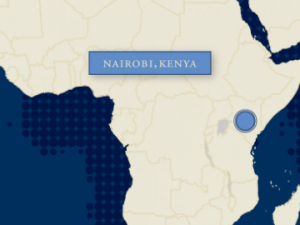
Africa Illegal Detention:Two Innocent Men Set Free in Kenya

After spending 75 days ‘unlawfully’ in prison, Shadrack and Joseph regained their freedom on April 18th, 2012. Thanks to the work of the International Justice Mission in Kenya, the organisation that worked tirelessly, against all odds to secure their release. This brings to the fore the notoriously sluggish machinery of justice in Africa, that an accused person can be made to suffer scorn and odium, for an offence he did not commit. As their lawyer said: ‘There is much more to be done to set the innocent prisoners free’.

One can only hope that the lawyer can go the whole hog to sue the relevant authorities for false imprisonment; deprivation of liberty; loss of income and consequently, make a claim for monetary compensation. ‘Exemplary’ and ‘aggravated’ damages might not be too far-fetched a claim to allege. As the maxim goes, for every right there is a remedy. Read herehttp://www.ijm.org/news/after-75-days-prison-two-innocent-men-are-set-free-kenya

Prisons in Africa: An Evaluation from a Human Rights Perspective

http://www.surjournal.org/eng/conteudos/getArtigo9.php?artigo=9,artigo_sarkin.htm In this article, Jeremy Sarkin makes a poignant argument for prison reforms in Africa. One constant theme dominates his discourse: the debasement, abuse and violation of the individual rights of prisoners. In almost all of the countries in Africa he cited, the anecdotal evidence clearly suggest the need for a different pathway to dealing with the question of prison reform, from a human rights perspective. In Uganda, he states - ‘For instance, two-thirds of the 18,000 inmates in Uganda have yet to be tried’. Ditto for South Africa, where as he contends; in South Africa Johannesburg prison, some inmates have not seen a judge in as many as seven years. In Nigeria, the situation is not any different, if not worse. He identifies the consequences of this parlous situation leading to - prison overcrowding; violation of pre-trial detention rights; dearth of prison resources and governance. He then concludes with solutions, which he narrows down to - alternative sentencing; the vigorous enforcement of prisoners’ rights vide the African Commission on Human and Peoples Rights; and the unique role of a Special Rapporteur on Prisons and Conditions. In conclusion, violation of prisoners’ rights is one veritable source, around which issues of wrongful convictions and the fight for the innocent, can be located, particularly in skewed systems in Africa, as highlighted by this article.

The Trajectory of Patrick Obinna Okoroafor’s Death Sentence

Patrick’s case is quite tragic. He was evidently a minor when he was ‘alleged’ to have commited the robbery and kidnapping for which he received a death sentence on May 30, 1997. His case is symptomatic of the essential nature of the justice system in Nigeria: from poor investigative techniques and skills of the police, to the poor representation by counsel. Indeed, it is difficult to exculpate the bench going by Amnesty International report. Why would the initial trial judge proceed to try a minor as if he were an adult? This case is just so confusing that you wonder if Amnesty International told the ‘whole truth’. I have no iota of doubt that they did. Now, the sensible thing is for the Governor to unconditionally grant Patrick clemency in exercise of his prerogative of mercy. Read full report here http://www.amnestyusa.org/our-work/cases/nigeria-patrick-okoroafor including background information on Patrick Okoroafor; prison conditions; and Nigeria’s normative international human rights obligations herehttp://www.amnestyusa.org/our-work/cases/nigeria-patrick-okoroafor/background-information-on-patrick-okoroafor.

The Amnesty International report concludes thus ‘Nigeria’s current prison system and legal proceedings are corrupt and inhumane. Individuals are being arrested arbitrarily and prisoners are being denied basic human rights. It is not uncommon for Nigerian citizens to be convicted of a crime they did not commit, presumed guilty before they stand trial or be denied an appeal processes. In some Nigerian states, the police and legal systems have devolved into corrupt bribery motivated networks’

Forensic DNA Technology has Stagnated in Africa

Forensic DNA technology has grown in leaps and bounds elsewhere in the world, except Africa. Whilst there is no doubting the utility of this technology to solving complex criminal investigation, African countries are still very reluctant to embrace it. There is only one forensic laboratory in Nigeria. It is located in Lagos and managed by the Nigerian Police Force. Given the serious credibility deficit by most government agencies, it is not unusual for serious applicants and accused persons to seek experts and expertise from outside Nigeria, in analysing forensic evidence. In Nigeria, post election appeals have tended to be heavily reliant on forensic evidence to determine or prove electoral fraud. And in almost all cases, the experts are imported from abroad. For more examples of how DNA could be used in Africa readhttp://www.forensicmag.com/article/dna-4-africa?page=0,0

‘An Eye for an Eye Leaves The Whole World Blind’

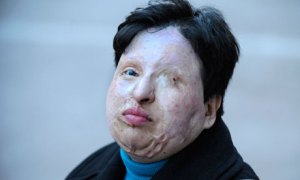
This epigram is famously associated with Ghandi and his teachings on non violence. Can justice ever cohere or be coterminous with this saying? What does it really convey jurisprudentially in the context of western style or Islamic/Sharia criminal law? Can a literal interpretation of the term truly serve the ends of justice? In countries like Nigeria with a dualist criminal law and procedure i.e. Sharia law operating side by side with western style criminal code, striking the right balance continue to pose problems at the level of interpretation and execution. It’s a different ball game with ‘theocratic’ Middle Eastern states, for instance - Iran, Saudi Arabia. The famous case of Ameneh Bahrami - who was blinded when a spurned suitor threw acid at her and she asked for the same to be inflicted on him - highlights the dilemma. Read her story http://www.guardian.co.uk/world/2011/may/13/iran-blind-criminal-acid

It compels us to ask, what is the purpose of crime and punishment in society? Reformation. Restitution. Or, to reach out for the eye of the convict. Each society must make that decision for itself to suit the mores, values, religion and culture of it’s people. I guess it is safe to say that, an eye for an eye should be at the lower end of that decision scale.

In Sierra Leone, Executive Meddlesomeness Led to the Wrongful Conviction of Mohamed Sesay

There are myriad of factors that enable wrongful convictions to happen. For Mohamed Sesay - a Sierra Leonean businessman - it was the mix of politics at the highest level of government, coupled with graft and state corruption that were the primary considerations. The legal system in Sierra Leone has in the past been plagued by inept corruption and extortion, where despite the nature of a case, if money exchanged hands, a wrongful conviction is inevitable. Flawed evidence were used to wrongfully convict Mohamed Sesay. Although Mohamed Sesay was eventually released, its unclear, if he, or his Attorneys pursued compensation from the government that wrongfully convicted him to serve a political purpose. Read herehttp://www.newstimeafrica.com/archives/23352