Category Archives: Africa

Nigeria: Plea Bargaining Your Way to Cheat Justice, is Prosecutorial Misconduct.

There is no doubting the original intendment of plea bargaining, as part of the mechanism for the administration of justice. In addition to a range of other factors, it helps prosecutors in a variety of ways to get at the root of crime. It helps to identify those ‘most responsible’ for heinous crimes, by inducing lesser accused persons to ‘snitch’ at the ‘big fish’; or, for the big fishes to break ranks and come clean with the level of their involvement in a crime. This way, large criminal rings, gangsters, the leading light of organised crime; and crimes of an endemic nature can be bursted, and those accused and successfully prosecuted are put behind bars for good. Unfortunately, in Nigeria, with organised crime like corruption - whether state and/or private sector led, or a combination of both like the Halliburton case - which is very secretive and goes right to the very top of organisations and government.

It is becoming increasingly difficult to shift when that balance is struck between when to accept plea bargaining by an accused person, and when to ensure that justice is done on behalf of society regardless. Prosecutorial powers in Nigeria lies in a number of agencies and statutory bodies, unlike in the United Kingdom where they rest squarely with the Crown Prosecution Service. This multiplicity and layers of bodies with prosecutorial powers, in a sense impacts the quality of evidence gathering; the decision to prosecute or not to prosecute; the quality, reach and extant powers of these bodies to deal with specific cases. However, only the Attorney General of the Federation have sole discretionary powers to enter a nolle prosequi. This is rarely ever exercised. And to be fair, when he does, the decision is more political than legal.

The level of corruption in Nigeria is alarming and way beyond tolerable limits, even by Transparency International standards. The recent initiative by the Economic and Financial Crimes Commission (EFCC) - the ‘apex’ corruption body - to give legal muscle to its powers to prosecute, decline to and accept plea bargaining, and on what terms should be commended. The National Assembly must make this an urgent national matter and deal with the legislation timeously. Nigerians are unanimous that corruption is one single enemy of Nigeria. Getting this legislation to pass through parliament is one sure way of combating it, to avoid the sort of miscarriage of justice where accused persons put on the dock for the theft of tens of millions of dollars, end up plea bargaining and making paltry sums of money in exchange, whilst getting away with their loot. For prosecutors to continue to allow this is to happen, is clearly prosecutorial misconduct. Read report about this here http://www.tribune.com.ng/sat/index.php/politics-today/7036-plea-bargain-and-corruption.html

Ethiopia: A New Criminal Policy in Place to Combat the Scourge of Wrongful Convictions

Ethiopia has taken a giant step in reworking its criminal policy. Until now, no articulate policy document or guidance existed, that provided a clear cut approach to criminal procedure and process, indeed, to criminal law reform. In connection with the wrongfully convicted, the new policy document states inter alia: ‘ If a person who is convicted of a crime and subjected to a death sentence imprisonment, or a fine, is later found actually innocent by a court through post conviction proceedings, the person, their heirs, or their spouse is entitled to a commensurate compensation of moral and material damage suffered due to the decision which subjected the person to the sentence’

Amongst other novel scheme, the policy makes provision for plea bargaining. Attempts were also made to push for the retrial of persons initially wrongfully acquitted, but evidence later emerges which implicates and conclusively prove their guilt. It failed. If someone is wrongfully acquitted and later evidence proving his apparent guilt is discovered, the prosecutor under the usual practice, is not given the right to demand a revision of the first verdict acquitting such defendant. Prosecutors are still trying to come to terms with the policy. Read further commentary herehttp://allafrica.com/stories/201203270611.html

It will be sometime yet for the full impact of this policy to percolate down the system of administration of justice in Ethiopia, given the very ‘conservative’ nature of the society, and a constrained political environment. Still, it is a good start.

Wednesday’s Quick Clicks…

  • CNN this Sunday night, March 25th will at 8pm EST in the U.S. will have a show on the topic of exoneree compensation (or lack thereof). Your DVR guide may indicate a different show (I think Dr. Sanjay Gupta) but I’m told it will be this show regardless
  • Houston beefing up spending on forensics and plans to make crime lab independent of prosecutors
  • How to attack shaky eyewitness identification testimony in court
  • Claims of innocents convicted and imprisoned in Zimbabwe in sham trials designed to stifle political dissent
  • The Innocence Network UK has posted its latest newsletter, which includes case updates and reform issues.
  • Death row exoneree Ray Krone to speak tonight at a public forum in New York

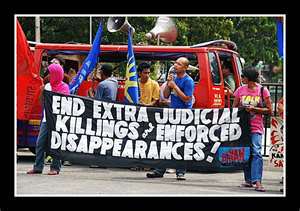
Nigeria: Extra-Judicial Killings and Police Brutality Spiralling

The rise and rise of the spate of police brutality in Nigeria, not only poses dire consequences for the stability of the Nigerian polity, but undermines the policing and judicial processes. In 2009, the Nigerian police was fingered in what turned out to be the extra-judicial ‘execution’ of Mohammed Yusuf, even though he was in the custody of the police and in cuffs. He was shot repeatedly at point blank range. Mohammed Yusuf was acclaimed to be the leader of the Boko Haram sect. Read BBC report here -http://news.bbc.co.uk/2/hi/africa/8544131.stm

The situation appears to have significantly deteriorated today. A detailed new report catalogued by the Daily Trust newspaper, demonstrates that the assault, brutality and extra-judicial killings is still going on under the watch of the Nigerian police. Read report here -http://weeklytrust.com.ng/index.php?option=com_content&view=article&id=8788:extra-judicial-killings-on-the-rise&catid=40:cover-stories&Itemid=26

It is hard to fathom how this situation can be reversed if the National Human Rights Commission; the Police Service Commission and the Judiciary dont take their statutory responsibilities seriously.

Saturday’s Quick Clicks…

March 20th: Matthew Puckett to Keep a date with the hangman’s noose

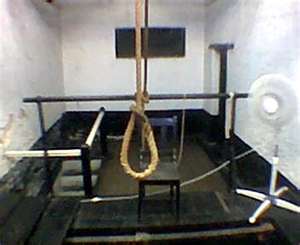
Matthew Puckett is slated for ‘execution’ by the state of Mississippi on March 20th, 2012. The death penalty - regardless of the heinousness of the crime - continue to raise dust and controversy wherever it is applied worldwide. It is about time we re-engage with the rationale, the humanity, as well as the emotional and spiritual arguments against the death penalty; especially, when it potentially raises the possibility, however slightly, of a wrongfully convicted person being taken to the gallows.

Jamie Arpin-Ricci (Author and Pastor) makes a powerful, emotional and ‘reasoned plea’ why Mathew Puckett should be spared the guillotine.Read herehttp://www.huffingtonpost.com/jamie-arpinricci/death-penalty-is-not-christian_b_1341706.html There is still enough time left to stretch the law to its limit. How you may ask? By signing the petition or contacting Mississippi’s Governor, Phil Bryant. A link is provided at the penultimate paragraph of the article

Why Do Innocent People Confess?

This question has puzzled criminologists, psychologists and criminal lawyers for centuries. It goes against the grain of all rational permutations, why a person would, on his own ‘volition’ own up to a crime he did not commit. Prof. Mark Godsey succintly restated the befuddling conundrum this way: ‘The idea that a suspect would falsely confess to a crime that he did not commit seems counterintuitive and nonesensical. Psychiatrists and social scientists are examining the reasons why false confessions occur, and we have a long way to go before we will have a complete answer’.

David K. Shipler in his article in the New York Times of February 23, 2012 attempted to grapple with the question. He identified shoddy police investigation; suspects apprehension and fear of the system - ‘They are susceptible to suggestion, eager to please authority figures, disconnected from reality, or unable to defer gratification’. In the case of children, he states: ‘Children think they will be jailed if they keep up their denial and will get to go home if they go along with interrogators’. As for adults, he opined that ‘Matured adults of normal intelligence have also confessed falsely after being manipulated’.

The penultimate and concluding paragraphs offers 2 suggestions which I consider apposite. He says -

1. ‘The police could be prohibited from lying about nonexistent evidence; from inducing a suspect to imagine leniency; from questioning minors without a parent or a lawyer present. They could be required to corroborate a confession with stringent evidence:

2. Finally, post-conviction challenges of confessions could be assigned to judges and prosecutors other than those who tried the original cases. The natural unwillingness to admit a grave error should not have to be overcome for justice to be done’

The full text of the article can be read herehttp://www.nytimes.com/2012/02/26/opinion/sunday/why-do-innocent-people-confess.html?pagewanted=2&_r=1&ref=falsearrestsconvictionsandimprisonments

Wrongfully Convicted in South Africa Forced to Wear Electronic Monitors after Release

I’ve blogged previously about the Wits Justice Project in South Africa and its first big win last year, where two of their innocence clients were released after 19 years in prison. They were released on parole rather than exonerated (even though the evidence of innocence was clear), were promised when released that the conditions of parole would be soon removed. Now, however, they are being forced into electronic monitoring pursuant to a new law in South Africa that requires all parolees of certain crimes to be monitored. Here is a letter from one of the wrongfully convicted to a government official complaining of this treatment:

Dear Mr. Nyambi

Kindly be informed that this morning we were called by the
Community Corrections office only to be told that next week Tuesday ( 13 March 2012 ) we’re going to be taken to Bloemfontein where we’re going to be tagged electronically and this is final.

Furthermore we were told to be ready on that particular time to be transported to Bloemfontein for this electronic tagging process to take place.

I personally take this as further humiliation and a severe torture, which is Continue reading

‘Wrongful Convictions and the Accuracy of the Criminal Justice System’

The above title is taken from the feature article by Prof. H. Patrick Furman. (Patrick is a Clinical Professor of Law in the Legal Aid and Defender Program; and a Director of Clinical Programs at the University of Colorado School of Law). It is amazing how the issues we contend with today has always been there with us. The causes, effects, consequences and impact has always been the same.

It’s like we never noticed. Yes, never noticed, until we look more intently at the skewed nature of justice; and how some unfortunate folks are at the receiving end of society’s negligence, indifference and sometimes, outrightly living in denial. Prof. Patrick’s article is well researched. Read the entire piece in ‘The Colorado Lawyer’ here http://lawweb.colorado.edu/profiles/pubpdfs/furman/03SeptTCL-Furman.pdf

‘Bryan Stevenson: We need to talk about an injustice’

This 23minutes 41seconds talk by Bryan, will simply blow up and open your mind to a whole new perspective of crime, society, criminal (in)justice, mass incarceration, death penalty, ‘identity/race’ question in the United States. The opposite of poverty is injustice. In a sense therefore, this can be replicated mutatis mutandi whether in the United States, Europe or Africa. It demonstrates clearly, there is work to be done. It was also striking to know that there is no death penalty in Germany. The entire footage can be viewed here.

Meet the Wits Justice Project (South Africa)

The Wits Justice Project at Witswatersrand University in Johannesburg formed in 2008, modeled on the Innocence Projects the U.S. The Project is based in the journalism school at Wits U., thus is similar in nature to the projects at Northwestern (Medill Innocence Project) and the Innocence Institute of Point Park University.

I visited the Wits Justice Project in 2010 and learned a lot about their set-up and the unique challenges they face in South Africa. Their operations are impressive. They have a larger staff, infrastructure and office space than most projects in the U.S. and U.K. And they are aggressive and do good work, having already obtained freedom for 2 clients and held a major conference to raise awareness in South Africa. This article, entitled Crusaders for the Innocent, gives a good overview of the program.

Me, Michele Berry-Godsey, Jeremy Gordin and other members of the Wits Justice Project

Fighting for the innocent in South Africa includes a unique facet that doesn’t exist in many other legal systems. WJP summarizes the problem as follows:

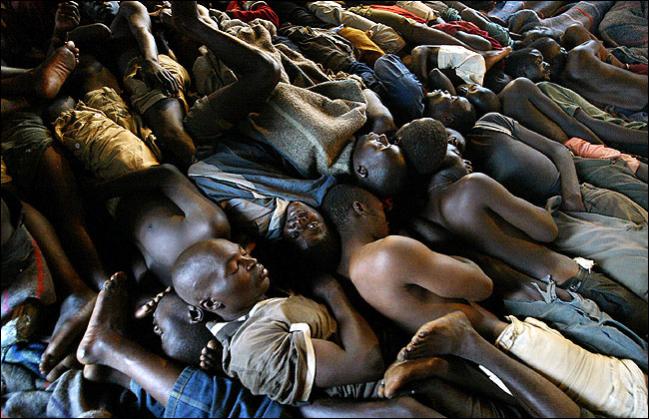
In its 2010/2011 Annual Report3, the Judicial Inspectorate for Correctional Services gave the number of inmates in the country as 160,545. Of these, 47,880 (30%) are remand detainees and have been behind bars, some for years, waiting for their trials to begin or reach conclusion. Yet approximately 2 in 5 of these inmates will eventually be acquitted. This means that a staggering number of innocent people are being deprived of their freedom

The Wits Justice Project_2012 Annual Plan is quite ambitious, and includes production of a documentary television series to raise awareness in South Africa of wrongful conviction and lengthy pretrial detention of the innocent.

In January, famed journalist and former director Jeremy Gordin left the project and was replaced by Nooshin Erfani-Ghadimi. Before joining WJP as project coordinator, Nooshin was the humanitarian diplomacy senior officer of the International Federation of Red Cross Red Crescent Societies, working in the 49 sub-Saharan African countries.

Nooshin Erfani-Ghadimi, WJP project coordinator

The rest of the WJP team, and their biographies, can be found here.

Corruption in Nigerian Courts that Leads to Wrongful Convictions

The long arm of the law was finally long enough to nab former Nigerian Delta state Governor James Ibori. The investigation and trial in the UK lasted more than 7years before a conviction was secured. Well, technically he was said to have pleaded guilty for the charges to be dropped. One and the same you might say.

The UK conviction however exposes the current state of rot, incompetence and corruption within the Nigerian bench. Or, how else do you explain the clean bill given to Ibori, on same or similar charges by the Nigerian high court, for which he has now finally been convicted and awaiting sentence on the 16th of April? This initial wrongful acquittal is emblematic of the problems that leads to wrongful convictions in Nigeria, where justice is dispensed to the highest bidder, whilst indigent accused persons languish for years in detention centers. For a fuller report, read Andrew Walker’s report on BBC news herehttp://www.bbc.co.uk/news/world-africa-17184075

Eyewitnesses: As Certain as they were Wrong

One of the imponderables of behavioural science, is how we remain ‘certain’ of uncertainties. A lot of research work in this area of psycho-analysis still remain work in progress; still police and state prosecutors continue to place premuim, sometimes sole reliance on evidence of eyewitness(es) like they were ‘gospel truths’. It is interesting how what we think we know, saw or even percieve can be the diametric opposite. We are still a long way from developing a body, or set of scientific knowledge or proof to achieve exactitute with our conclusions. The last 2 - 3 decades witnessed such phenomenal leap in forensic science, biometrics, DNA and technology that we still dont yet know all that we need to ‘know’.

The New York Times columnist Adam Liptak in his article entitled ’34 Years Later, Supreme Court Will Revisit Eyewitness IDs’ made certain profound and provocative analysis and conclusions worth reading. The issues raised continue to be relevant in our search for justice for those unjustly treated by the system; or victims of the tunnel visions of prosecutors and shoddy investigative work by the police. The full article can be accessed and read here at http://www.nytimes.com/2011/08/23/us/23bar.html

Is the ‘Legal Aid Architecture’ failing Nigerians?

The statistics are grim. 65 percent of inmates in Nigerian prisons have never been convicted of any crime. Waiting trial period has increased dramatically from 5years to upwards of 10years or more. The police and prison authorities continue to trade blames. Only one in seven inmates awaiting trial have access to private legal representation. Most prisoners are too poor to engage the services of a lawyer. To read more click here www.pmnewsnigeria.comThe shame of a nation

This situation exactly was the objective of setting up the Nigerian Legal Aid Council in the mid 70s: to provide free legal representation, assistance and advice, together with alternative dispute resolution services to indigent prisoners. Read more of the Council’s stautory responsibilities here www.legalaidcouncil.org.ng The Council has been struggling to make its impact. Admittedly, the Council’s constraints are primarily funding and capacity.

The recent passage and Assent by the President to the new Legal Aid Amendment Act 2011, has been hailed as one way of providing the needed impetus for the Council to act pro-actively, and take their responsibilities more seriously. The Act contains a lot of innovative provisions and strategies for tackling not only the knotty question of legal representation, but addressing the quality of justice delivered. It is still early days to make a definitive impact assessment. One thing is certain though, the Council will need to sit up and justify the tortuous process of ensuring that the 2011 Act was passed into law. No more excuses. Tens of thousands of prisoners are languishing in jail houses, in utter violation of their constitutional rights.

Monday’s Quick Clicks….

  • Northern California Innocence Project client Maurice Caldwell adjusts to life on the outside one year after being exonerated…..
  • the Supreme Court of India has ruled that mere “procedural errors” alone cannot be a basis for overturning a criminal conviction…there must also be a miscarriage of justice in the case before the conviction can be quashed….
  • Amanda Knox signs a multi-million dollar book deal….
  • a former prosecutor (now a judge) in Texas faces an inquiry for allegedly hiding exclulpatory evidence in a case….related commentary by Nancy Petro here….
  • Mississippi Innocence Project Director Tucker Carrington is a featured speaker at the University of Arkansas….
  • Geography-the rural/urban divide-impacts quality of justice in South Africa…
  • a documentary film on the West Memphis 3 wrongful conviction case nominated for Academy Award….
  • Massachusetts passed bill giving inmates access to DNA testing to prove their innocence….
  • this week is Innocence Week at Cardiff Law School in Wales….
Gallery

Trial by Jury: Is It About Time for Nigeria?

Nigeria’s adversarial justice system, pitches the prosecutor against the defense, in a fierce evidential ‘duel’ as to the guilt or otherwise of an accused person. That leaves a stand-alone bench to determine - on the basis of the weight of … Continue reading