Category Archives: Editorials/Opinion

The Sex Offender Registry Strikes Again

We’ve posted  here before about the insanity and injustice of the sex offender registries. Please see Sex Offender Registries – TIME-FOR-A-CHANGE.

A recent CNN article captures the situation very well. This quote from the article by a judge familiar with the case: “If we caught every teenager that violated our current law,” says former Judge William Buhl, “we’d lock up 30 or 40 percent of the high school. We’re kidding ourselves.”

See the CNN story – “How a dating app hookup landed a teen on the sex offender registry” – here.


“Toe Tag Parole” – a Documentary About Extreme Prison Sentences in the US

TOE TAG PAROLE: TO LIVE AND DIE ON YARD A

CAPTURING THE REALITY OF AMERICA’S EXTREME SENTENCING POLICIES AT A CALIFORNIA MAXIMUM SECURITY PRISON, DEBUTS   AUG. 3 ON HBO

More Than 50,000 Americans, Consisting of Men, Women And Juveniles, Are Currently Sentenced To Life Without The Possibility Of Parole – America is the most punitive nation in the world, handing out historically harsh sentences that largely dispense with the concept of rehabilitation.

Alan and Susan Raymond (Oscar® and Emmy® winners for HBO’s “I Am a Promise:The Children of Stanton Elementary School”) explore the reality of “the other death penalty” in TOE TAG PAROLE: TO LIVE AND DIE ON YARD A, debuting MONDAY, AUG. 3 (9:00-10:30 p.m. ET/PT), exclusively on HBO.

Other HBO playdates: Aug. 3 (5:05 a.m.), 6 (4:15 p.m., 12:30 a.m.), 7 (8:00 a.m.), 9 (3:00 p.m.) 11 (3:00 p.m.) and 15 (10:00 a.m.)

            HBO2 playdates: Aug. 12 (8:00 p.m.), 20 (12:30 a.m.), 23 (9:05 a.m.) and 25 (12:45 p.m.)

Featuring exclusive, unprecedented access, TOE TAG PAROLE: TO LIVE AND DIE ON YARD A was shot entirely at California State Prison, Los Angeles County, a maximum-security facility in the Mojave Desert.

Continue reading

A Broken Justice System – Cases in Point – Part 1 – The Case of Ryan Madden

From time to time, I become aware of cases that are particularly good examples of the flaws, problems, shortcomings, and actual injustices of our so-called justice system that I have been writing about here for the last 3 1/2 years. I thought it would be good to highlight some of them for the blog.

As a backdrop to this series, I’d like to refer you to The Blaze article The American Nightmare: The Tyranny of the Criminal Justice System by John Whitehead. Please also see our previous post Why I Think the US Justice System is Broken – and Why It’s Not Getting Fixed.

Part 1” is the case of Ryan Madden in California.  Here is what I think this case exemplifies:

1) Bad defense lawyering leading to a wrongful conviction and exclusion from the appeals process.

2) The fact that you can pay huge sums of money to a lawyer who screws up your case, and you still get wrongfully convicted, and …. the lawyer keeps the money.

3) The existence of arbitrary “time bars” in the law that serve only to value legal process and finality of judgement over true justice.

4) The fact that so-called “conviction integrity units” are, in my opinion, still under the complete and arbitrary control of the prosecutor, and are not a reliable remedy for wrongful convictions. (Please see our previous post, Conviction Integrity Units – A Skeptic’s Perspective.)

Ryan’s father, Michael Madden, posted a comment regarding his son’s case to the WCB article Equal Justice Under Law … Well … Just How Much Justice Can You Afford?  His comment follows (with his permission), and is self-explanatory.

_______________________________________________________

My son is currently serving 15 years for two armed robberies he did not commit. Shoddy and lazy lawyering led to his conviction through a myriad of miscalculations and mistakes, including failing to have ATM pictures of the actual suspect photographically enhanced.

During the appellate process, his once highly regarded attorney submitted his appeal 35 days too late, leading to the mounds of exculpatory evidence gleaned postconviction to be ADEPA time barred. He stands a very good chance under this system of NEVER having ANY of the exculpatory evidence considered by the courts… Including an actual confession letter written by the real perpetrator.

Even though his attorney miscalculated the allowable time frame in which to submit his appeal, my son is paying the price for his mistake, while the attorney suffers no consequences AND keeps the $85,000 fee.

In a last-ditch effort to have someone – ANYONE – examine the evidence, his fate now rests in the hands of the Ventura County Convictions Integrity Unit. Even though they are playing with taxpayers money, it’s amazing how frugal they become when it comes to spending it on possibly overturning a conviction they received nine years ago.

How did this “justice” system ever arrive at a place in which the timeliness of an appeal involving actual innocence trumps actual innocence?

_______________________________________________________

Michael maintains a website about his son’s case: innocentinmate.com

“Part 2,” and more, to come in future.

Thursday’s Quick Clicks…

Sam Gross, editor of the National Registry of Exonerations, recently wrote an editorial for the Washington Post: The Staggering Number of Wrongful Convictions in American

In Hawaii, attorneys say they can prove that the investigation and prosecution resulting in Taryn Christian 1995 murder conviction were rife with fraud

Illinois exoneree Alprentiss Nash who was convicted of murder in 1995 and released in 2012 after DNA tests proved his innocence, was fatally shot Tuesday after an argument

New York’s highest court denies State’s appeal of 2014 court decision overturning the 1993 kidnapping convictions of Everton Wagstaffe and Reginald Connor…

New Conviction Integrity Unit formed in Orange County, New York…

The Junk Science of Bite Marks Needs to Go Away

We’ve posted about bite mark junk science here before. See About Bite Mark Evidence – Forensic Odontology.

Now, a leading White House science advisor has exhorted the National Institute of Standards and Technology (NIST) to eliminate bite mark evidence, because there is, in fact, no science to it at all. See Radley Balko’s recent article in the Washington Post here.

Balko also correctly advocates in his article that we MUST get trial court judges out of the business of being the decision makers about what is, or is not, valid science. “If not a single court in the country to date has been able to rule against a self-evidently absurd field like bite mark matching, why should we continue to entrust the courts to arbitrate the scientific validity of other evidence?

Why so Many “Confessions” in Shaken Baby Syndrome Cases?

In suspected SBS cases, the child abuse pediatricians (CAP’s) and the police are perfectly willing to coerce a confession out of you, and they have circumstances on their side, because you are at your most vulnerable. You are terribly concerned about the condition of your child, or worse yet, your child has just died. (See our previous post on child abuse pediatricians here: The Child Abuse Pediatrician (CAP) – Just Another Term for Medical “Cop”)

We’ve posted about SBS “confessions” before. See Shaken Baby Syndrome (SBS) – A CBS Report: Blaming Melissa for the coerced “confession” of Melissa Calusinski. See Scenes of a Crime – A Documentary of a False Confession and Blatantly Coerced Confession Results in Conviction Reversal for the coerced “confession” of Adrian Thomas.

Washtenaw Watchdogs (Washtenaw County, MI) has just published an investigative report article on their website dealing with this very issue. It’s very powerful. See it HERE.

Quote of the Day – About Prosecutors

From Cynthia Roseberry:

“We, as criminal defense lawyers, are forced to deal with some of the lowest people on earth, people who have no sense of right and wrong, people who will lie in court to get what they want, people who do not care who gets hurt in the process. It is our job – our sworn duty – as criminal defense lawyers, to protect our clients from those people.”

Cynthia Roseberry

Of course, you know who the “people” are that she’s taking about.


Equal Justice Under Law? . . . Well . . . Just How Much Justice Can You Afford?

ejul

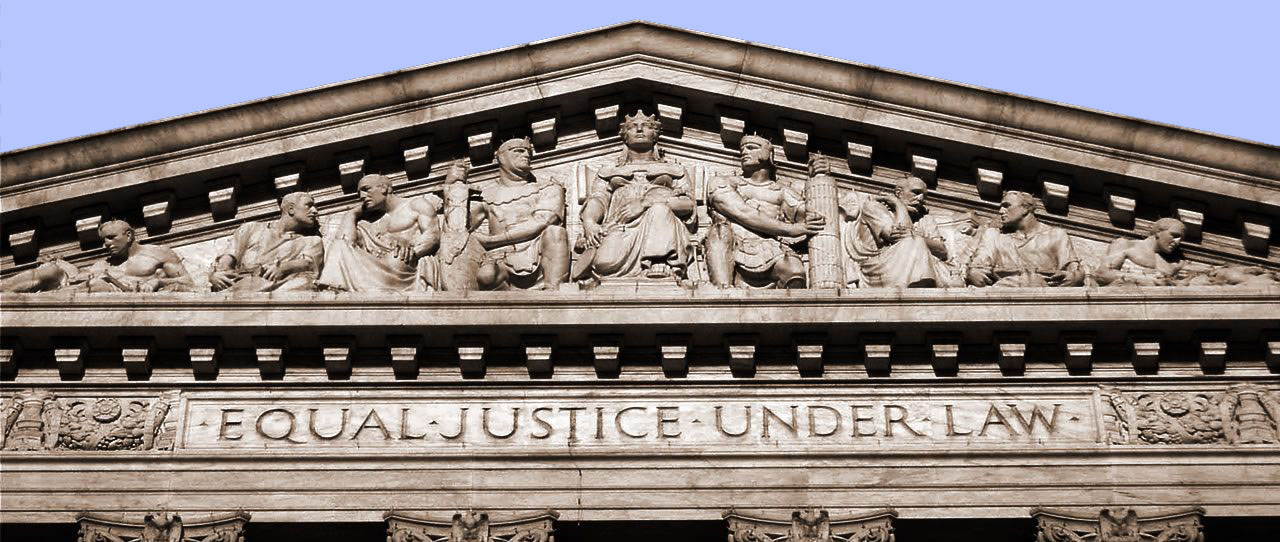
The words chiseled in stone above the entrance to the U.S. Supreme Court building say, “Equal Justice Under Law.” A truly noble philosophy – in theory.

But in actual fact, there’s nothing “equal” about justice in this country, and we’re not talking about racial, ethnic, religious, or gender issues here; although they certainly are a factor.  It’s a matter of just plain old “dollars and cents,” coupled with the statistical distribution of human capabilities. That is, the better the lawyer, the more money he/she can, and will, charge. This should not be surprising. It’s Economics 101 – supply and demand – the very bedrock foundation of capitalism. The better lawyers will be in higher demand – for those that can pay for them – and will consequently charge more money for their services. Lawyers are just like any other profession – doctor, mechanic, engineer, carpenter, tailor, chef, etc. – there’s a range of individual capabilities from “good” to “bad,” and the “good” one’s cost more money.  There’s an old saying in the legal business: “How much justice can you afford?” There’s no secret – the more you can pay for an attorney, the more effective your defense will be; and – if you’re actually innocent – the better your chances of a just outcome.

The law has become so incredibly vast, intricate, and complex, it’s no wonder that there have to be legal “specialties” – tax law, corporate law, patent law, estate law, non-profit law, contract law, political law, insurance law, criminal law, and on and on and on. It’s so complicated, even the lawyers can get it wrong. But the better lawyers are better at getting it right and in presenting an effective and successful case.

Continue reading

Judge Kozinski: Time to Rein In Prosecutors

Alex Kozinski is a judge of the Ninth US Circuit Court of Appeals. He has previously been outspoken regarding prosecutorial misconduct, and has recently authored an article for the Georgetown Law Review on the subject.

See the Wall Street Journal Law Blog article here. In the WSJ article, you’ll find a link to Judge Kozinski’s full article, which is lengthy, but the WSJ article provides a reasonable summary.


Rape Conviction Vacated with Support of Prosecutor

Quentin Carter, 40, maintained his innocence throughout nearly 17 years in prison following his conviction of the 1991 rape of a 10-year old child. He was likely denied parole numerous times because he would not express remorse for a crime he didn’t commit.

Carter was 16 when convicted. He was released in 2008 but was registered as a sex offender with all the restrictions this designation carries.

Kent County (MI) Prosecutor William Forsyth was instrumental in vacating Carter’s wrongful conviction, which occurred by order of a judge last Thursday. Continue reading

Monday’s Quick Clicks…

Wisconsin Innocence Project client Dan Scheidell’s 1995 conviction for sexual assault was vacated last week after DNA evidence implicated another individual…

Texas exoneree Anthony Graves who spent 12 years on death row before being exonerated in 2006, has been appointed to the board of directors for the Houston Forensic Science Center…

Former President of Ireland Mary McAleese and many others attended and spoke at the first International Innocence Conference held in Dublin, Ireland last weekend…

A Michigan man has been cleared of a 1992 rape after serving 17 years in prison for the crime…

According to LA District Attorney Jackie Lacey, Conviction Integrity Units are needed in order to preserve the integrity of prosecutor’s offices across the country…

Sharing Views on Prosecutorial Reform

If you’ve read much of my stuff on this blog, you must know that prosecutors, as a group, are not my favorite people. I am a person driven by logic, fairness, reason, and justice. Given their position, I would expect prosecutors to be the same. After all, they’re supposed to be “ministers of justice,” but my observation is that it’s so often not the case. I will grant that because of the work that I do, I routinely have exposure to prosecutorial behavior that is less than ethical, is not in the interest of true justice, and is sometimes just criminal. And because they’re “prosecutors,” they get away with it. I do not believe that prosecutors are inherently evil and unethical people; but they are human beings, subject to all the same human frailties that we all are. In fact, I believe their behavior is exactly what you would expect, given the incentives built into the system and the power with which they are endowed. What the actual extent of this problem is I’m sure we’ll never know, but I do know that I see it routinely, and I can only report what I observe.

As background, it would be helpful for you to see our earlier post regarding prosecutorial misconduct from two years ago: Prosecutorial Misconduct – What’s to be Done? A Call to Action. And as an update to this article, the National Registry of Exonerations now totals 1,618 wrongful convictions overturned as of this writing, and 46% of those had “official misconduct” as a contributing factor.

Continue reading

Prosecutors, Charge Stacking, and Plea Deals

We’ve posted several times on the blog about how prosecutors will “stack charges” against a defendant, thus building a very long potential prison sentence if convicted, and then approach the defendant with a “plea deal” that would result in a guaranteed, substantially reduced charge and sentence if the defendant agrees to plead guilty to the reduced offense. If the defendant takes the deal, the prosecutor doesn’t have to take the case to trial, and possibly not even to a grand jury, both of which are a lot of work and require a lot of time on the part of the prosecutor. This has become absolutely standard practice. The prosecutor will “stack” charges to build such a scary potential sentence, that even actually innocent people will be intimidated into pleading guilty, rather than face what’s called the “trial penalty ” – that very scary long sentence if they should somehow be convicted at trial. Not surprisingly, the nature of the deal offered by the prosecutor will be driven by how strong a case he/she thinks they would have in court – the weaker the case, the better the deal.

Let me also add that the prosecutor has no problem assembling a very long list of charges against you. The penal code has become so vast, and there are so many laws, that there’s a law against practically everything. I suggest that most people are not even aware they’re breaking a law when they do it, because they don’t know the law exists. I swear; I think they could charge you with something for walking down the sidewalk whistling a tune while wearing a blue shirt.

Continue reading

“Anti-Snitch” Bill in North Carolina ‘Dies’ in the Legislature

Making deals with snitches — just one of the more loathsome practices of prosecutors, and it happens all the time. Here’s how it works. A prison inmate (snitch) who has contact in prison with the defendant in a case comes forward, and claims that the defendant confessed to him in prison, or that the defendant bragged about the crime, or said things that implicated himself in the crime. In “exchange” for his testimony against the defendant the snitch is granted favorable treatment by the prosecutor – reduced sentence, reduced charges, early release, etc. Snitches can also be people who are not in prison, and get paid money for their testimony, or have pending charges dropped. Snitch testimony is often totally fabricated, and the snitch is lying just to get the deal from the prosecutor or to get the money. Snitches will read newspaper reports of crimes to learn just enough detail about a crime to give some credibility to their fake claims about what the defendant said to them. And when prosecutors put snitches on the witness stand, you can’t tell me they don’t know the testimony is bogus. However, it’s not uncommon for snitch testimony to be the deciding factor in a conviction.

North Carolina has been among the leaders in addressing the problem of wrongful convictions, including establishing the first state innocence commission, the North Carolina Innocence Inquiry Commission, in 2002. And recently in North Carolina, the issue of perjurious snitch testimony has bubbled to the surface. A bill under consideration in the legislature would bar a conviction based solely upon incentivized (snitch) testimony. However, that bill has now essentially died in the legislature after intense lobbying from the North Carolina Conference of District Attorneys.

This from the publication INDY Week: “Supporters called it one of the strongest bills in the country that would protect criminal defendants from lying jailhouse snitches. But now, the I. Beverly Lake, Jr., Fair Trial Act is on life support, blocked by N.C. House leadership after pressure from the state’s Conference of District Attorneys.”

See the INDY Week story here.

Given North Carolina’s heretofore forward thinking on wrongful convictions, I am dismayed by this; but, it’s just yet another obstacle to overcome – so upward and onward. The fact that this bill has even been under consideration is a source of encouragement, because it means that some legislators actually understand some of the problems.


Judge Disqualifies All 250 Orange County, CA Prosecutors !

In Orange County, CA, a case, in which the justice system should have been at its best, has deteriorated into a revalation of incompetence, corruption and perjury involving police, sheriff’s deputies, county counsel, and prosecutors. It has also come out that this systemic corruption, involving rights violations, “professional” jailhouse snitches, and secret police files, has been going on for decades.

As a result of these disclosures, the judge in the murder trial of the worst mass murderer in Orange County history has disqualified all 250 Orange County prosecutors from the case.

See the Daily Kos story here.

And see a supporting story from the OC Weekly here.

New Doubts are Cast on Shaken-Baby Diagnoses

Here is a recent article from the Boston Globe on developments in the diagnosis of Shaken Baby Syndrome (SBS/AHT), and their relation to the justice system. See the article here.

One more step on the road to scientific truth, but it’s going to be a long journey. To paraphrase Nobel physics laureate Max Planck, “Science advances one funeral at a time.”

A Profile in Courage – Ricky Jackson’s 39 Years in Prison

This past Wednesday, I was privileged to be present when Ricky Jackson addressed a group of people at the University of Cincinnati. In November, 2014, Ricky, along with two of his boyhood friends, the Bridgeman brothers, was exonerated of a murder he did not commit, and for which he spent 39 years in prison, including 2 1/2 years on death row.  See the previous WCB coverage of this here. I was so moved, that I felt compelled to write about my impressions.

Ricky spoke at some length about his experiences, his feelings about it all, and his perspectives and future plans.  I must say he is eloquent, articulate, intelligent, compassionate, humorous, and possessed of humility. He is the kind of person I would be honored to call a friend.

I won’t try to relate the details of his case or his experiences. For that, please check the link cited above, and the links within that article.  But know that I sat there in wonder as he spoke about all this without the slightest trace of anger, resentment, or bitterness. How a person can endure what he did, and come out of it with his attitude and perspective is just about incomprehensible to me.

I have to wonder also what this man might have accomplished during those 39 years had he not been in prison. Those 39 years were stolen not just from Ricky Jackson, but from us – all of us – because this is a man who clearly has the ability to have a positive influence on other people and on society as a whole. I’m sure Ricky has very definite knowledge of what this has cost him, but we’ll never know what this has cost us. And on top of that . . . the real murderers are still out there.

And of course, this begs the question – how many more Ricky Jackson’s are there still in prison in this country?


These Are the Wrongful Conviction Cases That Haunt Me

I’ve been doing “innocence work” for seven years now.  So …. just what is it that I do? I am Science & Technology Advisor to the Ohio Innocence Project at the University of Cincinnati College of Law and to the Duke Law Wrongful Convictions Clinic at Duke University. This means I advise on cases that include factors involving science and/or technology – usually forensics. I will also advise any innocence organization or agent that requests my input, and I do this pro bono. I do some other stuff too, like write for this blog, but those are the roles in which I get involved in case work.

During this seven year period, I’ve had personal involvement – meaning I’ve actually done work – in 63 cases in eight states and two foreign countries; and have had exposure to the details of probably 100 more cases on top of that. I’ve been privileged to be a small piece of the puzzle in five exonerations; and, in four cases, my work has contributed to confirming that the defendant was actually guilty. We consider confirming guilt to be a good outcome, because it means that justice has been properly served. We’re not trying to get everybody out of prison – only the people who are actually innocent.

We relish talking about the successes, the exonerations, but nobody ever hears about the failures. I count a failed case as one in which, based upon careful and intensive study of all the facts, testimony and evidence, we (I) are absolutely confident that the defendant is actually innocent; but our efforts to exonerate have not succeeded, and there’s really nothing more we can do. Sadly, the failures occur much, much more frequently than the successes. There are no good data for this, but in my experience, an exoneration takes years of time (average about 7), thousands of hours of total effort by a great many people, and, in some cases, thousands of dollars. And the failures can take just as much as the successes, if not more.

Most of the cases I’ve worked remain “open,” at least technically, but there are some for which we have seemingly come to the end of the legal road, and there’s little, if anything, that can still be done. There are five of these cases, in particular, that keep me awake at night, because I get so outraged and frustrated by the injustice. I thought I would share them with you, so you might get some idea of what the people doing innocence work have to deal with on a daily basis. Since these cases are unresolved, I will not reveal any names, dates, or places, and will provide only sketchy details of the incidents involved, but you’ll get the idea.

Continue reading

Exonerees Earn Law Degrees; Become Innocence Attorneys

Many exonerees, upon release from prison, undertake some form of innocence work. After all, being wrongfully convicted and incarcerated has to qualify as one of the most profoundly life-altering events a person can endure. So it’s not surprising that many dedicate the rest of their lives to trying to fix the broken system that wronged them so terribly.

There are even some who go on to earn a law degree, so they can confront the system in a personal and “head-on” way. Several of these “JD-carrying” exonerees were featured in the recent edition of the American Bar Association Journal.  See the article from the ABA Journal here.


Will They EVER Fix Forensics ?

We (I) haven’t posted here about forensics for some time, and the pot is long overdue for a stir. This post was triggered by a recent piece in the NY Times – Fix the Flaws in Forensic Science – see that NY Times story here. The Times story was in turn triggered by the recent “announcement”  (admission) by the FBI that FBI agents had been giving scientifically unsupportable testimony regarding microscopic hair comparison in thousands of cases for decades.

Because of a belief and fear that much of forensics was flawed, the NAS Report (National Academy of Sciences), Forensic Science in the United States, A Path Forward, was commissioned by Congress in Fall of 2005. The report was published in 2009. The report issued a scathing condemnation of the current state of forensic “science.” It was, of course met, with a firestorm of resistance from the forensic and prosecutorial communities. Regardless, the US Department of Justice and the National Institute of Standards and Technology announced the joint creation of a National Commission of Forensic Science (NCFS) in 2013 – see previous WCB posts here, and here.

The NCFS did not hold its first meeting until February, 2014. The Commission released its first nine drafts of policy statements for public comment in October, 2014. In January, 2015, it officially adopted three of those statements. The adopted policies are highlighted in the list below:

ncfs recs

While this has been going on, the sole federal judge on the commission, Jed Rakoff, resigned just last January in protest over the Justice Department’s position on an issue that would continue to favor prosecutors at the expense of full pretrial evidence exchange. There has since been an accommodation reached, but I suspect this is indicative of the Justice Department’s opposition to truly changing anything. This also causes me to wonder greatly about the objectivity of all the commission members.

Keep in mind also, that the commission is only empowered to make policy recommendations. It has no powers of oversight or enforcement, and no way to administer the adoption of its recommendations. My reading of the “tea leaves” here is that the advocates for the Justice Department and the existing forensic community have successfully kept the commission mired in politics and committees. So … there you have it. Six years after the publication of the NAS Report, a federal commission with no powers has adopted three policy recommendations.

In the meantime, the traditional forensic science community has been motoring along as if the NAS Report never happened. At the most recent American Academy of Forensic Sciences meeting, there was an active session on forensic odontology (bite mark analysis); a discipline for which the NAS Report states there is absolutely no scientific basis.

Do you wonder why I ask, “Will they EVER fix forensics?”