Category Archives: Editorials/Opinion

Justice for Sale at the Highest Level?

Lobbyists Pursue State Attorneys General

From an October 28, 2014 NY Times story:

“Attorneys general are now the object of aggressive pursuit by lobbyists and lawyers who use campaign contributions, personal appeals at lavish corporate-sponsored conferences and other means to push them to drop investigations, change policies, negotiate favorable settlements or pressure federal regulators.”

See the NY Times article here.

This is yet another reason why ‘prosecutor’ should not be an elected political position.  It exposes the position to a host of pernicious incentives.

Jennifer Thompson Promotes the Justice for All Act

Jennifer Thompson has been featured on the WCB before.  She authored, along with Ronald Cotton, the book Picking Cotton.  Ms. Thompson incorrectly identified Ronald Cotton as the man who raped her, and Cotton spent 11 years in prison before DNA proved he was not guilty.  After his release, Ronald and Jennifer became friends, and co-authored the book, which chronicles the events of the rape and the wrongful conviction.

Ms. Thompson has recently written an op-ed for The Hill in support of reauthorization of the Justice for All Act to ensure that post-conviction DNA testing remains accessible.

See the original posting on The Hill here.  The text of her piece appears below:

October 26, 2014
Harm multiplies when the innocent are wrongly convicted
By Jennifer Thompson

In June of 1995, I found myself on a journey I never wanted, never asked for and never would have wished on another human being. I learned that the man whom I had identified in court as my rapist – the man whose face, breath and evilness I had dreamt about for 11 years – was innocent. The man whom I believed had destroyed me that night, who had stolen everything from me, and whom I hated with an all-consuming rage had lost 4000 days, eleven Christmases, eleven birthdays, and relationships with loved ones. And on June 30th of 1995, Ronald Cotton, the man I had hated and prayed for to die, walked out of prison a free and innocent man.

My rage and hatred had been misplaced. I was wrong. I had sent an innocent man to prison. A third of his life was over, and the shame, guilt and fear began to suffocate me. I had let down everyone — the police department, the district attorney’s office, the community, the other women who became victims of Bobby Poole, and especially Ronald Cotton and his family.

Several years after Ronald was freed, I received a phone call from Bobby Poole’s last victim. I remember hearing her story about what happened to her and realizing that we all had left him on the streets to commit further crimes – rapes — that we possibly could have prevented if Ronald had not been locked up for something he had never done. The knowledge that Mr. Poole had been left at liberty to hurt other women paralyzed me and sent me into a backward spiral that took years to recover from. This journey has taught me that the impact of wrongful convictions goes so much further than a victim and the wrongfully convicted. The pool of victims from 1984 was huge – me, Ron, the police department, our families, and the other women who became victims of Bobby Poole all suffered.

This case crystalized for me why it is so important to have laws in place that protect the innocent. Those laws would be important enough if they only protected the innocent, but they do so much more. They also protect the potential victims of real perpetrators, the families and children of the wrongfully convicted person, and – ultimately – the victim who learns the truth.

The Justice for All Act, which is up for reauthorization by Congress, allows men like Ronald to obtain post-conviction DNA testing that can lead to their freedom and to the conviction of the guilty. Without access to such testing, innocent men will remain in prison, real perpetrators will remain free, and new victims will have to experience the same horrors and indignities that I did. I urge Congress to pass the Justice For All Act now so that we can live in a world where the truly guilty are behind bars and the innocent are free.

Thompson is the co-author with Ronald Cotton of the book Picking Cotton, a memoir they wrote together after DNA testing proved that Cotton had been wrongly convicted of raping Thompson as a college student.

Progress on the Road to Valid, Reliable Forensics

NASNCFS

The National Academy of Sciences of the United States published it’s Congressionally commissioned report,  “Strengthening Forensic Science in the United States – A Path Forward,” in 2009.  This was in response to the realization that a lot of what goes on in forensics can be called “junk science.” That is, much of it is not scientifically proven, is not statistically valid, is not reliable, and is very subject to the biases of individual examiners. We have featured the NAS report previously on this blog here, here, and here.

Not surprisingly, the NAS report was met with “stonewall” and dismissive resistance from the extant forensics community, as well as the National Association of District Attorneys.  However, the report succeeded in bringing forensics under the scrutiny of scientific discipline, and made the public aware of its many shortcomings and failings.  Subsequently, it was announced in 2013 that the US Department of Justice and the National Institute of Standards and Technology (NIST) would jointly form the National Commission on Forensic Science to provide guidelines and recommendations for the conduct and use of forensic technology.  The first meeting of the Commission was in February, 2014.

Continue reading

Update on the Hannah Overton Case

Five days ago, we happily posted here that the Texas Court of Criminal Appeals had overturned Hannah Overton’s conviction for murdering her 4-year-old stepson by salt poisoning.  The basis for the ruling was ineffective assistance of counsel, and we bemoaned the fact that the court let the prosecutor off the hook for egregious Brady violations.

Well … the happy ending is still a long way off.  The day after our posting, on October 18, 2014, Nueces County DA Mark Skurka announced that his office will retry Hannah Overton.

Given the evidence that the prosecutor had early on, and did not disclose to the defense, Overton never should have been charged in the first place. This was a “crime” that never happened.

Read the full story by Pamela Colloff for the Texas Monthly here.

If you can read Colloff’s article through, and not be bristling with anger, then you just don’t understand, or you need to read it again, or you’re just on the wrong blog.

Shaken Baby Syndrome (SBS) – Bad Science and the Race for Massachusetts Governor

In an op-ed piece that will appear in tomorrow’s (10/19) print edition of the Boston Globe, Lee Scheier takes former prosecutor Martha Coakley to task for her “deft misuse of science” in the SBS conviction of Louise Woodward, a British nanny who was working for the Eappen family when their 8-month-old son Matthew died in 1997.

Coakley is currently running for governor of Massachusetts, and recently set up a photo op with Deborah Eappen, Matthew’s mother, trying to defend her record on “protecting children.”

This quote from the article:  “Coakley’s odd invocation of this case demands that we look at the facts. What cannot be lost in all of this political maneuvering is the truth about the Woodward case and all the thousands of shaken-baby cases before and since Woodward. The truth is that Martha Coakley’s deft misuse of science actually came very close to sending an innocent caretaker to prison for life.” (emphasis mine)

See the Boston Globe op-ed here.

Thanks to Dr. John Plunkett for passing this along.

Texas Appeals Court Grants New Trial … but Lets Prosecutor “Off the Hook”

The Texas Court of Criminal Appeals has granted Hannah Overton a new trial based upon her claim of  “ineffective assistance of counsel” (IAC).  She has served seven years of a life sentence for capital murder in the death of her 4-year-old stepson who died of a sodium overdose (salt poisoning).  She truly did have ineffective assistance of counsel, because her attorney did not present the videotaped deposition of a salt poisoning expert saying that the overdose was likely unintentional, and there was nothing she could have done.

But here’s the part of the story that really gets me.  Overton had also filed a claim that the prosecution had withheld exculpatory evidence (Brady violation), and the court was presented with both the IAC claim and the Brady claim.  In it’s ruling, the court declined to rule on the Brady claim, saying it was unnecessary since they had granted a new trial based upon the IAC claim.  They let the prosecutor off the hook.

Story from KRIS TV (Corpus Christi, TX) here.

For a current update, see the KRIS site here.

David McCallum and the late William Stuckey exonerated of murder

After 29 years in prison, David McCallum was exonerated yesterday  of a murder he did not commit. Kings County (NY) Supreme Court Justice Matthew D’Emic also exonerated William Stuckey who died in prison in 2001. It took an army of advocates over many years — including the late Rubin “Hurricane” Carter, who had also been wrongfully conviction of murder — to finally overturn this miscarriage.

As teenagers McCallum and Stuckey falsely confessed to the murder of  Nathan Blenner, who died of a single gunshot wound to the head. McCallum and Stuckey quickly recanted the confessions. Although the confessions were filled with inconsistencies and inaccuracies, the men were convicted and lost all appeals. Over the years, McCallum refused parole rather than admit guilt to a crime he did not commit. His struggle was recorded in a recently released documentary, “David & me.”

Brooklyn District Attorney Kenneth Thompson, whose Conviction Review Unit investigated the case, recommended this exoneration, and has now cleared convictions in ten cases, said in a Wall Street Journal Report (here), “I think the people of Brooklyn deserve better, and I think we should not have a national reputation as a place where people have been railroaded into confessing to crimes they did not commit.”

Congratulations to Mr. McCallum and to the family of William Stuckey. The nation should be grateful for the persistence and hard work of all who contributed to this reversal including Steven Drizin of the Center on Wrongful Convictions (Chicago), Rubin “Hurricane” Carter and Ken Klonsky, Innocence International (Toronto), Oscar Michelen of the New York law firm of Cuomo, LLC, Professor Laura Cohen of the Rutgers-Newark Law School’s Criminal and Youth Justice Clinic, and King’s County District Attorney Kenneth Thompson  and his Conviction Review Unit team.


California Governor Vetoes Bill to Protect the Innocent

Jerry Brown, the same California Governor who recently signed an ‘anti-junk science forensics bill‘ into law, has vetoed a bill that would provide protection for the innocent, and hold prosecutors “mildly” more accountable.

The vetoed bill would have allowed judges to inform juries when prosecutors had been caught intentionally withholding exculpatory evidence, which is already a breach of ethics and arguably illegal.  Note that the bill did not even include sanctions for ethics-breaching prosecutors.

See the San Francisco Examiner story here.

See the Washington Post story here.


California Anti-Junk Science Forensics Bill Signed Into Law

Mike Bowers, on his blog Forensics in Focus, has posted the news that a new “anti-junk science forensics” bill has been signed into law in California.

The law permits post conviction defendants the ability to contest expert testimony that was presented against them at trial. In other words, convictions in which experts have either repudiated their past testimony, or used forensic “science” that is later deemed faulty by legitimate research, are subject to later proceedings reversing that conviction.

This is a huge deal, because it prevents prosecutors and judges from just using old case law as an excuse for ignoring habeas corpus appeals expressing new forensic research and attitudes.

Prosecutors Have All the Power

Mara Leveritt is a journalist and author who wrote the book Devil’s Knot, which was subsequently made into an award winning movie.  The book chronicles the case of the West Memphis Three, in which three young men were wrongfully convicted of the gruesome 1993 multiple murder of three eight year old boys.  See previous WCB posts on the West Memphis Three here and here and here.

In 2007, DNA and hair evidence recovered from the crime scene excluded all three of them.  A deal was struck with the prosecutor whereby the three were released from prison in 2011 (after 18+ years), but only after entering an Alford plea.  In an Alford plea, the defendant maintains his/her innocence, but concedes that the prosecution’s evidence would likely be enough to convince a judge or jury of guilt.  (Editorial Note:  In this editor’s opinion, the Alford plea is nothing more than a gimmick built into the justice system system that gives prosecutors an avenue to back out of a case while saving face.  It does nothing to change the facts of the case.  Just my opinion.)

Ms. Leveritt has recently taken on the responsibility of Director of the Center for Prosecutor Integrity‘s Wrongful Convictions Academy, which is brand new, and is just spinning up.  She is an Arkansas native, and has also authored a recent article about prosecutorial misconduct and the attendant lack of accountability and sanctions in Arkansas –  Prosecutors Have All the Power.  In the article she states, “Despite documented misconduct, especially Brady violations, no prosecutor in this state has been sanctioned in the past 25 years.”  While this article is Arkansas-specific, it can be applied to the situation nationwide in general.

Thursday’s Quick Clicks…

SBS Documentary “The Syndrome” – Interview with the Producer

We posted here on the WCB about the new SBS Documentary The Syndrome a few days ago.  See that post here.

As I hope you all know, Sue Luttner is the editor of the blog OnSBS.  Sue was recently able to conduct a phone interview with the producer of The Syndrome, Susan Goldsmith, and posted about it here.


Adding Balance and Transparency to the Plea Bargaining Process

The Hon. Jed Rakoff — U.S. District Judge, Federal District Court in Manhattan — has expressed concern over the fairness and accuracy of outcomes resulting from plea bargaining. In the United States, plea agreement negotiations have become the resolution mechanism for the vast majority—more than 95 percent—of federal and state criminal cases. The judge believes that the process contributes to an unacceptable number of innocent people pleading guilty to crimes they did not commit.

“We have hundreds, or thousands or even tens of thousands of innocent people who are in prison, right now, for crimes they never committed because they were coerced into pleading guilty,” Judge Rakoff said at the University of Southern California Gould School of Law’s annual Neiman Sieroty Lecture earlier this year. Read an article in USCNews on his comments (here).

The judge noted in an article in the New York Daily News (here), “The current Continue reading

A Little More on Militarization of the Police

MPolice

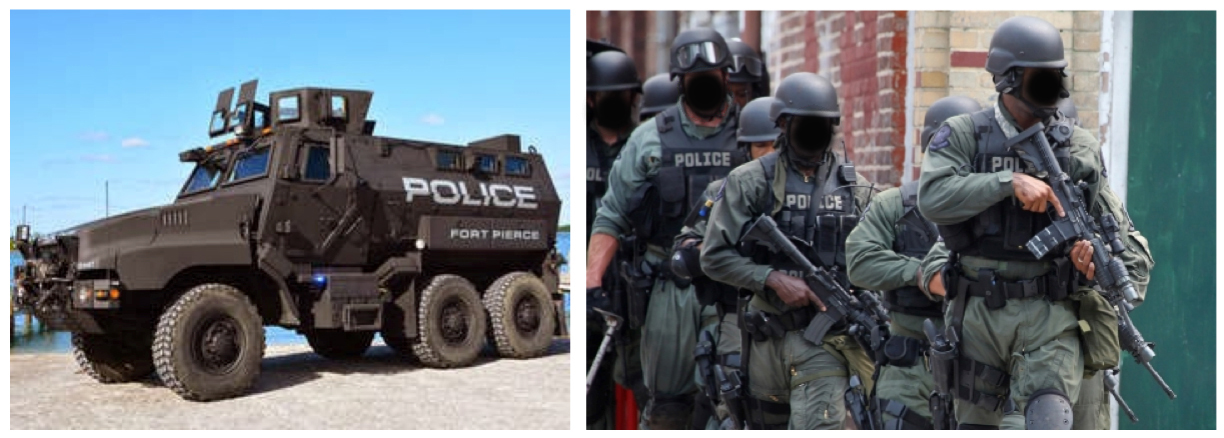
According to the latest data from the National Registry of Exonerations, 46% of wrongful convictions have “official (including police) misconduct” as a contributing cause.  The state bestows official “police powers” upon the police, which does, in fact, make them very powerful; and most police misconduct is manifested in the form of abuse of power, rather than simple error.  In recent years, we have, increasingly, given the police not just “police power” but “military power.”  As Lord Acton so insightfully stated in 1887, “Power tends to corrupt, and absolute power corrupts absolutely.”  Giving military power to police brings them that much closer to absolute power, and that power becomes easier and easier to misuse.  This is compounded by the fact that the police have a demonstrated history of not being good at “policing” themselves, and official police oversight is perfunctory.  Police departments will claim to have “internal affairs” divisions.  I submit this like having the fox watch the henhouse, and they apparently don’t work, because police misconduct persists, and “official misconduct” continues to contribute to 46% of wrongful convictions.

See our previous WCB post about the militarization of police here.

Everyone has recoiled at what has recently transpired in Ferguson, MO.  A recent NY Times article relates events in Ferguson to the militarization of police:  here.

This all started in 1990 with Section 1208 of the National Defense Authorization Act passed by Congress.  In 1996 Section 1208 was replaced with the Section 1033 DOD program, which is still in place today.  And with the 1033 program in place, the wind down of the Iraq war opened the floodgates of military equipment available to police departments.  See the Newsweek article How America’s Police Became an Army: The 1033 Program.  See also the NY Times article War Gear Flows to Police Departments.  While this was certainly well intentioned, the legislators failed to grasp the psychological impact this would have on the people who would actually be using the equipment.

All the military equipment and fire power is scary, but all that stuff is really just an “enabler.”  What’s really scary is what’s going on in the brains of the cops.  They seem to be increasingly adopting a “battlefield” mindset – vanquish the enemy – and giving them MRAP’s and M-16’s substantially reinforces that state of mind.  Plus, if the police have all this stuff, of course they’re going to want to use it.  For example, we’ve seen the evolution of  excessive use of SWAT teams.  SWAT teams have been around since the 1960’s, but SWAT teams are now commonly used to perform such routine functions as serving warrants and making simple arrests.  There was a recent (Feb. 2014) debate between Radley Balko, Washington Post investigative reporter and author of “Rise of the Warrior Cop,” and Maricopa County (AZ) Attorney Bill Montgomery about the militarization of our domestic police. During this debate, Mr. Montgomery stated, “These ‘elite’ officers have to stay sharp and on alert. They have to practice.”  Practice by having a SWAT team storm a young mother’s home at 3:00 AM to serve a warrant and make an arrest?  Might I suggest this is “over the top?”

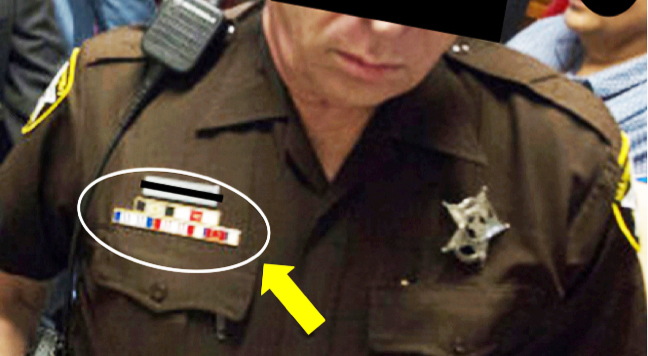
As an example of “military mindset,” I was recently startled by a news photograph of a police officer with what appears to be military style campaign ribbons on his uniform.  Campaign ribbons?  On a police uniform?  What’s up with that?  If this isn’t an indicator of a military mindset, what is?

Police Campaign Ribbons

If the situation calls for military intervention, then call in the National Guard.  That’s what they’re for.  But we just can’t have the “military” patrolling our streets and enforcing the law on a routine basis.

New Shaken Baby Syndrome Documentary – “The Syndrome”

A new, compelling documentary on the junk science of shaken baby syndrome, titled The Syndrome, will premiere at the Kansas Film Festival in October, 2014.

Synopsis:  The Syndrome tells the story of a group of doctors who say that shaken baby syndrome, the basis of hundreds of criminal cases every year, is not scientifically valid. The film focuses on three key doctors: A Georgetown University neurosurgeon, a former Minnesota state medical examiner, and the head of Stanford University’s Pediatric Neuroradiology Department. These doctors are part of a growing scientific movement coming to the defense of the some thousand people in prison for shaken baby. In an unprecedented criminal justice crisis, promoters of shaken baby syndrome are not backing down.

Watch the trailer here.

Editorial Comment:  Of course the promoters of this medical voodoo are not backing down.  For them, SBS has been their source of livelihood, notoriety, and power.

The Innocent on Death Row – NY Times Editorial

We (Martin Yant) recently reported here on the WCB about the North Carolina exoneration of death row inmate Henry Lee McCollum.  McCollum’s exoneration has prompted a highly compelling editorial by the The NY Times editorial board.  That editorial with active links appears here.  It appears below without embedded links (bolding emphasis is mine):

The Innocent on Death Row, by THE (NY Times) EDITORIAL BOARD, September 3, 2014

The exoneration of two North Carolina men who spent 30 years in prison — one on death row — provides a textbook example of so much that is broken in the American justice system. And it is further evidence (as though more were needed) that the death penalty is irretrievably flawed as well as immoral.

In late September 1983, an 11-year-old girl named Sabrina Buie was found murdered in a soybean field in Robeson County. She had been raped, beaten with sticks and suffocated with her own underwear.

Within days, police got confessions from two local teenagers, Henry Lee McCollum, 19 at the time, and his half brother, Leon Brown, who was 15. Both were convicted and sentenced to death.

The crime was so horrific that it has echoed for decades through North Carolina politics and beyond. In 1994, after Justice Harry Blackmun of the Supreme Court announced that he opposed capital punishment in all circumstances, Justice Antonin Scalia cited the Buie murder as a case where it was clearly warranted. “How enviable a quiet death by lethal injection compared with that!” he wrote.

On Tuesday, a state judge ordered both men freed after multiple pieces of evidence, some of which had never been turned over to defense lawyers, proved that neither Mr. McCollum nor Mr. Brown was responsible for the crime. DNA taken from a cigarette found at the crime scene matched a different man, Roscoe Artis, who is already serving life in prison for a similar murder committed just weeks after Sabrina Buie’s killing.

Virtually everything about the arrests, confessions, trial and convictions of Mr. McCollum and Mr. Brown was polluted by official error and misconduct.

No physical evidence linked either man to the crime, so their false confessions, given under duress, were the heart of the case the prosecutors mounted against them. Both men’s confessions were handwritten by police after hours of intense questioning without a lawyer or parent present. Neither was recorded, and both men have maintained their innocence ever since.

Equally disturbing, Mr. Artis was a suspect from the start. Three days before the murder trial began, police requested that a fingerprint from the crime scene be tested for a match with Mr. Artis, who had a long history of sexual assaults against women. The test was never done, and prosecutors never revealed the request to the defense.

It was not until 2011 that the North Carolina Innocence Inquiry Commission, an independent state agency that had taken on the men’s case, discovered the old fingerprint request. The commission also found that multiple statements in the two confessions were inconsistent with each other and with the facts of the crime. In July, the commission finally got the full case file and matched the DNA to Mr. Artis.

None of these pieces mattered to the prosecution in 1984. The prosecutor on the case, Joe Freeman Britt, was listed in the Guinness Book of World Records as the “deadliest prosecutor” for the nearly 50 death sentences he won during his tenure. Almost all have since been overturned.

Mr. McCollum and Mr. Brown, who are now middle-aged, have a hard road ahead. In addition to the difficulties of adapting to life after three decades behind bars, both are intellectually disabled. (Since their conviction, the Supreme Court has banned the death penalty for both juveniles and those with intellectual disabilities.)

Cases of capital prosecutions based on flimsy evidence or marred by prosecutorial misconduct, not to mention racial bias, are distressingly common. Yet, even as death-penalty supporters insist that only guilty people are sent to their death, it is now clear that Justice Scalia was prepared 20 years ago to allow the execution of a man who, it turns out, was innocent.

How many more remain on death row today? Can the American people be assured that none will be killed by the state? For this reason alone, the death penalty must end.

A version of this editorial appears in print on September 4, 2014, on page A26 of the New York edition with the headline: The Innocent on Death Row.

A Case for Mercy and Discretion in Criminal Justice

“I have always found that mercy bears richer fruits than strict justice.”

– Abraham Lincoln

So-called tough-on-crime policies in the United States over several decades have resulted in unanticipated changes in the criminal justice system that most Americans probably do not fully realize. Mandatory sentencing, policies such as “three strikes,” and increasing use of plea bargaining as opposed to jury trials have prompted an explosion in the prison population and unprecedented prosecutorial authority. With all due respect to those prosecutors who serve us well, we now know that increased power and immunity from abuses have enabled prosecutorial misconduct, a significant contributor to wrongful convictions.

While the Innocence Project and other organizations work to correct miscarriages and prevent others, and new models such as conviction integrity units seek to address the failure of the appeal process to correct conviction errors, a recent case demonstrated the appropriate use of an intact but rarely used remedy: mercy and discretion by public officials.

These capacities once broadly utilized by judges in sentencing may be the most efficient way to cure injustices whether wrongful convictions or unfair sentencing. In a recent illustration, no one questioned the guilt of Francois Holloway. The New York Times reported (here) and (here) that he was charged in 1995 with three counts of carjacking and using a weapon during a violent crime (he did not carry a gun but his accomplice did).

When the government prosecutor offered Holloway a plea deal with a prison term of 11 years, he declined. Holloway’s lawyer assured him that he would win at trial.

His attorney was wrong. Continue reading

Sex Offender Registries (SOR’s): TIME-FOR-A-CHANGE

registry swamp

Editor’s Note:  Although this article is clearly editorial in nature, it contains a substantial amount of fact and data that have direct bearing on the subject.  It’s also a long article, and I hope you’ll have the patience to read it through to the end.

The article is in five sections:

The History of Sex Offender Registries in the US

Sex Offender Registries are Manifestly Unjust

Sex Offender Registries Don’t Work

Sex Offender Registries Cost a Lot of Money

Conclusion

Continue reading

Militarized Police

The militarization of police scares the hell out of me.

How about you?

This from the NY Times: Get the Military Off of Main Street.

A Blog on Junk Science Forensics – At Last!

cropped-bowers_capitol-small1

Here at the WCB, we’ve posted many, many articles dealing with the highly questionable scientific validity of most all forensic disciplines.  I’m very happy to report that there is now a blog dedicated to that issue.

Dr. Michael Bowers is a practicing dentist and forensic odontologist in Ventura, CA, and a long time forensic consultant in the US and international court systems. His newest book, “Forensic Testimony, Science, Law and Expert Evidence” with Elsevier/Academic Press is available on Amazon.

Dr. Bowers has some refreshing and insightful views on the validity of forensics, and maintains a blog addressing the “junk science” that so many in the justice system refer to as “forensic science.”  Please visit that blog here: Forensics in Focus.

[Editor’s note:  I, personally, refuse to call them forensic sciences.  They are not sciences.  Technologies? Disciplines?  Perhaps, but they’re not sciences.]

PS:  I have reviewed Dr. Bowers’ new book Forensic Testimony – Science, Law, and Expert Evidence, and you can read that review here.  I highly recommend it.