Category Archives: Exonerations

Monday’s Quick Clicks…

Wednesday’s Quick Clicks…

Colorado Prosecutors Practice ‘Spin’ and Deceit

I have long been dismayed by the state of ethics within the prosecutorial community. Here is just one more example of why. This one stretches the limits of credibility to the point of being sadly laughable.

Between 2010 and 2014, prosecutors in Colorado conducted what was called the “Justice Review Project,” which was federally funded for $2.6 million. The objective was to review over 5,000 convictions to determine if DNA testing could prove any of the defendants actually innocent.

The “Project” consisted entirely of prosecutorial staff, with the exception of the “Review Board,” which did have representation from the legal defense community. However, there was only one case that ever came before the review board, and that case was imposed upon the “Project” by outside defense counsel, which had already paid for independent DNA testing. This one case was also the only one out of over 5,000 that the “Project” determined was suitable for DNA testing. The “Project’s” selection criteria had been set up to allow off-hand disqualification of essentially every case.

The prosecutors then went on to claim (boast) that the “Project” proved that the Colorado justice system is infallible, and that Colorado prosecutors “get it right the first time” all the time. Not only that, but they also had the unmitigated gall to state in their final report on the “Project” that the one case in which DNA was tested (which they had forced on them), and proved innocence, was their “crowning achievement.”

Now the prosecutors are refusing to release (hiding) records of the “Project.” So, the Exoneration Project is suing in Denver District Court to have the records released.

See the Colorado Independent story here.


More on the Jack McCullough Exoneration

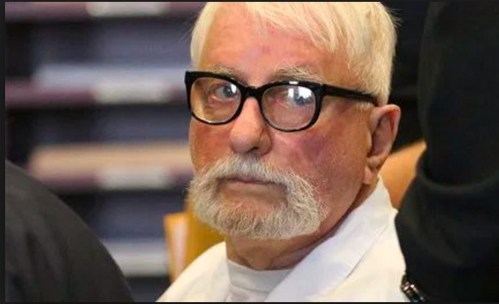
Jack

Photo: Chicago Sun-Times

See our recent post on this case here.

An Illinois judge has freed Jack McCullough from prison, and ordered a new trial. Jack was convicted in 2012 of the 1957 abduction and murder of 7-year-old Maria Ridulph in Sycamore, IL. Jack was a neighbor of the Ridulph’s at the time. This used to be called the coldest case ever “solved.” And I guess we can now call it an “exoneration,” since the prosecutor has indicated his intention to have the charges against Jack dismissed with prejudice; meaning Jack can never be brought back into court for this crime again.

CNN just published an article that includes an interview with Jack. This very insightful comment from that interview:

“People have to realize, it’s not about winning. It’s about justice. And this brave man — I probably shouldn’t talk about him at all — but he put his career on the line for me,” McCullough said. He thought a moment and carefully chose the words that followed:

“It isn’t about winning a case, it’s about justice. And God bless the man who stood up for justice. He’s probably going to pay a penalty for that because to everyone else it’s about winning. But it’s not about winning. It’s about doing the right thing.”

Let me add the editorial note that this is where politically ambitious, politically elected prosecutors get it wrong. It’s not supposed to be about “winning.” It’s supposed to be about seeing that justice is done. But … winning is much more important for your political record than is providing true justice. The prosecutor in this case is a rare and marvelous exception to that rule.

See the CNN story with the interview here.

Monday’s Quick Clicks…

Monday’s Quick Clicks…

Anatomy of a Confession – The Debra Milke Case

Gary Stuart, author and Professor of Law at Arizona State University, has just published a book about the Debra Milke case.    See our previous post here:  https://wrongfulconvictionsblog.org/2015/04/10/interview-with-debra-milkes-attorney/

anatomy of confession

“Anatomy of a Confession is the story of the 1990 murder trial of Debra Milke. Two men—Debra’s boyfriend at the time and a friend of his—murdered Debra’s four year-old son in the Arizona desert. One of them implicated the boy’s mother. Even before Debra was questioned, the police hung a guilty tag on her. Debra Milke spent twenty-three years on death row for the murder of her four year-old son based solely on a confession she never gave. This is also the story of Detective Armando Saldate, his history of extracting forced confessions, and the role the Phoenix Police Department played in the cover-up and misconduct in its handling of the Milke investigation. Anatomy of a Confession is a vivid and shocking reminder of what America’s vaunted presumption of innocence is all about.”

It’s available on Amazon here.

Monday’s Quick Clicks…

Tuesday’s Quick Clicks…

Exoneration doesn’t always mean freedom or compensation

Not every exoneration has a happy ending. Many end up like Danny Brown’s. Fifteen years after he was exonerated by DNA, prosecutors in Toledo, Ohio, still cling to the dubious eyewitness identification of a then-6-year-old boy to insist that Brown remains a suspect in the rape and murder of the boy’s mother.

In all that time, prosecutors have successfully prevented Brown from collecting compensation for the 20 years he spent in prison even though they have uncovered no evidence linking Brown to the man whose semen was found on the victim.

As The Blade reports here, Brown is now homeless and in declining health. Jobs are hard to come by even when he’s in good health because he remains a suspect in a horrible murder and suffers from the anxiety that comes with it.

Texas Disbars Former Prosecutor

Please see the following article by Jonathan Turley.

Texas State Bar Votes To Disbar Former Prosecutor For Role In Conviction Of Innocent Man

gavel2The Board of Disciplinary Appeals (appointed by the Texas Supreme Court) has upheld a state licensing board’s decision to disbar former prosecutor Charles Sebesta for his role in convicting an innocent man. Anthony Graves spent 18 years on death row for setting a fire that killed six people. Sebesta’s conduct was shocking but remains a relatively rare example of prosecutors being held accountable in such cases of prosecutorial abuse.

Sebesta had convicted Robert Carter for the murders and tried to get Carter to say Graves was an accomplice. However, just a day before the trial, Carter told Sebesta he acted alone and Graves was not involved. Sebesta withheld the information from the defense and presented false testimony implicating Graves. Sebesta also blocked an alibi witness by telling the court that the witness was a suspect in the murders and could be indicted. The witness then refused to testify.

After his conviction was reversed, a special prosecutor found in 2010 that there was no credible evidence that Graves was involved in the murders.

Sebesta now insists that he has been treated unfairly.

=======================================================

Treated unfairly?! Mr. Sebesta is lucky he himself is not now behind bars.

Record Year: Nearly Three Exonerations Per Week in 2015

The National Registry of Exonerations has reported a record 149 known exonerations in 2015 in 29 states, the District of Columbia, federal courts, and Guam. The exonerated had served an average of 14-and-a-half years in prison for crimes they did not commit.

Increasing known exonerations has been a trend over recent years, and the National Registry of Exoneration’s annual report, Exonerations in 2015, includes several new records for 2015: Continue reading

The National Registry of Exonerations Reports on Exonerations in 2015

The National Registry of Exonerations has just released a report on exonerations in 2015. See that report here.

2015 was a record setting year for exonerations, with 149 logged to date. And the trend line is up. For our last update on the Registry, see  https://wrongfulconvictionsblog.org/2015/01/13/update-on-the-national-registry-of-exonerations-2/.

Monday’s Quick Clicks…

Rogue prosecutor’s influence on hair expert’s testimony highlighted in ruling overturning conviction

The January 26 opinion overturning the conviction of Massachusetts inmate George D. Perrot, which you can read about here, was important in several respects.

First and foremost, the opinion written by Hampden County Superior Court Judge Robert J. Kane was important because it could lead to the release of Perrot 30 years after his conviction on rape charges even though the victim repeatedly said the then-long-haired, bearded Perrot didn’t look like the clean-shaven, short-haired man who raped her.

Second, the opinion is important because Judge Kane’s reasoning could influence thousands of past convictions that were based on now-discredited hair-comparison analysis like that used to convict Perrot.

Equally important, though, was Judge Kane’s finding that Wayne Oakes, the FBI hair examiner who testified as an expert in the case was unduly influenced by the overzealous prosecutor in the case. In his ruling, Kane noted that the prosecutor, Francis W. Bloom, hand-delivered the hairs and other evidence to the FBI Laboratory in Washington because he wanted to speak with Oakes and the other forensic scientists.

“Bloom carried with him to Washington his attitudes and feelings towards Perrot,” Kane wrote. “He despised Perrot. In a diary, Bloom … referred to Perrot as ‘inherently evil’ and as ‘a sociopath,’ and scoffed at Perrot’s redemption.

“Such feelings enable a person possessing public authority to shed the restraints and scruples that limit the exercise of power. The feelings allow the official to see the individual as apart from the community of citizens whose rights must be regarded. These feelings that filled Bloom’s mind, coupled with his trip to Washington, D.C., produce a reasonable foundation for the inference that Bloom voiced his views about Perrot to Oakes. … Unconsciously, Oakes, because of these communications, departed from his role as a neutral expert and slipped into the role of a partisan for the government.”

Bloom was later disciplined when it was discovered that he had forged Perrot’s signature to a fabricated confession implicating two of Perrot’s friends in another housebreak in an unsuccessful attempt to get them to confess. But the slap on the wrist he received pales by comparison with the price Perrot has paid greatly because of Bloom’s misguided zealotry.

Prosecutorial bias permeates the American judicial system. Prosecutors hell-bent on victory often directly or indirectly prod investigators and experts to get the results they want. It’s refreshing to see a judge recognize this in a well-reasoned, groundbreaking decision.



Monday’s Quick Clicks…

Thursday’s Quick Clicks…

Monday’s Quick Clicks…

Friday’s Quick Clicks…

New Report: Innocents Who Plead Guilty

Of more than 1,700 known exonerations in the U.S. since 1989, persons innocent of the crime pleaded guilty in 261 or 15 percent of the cases. The November 2015 newsletter of The National Registry of Exonerations (NRE) sheds light on the non-intuitive decision to plead guilty when innocent, the systemic pressures that prompt it, and why an unknown number of wrongful convictions based on false guilty pleas may never be identified or corrected.


About 95 percent of criminal felony and misdemeanor convictions in the United States now come by way of a guilty plea. The trend of case resolution by plea negotiation has diminished the percentage of cases that are resolved by jury or bench trial. As the report points out, guilty pleas usually result in lighter sentences — Continue reading