Category Archives: Prosecutorial conduct (good and bad)

Saturday’s Quick Clicks…

New Research Suggests Lack of Oversight and Consequence for Prosecutorial Error

New research suggests a lack of oversight and consequence for prosecutorial error and misconduct. The research, detailed here, conducted by the Veritas Initiative—the prosecutorial accountability program of the Northern California Innocence Project—was released yesterday at a University of Texas Law School forum.

From 2004-2008 Texas prosecutors committed error in 91 cases documented in published trial and appellate court decisions. The courts “upheld the conviction in 72 of the cases, finding that the error was ‘harmless.’ In 19 of the cases, the court ruled that the error was ‘harmful’ and reversed the conviction.” From “2004 until November 2011, only one prosecutor was publicly disciplined by the Texas Bar Association.” Austin was the second stop of a national (United States) tour focusing on prosecutorial accountability organized by the Prosecutorial Oversight coalition.

Official inquiry finds error rate of 7% in prosecutions in England and Wales.

An official inquiry into prosecution standards by Her Majesty’s Crown Prosecution Inspectorate has found an error of ‘analysis or judgement’ in up to 7% of cases. In any one year, this can mean 60,000 cases with errors: either prosecutions that should not have been brought, or cases that have failed to continue to a prosecution. Such a significant error rate has serious implications for the effectiveness of the criminal justice system in England and Wales. Read a news report here…

Mistakes in one in every 15 criminal prosecution cases, report suggests

The official press release can be found here….  and the full report is here:

Thematic review of the CPS Core Quality Standards Monitoring scheme

Friday’s Quick Clicks…

Recent Rulings Suggest Prosecutorial Immunity Has Boundaries

U.S. District Court Judge Joe Billy McDade has ruled that two McLean County (IL) prosecutors are not immune from all claims of alleged misconduct in a lawsuit filed as a result of the wrongful murder conviction of Alan Beaman. Beaman served 13 years for the murder of  his former girlfriend Jennifer Lockmiller before the Illinois Supreme Court overturned his conviction. Pantagraph.com reports here that Judge McDade’s ruling is consistent with a recommendation from federal Magistrate Judge Byron Cudmore that prosecutors James Souk and Charles Reynard were immune from claims related to their prosecutorial roles but that immunity does not extend to their involvement in the case before arrest.

Beaman’s lawsuit alleges that the prosecutors conspired with Normal (IL) police officers and a McLean County Sheriff’s officer in framing Beaman for the murder. Continue reading

What Really Happened in the Amanda Knox Case?

I have followed the Amanda Knox case over its course, and was recently able to attend a talk given by Prof. Greg Hampikian of Boise State University on the subject.  Prof. Hampikian is also Director of the Idaho Innocence Project and an internationally recognized authority on DNA forensics.  Prof. Hampikian advised the Amanda Knox legal team on DNA issues.

After the dust had settled, I felt compelled to write a brief summary of the case based upon my own knowledge of the case combined with information from Prof. Hampikian’s presentation – just to try to put it all into perspective.  That summary follows.

Continue reading

Scottish CCRC’s 800-Page Report on Problems in “Lockerbie Bomber” Conviction Leaked…

From a news source:

Glasgow-based newspaper the Sunday Herald published the 800-page Scottish Criminal Cases Review Commission (SCCRC) report on its website.  It documents the details of al Megrahi’s second appeal in 2007. According to the report, prosecutors failed to disclose seven pieces of evidence that led to the fresh appeal.  The SCCRC upheld six grounds that could have constituted a miscarriage of justice.  Megrahi was convicted of murder over the 1988 bombing of Pan Am Flight 103, which was destroyed over Lockerbie, Scotland, in 2001.

At the end of an 800-page report, the commission says: “In accordance with the principles set out at the beginning of this chapter the Commission has also considered whether, notwithstanding its conclusion that a miscarriage of justice may have occurred, the entirety of the evidence considered by it
points irrefutably to the applicant’s guilt. The Commission’s conclusion is that it does not.”

“In these circumstances the Commission believes not only that there may have
been a miscarriage of justice in the applicant’s case, but also that it is in the interests of justice to refer the case to the High Court. The Commission accordingly does so.”

The release of the report has been applauded, and some have called for an inquiry into the official misconduct

More here

U.S. News Programs Explore Systemic Wrongful Conviction Issues

Millions of Americans had their eyes opened to two important criminal justice issues—prosecutorial misconduct and wrongful conviction compensation—as national television news programs explored topics related to wrongful conviction last night, Sunday, March 25, 2012. Ohio Innocence Project Director Mark Godsey previously announced these programs on this blog. If you missed them, see the video link here to the 14-minute segment of CBS’s 60 MINUTES with Michael Morton, who spent 25 years in prison before DNA proved he didn’t murder his wife. The piece explores the case that has prompted a rare judicial inquiry into allegations of prosecutorial Continue reading

Public Pressure Builds for Sheriff in Michael Hash Wrongful Conviction Case to Resign…

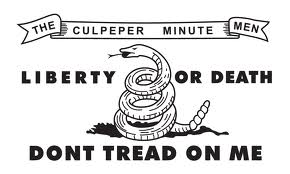
Good for the freedom fighters and vigilant citizens of Culpeper, Virginia.  On the heels of the exoneration of Michael Hash, citizens are putting pressure on Scott Jenkins, the sheriff of Culpeper, Virginia, to resign immediately.  The prosecutor in the case has already resigned after the federal decision throwing out Hash’ convictions strongly condemned the conduct of both sheriff and prosecutors.  More than 150 people showed up at a rally last night to blast Jenkins and demand his resignation.  Excerpt from news coverage:

“Enough is enough,” said citizen Bob Buettgens, mentioning his background in law enforcement, and how he had never seen a judge opine to this level of criticism.

“We are not going to stand for it anymore. We don’t care about your politics or who you’re friends with. You need to step down and be done with it!”

The provoked gathering of young and old posed questions like: 1) if the sheriff broke the law as an investigator why couldn’t he just be charged, convicted and arrested like everyone else 2) are local media reports about what occurred in the case really true and 3) why isn’t Culpeper County Lieutenant of Courts James Mack being held more responsible for his role in the seemingly botched investigation.

Recall Petition organizer Wayne Stephens, a civil engineer from Rixeyville, said the thing that bothered him most was a statement in the judge’s report attributed to Jenkins in which the sheriff said he never believed Hash and his two teenage accomplices killed 74-year-old Thelma Scroggins in her Lignum home.

“Yet he participated in the prosecution of these three boys,” Stephens said. “To me that is a misuse of justice, not excusable by a deputy or a sheriff.”

The avid blogger and apparent activist said you can’t just hide behind the excuse, ‘My boss told me to.’ Stephens called that “a variation of the Nuremberg defense some Germans tried to use after World War II.”

News here and here.

Tuesday’s Quick Clicks…

Following Stevens Trial Report, Senator Introduces Legislation for New Federal Disclosure Standards

With the backing of the American Bar Association, the U.S. Chamber of Commerce, the American Civil Liberties Union, among others, legislation introduced by Senator Lisa Murkowsk (R-Alaska) seeks to create a new national standard for prosecutorial disclosure of evidence in federal cases. This comes in the wake of the scathing 524-page report recently unsealed that concluded prosecutors in the Senator Ted Stevens (R-Alaska) case “intentionally withheld and concealed significant exculpatory information.”

In an article in Roll Callthe longstanding newspaper of Capital Hill, Peter Awindenbert, a partner at DLA Piper, said this issue goes well beyond this case: Continue reading

Sheriff Calls For An Innocence Commission and a “Prosecutorial Misconduct” Commission in Virginia

From the StarExponent:

No agencies or commissions exist in Virginia to investigate prosecutorial misconduct and wrongful convictions, and University of Virginia Law Professor Brandon Garrett said that needs to change.

“What the public needs to know is how many more murder convictions have been a result of these errors,” said Garrett, who joined the faculty in 2005 and specializes in wrong convictions. “There needs to be some sort of audit or investigation done, but that’s very rare.”

Albemarle County Sheriff J.E. “Chip” Harding said Virginia needs two commissions: One that looks into police and prosecutorial procedures, and a second that investigates cases and convictions after the fact. He even has an idea for how to staff them. Continue reading

FBI Agent Blasts Scottish Report Outlining Reasons Why “Lockerbie Bomber” Might be Innocent

I’ve blogged here and here about questions as to whether Abdelbaset Ali Mohmed al-Megrahi, known as “The Lockerbie Bomber,” might have been wrongfully convicted, as many believe.  An 800-page report by the Scottish CCRC the has identified 6 areas of concern in the case that point to innocence, including the fact that the FBI allegedly paid witnesses for their testimony.  But an FBI agent, Oliver “Buck” Revell, who was in charge of investigating the case has now come out firing, claiming that the FBI never paid witnesses, and that the report is not complete or credible because the FBI was never interviewed or consulted regarding the facts.  Details here.  More here.

Monday’s Quick Clicks…

Friday’s Quick Clicks…

New Scholarship Spotlight: Pretrial Procedures for Innocent People: Reforming Brady

Professor Lissa Griffin of Pace Law School in New York has posted the above titled article on SSRN.  Download article here.  The abstract states:

In this article, the author proposes that the prosecution’s obligation to disclose exculpatory information to the defense be formalized by statute, court rule, or internal protocol in ways that would reflect the current state of our knowledge of and experience with both Brady and wrongful convictions. This would improve on the current ineffective constitutional protection — and any existing statutory or rule-based regimes — in several Continue reading

Bryant “Rico” Gaines to Walk Free Today in Ohio: Reflections on System Resistance to Innocence

Later today, Ohio Innocence Project client Bryant “Rico” Gaines will walk free after serving 9 years of a life sentence for a murder he did not commit.  (Details of case, and grounds of innocence, available  here).  OIP attorney Karla Hall and Cincinnati defense attorney Bill Gallagher, along with scores of students, worked very hard over the years to bring about Rico’s freedom, and they deserve many congratulations.  But Rico will not be going home cleared of all charges, despite the fact that he is innocent.  He walks free today after deciding to  take a plea deal to a reduced charge of “conspiracy to commit involuntary manslaughter.”  His decision was simple.  He has two daughters, including an 11-year old daughter that he has barely seen since she was 2 when Rico was locked up.  Rico knows he had nothing to do with the murder in this case, but after having clear evidence of  innocence in his favor for many years, and seeing how the prosecutors and courts refuse to listen, he decided that taking a plea and lying about his involvement in the murder was the price to pay for freedom and being reunited with his daughters immediately.

Rico’s case is a testament to three things:  (1) how difficult it is for an innocent man to win his freedom when there is no DNA in his case; (2) the lengths that the system will go to deny admitting a mistake; and (3) how difficult it is for a Continue reading

Wednesday’s Quick Clicks…

Did the U.S. Make Undisclosed Payments to State Witnesses in the Lockerbie Bombing Case?

Many now believe that the so-called “Lockerbie Bomber” was wrongfully convicted.  Now it appears that one of the many things that was not disclosed to his defense counsel prior to or during trial was the that U.S. Department of Justice made secret payments to prosecution witnesses.  Details here.  More on evidence in the case that was withheld from the defense.

Virginia Has DNA Results Proving its Prisoners Innocent, But is Keeping it Quiet….

Here’s an unbelievable and must-read story from Slate.com about Virginia’s project, dating back to 2005 and Governor Warner, to test the DNA in all old cases where convictions were obtained prior to the advent of DNA testing.  So far the project has excluded the person convicted and in prison nearly 70 times, but only a handful of those inmates have been informed and exonerated.  This includes Bennett Barbour, who wasn’t informed by the state that they had proved his innocence until more than 2 years after the exonerative DNA test.