Category Archives: Reforming/Improving the system

Convictions by the Numbers

.

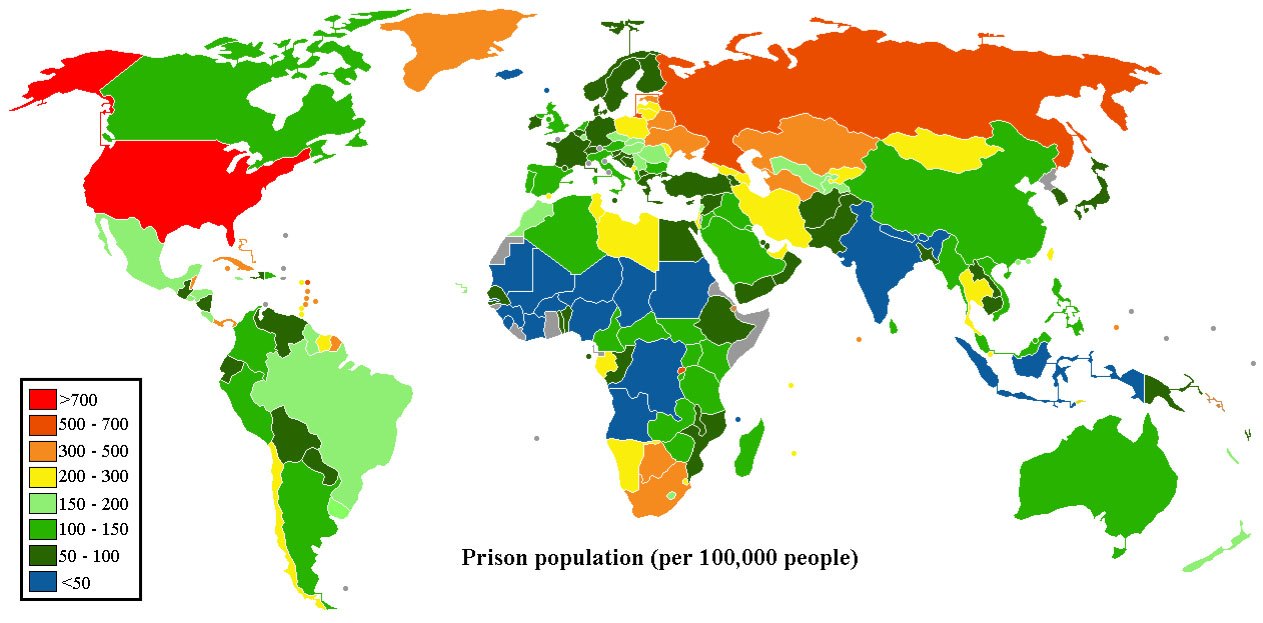
The United States has 4.47% of the world’s population (2012).  The United States has (depending upon which study you use) 23%-25% of the world’s prisoners.  The incarceration rate in the US is 5 times the average for the rest of the world.  In the graphic above, the US is the only country in the world colored bright red at greater than 750 per 100,000 population.

At an incarceration rate of 750 per 100,000, 1 out of every 133 adults in the US is in prison/jail.  Now, considering the fact that the incarceration rate for males in the US is 13 times higher than for females, this means that approximately 1 out of 67 adult males in the US is in prison.

The actual number of people in prison in the US is approximately 2.3 million.  But get this – there are an additional 5 million on probation or parole!

Does anybody else find find these to be staggering statistics?

Take a look at the chart below:

.

The incarceration rate in the US is 6-10 times that of other industrialized countries with which we typically compare ourselves – Europe, Canada, Australia, Japan.

Continue reading

Audio and Visual Recording of Interrogations by Public Prosecutors, Part II

The Supreme Public Prosecutor’s Office (SPPO) issued a report on audio and visual recording of interrogations last week (on July 4th, JST).

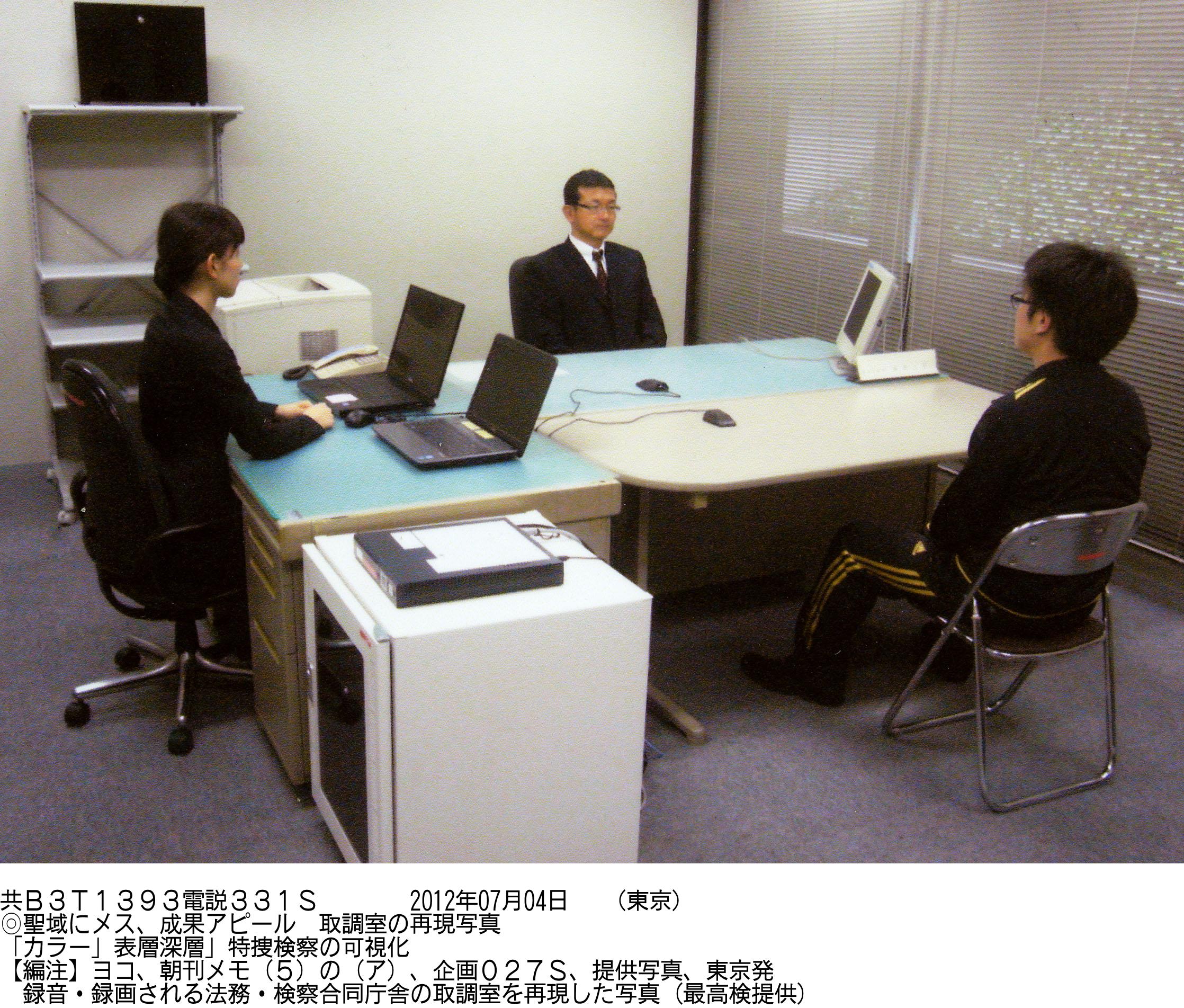
Demonstration of how the recording would take place during interrogation by prosecutor.

As I posted earlier, the SPPO started recording some interrogations on an experimental basis in 2006. Last week’s report  focused on the experimental recording in three Special Investigation Units and ten Special Crime Devision Public Prosecutor’s Office, which took place in 91 cases from March 2011 through April 2012 (note that these offices or branches in the Public Prosecutor’s Office usually involve only white collar crimes). The report revealed what the prosecutors in Japan have to say about the recording of interrogations.

Below are the points worth noting:

1)  Interrogations in 91 cases out of 98 were either partially or entirely recorded. The entire interrogation process was recorded in 39 cases.  30 of the cases concerned tax violations.

2) In seven cases, the suspects refused the recording from the beginning of interrogations. In 12 cases, the suspects refused the recording halfway through. The reasons for their refusal include: they were ashamed of being arrested and incarcerated, and they did not want to provide discussions in front of the camera.

3) Recording took place in other prosecutor’s offices in 946 cases out of 1,005 cases, where the charge was a serious offense and the case was to be disposed of by a Lay Judge trial, such as murder. In cases involving persons with intellectual disabilities, 540 cases were recorded (this was all of the cases in this category except where the accused refused). Continue reading

Lessons from Abroad: Reforming the Nigerian Police

In Nigeria, the police is vilified virtually by everybody that have had the ‘misfortune’ to come into contact with them. Much of this vilification, hinges on their lack of professionalism, indiscipline, corruption and bad policing strategies. The response of the police to this, has always been lack of resources, proper training, and the fact that they are also a mirror, reflecting the values – positive or negative – of the larger Nigerian society. The truth of the matter lies in-between both contentions.

The Police Service Commission is the apex Commission charged with the discipline, promotion and regulation of all police officers in Nigeria. They have the statutory responsibility of shaping the values, ethos as well as enforcing those good and bad conducts of the police. The Commission ironically is still obscured to many Nigerians, except of course during elections and electioneering campaigns, when they put out warning and information notices to appeal to Nigerians.

Reading the article by A. M. Blackmore entitled – Correcting Miscarriages of Justice http://www.odpp.nsw.gov.au/speeches/CORRECTING%20MISCARRIAGES%20OF%20JUSTICE.html you cannot but get the feeling that the Nigerian Police Service Commission needs to be re-jigged; in concert with the Office of the Federal Attorney General of the Federation. As identified by Blackmore in the said article, the usefulness of the outcomes of the Royal Commission in the New South Wales Police Service, cannot be over emphasised; same can be deployed to deal with the Nigerian situation. Of course, with necessary modifications to suit the Nigerian clime.

A top to bottom strategy will ensure proper reform is achieved, which can then be passsed down the line to the rank and file. The recurring cases of miscarriages of justice in Nigeria leaves much to be desired. Without prejudice to the numerous Commissions, Committees and ‘White Paper’, there is the urgent need to shake up the Nigerian police force. With the recent confirmation of the new Inspector General of Police, M.D. Abubakar, there is no better time than now, to start re-thinking alternative policing strategies that will deliver for the Nigerian people. Read report here http://saharareporters.com/news-page/md-abubakar-confirmed-inspector-general-police-photos

The root causes of miscarriages of justice and wrongful convictions in Nigeria, can be tackled in large part with a functional and professional police force.

Shaken Baby Syndrome (SBS) Litigation “Point Person” Sought by National Innocence Network

The National Innocence Network has established a full-time position for an SBS litigation point person.  The position will be located at the offices of the Innocence Project of Wisconsin at the University of Wisconsin Law School.

Particulars of the position here:   SBS Fellow 07.02.12

At a time when the American Academy of Pediatrics has been redoubling its political/propaganda efforts to shore up support for the SBS Triad, this couldn’t come at a better time.

Personally, I’m thrilled.

Arson, Fire Science, and Habeas – Case Details, CA vs. Souliotes

Mark Godsey recently posted an article on a US District Court ruling about a “time-bar” exemption to habeas law in an arson case that was driven by new developments in fire science.  See that post here.

For those of you who may be interested in the details of the case, here is the original magistrate’s ruling that was upheld by the US District Court:

Habeas Ruling New Fire Science

This was made available by renowned fire scientist John Lentini, who worked on the case.

FYI.  It was necessary for me to post this as a new post, rather than a comment to Mark’s original post, because I can’t embed a document in a comment.  Thank you.

Eyewitness Nightmare: We’ve Convicted Countless on Evidence that is Unreliable 25% of the Time

A fundamental principal in American criminal justice is that one is innocent until proven guilty beyond a reasonable doubt. But in the past two decades, DNA-proven wrongful convictions have revealed that we’ve routinely met the standard of “beyond a reasonable doubt” with evidence that is quantifiably incorrect one-fourth of the time.

A 25 percent error rate in school has historically earned the very lackluster grade of D. A 25 percent margin of error would shutter any hospital and ground any airline. But, in the criminal justice system, most Americans, blinded by trust in the system and a popular allegiance to “tough on crime” policies, have yet to Continue reading

Another False Confession Case — Fukawa Case

Takao Sugiyama and Shoji Sakurai

As I posted here, false confessions account for many, if not the majority of, wrongful convictions in Japan. Yet another case illustrates this: the Fukawa Case, in which two people were finally exonerated in 2011 for a 1967 robbery-murder.

The crime occured in August of 1967, in the town of Fukawa, Ibaraki Prefecture, about 40 miles outside of Tokyo. A carpenter was found dead in his home.  His legs were tied with a towel and a shirt, a pair of underpants were stuffed in his mouth, and he was strangled. There were signs of struggle in the house, but it was unclear if anything was taken from the house, except for a white purse the victim supposedly used daily. 43 fingerprints were found but none of them connected to perpetrator(s). There was no physical evidence at the scene.

However, there were several eyewitness statements that two men (one tall man and another shorter man) were near the victim’s house on the evening that the victim was supposedly murdered. This statement lead the police to think there were two perpetrators.

Based on this information, the police investigated more than 180 men in the area, until they found the two men, Shoji Sakurai and Takao Sugiyama,who did not have an alibi on the date of the crime. In October of the same year, both of them were arrested on separate charges, and were interrogated.

Sakurai and Sugiyama were held in police jails (“Daiyo-Kangoku“), and interrogated for hours and days. After 5 days of interrogations, Sakurai confessed to the crime. Based on Sakurai’s confession, the police also forced Sugiyama to confess. They retracted their confession during the interrogation by the prosecutors, but the prosecutors sent them back to police jails, and after continuous interrogations that ensued, they finally gave in and confessed again.

The two contested their guilt at trial. The prosecutors had no direct evidence of their guilt. All they had were: their confessions made during interrogations by police and prosecutors (with the  testimony of interrogators and the partial tape recordings of the interrogations which recorded only the part after they confessed to the crime), and testimonies of eyewitnesses who saw two men on the day of the crime.

There was no physical evidence, including the white purse which was never found. Their confessions during investigation changed repeatedly, Sakurai and Sugiyama’s confessions contradicted each other’s in important parts, they did not match the circumstances of the crime scene, and there was no information revealed in the confessions which unknown to investigators.

Nevertheless the trial court declared that their confessions made during investigation were reliable and sentenced them to life in 1970. The High Court as well as the Supreme Court denied the appeal. Their sentences were finalized in 1978. Continue reading

Florida Innocence Commission Says State Must Fund the Courts to Avoid Wrongful Convictions…

From the MiamiHerald.com:

BY DAVID OVALLE

Lawmakers must come up with better funding for the state police’s DNA lab and the overburdened court system, according to a panel created by the Florida Supreme Court to examine wrongful convictions.

The Florida Innocence Commission made clear in a final report Thursday, that woeful funding is putting defendants at risk.

“We cannot avoid the reality that a number of the problems in our system in our system of justice deal with the issue of adequate funding,” wrote Belvin Perry Jr., a chief circuit judge in Orlando who headed the commission, created in December 2009 to examine why people are wrongfully convicted of crimes. “Prosecutors, public defenders, and the courts are overburdened and do not have adequate tools and resources to keep pace with the volume and complexity of the cases before them.”

The commission was formed after DNA testing showed that a list of Florida men in recent years had been wrongfully convicted of crimes.

Holding meetings around the state, the panel heard testimony about the most common reasons for wrongful convictions, including incorrect eyewitness testimony, false scientific evidence and false confessions.

The group made other recommendations, including urging the Legislature to mandate that police electronically record suspect interrogations, establish Continue reading

Rate of Wrongful Convictions – You Can’t Improve What You Don’t Measure – Six Sigma and the US Justice System

(Editor’s note:  some readers may find this post a little “dry”, but I believe it’s none the less relevant.)

Just what is the rate of wrongful convictions in the US?  Nobody knows for sure.

Estimates of the rate of wrongful convictions in the US span a range from 0.5% to 5.0%, based upon several recent studies done by law schools, and cited on this blog.  SCOTUS Justice Antonin Scalia happens to believe that it’s 0.027%, but he is clearly not connected with reality.  Anything in the 0.5% to 5.0% range is a staggering number, and would cry out for remedy.

What if we were confident that the justice system produced the correct result 99.99966% of the time, and we had the data to prove it?  Another way to say this is that the justice system would get the verdict ‘wrong’ only 3.4 times per million cases, or a 0.00034% wrongful conviction rate.  That would be a wonderful thing.

Continue reading

Nigeria: Trading Justice for ‘Self Help’

Dispensing ‘jungle justice’ is a sign of the times in Nigeria. Truth be told, the Nigerian justice system is not only broken, it has completely failed, thence, the resort to self help. As BBC Andrew Walker’s report highlights, the activities of vigilante group who have completely taken over neigbouhood policing, is worrisome. It’s evidently the clearest indication yet, that it is everyman for himself and God for us all. The Hobbesian state. How did Nigeria get to this sorry state?

Ordinary people have completely lost faith in the police and the judicial system to help them seek justice. Despite the understandable constraints under which the police work, that is no excuse for bad policing, extortion of money, bribery and corruption, which seems to be the hallmark of how the ordinary Nigerian views the police and the outright failure to carry out their statutory duties. On the other hand, the ineffective judiciary is plagued with its own malaise of court delays, needless and endless adjournments, deliberate obfuscation of the court processes by lawyers who manipulate the rules of court with a view to ‘extorting’ money from clients, just to prolong cases unnecessarily – bad lawyering. And they find willing accomplices ‘sometimes’ from the bench. In the result, Nigerian citizens are left to their own mercies and fate. Do you really blame them when they now resort to jungle justice? Read Andrew Walker’s report here.http://news.bbc.co.uk/2/hi/africa/8021468.stm

The Nigerian state must find a way to redress this. Most of the institutions connected with the administration of justice should be re-jigged, particularly, the police and judiciary. Leaving this essential reform to international development agencies like DfID, is surely, but a stop gap measure.  They can only compliment the efforts of  government, not as a substitute for government implementing reforms.

‘Self-help’ undermines justice, due process and human rights of victims – however justified the vigilantes are. The likelihood of lumping and lynching an innocent person, by a vigilante ‘mob’, in a situation where there are no defined rules, processes and procedures, is very high. Innocent people have been known to have been killed.

False Confessions as Major Cause of Wrongful Convictions in Japan

A Police Jail in Tokyo.

One of the major causes of wrongful conviction in Japan is definitely false confessions.

Why? Obviously, since a confession is still the “King of evidence” in Japan.  And since the law permits long period of detention (23 days!) before the formal charge (indictment) of a suspect, and since during this pre-charge detention period, there are lengthy interrogations by the police and prosecutors.

When and How Long can a Suspect be Detained?

In Japan, a suspect can be detained when there is a “reasonable cause” that he/she committed the crime, and there is a risk of flight or he/she might tamper with the evidence in the case.  When a judge issues an arrest warrant and once the suspect is arrested (“Taiho“), the police has 48 hours to transfer the suspect and the case to prosecutors.

When prosecutors receive the suspect and if they think he/she should be detained further, they must ask a judge within 24 hours of receiving the case to issue a warrant for up to 10 days of additional detention (“Koryu“). This is when the suspect appears before a judge for the first time.  Additional 10-day extension of Koryu is possible after the initial 10days. Judges almost always issue the arrest/ detention warrant. Less than 1 % of the warrant claim is denied. For violent crimes, it’s almost 0%.

To sum up, police and prosecutors can detain a suspect for up to 72 hours before the suspect has to appear before a judge, and then for additional 20 days  before the formal charge (23 days in total!).

Interrogation During Detention

During this 23-day period, police and prosecutors usually interrogate the suspect for a long period of time. Conducting the interrogation is critical, even for prosecutors. Continue reading

FAILED EVIDENCE: Why Law Enforcement Resists Science

Professor David Harris has published a new book with the title above.

From the book’s website:

Failed Evidence: Why Law Enforcement Resists Science (NYU Press) is a direct challenge to police and prosecution leadership that has failed to come to grips with the insights that science has supplied for routine types of traditional police work. We’ve all heard about the DNA-based exonerations of innocent people: almost 300 over the last two decades.  Failed Evidence starts with this topic, but pushes further.  There is now plenty of science about the basic things that go wrong in eyewitness identifications, in suspect interrogations, and in forensic science.  The science concerning these issues is rigorous, well documented, and replicated; moreover, it tells law enforcement not only what *not* to do in order to avoid miscarriages of justice (e.g., don’t do simultaneous lineups) but how to do the same tasks with much lower risk of mistakes (e.g., use sequential lineups).  Yet, with the exception of DNA work, law enforcement has not embraced science.  Most often, it has actively resisted science.  The question at the center of Failed Evidence is why.  If we can understand why, we will begin to understand what can be done to overcome this resistance, and how to have lasting change in the justice system.  The book contains recommendations for creating this kind of change, as well as examples of situations from states in which breakthroughs have happened.

Buy here

Were the Trayvon Martin Charges Politically Motivated?

The governor-appointed prosecutor in the Trayvon Martin shooting case, Angela Corey, brought charges of 2nd degree murder against George Zimmerman without a grand jury indictment.  Harvard law professor Alan Dershowitz has questioned the foundations for those charges and that action.

The following link is to an article that explores this question.

http://www.cnn.com/2012/06/19/opinion/nejame-angela-corey/index.html?hpt=hp_bn7

This, once again, raises the issue of “prosecutorial immunity”.  So much power vested in a single individual with no accountability.

Minnesota Innocence Project Trains Defense Lawyers on How To Avoid Wrongful Convictions…

From MPRnews.com:

ST. PAUL, Minn. — A man in a bathtub filled with blood. A dead woman, half-naked, lying face down in her kitchen. A child stabbed with a knife.

The photos, part of a lecture by the Hennepin County medical examiner, horrified the defense attorneys who had gathered in the dimly lit room. But they knew they needed to look. The lives of their clients depended on it.

The attorneys had gathered for a crash course on forensic science, organized by the Innocence Project of Minnesota, to help prevent wrongful convictions. Many in the room had followed media coverage of cases in which innocent people went to prison based on junk science and false testimony from forensic experts. The cases alarmed defense attorneys, who worried they lack the right kind of training to detect problems with science in the courtroom.

“You look at cases, and you wonder, if I got a report like that, would I have caught that problem?” said Mankato criminal defense attorney Allen Eskens, who attended the June 8 training at the Bureau of Criminal Apprehension in St. Paul.

In wrongful conviction cases, defense attorneys often blame the shoddy work of a handful of scientists and doctors, said public defender Christine Funk, one of the training instructors. The real question, she said, is how that shoddy work ended up in the courtroom in the first place.

“We need to be investigating when we get science,” Funk told the group.

Funk used the example of a Michigan man, David Gavitt, who was convicted of setting a fire that killed his wife and two daughters. Decades later, students at the University of Michigan’s Innocence Clinic reviewed his case and found problems Continue reading

Mainali Case Reveals Flaws of Japanese Criminal Justice System

Mainali’s wife and his two daughters.

Here is an article by Minoru Matsutani of the Japan Times on the Mainali Case and the flaws of the Japanese criminal justice system that it highlights (read about the Mainali Case here and here).

It points out some of the problematic features of the Japanese system including: (1) prosecutors withholding evidence which would have cleared the defendant (no Brady rule in Japan), (2) not enough disclosure of the prosecution’s evidence, (3) no law to limit the appeal by the prosecution to a not guilty decision by the court, etc. In addition, there were apparently even more hardships for Mainali, who is a Nepalese.

Mainali is expected to leave Japan for his home country this week.

Excerpt:

Mainali case exposes flaws, bias in judicial system –Prosecutors withheld evidence, detained Nepalese after acquittal

Facing retrial, exoneration and freedom after spending 15 years in prison for the 1997 murder of a Tokyo woman — a crime for which he was initially acquitted — Govinda Prasad Mainali could be a case study in the flaws in the nation’s judicial system.

Like other foreigners in violation of their visa status, the Nepalese was placed in immigration detention after his acquittal, pending deportation. But prosecutors had other plans: They made sure he stayed in immigration custody as they retried his case on appeal, bent on a conviction.

To this end, they withheld evidence that would strongly establish reasonable doubt of guilt. In short, they presented, as a spokesman for the state said, what was needed “to prove their case.”

……Mainali lawyer Shozaburo Ishida faulted prosecutors for withholding vital evidence that could have upheld Mainali’s acquittal. Continue reading

False Confessions – How Can That Happen??

Recent data from the National Registry of Exonerations shows that 15% of the wrongful convictions in it’s data base involved a false confession.  A reasonable person would have to ask, “How can that happen?”  And how can that happen particularly for brutal crimes like rape and murder?  Well, there are some quirky psychological reasons why some unique individuals might confess to a crime they didn’t commit, but in the more general case, there are reasons why people do this.  The first of these would be what I call gaining a confession “the old fashioned way.”

Continue reading

Competing Perspectives on the Wrongful Conviction Issue…

From the Deseret News:

Judge Michael DiReda of Utah’s Second District is convinced that Debra Brown didn’t do it. He found her “factually innocent” in May 2011, after she served 17 years in prison. Attorney General Mark Shurtleff is convinced she did do it.

In dispute is the cold-blooded murder of Brown’s former employer, shot in his sleep near Logan in 1993. Today, Brown is free, reunited with her children and grandchildren. But the attorney general has filed for a new trial, likely to begin in the fall of 2012.

Since the 1989 advent of DNA analysis, 290 convicted Americans have been exonerated through biological evidence, according to the Innocence Project, the national clearing house for investigating and pursuing innocence claims. The most recent DNA exoneree is a Colorado man released this month.

Most overturned convictions lacked DNA and were based on circumstantial evidence and eye witnesses. Proving errors in such cases is difficult, as they often come down to disputed reconstructions of fading memories.

False convictions are a particular concern for those lacking economic resources, according to Daniel Medwed, a professor at the University of Utah law school.

“Poor people lack the financial resources to mount a vigorous and thorough defense,” Medwed said. “All too often, indigent defendants are represented by public defenders who themselves are underfunded and overworked.”

In the absence of DNA, no one knows how many innocents are mistakenly languishing in prison. If the false conviction rate is .027 percent, as U.S. Supreme Court Justice Antonin Scalia suggested in 2006, most experts on all sides would view this as regrettable but inevitable. But if the rate is closer to 3.3 percent or 5 percent, as Michael Risinger of Seton Hall University has suggested, most would agree a civilized system would demand strong correctives.

Combatting ‘urban myths’

With real numbers elusive, people imagine reality through stories. Even innocence advocates admit such stories are often distorted and counterproductive.

Joshua Marquis, district attorney of Clatsop County, Ore., is a feisty, outspoken and widely quoted defender of the law enforcement and prosecutors, whom he sees as unfairly maligned by news media and reform advocates.

Exhibit A for Marquis is an acclaimed off-Broadway play, “The Exonerated,” which features actors playing six “exonerated” death row convicts. The play ran for two years in the early 2000s, became a made-for-TV movie with Mimi Rogers and has since toured college campuses around the country.

In Marquis’ view, the errors in the play typify public misunderstanding and Continue reading

Role of Prosecutors in Postconviction Proceedings

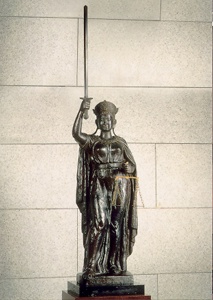
Lady Justice, in the Supreme Court of Japan

As I posted on Thursday, there was a decision by the Tokyo High Court to grant a retrial to Govinda Mainali. The High Court also ordered his release. He was finally released after 15 years of confinement. Since he has a conviction for visa violations, he is placed in immigration custody, and will be sent back home to Nepal, to his family.

However, the Tokyo High Public Prosecutor’s Office immediately filed an objection to the High Court. Even if the Court denies the objection, they can still file an appeal to the Supreme Court. Deputy chief prosecutor of the Tokyo High Public Prosecutor’s Office was quoted as saying that the Court’s decision to grant Mainali a retrial was “absolutely unacceptable”.

Meanwhile, Asahi Shimbun news reported on June 3rd that the Supreme Public Prosecutor’s Office will be holding the first meeting ever with the public prosecutors who deal with postconviction claims of innocence. They are apparently alarmed about the relatively high number of recent court decisions to retry cases. Of the eleven decisions (in death penalty or life sentence cases) to grant a retrial since the end of WWII, five  were handed down after 2009 (decisions in Ashikaga, Fukawa, Fukui, Higashi Sumiyoshi, and Mainali cases. Note that four of these involve false confessions).

The court decisions in these cases were made possible in part by the state-of-the-art DNA testing. As the exonerations all over the world have made it clear, DNA is a strong tool to prove innocence of the wrongfully convicted.

However an exoneration means the police and prosecutors who investigated, prosecuted, and helped to convict an innocent person will be criticized by the public. Thus, it was reported that the prosecutors are worried that these decisions to retry cases “will undermine the public’s trust to the investigation process, and therefore worrisome from the standpoint of public safety”. An executive prosecutor said that they “will do their best to battle these retrial claims by developping prosecution’s scientific knowledge.”

If the prosecutors truly believe what they said in these media reports, it is an evidence that the public prosecutors are worried more about “winning” postconviction cases than finding out the truth. Continue reading

J. Barry on Actual Innocence and the Double Jeopardy Clause

I came across a great article by Professor Jordan Barry of University of San Diego School of Law on prosecution of the exonerated.

Jordan Barry, Prosecuting the Exonerated: Actual Innocence and the Double Jeopardy Clause, 64 Stanford Law Review 535 (March, 2012). It is obtainable on SSRN.

Here is the abstract:

In certain circumstances, a prisoner who challenges her conviction must convince a court that she is actually innocent in order to get relief. Unfortunately, such judicial exonerations often fail to persuade prosecutors, who are generally free to retry prisoners who successfully challenge their convictions. There have been several instances in which prisoners have convinced courts of their innocence and overturned their convictions, only to have prosecutors bring the exact same charges against them a second time. This Article argues that the Double Jeopardy Clause protects these exonerated defendants from the ordeal of a second prosecution. Permitting prosecutors to continue to pursue such individuals contradicts established Supreme Court case law, violates the policies animating the Double Jeopardy Clause, and impairs the operation of the criminal justice system.

Michigan Arson Exoneration Yesterday….

After an exoneration in Illinois in an arson case just last week, Michigan followed it up with one yesterday (thanks to the U. of Michigan Innocence Clinic).

From the Sentinel-Standard:

After spending 26 years in prison, David Gavitt is a free man.

Gavitt, now 53, was convicted in 1986 in the arson deaths of his wife and two daughters. He was serving three life sentences at Carson City Correctional Facility when lawyers and law students from the Michigan Innocence Clinic took on his case three years ago and filed a Motion for Relief from Judgment last fall.

After extensive examination of trial records and the evidence, Ionia County Prosecutor Ron Schafer signed a stipulation and order, acknowledging that Gavitt was entitled to a new trial, that the prosecutor’s office is not going to retry him, and that he should be released from prison.

Chief Circuit Court Judge Suzanne Hoseth-Kreeger ordered that Gavitt’s charges Continue reading