
Back in February 2017, I blogged about concerns surrounding the quality of forensic science services in the UK (Serious concerns about forensic Science standards in the UK). Perhaps predictably then, UK law enforcement and courts are now facing a scandal that on first appearances seemed to be limited in potential impact, but is now said to involve up to 10,000 criminal cases (Police review 10,000 cases in forensics data ‘manipulation’ inquiry).
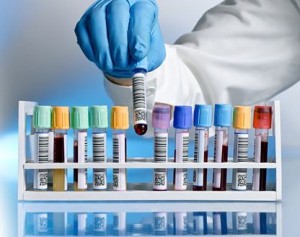
Since 2012 all UK forensic science providers are private, for-profit, companies – some are not even UK companies – (see LGC divests its forensics division to Eurofins). In January 2017, after a ‘whistleblower’ contacted police, concerns were raised about the manipulation of toxicology test results from a private laboratory and a criminal investigation was launched. The company – Randox Testing Ltd – had previously bought another company – Trimega – where there had been serious errors and quality failings noted since 2010. The previous highly criticised company, had employees who then went to work for Randox, whereupon the same problems seem to have continued.
The previous company specialised in child protection and family court cases, where children may have been removed from parents based upon flawed drug or alcohol tests. They also undertook work for private companies and public sector bodies, undertaking work such as employers testing their employees for drugs etc. A government minister has conceded that it may never be possible to identify the true number of Trimega customers affected, due to poor record-keeping, and that its samples cannot be retested.
It was anticipated that the cases from Randox would be limited to traffic offences, as the laboratory specialises in alcohol and drug testing for police forces. However, while three-quarters of the cases are traffic offences (7500) – albeit some of the most serious including causing death by dangerous driving (150) – the other quarter involve serious violent (250 murders) and/or sexual offences (up to 1000, including rape) and some 500 relate to unexplained deaths. So far, none of the more serious cases appear to have been affected, but it is admitted that it may take up to 3 years to go through all the cases, due to a lack of forensic testing capacity in the UK.
A police spokesman this week stated that: “Understandably, confidence in the criminal justice system will be rocked, but I am confident that chief constables and the CPS [Crown Prosecution Service] in particular are doing everything they can to deal with this unforeseeable challenge, affecting both live and historic cases…. We have worked at pace to respond to this serious breach of standards and take action in cases where people’s lives could have been affected,… We are striving to complete all cases requiring retesting as quickly as possible so we will continue to explore ways of speeding up the processes.”
Meanwhile a senior MP has said: “It is clear the chaotic reorganisation of the forensics system, including the closure of the Forensic Science Service, has left providers who were simply not fit for purpose to fill the gap. This has had devastating consequences.”
Two employees of Randox have been arrested with a further 5 interviewed under caution by police. The UK Forensic Science Regulator, tasked with ensuring standards across the entire provision of forensic science in the UK has said all major forensic toxicology suppliers were asked to carry out a detailed audit to ensure the issue was not more widespread, but that investigations uncovered no data manipulation, adding: “I’m not going to speculate on any motives because obviously there is an ongoing criminal investigation, but we cannot just say it was a minor technical issue.”
Even if you were not concerned about individuals who may have perhaps received a drink-driving conviction that they did not deserve, albeit such a conviction can have serious consequences, the doubts over the testing has already led to up to 50 drug- and drink-driving cases being dropped because the prosecution can no longer be sure of their evidence. Many more may still have to be halted or re-testing ordered where possible. There are also serious cases involving deaths that have now been referred back the Court of Appeal.
One of the major difficulties is that in many of these cases, suspects will have been under pressure to plead guilty, particularly because there will have been no legal aid available for them to order their own re-testing of samples. One defence lawyer has said: “This is going to blow the whole thing wide open. With cuts to legal aid we don’t always have the resources to challenge scientific evidence. Sometimes you have to take the science at face value… There is a lot of pressure on defendants to plead guilty, the system is stacked against the defence… ” This is the situation in almost all but the most serious criminal cases across the country. With the legal aid system almost non-existent, and the criminal justice system grinding to a halt through severe under-funding and further budget cuts on the way, it may increasingly be the case that any prosecutions that involve forensic evidence will get ‘waived through’ as there is no funding (nor time) for defence testing or scrutiny. In such a situation, we are completely reliant upon the Forensic Regulator to ensure and enforce standards, and for forensic providers to never make mistakes… or act fraudulently. If history – and wrongful convictions – tell us anything, it is that 100% reliance upon ‘standards’ and the professionalism and infallibility of humans is foolhardy in the extreme. This scandal should remind us that we need more safeguards in criminal justice – not fewer.
Read more here:
Convictions in doubt as more than 10,000 cases could be affected by data manipulation at forensics lab
Joint Statement: Randox Testing Services- Data Manipulation Investigation
Drug-driving cases dropped over forensics
 Two very interesting reports have been published in the UK, both detailing the continuing crisis in disclosure, which is key to a just criminal process and crucial in ensuring a fair trial and preventing miscarriages of justice. Yet numerous reports and reviews always find disclosure to be a serious problem among the police and prosecuting authorities (the Crown Prosecution Service (CPS) in England and Wales).
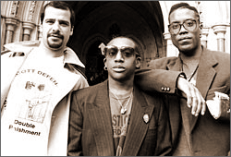
 A man has been sentenced to 12 years imprisonment for the 1976 rape and manslaughter of Janet Commins, a 15 year old girl, a crime that made national news at the time. Stephen Hough was interviewed along with all local men aged 17-22, but was ruled out after claiming to have been stealing petrol at the time. Instead, another local young man, Noel Jones, a barely literate 18-year-old traveller who had been picked up by police the day Janet’s body was discovered, was interviewed for days without legal assistance. He denied all knowledge of the crime but later his girlfriend told police he had confessed to killing Janet and had asked her to provide him with an alibi. After two days of questioning, he signed two detailed confession statements. On the second day of his murder trial in June 1976, he admitted manslaughter and was sentenced to 12 years in prison. Noel Jones spent 6 years in prison for the murder.
 Miscarriages of justice (as wrongful convictions are more commonly referred to in the UK) rarely feature in the national media in the UK. This has been noted for many years now. If a case is sufficiently high-profile or has some peculiarity (i.e. involves a footballer or other ‘celebrity’), then it may merit a short piece in a national newspaper. Most will only make a paragraph or two in a regional newspaper if lucky supporters can provoke the interest of a local journalist. The overwhelming majority get no media coverage at all. This is not because of a lack of miscarriages of justice (our Criminal Court of Appeal is as over-run with work as ever, as is our Criminal Cases Review Commission), but a perceived lack of public interest. Perhaps domestic miscarriages lack the ‘drama’ of an exoneration in the US (we lack the ridiculously lengthy sentences for a start). The contrast is becoming increasingly stark, with ‘Making a Murderer’ lawyers ‘on tour’ in the UK speaking to rapturous crowds, while campaigners for domestic cases struggle to be heard. In just one example: a leading national newspaper this week has a major splash on an exoneration in the US, that has a small ‘home’ angle that can be exploited:
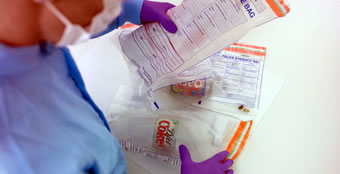 In England and Wales, since the closure of the Forensic Science Service, forensic testing has been undertaken by a number of private companies. At the time of the privatisation, many warned that introducing a profit-motive into forensic science could have perverse outcomes. Many were concerned about falling standards and ‘bargain basement’ outfits doing shoddy work. Some of these concerns look to have been justified, with news this week that two men have been arrested after the discovery that they have manipulated alcohol/ drug test results used in both the criminal and family courts. The media have reported that almost 500 cases are being reviewed to see if an injustice has occurred. Already, there is one reported instance of a case being dropped because the results of the drug tests cannot be relied upon (
 Michael Hannon was accused of sexual assault by a 10 year old neighbour, in 1997. He was convicted and yet in 2006, his accuser came forward and retracted her statement, confessing that she had made a false allegation. Despite this, the Ministry of Justice ‘lost’ Hannon’s case files. It was not until 2009 that he was able to have his case certified as a miscarriage of justice. The Ministry and Hannon have now reached an out-of-court settlement after his claim for compensation went to the High Court. The case is a stark example of what can happen when police pursue allegations in spite of a total lack of evidence. This failure was compounded by incompetence on behalf of the prosecutors and Ministry of Justice staff who not only ‘lost’ his file for 15 months, but continued to protest against his case being declared a miscarriage of justice.
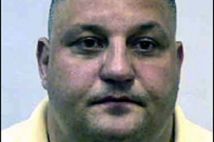 A man who spent six years in prison has successfully sued the England and Wales Crown Prosecution Service after their failure to disclose police surveillance tapes that proved his innocence. Wrongly convicted of perverting the course of justice in 2007 (after 2 failed trials), Conrad Jones was freed in 2014 when he won an appeal. He was on trial for bribing a witness in a murder trial, but police surveillance tapes proved he could not have been present. While the Judge at his appeal called the failure to disclose the exculpatory evidence ‘lamentable’, Jones’s solicitor said: “It is clear that the CPS and prosecution counsel had in their possession, both while my client remained on remand in prison awaiting trial and at the time of my client’s trial, surveillance material which showed he could not realistically have met with and bribed [the witness] not to give evidence. They knew it was relevant, they knew it undermined the prosecution case and strengthened Mr Jones’s defence and they knew that the law required them to disclose it. To discover years after the event that the CPS, on the advice of highly experienced lawyers, has knowingly and repeatedly failed to comply with the criminal law on disclosure is shocking, and raises very serious questions which go right to the heart of public confidence in the criminal justice system and the legal profession.”
 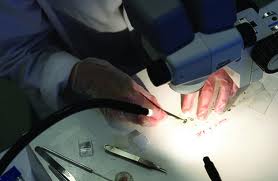 Coming amidst growing concerns and warnings from scientists about the state of forensic science in the UK, is the announcement that Dr Gill Tully – the UK’s Forensic Regulator, has ordered a review of a series of sexual assault cases: “to find out whether there are occasional examples of poor practice or whether there are more systematic issues.” The review was prompted by cases where “the scientific opportunities don’t appear to have been maximised”. These included examples where scientific analysis was not carried out at all. Read more here:
 Gleeson case led to campaign for abolition of capital punishment
 Mother and baby homes were symptoms of a traumatised society after Civil War










 Wrongful Convictions Blog