Category Archives: United Kingdom

Thursday’s Quick Clicks…

click

Yet more bad news from the UK on exoneree compensation

As several of my blog posts have pointed out (here…. and here….  and here…), seeking compensation for a wrongful conviction in the UK is becoming nigh on impossible. Recent decisions to severely restrict compensation to only those who can demonstrate ‘innocence’ is now set to be enshrined in legislation. This is being done without any fanfare, media attention, or political debate. Academic expert Dr. Hannah Quirk from the University of Manchester is trying to highlight the new provisions that will forever restrict compensation (to the point where I can barely see how anyone will qualify for compensation) for exonerees. Quirk has just had a letter published on this issue in The Times newspaper. Mr Murdoch keeps this behind a ‘paywall’, so it cannot be viewed without payment, so I have reproduced the text of the letter here:

Unknown

“Tucked away in the Anti-Social Behaviour, Crime and Policing Bill 2013-14 is a provision to restrict compensation for miscarriages of justice to cases in which “if, and only if the new or newly discovered fact shows beyond reasonable doubt that the person was innocent of the offence.” (s.143) There is no mention of this in the preamble to the Bill and only a brief reference from Theresa May (the Home Secretary) during the Bill’s second reading. Eligibility is already very restrictive since the previous government ended the ex gratia scheme. Very few successful appellants are able to establish their innocence (which is why the Court of Appeal considers the ‘safety’ of a conviction). Under this test, the Guildford Four, notwithstanding an apology from the Prime Minister for the grievous wrong they had suffered, would not have been entitled to compensation. It is not clear that this provision complies with our international obligations. When the ICCPR was drafted, every proposal that compensation should be restricted to the innocent was rejected. The European Court of Human Rights has said that the existing provisions do not infringe Article 6 (Allen v UK) noting specifically that the appellant was not obligated to demonstrate her innocence. Finally, a small but significant number of successful appellants do not know on what basis their conviction has been quashed. These could be cases relating to undercover policing or collusion – areas in which the State may have directly contributed to or caused the miscarriage of justice. It is hard to see how the decision-making process regarding compensation in these cases could possibly be regarded as fair”.

Dr Hannah Quirk, University of Manchester.

Tuesday’s Quick Clicks…

click
  • The National Center for Reason and Justice’s response to DA Kathleen Rice’s self-serving report on the Jesse Friedman case.
  • Irish Innocence Project students intern in the U.S.
  • A killer from Ipswich, England, who spent a decade claiming he was the victim of a miscarriage of justice has finally admitted his guilt.  Simon Hall, 35, was convicted and jailed for life in 2003 after murdering Joan Albert, 79, in her home in Capel St Mary, Suffolk. She was found in her hallway on December 16, 2001, after being stabbed five times.  He had protested his innocence ever since, launching a series of appeals, winning the backing of MPs and appearing in the BBC documentary Rough Justice.  But now it has emerged Hall, previously of Hill House Road, Ipswich, had admitted his guilt to prison authorities, bringing his campaign to an end.
  • An exonerated Durham man said Monday that the State Bureau of Investigation has agreed to pay him $4.6 million after he was wrongfully convicted of murder and spent 17 years behind bars.  Greg Taylor sued the agency after an independent review found questionable practices at its state crime lab. Taylor’s conviction was bolstered in part by blood evidence analysis from the lab that has since been discredited.
  • In New Orleans, police avoid turning over public records to Innocence Project New Orleans
  • Exoneree Brian Banks cherishes preseason debut with Atlanta Falcons

Forensic Science in the UK: “A Threat to Justice”

UnknownThe state of the forensic science ‘market’ in the UK has been the subject of much debate (see here…  ) March 2012 saw the closure of the main provider of forensic services, the Forensic Science Service, by order of the government. It was deemed that with the service ‘losing’ (note ‘losing’ rather than ‘costing’) 2million pounds a year, it could no longer be sustained. Instead, forensic provision is now provided by private companies, individual consultants, or the police themselves. Now, the highly respected Science and Technology Select Committee of MPs has produced a report on the ‘fiasco’ of forensic science in the UK, roundly criticising the government move to close the FSS and warning of the dangers of miscarriages of justice. The provision of forensic science is now fragmented, dangerously unsupervised and the lack of research funding will only make matters worse in the years to come. The damning report contains no ‘news’ to those critics who predicted that the risks the government were taking with forensic science could end in disaster: the wrongful conviction of innocents as well as the diminishing ability to detect offenders.  The government report has been widely reported in the press:

UK forensic science slammed by inquiry

Forensics upheaval ‘threat to justice’, MPs warn

The full Forensic Science report can be found here… 

New Scholarship Spotlight: What is a Miscarriage of Justice? The Irish Answer to an International Problem

Vicky Conway and Jennifer Schweppe have posted the above-titled article on SSRN. Download here.  The abstract states:

We inherently link miscarriages of justice with innocence. Yet the language of the term is not so restrictive, and implies that a broader definition can be contemplated, one encompassing all cases in which justice has not been done or carried. This article will begin by considering why the definition and application of the term is so problematic, followed by a conceptual and theoretical discussion of the term ‘miscarriage of justice’. It will then look at why the change in Irish law occurred in 1993 with the passing of the Criminal Procedure Act, with a short overview of the new law. The focus will then turn to a substantive discussion of the case law on the issue, charting the evolution of the definition and difficulties that faced the judiciary. The article will conclude with a discussion supporting the approach of the Irish judiciary, arguing that it presents an important challenge to legal systems internationally.

Bad news from Europe on wrongful conviction compensation

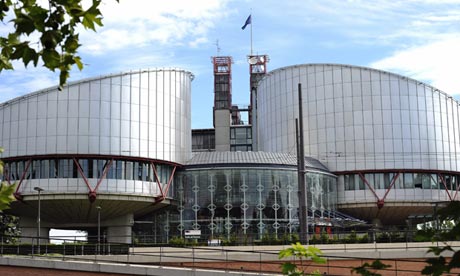
Two rulings in the last couple of weeks in the English Court of Appeal and the European Court of Human Rights have dealt a blow for those trying to obtain compensation for their wrongful convictions. In previous posts (here….  and here…) I have detailed the efforts of Barry George (wrongly convicted of the murder ofThe European court of human rights in Strasbourg Jill Dando who served 8 years in prison) and Lorraine Allen (imprisoned for killing her son before being exonerated having serving 3 years in prison). However, both have had their appeals rejected.

At the Court of Appeal, Barry George was refused the right to appeal the decision in January 2013 that the State need not compensate George because he could not demonstrate that he was completely innocent. See latest decision here:

Barry George appeal loss is ‘travesty of justice’

In a further blow to victims of miscarriages of justice, Lorraine Allen lost her case at the European Court of Human Rights. The Court repeated the mantra now emanating from policy makers and judges, that you do not deserve compensation unless you can prove your innocence – so compensation can be denied to those ‘not innocent enough’. The Court concluded that “the existence of a miscarriage of justice had not been established beyond reasonable doubt”. Thus denying her any right to compensation.  Read more here:

Wrongly jailed woman loses Europe fight for compensation

Lorraine Allen denied compensation after being wrongly jailed for killing son

Monday’s Quick Clicks…

click
  • In China, efforts to exonerate an executed inmate underway; more from China here
  • Michigan Innocence Clinic wins case based on junk arson science
  • CCRC in England receives a 10% budget increase because of growing number of applications
  • Life after death row for Damien Echols of the West Memphis 3
  • More on exoneree Brian Banks and his journey to the NFL; Banks’ false accuser ordered to pay back her $2.6 million settlement against the school where she alleged Banks had raped her
  • The New York-based Innocence Project has assembled an Artists’ Committee which consists of writers, directors, actors, visual artists and musicians who support the innocence movement and are helping raise awareness about wrongful convictions. Members lend their talent and voice to the vital work of innocence organizations in a variety of ways, such as raising awareness and money, speaking out about the need to prevent wrongful convictions, and integrating these issues into their art. Several household names sit on the committee, including Yoko Ono, Sarah Jessica Parker, Stephen Colbert, Zooey Deschanel, and the late James Gandolfini, whose sudden death this past week shocked the nation.
  • Uriah Courtney of California embraces freedom
  • Kirk Bloodsworth marks 20 years since exoneration

Forensic staff investigated following wrongful conviction

By Jasmin McDermott
Police Oracle (UK)
Date – 5th July 2013

Forensic Science Service (FSS) staff involved in a crime scene exhibit mix up that resulted in a man being wrongfully convicted of possessing a live round will have to answer for their actions following claims they were aware the exhibit was a dummy.

Officers from Merseyside Police carried out a search of Thomas Smart’s property in Liverpool in January 2008 and discovered what appeared to be a live round. He was arrested on suspicion of illegally possessing ammunition.

Mr Smart told officers that he bought the round as an ornament and assumed it was not live. However, forensic scientist Philip Rydeard, employed by the FSS, said in a report that it was a bulleted cartridge.

Mr Smart was charged and pleaded guilty. He was given a four-month suspended sentenced and ordered to do 180 hours of unpaid work.

However, following an internal review a a year later in January 2009, staff discovered that there had been a mix up and that the exhibit numbers had been altered.

They apologised for the “quality failure” and admitted that there was the potential for a miscarriage of justice. But they denied that they owed any duty of care and said that Mr Rydeard was immune from any civil proceedings.

A judge ruled in 2012 that the FSS was protected by witness immunity and that the organisation owed no duty of care to Mr Smart. They dismissed his claims of negligence and breach of the Human Rights Act 1998.

However, Mr Smart appealed the decision and additionally lodged a claim of deceit – that forensic staff, including Mr Rydeard, knowingly altered exhibit records to falsely represent that it was the seized dummy bullet.

Lord Justice Moses sitting in the Court of Appeal ordered a full hearing into the case. He said: “Witnesses, if called by the FSS, will have to explain and justify the handling of the exhibits in this case.

“They cannot be protected from being questioned or from accounting for their actions.”

He added: “It must be recognised that, as a result of interference with the exhibit number, the real bullet was falsely attributed to Mr Smart.

“The effect of interference with exhibit numbers, whether it was designed originally to conceal confusion or ‘mix up’ or not, was the same as planting the real bullet in Mr Smart’s premises.

“It is alarming that the course of justice appears to have been perverted by the alteration of exhibit numbers and the failure to disclose that that had occurred or any reason why it occurred.”

New Scholarship Spotlight: International Perspectives on Correcting Wrongful Convictions: The Scottish Criminal Cases Review Commission

Pace law professor Lissa Griffin has posted the above-titled article on SSRN.  Download full article here.  The abstract states:

Part I of this Article traces the history of the Scottish Criminal Cases Review Commission (SCCRC) and outlines the procedures employed by the SCCRC after an application is received, with particular attention to its extensive investigatory procedures. It also describes and analyzes the standards for referral of an application to the Scottish court. Part II briefly sets forth the statistics concerning applications, referrals, and judicial decisions. Part III includes an analysis of the SCCRC’s work by looking at the cases that have been referred and decided by the court. Those cases are divided into several categories: fresh evidence referrals, referrals based on a newly raised legal issue, and historic cases. It also includes a discussion of two sui generis, but very important decisions, and a consideration of how the SCCRC and the court deal with cases that do not involve any new factual or legal claims. Part IV reflects on and attempts to draw some conclusions about the SCCRC’s role in the correction of wrongful convictions.


Thursday’s Quick Clicks…

click
  • Scotland may get rid of 300 year old corroboration rule, which requires multiple pieces of corroborating evidence before a conviction can be obtained.  It was implemented to avoid wrongful convictions
  • A review of Michael Naughton’s The Innocent and the Criminal Justice System
  • A Texas fire review panel flagged two quarter-century-old arson cases on Wednesday, saying investigators were mistaken in finding that the defendants set intentional fires.
  • Exoneree Brian Banks:  the best revenge is success

Brain-scan lie detectors don’t work, study finds

Here’s an excellent story from Pacific Standard magazine:

June 10, 2013 • By Lauren Kirchner

It sounds just like something out of a sci-fi police procedural show—and not necessarily a good one.

In a darkened room, a scientist in a white lab coat attaches a web of suction cups, wires, and electrodes to a crime suspect’s head. The suspect doesn’t blink as he tells the detectives interrogating him, “I didn’t do it.”

The grizzled head detective bangs his fist on the table. “We know you did!” he yells.

The scientist checks his machine. “Either he’s telling the truth … or he’s actively suppressing his memories of the crime,” says the scientist.

“Dammit,” says the detective, shaking his head, “this one’s good.”

But it isn’t fiction. Some law enforcement agencies really are using brain-scan lie detectors, and it really is possible to beat them, new research shows.

The polygraph, the more familiar lie detection method, works by “simultaneously recording changes in several physiological variables such as blood pressure, pulse rate, respiration, electrodermal activity,” according to a very intriguing group called the International League of Polygraph Examiners. Despite what the League (and television) might have you believe, polygraph results are generally believed to be unreliable, and are only admitted as evidence in U.S. courts in very specific circumstances.

The brain-scan “guilt detection test” is a newer technology that supposedly measures electrical activity in the brain, which would be triggered by specific memories during an interrogation. “When presented with reminders of their crime, it was previously assumed that their brain would automatically and uncontrollably recognize these details,” explains a new study published last week by psychologists at the University of Cambridge. “Using scans of the brain’s electrical activity, this recognition would be observable, recording a ‘guilty’ response.”

Law enforcement agencies in Japan and India have started to use this tool to solve crimes, and even to try suspects in court. These types of tests have not caught on with law enforcement in the U.S., though they are commercially available here. That’s probably a good thing; the researchers of this study found that “some people can intentionally and voluntarily suppress unwanted memories.”

The experiment was pretty straightforward, and the participants were no criminal masterminds. Ordinary people were asked to stage mock crimes, and then were asked to “suppress” their “crime memories,” all while having their brains scanned for electric activity. Most people could do it, the researchers found: “a significant proportion of people managed to reduce their brain’s recognition response and appear innocent.”

Not everyone could, though. “Interestingly, not everyone was able to suppress their memories of the crime well enough to beat the system,” said Dr. Michael Anderson, of the Medical Research Council Cognition and Brain Sciences Unit in Cambridge. “Clearly, more research is needed to identify why some people were much more effective than others.”

Separate studies on guilt-detection scans, conducted by cognitive neuroscientists at Stanford University, had similar findings. Anthony Wagner at Stanford’s Memory Lab had study participants take thousands of digital photos of their daily activities for several weeks. Wagner and his colleagues then showed sequences of photos to the participants, and measured their brain activity while the participants saw both familiar and unfamiliar photos.

The researchers could identify which photos were familiar to the participants and which ones were not, with 91 percent accuracy, Wagner said. However, when the researchers told the participants to try to actively suppress their recognition of the photos that were theirs—to “try to beat the system”—the researchers had much less success.

Scientists still don’t know how this “suppression” actually works; like so many questions about the inner workings of the human brain, it remains a mystery. But the fact that so many test subjects could, somehow, do it on command, led the authors of both the Cambridge and Stanford studies to come to the same conclusions.

In short, brain-scan guilt-detection type tests are beatable, their results are unreliable, and they shouldn’t be used as evidence in court. Except on television.


Monday’s Quick Clicks…

click

Miami ‘injustice system’ gets international attention

The release this week of Amanda Knox’s book, Waiting to be Heard, and her hour-long interview on ABC last night puts the focus on the growing problem of citizens of one country being convicted in the unfamiliar court system of another country.

Knox has gained strong sympathy in her native United States. But feelings toward her in Italy, where her murder conviction occurred before being overturned, and in Great Britain, where murdered roommate Meredith Kercher was from, are less favorable.

The shoe is on the other foot in the murder conviction in the United States of a British citizen of Indian descent, Kris Maharaj, who grew up in Trinidad and made a fortune in Britain before moving to Florida. Maharaj has gained lots of support and media exposure in Britain, but relatively little in the U.S.

Maharaj got a rude introduction to the American justice system when two business rivals were killed in a Miami hotel room in 1986 and he was convicted of their murders and sentenced to death. Maharaj’s case had many sordid aspects, including a judge who was arrested mid-trial on bribery charges, a lackadaisical attorney (who is now a judge), police and prosecutors who withheld evidence, Caribbean con-artists and Columbian cocaine dealers.

Clive Stafford Smith bares these facts in his compelling book, The Injustice System: A Murder in Miami and a Trial Gone Wrong, which was previously published in Britain as Injustice.

Stafford Smith has an interesting perspective. The British citizen attended the University of North Carolina and graduated from Columbia Law School. He then spent two decades representing death-row clients in the United States before returning to Britain, where he is founder and director of Reprieve, a nonprofit legal defense firm. One of his American clients was Maharaj. In his book, Stafford Smith recounts how he developed convincing evidence that the murders for which Maharaj was sentenced to death were really committed by a Columbian hit man to exact revenge for the victims’ theft of a drug cartel’s profits.

Stafford Smith tells how he got Maharaj’s death sentence overturned with some regret. Why? Because, Stafford Smith says, American courts are far less likely to consider evidence of innocence if the defendant isn’t on death row. As a result, Maharaj, now in his 70s, languishes in prison with little chance of having the evidence Stafford Smith has developed ever considered. You can read more about the case here and here.

Pre-requisites for a safe criminal justice system II: Legal representation.

In addition to committing to spending on GOOD science (see my earlier post here… ), governments have a responsibility to provide free legal representation to those who cannot afford it. This responsibility however, is being increasingly shirked by many governments, who see legal aid (as it’s called in the UK) as a cost that can be cut. This is dangerous territory. One of the leading causes of miscarriages of justice is poor legal representation. In addition, if a defendant has NO, or very poor, legal representation, little can be done to challenge other defects in the criminal process and flawed evidence leading to wrongful convictions. In the UK, there are also major concerns that the lack of funding for lawyers will lead to many more legal professionals opting out of doing any criminal legal aid work, or doing so in such numbers (to make it worth their while financially) that they will merely be able to offer the most basic of services, with great temptation to get suspects to ‘plead’ early to avoid spending more time than necessary on making a defence. See some commentary on the cuts here…

Legal aid: Government consults on £220m savings plan.

Our justice system is being turned into Profit & Growth plc

Criminal legal aid bill to be cut by £220m

406eff1f-6fc9-4d33-b3cf-f81457439544

The cuts are combined with measures such as ‘Best Value Tendering’, where legal firms must submit the lowest bid in order to secure rights to defend suspects – an immediate attack on quality. In response, the government is trying to introduce ‘QASA’ – Quality Assurance Scheme for Advocates. The introduction of this scheme has already led to unprecedented action among the legal profession and seems set to incite strike action soon. There are also suggestions being made that volunteer legal advice centres – including those set up in law schools, can pick up the work. Putting an incredible burden on these resource-poor and inexperienced individuals.

Similar plans to cut legal aid are moving ahead across Australia too:

Vulnerable hit by cuts to legal aid

imagesIn the UK in particular, legal aid is being cut from certain individuals altogether, with prisoners no longer eligible. Proper legal representation is not a luxury. It will not be long before any economic benefits at all are wiped out by the increased costs of failed trials and wrongful convictions.


Pre-requisites for a safe Criminal Justice System I: GOOD Science.

Junk_Science_zps5ca255edTime and again, we are reminded that ‘junk science’ can so easily lead to injustice. This need not just be wrongful convictions, but can damage confidence in the justice system in many ways, including giving false hope to victims. However, it is shocking to still see cases where BAD science can lead to people being wrongfully convicted. It is still happening daily around the world. In the US, ‘bite mark’ evidence is still being used to convict, EVEN when the bite mark evidence given at trial is later reversed by the same experts  – read the shocking story here….

When Courts Uphold Bad Science, Innocent People Stay in Prison

Fortunately for one suspect – DNA evidence came to his rescue – albeit 3months after his arrest and imprisonment on child rape charges. The suspect had been identified by the victim AND failed a lie detector test, but was eventually freed when DNA testing that he had pleaded for, linked to another convicted felon who lived nearby. The Prosecutor had only reluctantly agreed to DNA testing, stating previously that it would be ‘a waste of taxpayers money’. Read here…

Rape Suspect Denied DNA Test Is Finally Cleared

This is a shocking reminder that prosecutors and governments as a whole, often think of forensic science as a ‘cost’ that can be cut. This is playing out now in the UK, with the ongoing cost-cutting which has seen the closure of the Forensic Science Service and full privatisation of the forensic science ‘market’, as well as the slashing of police science budgets. Now, finally, the media are reporting on the shocking delay in the UK of utilising advances in DNA profiling. Read more here….

Britain goes from ‘pole position to banana republic’ in DNA profiling

How long before we are counting the cost in terms of wrongfully convicted individuals?

Thursday’s Quick Clicks…

click

Tuesday’s Quick Clicks…

click
  • Ohio’s public records law dies slow death of 1,000 cuts
  • More than 30 years after he was convicted, a Virginia man has been cleared of abducting a woman and her two young children.  The Virginia Supreme Court on Monday granted Garry Lowell Diamond a writ of actual innocence, Virginia Attorney General Ken Cuccinelli said in a news release
  • In the UK, a man jailed in connection with a murder in Chorleywood 18 years ago is to have his case heard at the Court of Appeal.  Kevin Lane was found guilty of using a shotgun to kill Robert Magill while he walked his dog in 1996.  Appeals judges are expected to hear concerns over a Hertfordshire police officer involved in the investigation who was later jailed.  Lane’s solicitor Maslen Merchant told the BBC: “This is a significant development in what has been a long and arduous journey for Kevin and his legal team.”  The case has been reviewed twice by the Criminal Cases Review Commission (CCRC) which refused to refer the case for appeal.  He subsequently applied directly to the Court of Appeal which instructed the CCRC to look at “particular points”.  The announcement comes almost exactly a year after the Innocence Network UK (INUK) listed Lane’s among 45 cases it believes should be heard by the Court of Appeal. 

Fight to prove innocence continues after victim’s death

A very local case, from Leeds, is back in the news. Tony Stock was – by all accounts – wrongly convicted of a nasty armed robbery in Leeds in 1970. He protested his innocence for four decades, to no avail. He has now passed away, but his fight is continuing. Tony Stock had a total of four appeals, but none were successful. Lawyers are still fighting to get back to the court of appeal for a record fifth time, to at last, get justice. Read more here….

1667224303

One man’s struggle to clear his name… and the fight for justice that will not die

Serious Doubt Over Brothers’ Convictions with Key Witness Jailed

The conviction of Robert and Lee Firkin for the notorious murders of Graham and Carole Fisher in 2003, has been thrown into doubt with the conviction of the main prosecution witness in their case.

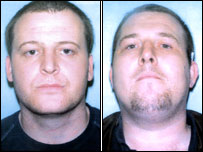
_41234600_firkins203The witness, known as ‘Z’, told the court at their trial that one of the brothers had ‘confessed’ to him in their shared prison cell. Even the police admitted that there was very little by way of other evidence against the brothers. Now, ‘Z’ has been convicted of murder, after acting as a hired hitman, making the admission of his testimony in the 2006 trial against the Firkin’s, even more controversial. The lawyers for the brothers are intending to use this evidence to try and get a new appeal. Read more here…

Firkin brothers’ murder convictions questioned after witness jailed


Tuesday’s Quick Clicks…

click