Author Archives: Carole McCartney

Sad news from UK – the death of Susan May – wrongly convicted.

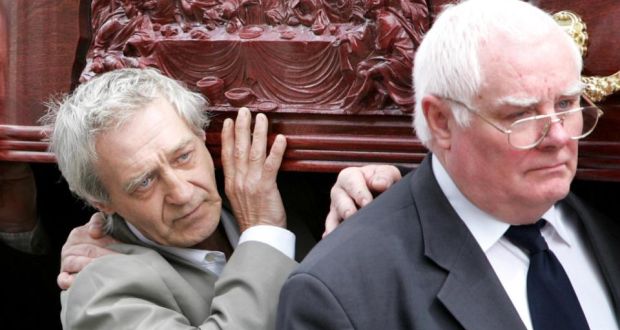
_70427007_susanintI have previously written on this blog of the case of Susan May (see here… ) a brave lady who served 12 years in prison for the murder of her aunt, a murder she almost certainly did not commit. The sad news is that Susan May has not lived to see her conviction overturned, and she passed away last week. This is very sad news indeed and all wrongful conviction campaigners send their condolences to her family, friends, and her many many supporters. They will continue to fight her conviction.

read more here…

Susan May: Murder case woman dies before appeal ruling

Hope at last for UK’s Susan May, wrongly convicted 20 yrs ago?

Susan May always denied murdering her auntIt is unusual to find criminal cases where large numbers of individuals are prepared to put their head above the parapet and state that they wholly believe in their innocence, regardless of having failed to date to overturn their conviction. Susan May’s case is one of the few. Convicted in 1993 of killing her 87 year old aunt, Susan served 12 years in prison before being released, the first life sentenced prisoner to be released while still proclaiming their innocence. Susan and her supporters however, have never given up trying to prove her innocence and have her murder conviction overturned. After all these years, there is still some hope. Internationally renowned fingerprint expert Arie Zeelenberg has writte a report that the ‘fingerprints in blood’ that were the main prosecution evidence were not, in fact, in blood at all, and were most likely left before the crime. Zeelenberg’s report is now with the CCRC, who are considering her case for referral again, back at the Court of Appeal. I sincerely hope that Susan May’s nightmare may soon be over. Read more here….

New evidence may clear woman convicted of murder 21 years ago

Susan May’s 20-year fight against murder conviction

Strict UK compensation rules for exonerees soon to be passed

Strict new rules which will severely restrict the ability to obtain compensation for those who have had convictions overturned in the courts of England and Wales, look set to be passed. Earlier blog posts have detailed these changes (here….and here…) and now, former ‘Birmingham Six’ member, Billy Power, has spoken out. It is very rare for Mr Power to speak to the media, and his clear concerns about the new rules are prompting him, and others, to try and raise the issue, which seems to be entirely evading any political or public debate at all. imageRead Mr Power’s views here…

Birmingham Six member warns over changes to UK miscarriage of justice rules

And more reaction here:

Criminal compensation reforms would shift burden of proof on to victims

More calls in New Zealand for independent justice review committee

In light of this week’s decision at the Privy Council to overturn the murder conviction of New Zealand citizen Mark Lundy (see earlier post here….), ongoing debate surrounding the need for an independent review commission, along the lines of the UK’s Criminal Cases Review Commissions, has again been sparked. An earlier post here…. detailed how New Zealand authorities have long been contemplating the creation of a post-appeal review body, but they have so far resisted calls. See an interesting news piece here…. untitled

Call for justice review committee for miscarriages

Privy Council in London overturn New Zealand murder conviction

The Privy Council, sitting in London, has heard an appeal from Mark Lundy, a New Zealand resident serving a 20 year life sentence for murdering his wife and daughter. Mark Lundy has already served over 12 years in prison for the murder that he has always maintained he did not commit. The court has overturned the conviction and instructed the authorities in New Zealand to give Mr Lundy a new trial as soon as possible. Mr Lundy turned to the Privy Council after losing all appeal avenues in New Zealand. His appeal turns upon new ‘credible’ expert evidence that casts serious doubt over the original evidence used at trial, of stomach contents analysis, in order to determine the time of death of the victims. Mr Lundy has always had an alibi for when he claims the murders must have taken place, but the stomach content analysis put the deaths at a time when he could have committed the murders. If this evidence is proved flawed, then the whole case is thrown into doubt.

Read more here:

Mark Lundy murder convictions quashed  

New Zealand businessman Mark Lundy wins appeal in UK court over conviction for murdering wife and daughter with tomahawk-like weapon

New Zealand judge: ‘Case for Independent body to investigate miscarriages of justice even stronger now’

untitledA retired New Zealand judge is arguing, 10 years after conducting an inquiry into miscarriages of justice in New Zealand, that the country is still in dire need of an independent body to investigate cases. This article outlines his conclusions then, and now, and the political concerns surrounding the establishment of such a body.

Read more here: A decade after he recommended New Zealand set up an independent commission to investigate claims of miscarriages of justice, Sir Thomas Thorp says the case is even stronger.

Top Chinese Forensic Scientist Quits in Protest Over Miscarriages of Justice

Following hot on the heels of previous posts about the rising awareness of wrongful convictions in China (see here… and here…. and here…), one of the leading forensic scientists in the country has now resigned in protest at the mishandling of evidence in criminal cases and a series of miscarriages of justice:

1573238303

Wang Xuemei, the vice-president of the government-administered Chinese Forensic Medicine Association, said she could no longer be involved with an organisation that routinely serves up “ridiculous and false expert conclusions”

Defence solicitors have commented that the judiciary in China remain under the control of the Communist Party, and cannot be independent. Such comments, and a high profile resignation, should serve as clarion calls for reformers in China to work to bring about urgent reforms, and those in the international innocence movement must continue reaching out to our Chinese colleagues, to ensure that exonerations can be secured. Read more here…

Top Chinese forensic scientist quits over mishandled cases

Neil Heywood case: forensic scientist who raised doubts over conviction quits

Ahead of Bo Xilai trial, a top China forensic scientist quits

Yet more bad news from the UK on exoneree compensation

As several of my blog posts have pointed out (here…. and here….  and here…), seeking compensation for a wrongful conviction in the UK is becoming nigh on impossible. Recent decisions to severely restrict compensation to only those who can demonstrate ‘innocence’ is now set to be enshrined in legislation. This is being done without any fanfare, media attention, or political debate. Academic expert Dr. Hannah Quirk from the University of Manchester is trying to highlight the new provisions that will forever restrict compensation (to the point where I can barely see how anyone will qualify for compensation) for exonerees. Quirk has just had a letter published on this issue in The Times newspaper. Mr Murdoch keeps this behind a ‘paywall’, so it cannot be viewed without payment, so I have reproduced the text of the letter here:

Unknown

“Tucked away in the Anti-Social Behaviour, Crime and Policing Bill 2013-14 is a provision to restrict compensation for miscarriages of justice to cases in which “if, and only if the new or newly discovered fact shows beyond reasonable doubt that the person was innocent of the offence.” (s.143) There is no mention of this in the preamble to the Bill and only a brief reference from Theresa May (the Home Secretary) during the Bill’s second reading. Eligibility is already very restrictive since the previous government ended the ex gratia scheme. Very few successful appellants are able to establish their innocence (which is why the Court of Appeal considers the ‘safety’ of a conviction). Under this test, the Guildford Four, notwithstanding an apology from the Prime Minister for the grievous wrong they had suffered, would not have been entitled to compensation. It is not clear that this provision complies with our international obligations. When the ICCPR was drafted, every proposal that compensation should be restricted to the innocent was rejected. The European Court of Human Rights has said that the existing provisions do not infringe Article 6 (Allen v UK) noting specifically that the appellant was not obligated to demonstrate her innocence. Finally, a small but significant number of successful appellants do not know on what basis their conviction has been quashed. These could be cases relating to undercover policing or collusion – areas in which the State may have directly contributed to or caused the miscarriage of justice. It is hard to see how the decision-making process regarding compensation in these cases could possibly be regarded as fair”.

Dr Hannah Quirk, University of Manchester.

Miscarriages of Justice in China Prompt New Guidelines

Unknown-1

China has recently been uncovering a raft of miscarriages of justice. The latest case sees a man released after spending 17 years in prison for the murder of his wife. This latest case, and the many that have recently hit the headlines have led to new guidelines from the ruling Communist Party, regarding prosecution policy and procedures. The guidelines reaffirm the presumption of innocence, and makes police and prosecutors ‘responsible’ for erroneous convictions – removing the previous ‘conviction target’ system of appraising performance simply through numbers of convictions. Read more here:

Chinese man innocent after 17yrs in jail

Lifelong Responsibility

High Hopes for South African DNA Database

dnabill-adopted

Yesterday, (August 15th 2013), the South African Parliament passed a bill, permitting the creation of a DNA database for South African police. The Criminal Law (Forensic Procedures) Amendment Bill, permits the taking of DNA from suspects during criminal investigations. While the cost of the DNA database and associated costs have been queried and concerns abound about whether the nation can afford the cost it is hoped that the human rights/ civil liberties concerns that have delayed the passing of the bill, have been addressed (e.g. see:  Costing queried as DNA bill gets the nod).

There are high hopes that in South  Africa, a country beset with a massive crime problem, with corruption rife within a highly dysfunctional justice system, will assist with criminal detection.

Unknown

The DNA bill was supported by a very high profile (and successful) campaign by families of crime victims – you can see their work and campaign successes in their very professional website: ‘The DNA Project’.


As yet, even with the wide media coverage, there has been no mention of the use of DNA to exonerate innocent prisoners, of whom there would be expected to be many. The emphasis so far is all on the detection of offenders – although we know that the diligent use of DNA at an early stage in criminal investigations can be an effective tool in the prevention of wrongful convictions. However, it is hoped that with the establishment, and investment in a DNA database, South Africa may be able to take action on miscarriages of justice.

Further north, in Kenya, there has been a recent call to recognise the potential for miscarriages of justice, and take action to give greater rights of appeal and for the judicial system to acknowledge the possibility of miscarriages of justice, albeit the country is yet to publicise any: Kenya scarred by miscarriage of justicePerhaps there is cause for cautious optimism that the ‘innocence movement’ may be spreading to the African continent.

Australasia: New calls for criminal cases review body

New Zealand media are again focussing attention on the case of Teina Pora (read about his case here) , a man convicted 21 years ago of a rape and murder that he maintains he did not commit. Pora is now awaiting a pardon, having lost all his appeals and reached the end of the line. Many groups including politicians and police support his claims of innocence. However, the Premier of New Zealand (John Key) is rejecting calls for the government to set up an inquiry into the conviction. Instead, the case may (if refused a pardon) have to go to the Privy Council in London.

SCCZEN_A_110413SPLPORA1_220x147

Read more here:  Key, Collins shy off action on Pora case

The case is attracting sufficient criticism that it is heightening calls for a criminal case review body specifically created to look at potential miscarriages of justice. Commentators are looking to renew previous calls in New Zealand to set up a review bodysimilar to the CCRC in the UK. With Pora’s case featuring so heavily in the news, the calls may get greater political and public support.  Read more here: Criminal conviction review system long overdue

Meanwhile, similar calls are being made just across the Tasman Seain Tasmania (a state of Australia). They too are demanding new appeal rights for those alleging a miscarriage of justice. Similar to many of the States in Australia, once you have your appeal in Tasmania, 

Unknown-1

you cannot have a subsequent one, even if new evidence is produced. Civil Liberties Australia are now calling for greater appeal rights in Tasmania, a call that could similarly be made all across Australia. Read more here:  Calls mount for retrial ruling

Germany frees innocent man from asylum after 7 years

For the last seven years, Gustl Mollath, 56, has been held in a German asylum, after his wife accused him of assault. Mr Mollath had been trying to expose bank staff at Bavaria’s HypoVereinsbank (HVB), including his wife, who he accused of smuggling millions into Swiss accounts. Instead judges ruled that he was paranoid and committed him to psychiatric care for an indeterminate period. An audit of the bank has now proven his claims to be true, and he was released from involuntary detention. Read more here…

Germany’s worst miscarriage of justice? ‘Paranoid’ husband freed after he was mistakenly held in asylum for seven yearspg-34-mollath-reuters

Australia: Call for end of juries in new book: ‘Presumed Guilty’

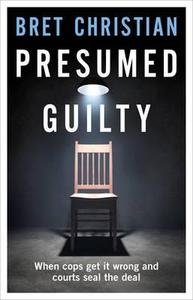
A veteran reporter in Western Australia, Bret Christian, has written a new book entitled ‘Presumed Guilty’. In promoting the book, he has given an interesting radio interview where he calls for the abolition of juries. He claims that having covered many miscarriages of justice, this may prevent further occurring. You can listen to the interview here….   

More details on the book are available here:

Presumed Guilty

Bret Christian506782

Forensic Science in the UK: “A Threat to Justice”

UnknownThe state of the forensic science ‘market’ in the UK has been the subject of much debate (see here…  ) March 2012 saw the closure of the main provider of forensic services, the Forensic Science Service, by order of the government. It was deemed that with the service ‘losing’ (note ‘losing’ rather than ‘costing’) 2million pounds a year, it could no longer be sustained. Instead, forensic provision is now provided by private companies, individual consultants, or the police themselves. Now, the highly respected Science and Technology Select Committee of MPs has produced a report on the ‘fiasco’ of forensic science in the UK, roundly criticising the government move to close the FSS and warning of the dangers of miscarriages of justice. The provision of forensic science is now fragmented, dangerously unsupervised and the lack of research funding will only make matters worse in the years to come. The damning report contains no ‘news’ to those critics who predicted that the risks the government were taking with forensic science could end in disaster: the wrongful conviction of innocents as well as the diminishing ability to detect offenders.  The government report has been widely reported in the press:

UK forensic science slammed by inquiry

Forensics upheaval ‘threat to justice’, MPs warn

The full Forensic Science report can be found here… 

Sweden’s worst miscarriage of justice?

Sweden, often looked upon as an aspirational model for criminal justice reformers, looks set to finally admit that it has wrongly convicted a mentally ill psychiatric patient of a series of murders after he confessed to the crimes. Bergwall, now 63 years,  ‘confessed’ to dozens of macabre killings (including cannibalising his victims) during the 1990s.  He was convicted – with apparent ease – of at least 8 murders, despite little or no evidence beyond his detailed confessions. Now, the authorities are dropping all charges against him, after he retracted all of his confessions in late 2008. The Swedish Attorney General has admitted:

“That a person has been convicted of eight murders and later been declared innocent, that is unique in Swedish legal history…It has to be considered as a big failure for the justice system.”

The story is receiving international attention, being reported as far afield as China and Auspg-32-sweden-aptralia. Read more here….(Incl. a GQ magazine article)

The Serial Killer Has Second Thoughts: The Confessions of Thomas Quick

Swedish serial killer who raped and ate his victims to be freed – because he made it all up

Swedish ‘serial killer’ cleared of all charges despite confession

Bad news from Europe on wrongful conviction compensation

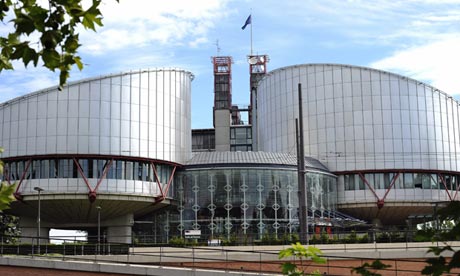
Two rulings in the last couple of weeks in the English Court of Appeal and the European Court of Human Rights have dealt a blow for those trying to obtain compensation for their wrongful convictions. In previous posts (here….  and here…) I have detailed the efforts of Barry George (wrongly convicted of the murder ofThe European court of human rights in Strasbourg Jill Dando who served 8 years in prison) and Lorraine Allen (imprisoned for killing her son before being exonerated having serving 3 years in prison). However, both have had their appeals rejected.

At the Court of Appeal, Barry George was refused the right to appeal the decision in January 2013 that the State need not compensate George because he could not demonstrate that he was completely innocent. See latest decision here:

Barry George appeal loss is ‘travesty of justice’

In a further blow to victims of miscarriages of justice, Lorraine Allen lost her case at the European Court of Human Rights. The Court repeated the mantra now emanating from policy makers and judges, that you do not deserve compensation unless you can prove your innocence – so compensation can be denied to those ‘not innocent enough’. The Court concluded that “the existence of a miscarriage of justice had not been established beyond reasonable doubt”. Thus denying her any right to compensation.  Read more here:

Wrongly jailed woman loses Europe fight for compensation

Lorraine Allen denied compensation after being wrongly jailed for killing son

Pre-requisites for a safe criminal justice system II: Legal representation.

In addition to committing to spending on GOOD science (see my earlier post here… ), governments have a responsibility to provide free legal representation to those who cannot afford it. This responsibility however, is being increasingly shirked by many governments, who see legal aid (as it’s called in the UK) as a cost that can be cut. This is dangerous territory. One of the leading causes of miscarriages of justice is poor legal representation. In addition, if a defendant has NO, or very poor, legal representation, little can be done to challenge other defects in the criminal process and flawed evidence leading to wrongful convictions. In the UK, there are also major concerns that the lack of funding for lawyers will lead to many more legal professionals opting out of doing any criminal legal aid work, or doing so in such numbers (to make it worth their while financially) that they will merely be able to offer the most basic of services, with great temptation to get suspects to ‘plead’ early to avoid spending more time than necessary on making a defence. See some commentary on the cuts here…

Legal aid: Government consults on £220m savings plan.

Our justice system is being turned into Profit & Growth plc

Criminal legal aid bill to be cut by £220m

406eff1f-6fc9-4d33-b3cf-f81457439544

The cuts are combined with measures such as ‘Best Value Tendering’, where legal firms must submit the lowest bid in order to secure rights to defend suspects – an immediate attack on quality. In response, the government is trying to introduce ‘QASA’ – Quality Assurance Scheme for Advocates. The introduction of this scheme has already led to unprecedented action among the legal profession and seems set to incite strike action soon. There are also suggestions being made that volunteer legal advice centres – including those set up in law schools, can pick up the work. Putting an incredible burden on these resource-poor and inexperienced individuals.

Similar plans to cut legal aid are moving ahead across Australia too:

Vulnerable hit by cuts to legal aid

imagesIn the UK in particular, legal aid is being cut from certain individuals altogether, with prisoners no longer eligible. Proper legal representation is not a luxury. It will not be long before any economic benefits at all are wiped out by the increased costs of failed trials and wrongful convictions.


Pre-requisites for a safe Criminal Justice System I: GOOD Science.

Junk_Science_zps5ca255edTime and again, we are reminded that ‘junk science’ can so easily lead to injustice. This need not just be wrongful convictions, but can damage confidence in the justice system in many ways, including giving false hope to victims. However, it is shocking to still see cases where BAD science can lead to people being wrongfully convicted. It is still happening daily around the world. In the US, ‘bite mark’ evidence is still being used to convict, EVEN when the bite mark evidence given at trial is later reversed by the same experts  – read the shocking story here….

When Courts Uphold Bad Science, Innocent People Stay in Prison

Fortunately for one suspect – DNA evidence came to his rescue – albeit 3months after his arrest and imprisonment on child rape charges. The suspect had been identified by the victim AND failed a lie detector test, but was eventually freed when DNA testing that he had pleaded for, linked to another convicted felon who lived nearby. The Prosecutor had only reluctantly agreed to DNA testing, stating previously that it would be ‘a waste of taxpayers money’. Read here…

Rape Suspect Denied DNA Test Is Finally Cleared

This is a shocking reminder that prosecutors and governments as a whole, often think of forensic science as a ‘cost’ that can be cut. This is playing out now in the UK, with the ongoing cost-cutting which has seen the closure of the Forensic Science Service and full privatisation of the forensic science ‘market’, as well as the slashing of police science budgets. Now, finally, the media are reporting on the shocking delay in the UK of utilising advances in DNA profiling. Read more here….

Britain goes from ‘pole position to banana republic’ in DNA profiling

How long before we are counting the cost in terms of wrongfully convicted individuals?

International Recognition of Wrongful Convictions: A Growing Trend?

ImageWith recent posts on this blog detailing further great news from Europe on developing Innocence Projects (see here… on France, see here… on Belgium, here… on Netherlands), it certainly feels like the ambition of those in the US to spread the word of innocence internationally is proving fruitful. South Australia is celebrating (finally) getting a body to investigate miscarriages of justice – the first in Australia. There have been notorious miscarriages of justice in that State, and many others waiting to see the light of day. They may now have a chance – let’s hope it’s not too long before the other States and Territories follow suit:

A small step in legal reform, a giant leap for justice

Meanwhile, just in the last few weeks I have read the following news items from around the world – perhaps the media is starting to get with the programme?

In China, authorities have apologised ‘deeply’ for wrongly convicting 2 men of rape and murder (including a death sentence that was commuted). They have ordered inquiries into the investigation and conviction of the men. DNA testing led to another man who was executed in 2005 for another killing. Read here: 

Police apologizes to 2 men wrongly convicted

and: Zhejiang plans to probe men’s wrongful conviction.

There are hopes that the revelation of wrongful convictions – including the execution of innocence individuals – in China will lead to the cessation of the death penalty

Putting China on the Path to Ending Capital Punishment

In Israel, an interesting and detailed article looks at the re-opening of the notorious murder of a child at school (the Zadorov case). It re-caps on previous high-profile miscarriages of justice in Israel and their causes:

The Zadorov case

In New Zealand, calls are being made by political party leaders for a pardon in an infamous case where a 17 year old was questioned by police for five days without a lawyer. Teina Pora has spent 20 years in prison for murder – a murder where another man was convicted (on DNA evidence) of raping, but not killing, the victim. The case has always attracted accusations of racism in the treatment of Pora.

Māori Party wants mercy in Pora case

Mounting pressure for re-investigation of Pora case

One can only hope that the spread of media interest in, and political motivation to tackle wrongful convictions, continues.

Fight to prove innocence continues after victim’s death

A very local case, from Leeds, is back in the news. Tony Stock was – by all accounts – wrongly convicted of a nasty armed robbery in Leeds in 1970. He protested his innocence for four decades, to no avail. He has now passed away, but his fight is continuing. Tony Stock had a total of four appeals, but none were successful. Lawyers are still fighting to get back to the court of appeal for a record fifth time, to at last, get justice. Read more here….

1667224303

One man’s struggle to clear his name… and the fight for justice that will not die