Author Archives: Carole McCartney

Pre-requisites for a safe Criminal Justice System I: GOOD Science.

Junk_Science_zps5ca255edTime and again, we are reminded that ‘junk science’ can so easily lead to injustice. This need not just be wrongful convictions, but can damage confidence in the justice system in many ways, including giving false hope to victims. However, it is shocking to still see cases where BAD science can lead to people being wrongfully convicted. It is still happening daily around the world. In the US, ‘bite mark’ evidence is still being used to convict, EVEN when the bite mark evidence given at trial is later reversed by the same experts - read the shocking story here….

When Courts Uphold Bad Science, Innocent People Stay in Prison

Fortunately for one suspect - DNA evidence came to his rescue - albeit 3months after his arrest and imprisonment on child rape charges. The suspect had been identified by the victim AND failed a lie detector test, but was eventually freed when DNA testing that he had pleaded for, linked to another convicted felon who lived nearby. The Prosecutor had only reluctantly agreed to DNA testing, stating previously that it would be ‘a waste of taxpayers money’. Read here…

Rape Suspect Denied DNA Test Is Finally Cleared

This is a shocking reminder that prosecutors and governments as a whole, often think of forensic science as a ‘cost’ that can be cut. This is playing out now in the UK, with the ongoing cost-cutting which has seen the closure of the Forensic Science Service and full privatisation of the forensic science ‘market’, as well as the slashing of police science budgets. Now, finally, the media are reporting on the shocking delay in the UK of utilising advances in DNA profiling. Read more here….

Britain goes from ‘pole position to banana republic’ in DNA profiling

How long before we are counting the cost in terms of wrongfully convicted individuals?

International Recognition of Wrongful Convictions: A Growing Trend?

ImageWith recent posts on this blog detailing further great news from Europe on developing Innocence Projects (see here… on France, see here… on Belgium, here… on Netherlands), it certainly feels like the ambition of those in the US to spread the word of innocence internationally is proving fruitful. South Australia is celebrating (finally) getting a body to investigate miscarriages of justice - the first in Australia. There have been notorious miscarriages of justice in that State, and many others waiting to see the light of day. They may now have a chance - let’s hope it’s not too long before the other States and Territories follow suit:

A small step in legal reform, a giant leap for justice

Meanwhile, just in the last few weeks I have read the following news items from around the world - perhaps the media is starting to get with the programme?

In China, authorities have apologised ‘deeply’ for wrongly convicting 2 men of rape and murder (including a death sentence that was commuted). They have ordered inquiries into the investigation and conviction of the men. DNA testing led to another man who was executed in 2005 for another killing. Read here:

Police apologizes to 2 men wrongly convicted

and: Zhejiang plans to probe men’s wrongful conviction.

There are hopes that the revelation of wrongful convictions - including the execution of innocence individuals - in China will lead to the cessation of the death penalty

Putting China on the Path to Ending Capital Punishment

In Israel, an interesting and detailed article looks at the re-opening of the notorious murder of a child at school (the Zadorov case). It re-caps on previous high-profile miscarriages of justice in Israel and their causes:

The Zadorov case

In New Zealand, calls are being made by political party leaders for a pardon in an infamous case where a 17 year old was questioned by police for five days without a lawyer. Teina Pora has spent 20 years in prison for murder - a murder where another man was convicted (on DNA evidence) of raping, but not killing, the victim. The case has always attracted accusations of racism in the treatment of Pora.

Māori Party wants mercy in Pora case

Mounting pressure for re-investigation of Pora case

One can only hope that the spread of media interest in, and political motivation to tackle wrongful convictions, continues.

Fight to prove innocence continues after victim’s death

A very local case, from Leeds, is back in the news. Tony Stock was - by all accounts - wrongly convicted of a nasty armed robbery in Leeds in 1970. He protested his innocence for four decades, to no avail. He has now passed away, but his fight is continuing. Tony Stock had a total of four appeals, but none were successful. Lawyers are still fighting to get back to the court of appeal for a record fifth time, to at last, get justice. Read more here….

1667224303

One man’s struggle to clear his name… and the fight for justice that will not die

Serious Doubt Over Brothers’ Convictions with Key Witness Jailed

The conviction of Robert and Lee Firkin for the notorious murders of Graham and Carole Fisher in 2003, has been thrown into doubt with the conviction of the main prosecution witness in their case.

_41234600_firkins203The witness, known as ‘Z’, told the court at their trial that one of the brothers had ‘confessed’ to him in their shared prison cell. Even the police admitted that there was very little by way of other evidence against the brothers. Now, ‘Z’ has been convicted of murder, after acting as a hired hitman, making the admission of his testimony in the 2006 trial against the Firkin’s, even more controversial. The lawyers for the brothers are intending to use this evidence to try and get a new appeal. Read more here…

Firkin brothers’ murder convictions questioned after witness jailed


Flawed fingerprint expert won’t be getting job back…

One of the fingerprint experts at the centre of the Shirley McKie scandal in Scotland (see here…) has lost her bid to get her old job back. Fiona McBride wrongly identified a latent print at the centre of a murder case, which saw PC McKie tried for perjury and eventually compensated three quarters of a million pounds by the Scottish Government. McBride and others were suspended from work, but after a year re-training were re-instated. However, they were not allowed to sign joint reports, nor were they to be court-going experts. The fear was that the McKie misidentification would always come up and prosecutions could fail. McBride appealed to the Court of Sessions, who ruled that she need not be re-instated, but that the Employment Tribunal should re-consider if she should be paid compensation (depending on whether she contributed to her dismissal). Read more here….

921496438

McKie fingerprint expert Fiona McBride fails to win job back

Shirley McKie fingerprint expert loses job appeal

“Not innocent enough” victims of miscarriages lose claims for compensation

Barry George, (subject of previous blog post here…) and three others, have lost their claims for compensation from the government, following the overturning of their wrongful convictions. One of the claimants, DID win his claim. Ian Lawless served eight years for a murder that he did not commit. He was jailed for life in 2002 and yesterday, a UK High Court judge ruled that the decision not to award Mr Lawless compensation, was legally flawed, and the government must re-consider. This leaves the door open for him to succeed in gaining compensation (read here…)

Barry-George-should-be-en-003

However, the other four claimants LOST their appeals to the High Court, with ramifications for all victims of miscarriages of justice in the UK.

The Court ruled that the government decision to not award payouts to those against who there was evidence that could possibly indicate their guilt was legal, applying for the first time, the Supreme Court ruling that a miscarriage of justice ONLY occurs when: a miscarriage of justice occurs “when a new or newly discovered fact shows conclusively that the evidence against a defendant has been so undermined that no conviction could possibly be based upon it”. Thus, not all those who have convictions overturned will qualify for compensation: “Procedural deficiencies that led to irregularities in the trial or errors in the investigation of offences will not suffice to establish entitlement to compensation”. It was concluded that a jury could STILL find a verdict of guilt against Barry George, thus, he was not a clearly ‘innocent’ person and the government were justified in refusing him compensation.

There are a further 11 cases awaiting a hearing, but with this decision, it is highly unlikely that the High Court will waiver, and the Supreme Court’s ruling in 2011, will stand firm. Barry George therefore, along with many others, will continue to live with the cloud over their head, that they have yet to ‘prove their innocence’, as many media outlets are reporting. See here….

“Not innocent enough”: Barry George loses compensation bid over wrongful conviction for Jill Dando murder

Barry George loses compensation bid over Jill Dando conviction

Barry George loses compensation case

Barbados rape scandal grows with Police Commissioner statement.

Image

Further to my 22nd November post:

Victims try to prevent a wrongful conviction in Barbados

the story continues to develop. While the two victim’s efforts appear to have prevented an innocent man from being wrongly convicted of rape, the Police Commissioner of Barbados has now spoken out to claim that he is ‘happy’ with the investigation, and will not be losing any sleep over it. The real rapist is yet to be caught. Derick Crawford maintains that he was forced to confess, and there is no other evidence to link Crawford with the two separate rapes.See news items here:

Barbados rapes: Case against Derick Crawford dismissed

Barbados rapes: Derick Crawford thanks women who fought to clear him

Barbados rapes: Victims Rachel Turner and Diane Davies’ anger at police

Victims try to prevent a wrongful conviction in Barbados

Two women from the UK are trying to prevent the conviction of a man in Barbados for their sexual assaults. Both victims are ‘absolutely convinced’ that the Barbados police have got the wrong man. The man ‘confessed’ to the crime, a confession he has now retracted. The Barabados police claim that there is a lot of other evidence to support the prosecution of the man for the attacks, but in the last 18months, have failed to reveal this other evidence. Both women are speaking out and have revealed their identities in the desperate hope that they can prevent this wrongful conviction. Read the full shocking story here….

Landmark hearing at European Court of Human Rights on Weds. 14th Nov.

On Wednesday 14th November, there is to be a hearing in the Grand Chamber of the European Court of Human Rights in the case of Lorraine Allen (nee Harris) versus the UK. Mrs Allen is claiming that the UK government wrongly denied her compensation for her wrongful conviction for shaking her baby son to death. Her conviction was overturned in 2005 (see details of her case here…). The hearing will consider whether somebody who wins an appeal and has their conviction overturned, is then to be considered ‘innocent’. As an article in The Independent newspaper explains:

Hugh Southey QC, Mrs Allen’s barrister, added: “The issue for the court is whether the UK has infringed her right to a presumption of innocence by refusing her compensation. Anyone who has been refused compensation on this basis will benefit. This is not an isolated case.”

The case, which will be heard by 20 judges, wound up in Europe after John Reid, then Home Secretary, refused an initial appeal for compensation in 2006. The High Court refused her attempt to challenge the decision by judicial review, and a subsequent appeal was dismissed in 2008.

In the UK, rules on compensation for victims of miscarriages of justice have been tightened up considerably, so that you have to be able to clearly demonstrate that a ‘newly discovered fact(s)’ used in your appeal shows that you are innocent. Many fail to satisfy the Home Office of this.

I, along with many others, await the ruling of the Court with anticipation. I hope that the 20 judges seize the opportunity to expound an unequivocal principle that those who are exonerated return to their original ‘innocent’ state and whilst they should be entitled to compensation, perhaps most importantly, they should be considered ‘innocent’ in the eyes of the State, and treated as such. I shall of course update readers as news comes in.


Supporting acquittals in the face of public outrage: some thoughts.

In the UK and Australia, as elsewhere, there have been high profile acquittals of persons who were considered ‘guilty’ in the media. I have long thought that while we often do not do enough to heed the lessons of wrongful convictions, we should also be taking note of acquittals and seeing what wider lessons they may also hold. Two such cases this week have given me pause to consider the criminal process when it ‘works’ and how this can be portrayed in the media in such as way as to be damaging to public confidence in the criminal justice system. While it can be difficult and unpopular, I believe those working to prevent wrongful convictions, should not be afraid to support these cases and speak up in support of the protections that have led to the acquittals.

In the UK, the case of Christopher Halliwell (called a ‘dangerous predator here) hit the headlines. Halliwell was arrested on suspicion of kidnapping Sian O’Callaghan and upon arrest, was driven to a deserted spot and grilled by a detective. While he pleaded to see a solicitor, he eventually buckled and led the police to Sian’s body. After subsequent questioning, all still outside of the bounds of legality, Halliwell led the police to a second body. Under the rules of evidence in England and Wales, his ‘confession’ to the second murder (which had occurred 8 years previously) was not admissible, and as there was no other evidence, Halliwell could not be tried for that murder. Halliwell is clearly guilty of 2 murders, and yet can only be convicted of one, with an understandable ensuing outcry led by the victims mother. Commentators have also taken the opportunity to bemoan the plentiful ‘rights’ that are afforded suspects and how these obstruct justice, pledging support for the now suspended detective. However, these rules on confessions and police conduct of interviews are there for a purpose. There is a long history of false confessions that have been co-erced or even beaten out of suspects, who have gone on to be convicted and serve many years in prison wrongfully. It took many years of campaigning to get these rights enshrined in law and we lose them at our peril. I have faced down critics on more than one occasion, for standing up for the rights of suspects, including those of murderers. (Read more on Halliwell case here and how he ‘evaded trial’).

In Australia this week, a high profile acquittal was covered in the media with much accompanying outrage. Lloyd Rayney has been cleared of murdering his wife after the ‘trial of the decade’ (see here and see here). The beauty of this trial is that it was a judge-only trial, and you can read the judge’s statement here... The reasoning reasserts that it is for the prosecution to prove beyond a reasonable doubt the guilt of the accused and the accused does not have to prove his innocence. He goes on to explain that in this case: “Endeavours by the State to fill critical gaps and explain away improbabilities are primarily no more than speculation without foundation in the evidence.”

This echoes a prior acquittal, in the case against Francis Marshall, again in a judge-only trial in Australia in 2010, where the judge stated: “I’m satisfied that the accused had a motive, and find that there are a number of suspicious circumstances which implicate the accused as the killer of Bernadette Liston,… But motive, by itself, is insufficient to find the accused guilty, (and) suspicion piled upon suspicion does not equate to proof beyond reasonable doubt.”

Perhaps there is something to be said for holding more ‘judge only’ trials. That is a debate for another day. What I do believe, is that we need to support these acquittals, even in the face of strong criticism. We cannot allow the media to use such cases to fight against removal of any hard-won protections for suspects and defendants.

The case of Johnny Montani will hopefully be successful and instructive (read more here). Montani’s brother has lodged a complaint with the Australian Corruption and Crime Commission over his three trials (and acquittals), three years on remand and huge legal bill. Montani is alleging police misconduct for adducing erroneous evidence. Being put on trial for a crime you didn’t commit should not be considered a minor inconvenience. Lives can be shattered, just as with a wrongful conviction.
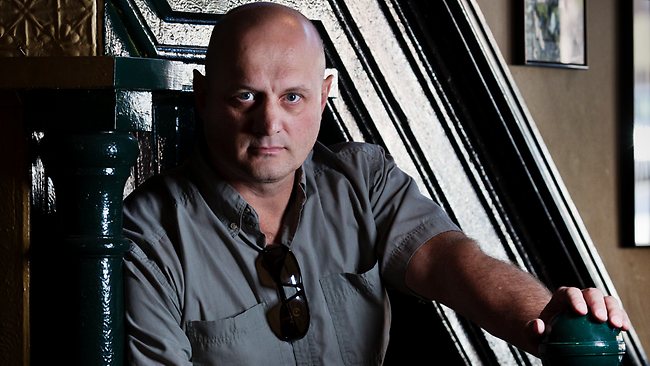
In many of these ‘near misses’, there are lessons for all the participants in the criminal process to learn. These people mentioned here are fortunate to not now be fighting for their wrongful convictions to be overturned. It is important that we do not allow the media to use such cases to argue against due process rights.

Former Tokyo High Court Judge publishes book on causes of wrongful convictions

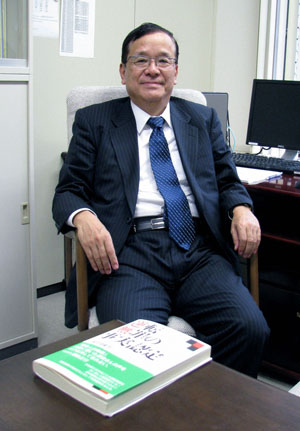
From The Japan Times: “A former judge is seeking to raise public awareness of how miscarriages of justice can occur, having reversed more than 20 guilty verdicts during eight years as a presiding judge at the Tokyo High Court. In his newly published book, “Reversed on the Facts — What Overturned Guilty Verdicts Can Teach Us About Fact-Finding,” Kunio Harada uses actual rulings in 16 of these cases to explain how he found misjudgments in the previous court decisions.” Read the full story here…

News photo


Scottish judges, lawyers & advocates all fight to keep corroboration rule

The Scots have been making a lot of headlines in the UK this week after signing an agreement with the British Prime Minister that they can hold a referendum seeking full independence from the UK. However, they have always had their own legal system, entirely separate from England, Wales and Northern Ireland. This legal system has just been the subject of a major review, which has recently reported.

The Carloway Review has recommended the abolition of the Scots corroboration rule, that requires that each piece of evidence adduced during a trial is supported by two sources. This requirement has always been the subject of envy by those south of the border who work in the field of miscarriages of justice, albeit that there are still people wrongly convicted in Scotland. However, Lord Carloway’s recommendation that the rule be abolished, as it has ‘no place in a modern legal system’, is meeting with fierce resistance. Each of the professional bodies for judges, advocates, and lawyers, have come out against the move, arguing that it would seriously increase the risk of miscarriages of justice and decrease confidence in the legal system. Read more here…

The corroboration rule is one that acts as a significant safeguard against miscarriages of justice and it is a shame that the rule does not apply in English and Welsh courts. With each piece of evidence requiring corroboration, many false allegations of sexual assault etc. cannot be prosecuted as they cannot be supported independently. However, this is one reason the corroboration rule is at risk of being eradicated, because it makes it harder to achieve convictions, particular in cases of domestic violence or sexual offences where it can be merely one person’s word against another. We shall watch the Scottish debate with interest.

Barry George, victim of miscarriage of justice, appeals again for compensation

Barry George, who was wrongly convicted in 2001 of shooting dead TV personality, Jill Dando, is appealing again to the government for compensation. He spent eight years in prison before he won an appeal and was acquitted at a re-trial. His case had turned on seriously flawed gunshot residue particle evidence. When he applied for compensation however, the government refused, after the definition of ‘miscarriage of justice’ was changed in a Supreme Court ruling in 2011. In order to receive compensation, victims of miscarriages of justice could not ‘merely’ have their conviction quoshed, they had to be able to prove their innocence with new facts, so that a conviction could not possibly be supported by the evidence. This raised the bar for compensation significantly. Barry George is now set to challenge this definition and fight for compensation. Read more here…. and here….

Link

French Wrongful Conviction Overturned

French Wrongful Conviction Overturned

A 51-year-old man has become only the seventh person in France since 1945 to have a wrongful conviction overturned. Loic Secher served seven years in jail after being wrongly convicted of raping a 15-year-old girl in 2003. The former farm worker has been awarded 800 thousand euros compensation. See the news clip here….

Urgent retrial called for death row inmate in Taipei

In a case that supporters are calling ‘an obvious miscarriage of justice’, a Taipei man is set to be executed after confessing to the killing in 2002 of a police officer. It is alleged that his confession was gained through torture. Read more here…

How Much Justice Can We Afford: Postscript

In a recent post: How much justice can we afford during the UK’s financial crisis? I discussed the many budget cuts in the UK, to the police, courts, legal aid, and forensic science, that are threatening the quality of justice in this country. I could barely have believed that today we read that a senior police officer has called for ‘volunteers’ to help police take fingerprints. He calls this ‘very low grade’ forensics, and something that ordinary members of the public could do with little training. This is in an attempt to save £20m from the police budget. One can only imagine where these cuts will lead us next.

Police chief wants volunteers to collect fingerprints

Police Corruption: a Global Issue.

When people talk about police corruption, it is easy to look to other nations, such as China, or countries on the African continent. Aren’t reporters always telling us that these places are awash with corruption? Yesterday, the UK heard that following a disaster at a sporting event 23 years ago in which 96 people died (not counting those that subsequently died of injuries or took their own lives in extreme distress), the police not only did not act appropriately at the time, they subsequently altered hundreds of police statements and conducted a major cover-up. They illegally accessed police files to try and smear the victims and put pressure on other emergency services to change their statements to absolve the police of any blame. It has taken 23 years to finally uncover this scandal, and may take many more, before we see any police officers prosecuted or disciplined for their actions. One wonders how many years it would have taken before any police officer would have blown the whistle… Read more here… Hillsborough disaster

Today, we hear of reports that a police officer has admitted to 13 charges of misconduct in a public office, after he failed to investigate offences, and falsified reports, while working in a ‘gold standard’ sexual offences unit within the Metropolitan Police. The officer faked police reports, claimed to have interviewed suspects and witnesses, and failed to pass on forensic evidence over at least 4 years. This is just one of four investigations being undertaken into this one police unit. Read more here… Former Met police officer admits failing to investigate rape cases

Of course, one does not have to look too far to confirm stereotypes that corruption within policing is rife in other countries… The Sowetan Daily reports on major corruption and criminal activity in their police forensic laboratories: ‘Corruption at forensic lab sabotages convictions’ but we should never forget to look at what is under our noses too. A similar story has recently emerged from a lab in Jamaica Plains, where a toxicologist is under investigation. 9 years of testing is being investigated, with the potential for numerous cases of drugs being mishandled and manipulated to ensure positive test results:

Black mark on the state drug lab

If the police and forensic scientists cannot be relied upon to tell the truth, the the whole criminal process is jeopardised.

Australia: Time for a review body for wrongful convictions.

David Eastman was convicted of murdering Colin Winchester in 1989 and is serving life imprisonment. His case has featured on the ‘Charles Smith Blog’ here…. His conviction is in significant doubt, and now a retired South Australian Supreme Court judge has been appointed to conduct an inquiry into the conviction: read story here…..

Commentators are now using the case to argue for a body in Australia, like the UK’s Criminal Cases Review Commission, to investigate potential wrongful convctions, to obviate the need for full-blown inquiries like this and previous ones. Read more here…..


How much justice can we afford during the UK’s financial crisis?

Justice is yet again coming under threat in the UK. With a government hell bent on cutting expenditure, the justice system is proving an easy targets for cuts. These cuts, whilst widely criticised, are only now starting to result in the inevitable: injustice. The most obvious cuts have been to legal aid budgets: this is not new of course, governments have been cutting the legal aid budget for years - but it has now reached crisis point, with criminal lawyers leaving the profession and ineffective defence lawyering becoming widespread. These cuts are proposed to be 40% - see here…

Legal aid cuts: if lawyers don’t defend justice for all, who will?

These cuts in addition of course to the privatisation of the court interpreting service, which I have blogged about previously.

Recently, we had the closure of the UK’s Forensic Science Service in March 2012 - while lone voices raised serious concerns about this (and I have blogged about this previously) and the risks of miscarriages of justice, the public may finally be starting to sit up. The BBC recently aired a Radio 4 documentary highlighting the risks of flawed forensic science (news item contains link to radio programme):

DNA test jailed innocent man for murder

We are now being warned that budget cuts to the Criminal Cases Review Commission - the body specifically tasked with investigating possible wrongful convictions - is leaving the organisation so cash-strapped it is taking short-cuts and delays are lengthening. The case of Kevin Lane and his fight to get the CCRC to refer his case back the Court of Appeal is just one example:

Prisoner’s 16-year fight to prise open the secrets of Operation Cactus

All of this comes on top of 20% across the board cuts to the police, with some forces cutting their forensic budgets by up to 40% to ‘protect’ frontline policing. Michael Mansfield now warns the government that treating the justice system as a business risks the entire system with creeping deregulation. The cost of wrongly imprisoning someone (and leaving someone else free to commit more crimes) is difficult to calculate in simple economic terms - the government needs to realise that all these cuts will end up with far greater costs - to public confidence in justice, and the ability of the police and courts to arrest and prosecute the right people. This is too high a cost to bear:

Justice can’t be treated as a business enterprise.

DNA exoneration in Jamaica

Christopher Murray, convicted in October 2010 of sexually molesting a young boy, has had his conviction overturned at the Court of Appeal in Jamaica. At trial, the Government forensic experts had ruled that DNA tests had been inconclusive. On further testing, the DNA exonerated Murray. Read more here….

DNA evidence overturns Jamaica man’s buggery conviction