Author Archives: Phil Locke

Ohio Moving to Curtail Civil Asset Forfeiture

In many states, including Ohio, the police may seize and keep a person’s assets merely with evidence that “wrongdoing” has occurred. This includes cars, houses, boats, and cash. A person does not have to be convicted of a crime to suffer civil asset forfeiture, and in many instances “evidence of wrongdoing” is very subjectively interpreted by the police.

There is currently a bill moving through the Ohio legislature that would curtail this practice, and if passed, would require a conviction before the police could keep seized assets.

See the WCPO Cincinnati story here.

“CSI” FINALLY Going Off the Air

See the CNN story here.

Thank you. Thank you. Thank you.

CSI – I hate the show. A pile of fictitious forensic junk that has been a burden to innocence work since its inception.

Prosecutors complain about it because they think it instills in the minds of jurors that there needs to be fancy, technical forensic evidence in order to convict a defendant. Maybe so, and if so, this might possibly result in a jury finding a defendant innocent who is actually guilty.

But there is a much more pernicious “other edge” to that sword. My view has always been that it instills in the minds of jurors that fancy, technical, forensic evidence is infallible, even though it may be scientific garbage. And this can, and does, result in a jury finding a defendant guilty who is actually innocent.

CSI, RIP. (No, not really.)

Prosecutor Can be Sued for Presenting False Information to Grand Jury

The US Second Circuit has ruled that a prosecutor can be held to a standard above “qualified immunity,” and thus can be sued, for knowingly presenting false information to a Grand Jury.

This quote from the court: “It ought not to be difficult, even for the most single‐minded of prosecutors, to avoid misconduct of the scope and seriousness of that in which the defendants engaged:

Creat[ing] false or fraudulently altered documents in the course of their performance of “investigatory functions,” knowing that such information was false or fraudulent; where “false” is defined as “untrue when made and . . . known to be untrue when made by the person making it or causing it to be made” and “fraudulent” as “falsely made with intent to deceive“.

It does not seem to us to be a danger to effective law enforcement to require prosecutors and their aides to abide by these rules even when pursuing the most complicated of cases with the utmost determination.”

See the story on the “Above the Law” website here.


Glossip Execution Stayed in Oklahoma

Please see our earlier post on this subject:  Oklahoma May Be About to Execute an Innocent Man.

An Oklahoma appellate court has granted a two week stay of execution for Richard Glossip while it considers motions filed by his attorneys. See the CNN story here.


Oklahoma May Be About to Execute an Innocent Man

Richard Glossip is scheduled to be executed by lethal injection in Oklahoma next Wednesday, 9/16.

He was convicted of a murder-for-hire plot based solely upon the testimony of the actual murderer, who implicated Glossip after coercion by the police, and to save his own skin.

See the CNN story by Helen Prejean here.

Amanda Knox – The Period at the End of the Sentence.

Italy’s Court of Cassation has issued a final, formal opinion on the resolution of the Amanda Knox case.

It is a resounding exoneration of Knox and Sollecito, and a scathing indictment of a sloppy, inadequate, hastily contrived prosecution case.

See the ABC News story here.

Perspectives of a Public Defender

Tina Peng is a public defender in New Orleans, and has authored an opinion piece that recently appeared in the Washington Post.

Her insight and commentary on the job of public defender are eye opening.

See her article, “I’m a public defender. It’s impossible for me to do a good job representing my clients.”,  here.


New York Considers Independent Prosecutorial Conduct Review Boards

“Plagued by misconduct, New York is considering the establishment of independent review boards for prosecutors, just like the ones for judges.”

See the article by Bennett Gershman, Pace Law School professor and expert on prosecutorial misconduct, here.

From the article:

“Legislation has been proposed to establish a state Commission on Prosecutorial Conduct—the first in the nation—to investigate and discipline prosecutors for misconduct.

The Commission on Prosecutorial Conduct is modeled after state commissions on judicial conduct, which exist in every state to review complaints of misconduct by judges and impose discipline. New York’s judicial commission was created in 1975 and has made a significant contribution to enforcing standards of judicial integrity. Indeed, for the previous 100 years, only 23 judges in New York State were disciplined. Since 1975, 826 judges have been disciplined, and 166 removed from office.

The Commission bill is supported by numerous organizations—United Teachers Association, Catholic Archdiocese, Legal Aid Society, New York Association of Criminal Defense Lawyers, and others. Committees in the state Senate and Assembly approved the bill late last term, but it did not reach the floor in time for a vote.”


Parole of the Wrongfully Convicted Requires Admission of Guilt


parole

We’ve written here before about the quandary faced by actually innocent, wrongfully convicted prisoners seeking parole.  Please see The Catch 22 of Parole for the Wrongfully Convicted.

The issue here is that it’s uniformly standard practice for parole boards to refuse parole for defendants who will not admit guilt. So, what’s a wrongfully convicted, actually innocent prisoner to do?

However, a California appeals court has recently ruled that the parole board cannot keep refusing parole to a prisoner simply because he will not admit guilt. See the article By Maintaining Innocence, Convicted Murderer is Denied Parole by Seth Augenstein here.

This is a big deal. Could this be precedential?

Criminal Law 2.0, by The Hon. Alex Kozinski (Why the US Justice System Really Isn’t Just)

Alex Kozinski is a judge on the U.S. Ninth Circuit. He has recently authored an article for the Georgetown Law Journal, which he simply titles “Criminal Law 2.0.” It is a comprehensive review and critique of the flaws and shortcomings of the current US justice system. My opinion is that this article is a masterpiece, a classic. Here is an experienced, seasoned, knowledgable justice system “insider” who has “figured it out.” And not only has he figured it out, but he also has some very good ideas about fixing the problems, or at least some of them. You can see the full text here: Kozinski, Criminal Law 2. I strongly encourage reading the full article.

Here is a topical summary: (Please see the full article for Judge Kozinski’s discussion of each point.)

A. The myths that cause us to think that the justice system is fair and just, when it’s really not.

  1. Eyewitnesses are highly reliable.
  2. Fingerprint evidence is foolproof.
  3. Other types of forensic evidence are scientifically proven and therefore infallible.
  4. DNA evidence is infallible.
  5. Human memories are reliable.
  6. Confessions are infallible because innocent people never confess.
  7. Juries follow instructions.
  8. Prosecutors play fair.
  9. The prosecution is at a substantial disadvantage because it must prove its case beyond a reasonable doubt.
  10. Police are objective in their investigations.
  11. Guilty pleas are conclusive proof of guilt.
  12. Long sentences deter crime.

B. Recommendations for reform – Juries

  1. Give jurors a written copy of the jury instructions.
  2. Allow jurors to take notes during trial and provide them with a full trial transcript.
  3. Allow jurors to discuss the case while the trial is ongoing.
  4. Allow jurors to ask questions during the trial.
  5. Tell jurors up-front what’s at stake in the case.
  6. Give jurors a say in sentencing.

C. Recommendations for reform – Prosecutors

  1. Require open file discovery.
  2. Adopt standardized, rigorous procedures for dealing with the government’s disclosure obligations.
  3. Adopt standardized, rigorous procedures for eyewitness identification.
  4. Video record all suspect interrogations.
  5. Impose strict limits on the use of jailhouse informants.
  6. Adopt rigorous, uniform procedures for certifying expert witnesses and preserving the integrity of the testing process.
  7. Keep adding conviction integrity units.
  8. Establish independent Prosecutorial Integrity Units.

D. Recommendations for reform – Judges

  1. Enter Brady compliance orders in every criminal case.
  2. Engage in a Brady colloquy.
  3. Adopt local rules that require the government to comply with its discovery obligations without the need for motions by the defense.
  4. Condition the admission of expert evidence in criminal cases on the presentation of a proper Daubert showing.
  5. When prosecutors misbehave, don’t keep it a secret.

E. Recommendations for reform – General

  1. Abandon judicial elections.
  2. Abrogate absolute prosecutorial immunity.
  3. Repeal AEDPA § 2254(d). (Antiterrorism and Effective Death Penalty Act)
  4. Treat prosecutorial misconduct as a civil rights violation.
  5. Give criminal defendants the choice of a jury or bench trial.
  6. Conduct in depth studies of exonerations.
  7. Repeal three felonies a day for three years. (Refers to the fact that there are too many vague, overlapping laws on the books.)

I would add two more to the General category:

•  Have all trial counsel, prosecution and defense, sworn in at the beginning of every trial.

•  Abandon political election of prosecutors.

Documentary on Scientifically Flawed FBI Hair Comparison Evidence

We’ve reported here before about the fact that FBI agents have been giving scientifically unsupportable testimony regarding hair comparison evidence for decades. Please see  Hair Analysis Evidence About to Join CBLA as “Junk Science.”

This Monday, August 17th at 10pm ET/7p PT, Al Jazeera’s Emmy Award-winning “Fault Lines” investigates how the FBI used the flawed science of microscopic hair analysis to help convict thousands of criminal defendants.

In this new episode, “Under the Microscope: The FBI Hair Cases,” Fault Lines correspondent Josh Rushing and team travel to Savannah, Georgia to meet Joseph Sledge. In 1978, Sledge was convicted of murder, partly based on FBI testimony that his hair was “microscopically alike in all respects” to hairs found at the crime scene. He was released this January, after serving 37 years in prison, when DNA testing proved the hairs used at trial were not his.

As “Fault Lines” reveals, Sledge is among at least 74 Americans who were exonerated after being convicted of a crime involving the forensic science of microscopic hair analysis. “There was no physical evidence tying Joseph to the crime, and the microscopic hair comparison was the closest they could come,” attorney Christine Mumma of the North Carolina Center on Actual Innocence said of Sledge’s case.

Before the advent of DNA testing, the FBI used the technique of hair analysis for decades. Al Jazeera America interviewed former FBI hair examiner Morris Samuel Clark, who said he testified hundreds of times in court about hair evidence, and that FBI microscopic hair comparisons were based on “16 different characteristics.”  However, with no database with which to compare hairs, Clark conceded that the FBI could not account for how hair characteristics are distributed in the general population.

“The hairs on your head are quite different depending on where they’re selected,” said Dr. Terry Melton, founder of Mitotyping Technologies, a Pennsylvania-based DNA lab. “Microscopy is a very subjective science, and DNA is exactly the opposite.”

In 2012, Dr. Melton’s DNA lab helped overturn convictions for two Washington, D.C.-area men: Kirk Odom, arrested for rape when he was 18 years old, and Santae Tribble, arrested for murder when he was 17.  Sandra Levick, the public defender who represented both Odom and Tribble in their appeals, said, “We had all 13 of the hairs that the FBI had examined [in Tribble’s case] sent off [for DNA testing.]” DNA-testing revealed that one of the hairs used at trial belonged to a dog.

In 2012, these high-profile exonerations finally compelled the Department of Justice to conduct a thorough review. In cases reviewed thus far, they have found that 26 out of 28 FBI examiners made false claims at trial. “We can now say, based on a statistically sizable sample of cases they have reviewed, [the FBI] were wrong 95% of the time,” said David Colapinto, an attorney at the National Whistleblower’s Center.

As of April 2015, the Department of Justice says it has reviewed about 1,800 cases – but in 40% of them, it closed the review due to lack of documentation. Officials from Justice and FBI declined to speak on camera for “Fault Lines” but publicly, they say they will notify defense counsel in cases they have reviewed, while declining to release the names of the defendants to the public. But with at least 14 defendants in question already executed or deceased of old age, is justice working too slowly?

Fault Lines’ “Under the Microscope: the FBI Hair Cases” premieres on Al Jazeera America on Monday, August 17th at 10 p.m. Eastern time/7 p.m. Pacific.

Al Jazeera America can be seen around the U.S. on Comcast Channel 107, Time Warner Cable, Dish Channel 216, DirecTV Channel 347, Verizon Fios Channel 614 and AT&T U-Verse Channel 1219.

When Innocence Is No Defense

The ancient Greek playwright, Euripides, once wrote, “Ours is a world in which justice is accidental, and innocence no protection.”

Interestingly, there is an op-ed piece in the NY Times today with the title “When Innocence Is No Defense.”

This quote from the article: “What is most troubling (about the Georgia Supreme Court’s decision) is that the issue of innocence becomes irrelevant if there has been a failure of due diligence. In effect, the ruling elevates finality over justice to the point that an innocent person can be imprisoned, even executed, because of errors made by his lawyer. Absent a constitutional safety net, an innocent person convicted after a procedurally adequate trial is out of luck.” (Highlighting is mine.)

See the NY Times op-ed piece by Julie Seaman here.

The Sex Offender Registry Strikes Again

We’ve posted  here before about the insanity and injustice of the sex offender registries. Please see Sex Offender Registries – TIME-FOR-A-CHANGE.

A recent CNN article captures the situation very well. This quote from the article by a judge familiar with the case: “If we caught every teenager that violated our current law,” says former Judge William Buhl, “we’d lock up 30 or 40 percent of the high school. We’re kidding ourselves.”

See the CNN story – “How a dating app hookup landed a teen on the sex offender registry” – here.


“Toe Tag Parole” – a Documentary About Extreme Prison Sentences in the US

TOE TAG PAROLE: TO LIVE AND DIE ON YARD A

CAPTURING THE REALITY OF AMERICA’S EXTREME SENTENCING POLICIES AT A CALIFORNIA MAXIMUM SECURITY PRISON, DEBUTS   AUG. 3 ON HBO

More Than 50,000 Americans, Consisting of Men, Women And Juveniles, Are Currently Sentenced To Life Without The Possibility Of Parole – America is the most punitive nation in the world, handing out historically harsh sentences that largely dispense with the concept of rehabilitation.

Alan and Susan Raymond (Oscar® and Emmy® winners for HBO’s “I Am a Promise:The Children of Stanton Elementary School”) explore the reality of “the other death penalty” in TOE TAG PAROLE: TO LIVE AND DIE ON YARD A, debuting MONDAY, AUG. 3 (9:00-10:30 p.m. ET/PT), exclusively on HBO.

Other HBO playdates: Aug. 3 (5:05 a.m.), 6 (4:15 p.m., 12:30 a.m.), 7 (8:00 a.m.), 9 (3:00 p.m.) 11 (3:00 p.m.) and 15 (10:00 a.m.)

            HBO2 playdates: Aug. 12 (8:00 p.m.), 20 (12:30 a.m.), 23 (9:05 a.m.) and 25 (12:45 p.m.)

Featuring exclusive, unprecedented access, TOE TAG PAROLE: TO LIVE AND DIE ON YARD A was shot entirely at California State Prison, Los Angeles County, a maximum-security facility in the Mojave Desert.

Continue reading

A Broken Justice System – Cases in Point – Part 1 – The Case of Ryan Madden

From time to time, I become aware of cases that are particularly good examples of the flaws, problems, shortcomings, and actual injustices of our so-called justice system that I have been writing about here for the last 3 1/2 years. I thought it would be good to highlight some of them for the blog.

As a backdrop to this series, I’d like to refer you to The Blaze article The American Nightmare: The Tyranny of the Criminal Justice System by John Whitehead. Please also see our previous post Why I Think the US Justice System is Broken – and Why It’s Not Getting Fixed.

Part 1” is the case of Ryan Madden in California.  Here is what I think this case exemplifies:

1) Bad defense lawyering leading to a wrongful conviction and exclusion from the appeals process.

2) The fact that you can pay huge sums of money to a lawyer who screws up your case, and you still get wrongfully convicted, and …. the lawyer keeps the money.

3) The existence of arbitrary “time bars” in the law that serve only to value legal process and finality of judgement over true justice.

4) The fact that so-called “conviction integrity units” are, in my opinion, still under the complete and arbitrary control of the prosecutor, and are not a reliable remedy for wrongful convictions. (Please see our previous post, Conviction Integrity Units – A Skeptic’s Perspective.)

Ryan’s father, Michael Madden, posted a comment regarding his son’s case to the WCB article Equal Justice Under Law … Well … Just How Much Justice Can You Afford?  His comment follows (with his permission), and is self-explanatory.

_______________________________________________________

My son is currently serving 15 years for two armed robberies he did not commit. Shoddy and lazy lawyering led to his conviction through a myriad of miscalculations and mistakes, including failing to have ATM pictures of the actual suspect photographically enhanced.

During the appellate process, his once highly regarded attorney submitted his appeal 35 days too late, leading to the mounds of exculpatory evidence gleaned postconviction to be ADEPA time barred. He stands a very good chance under this system of NEVER having ANY of the exculpatory evidence considered by the courts… Including an actual confession letter written by the real perpetrator.

Even though his attorney miscalculated the allowable time frame in which to submit his appeal, my son is paying the price for his mistake, while the attorney suffers no consequences AND keeps the $85,000 fee.

In a last-ditch effort to have someone – ANYONE – examine the evidence, his fate now rests in the hands of the Ventura County Convictions Integrity Unit. Even though they are playing with taxpayers money, it’s amazing how frugal they become when it comes to spending it on possibly overturning a conviction they received nine years ago.

How did this “justice” system ever arrive at a place in which the timeliness of an appeal involving actual innocence trumps actual innocence?

_______________________________________________________

Michael maintains a website about his son’s case: innocentinmate.com

“Part 2,” and more, to come in future.

The Junk Science of Bite Marks Needs to Go Away

We’ve posted about bite mark junk science here before. See About Bite Mark Evidence – Forensic Odontology.

Now, a leading White House science advisor has exhorted the National Institute of Standards and Technology (NIST) to eliminate bite mark evidence, because there is, in fact, no science to it at all. See Radley Balko’s recent article in the Washington Post here.

Balko also correctly advocates in his article that we MUST get trial court judges out of the business of being the decision makers about what is, or is not, valid science. “If not a single court in the country to date has been able to rule against a self-evidently absurd field like bite mark matching, why should we continue to entrust the courts to arbitrate the scientific validity of other evidence?

Why so Many “Confessions” in Shaken Baby Syndrome Cases?

In suspected SBS cases, the child abuse pediatricians (CAP’s) and the police are perfectly willing to coerce a confession out of you, and they have circumstances on their side, because you are at your most vulnerable. You are terribly concerned about the condition of your child, or worse yet, your child has just died. (See our previous post on child abuse pediatricians here: The Child Abuse Pediatrician (CAP) – Just Another Term for Medical “Cop”)

We’ve posted about SBS “confessions” before. See Shaken Baby Syndrome (SBS) – A CBS Report: Blaming Melissa for the coerced “confession” of Melissa Calusinski. See Scenes of a Crime – A Documentary of a False Confession and Blatantly Coerced Confession Results in Conviction Reversal for the coerced “confession” of Adrian Thomas.

Washtenaw Watchdogs (Washtenaw County, MI) has just published an investigative report article on their website dealing with this very issue. It’s very powerful. See it HERE.

Quote of the Day – About Prosecutors

From Cynthia Roseberry:

“We, as criminal defense lawyers, are forced to deal with some of the lowest people on earth, people who have no sense of right and wrong, people who will lie in court to get what they want, people who do not care who gets hurt in the process. It is our job – our sworn duty – as criminal defense lawyers, to protect our clients from those people.”

Cynthia Roseberry

Of course, you know who the “people” are that she’s taking about.


Equal Justice Under Law? . . . Well . . . Just How Much Justice Can You Afford?

ejul

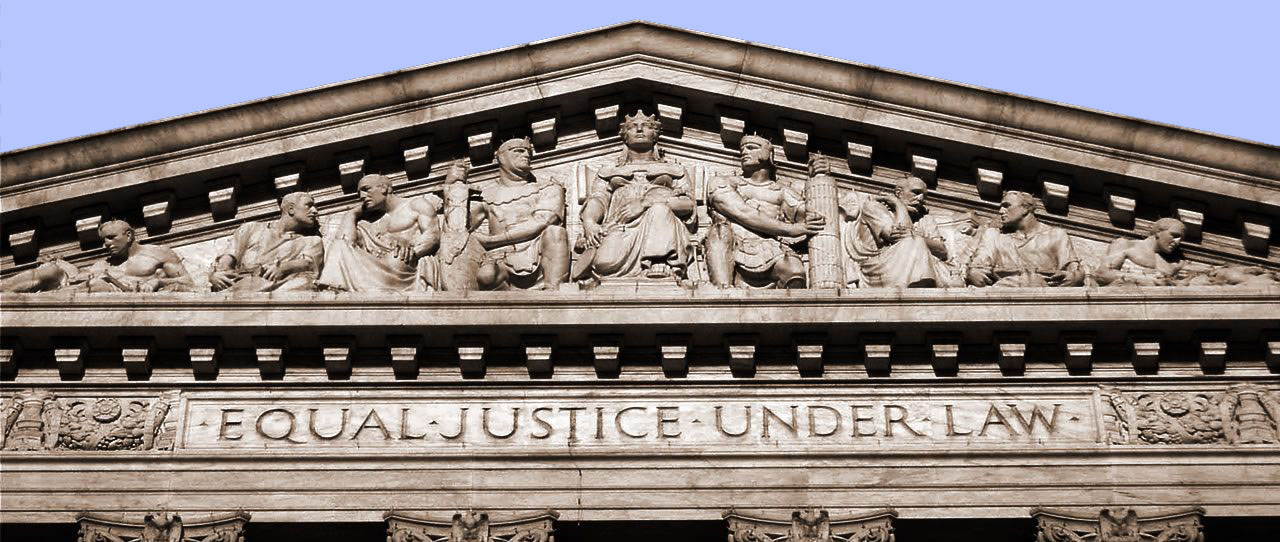
The words chiseled in stone above the entrance to the U.S. Supreme Court building say, “Equal Justice Under Law.” A truly noble philosophy – in theory.

But in actual fact, there’s nothing “equal” about justice in this country, and we’re not talking about racial, ethnic, religious, or gender issues here; although they certainly are a factor.  It’s a matter of just plain old “dollars and cents,” coupled with the statistical distribution of human capabilities. That is, the better the lawyer, the more money he/she can, and will, charge. This should not be surprising. It’s Economics 101 – supply and demand – the very bedrock foundation of capitalism. The better lawyers will be in higher demand – for those that can pay for them – and will consequently charge more money for their services. Lawyers are just like any other profession – doctor, mechanic, engineer, carpenter, tailor, chef, etc. – there’s a range of individual capabilities from “good” to “bad,” and the “good” one’s cost more money.  There’s an old saying in the legal business: “How much justice can you afford?” There’s no secret – the more you can pay for an attorney, the more effective your defense will be; and – if you’re actually innocent – the better your chances of a just outcome.

The law has become so incredibly vast, intricate, and complex, it’s no wonder that there have to be legal “specialties” – tax law, corporate law, patent law, estate law, non-profit law, contract law, political law, insurance law, criminal law, and on and on and on. It’s so complicated, even the lawyers can get it wrong. But the better lawyers are better at getting it right and in presenting an effective and successful case.

Continue reading

Judge Kozinski: Time to Rein In Prosecutors

Alex Kozinski is a judge of the Ninth US Circuit Court of Appeals. He has previously been outspoken regarding prosecutorial misconduct, and has recently authored an article for the Georgetown Law Review on the subject.

See the Wall Street Journal Law Blog article here. In the WSJ article, you’ll find a link to Judge Kozinski’s full article, which is lengthy, but the WSJ article provides a reasonable summary.