Category Archives: Forensic controls

Keith Findley: Mounting Evidence Questions the Justice in Shirley Smith Case

Written and submitted by Keith Findley, Wisconsin Innocence Project director and President, Innocence Network Board of Directors:

NPR disclosed last week that a senior pathologist in the Los Angeles County coroner’s office has sharply questioned the forensic evidence used to convict Shirley Smith, a 51-year-old grandmother, of shaking her 7-week-old grandson to death.  The disclosure comes three months after the U.S. Supreme Court reinstated Shirley Smith’s conviction and sentence for felony child endangerment by summarily reversing the 9th Circuit’s grant of habeas relief in Cavasos v. Smith.

According to NPR, the newly disclosed report by the pathologist, James Ribe, details eight “diagnostic problems” with the coroner’s 1996 ruling that the child had died from violent shaking or a forceful blow to the head.  Ribe’s report notes that there was no evidence of abuse, and that the child’s brain injuries were relatively minor and could have been caused by suffocation from sleeping face down on a couch cushion or even from the birth process.

These revelations make the Supreme Court’s summary reversal in Smith’s case all-the-more troubling.  The Court’s per curiam majority treated this as a routine decision mandated by established principles requiring deference to juries in Continue reading

Second serious DNA ‘error’ in UK made public.

Hot on the heels of the Adam Scott case where DNA contamination at LGC labs in England led to an innocent man being charged with rape, (see post here… Review of convictions after DNA contamination in lab discovered.) we now read that another error – this time a typographical error made during data entry on a computer – has led investigators on a wild goose chase for more than a year in a murder inquiry. The revelations in the case of Gareth Williams, whose death still remains a mystery, has led to further comments on the problems with the privatisation of forensic science in the UK, as well as the risk that miscarriages of justice are just as likely as ever, with faulty science often being to blame. Read here:

Calls for inquiry into ‘astonishing’ DNA error

and comment on privatisation from Prof Peter Gill:

Privatisation is a catastrophe, warns godfather of forensics

Listen here to Michael Mansfield QC warning that miscarriages of justice in England and Wales are NOT a thing of the past:

Michael Mansfield: ‘Risk of miscarriages of justice as great as ever’ – video

A Plug …. for the National Association of Criminal Defense Lawyers

The 2012 National Innocence Network Conference has just concluded.  The event was hosted this year by the University of Missouri Kansas City School of Law.  We attend these events to sharpen our skills, increase our knowledge base, and forge relationships that will help us in our work; and this year’s conference did not disappoint.

On the Thursday prior to the conference, the National Association of Criminal Defense Lawyers (NACDL) (www.nacdl.org) conducts a full day seminar/tutorial, usually on some aspect of litigating forensics.

Here is the agenda from this year’s session dealing with “forensic pathology”.

NACDL

They bring in recognized experts to speak, and the day is jammed full of relevant and useful information.  They do an excellent job, and they offer this free of charge to “qualified” (defense/innocence work) attendees.

I have had the distinct pleasure of attending three of these events, and I would rate them as outstanding.

The NACDL is funded by:

  • Membership dues revenue;
  • Non-dues revenue such as CLE programs, publications, and product sales; and
  • Funding support, including external grants and internal fundraising.

This is an organization that deserves your support.

Phil Locke

Monday’s Quick Clicks…

  • Article on this past weekend’s Innocence Network conference in Kansas City
  • Should the Lockerbie bombing case be re-opened?  More here
  • Abolition of Forensic Science Service in the UK will lead to miscarriages of justice, says DNA pioneer
  • Japan executes 3 after 20 months de facto moratorium on capital punishment

Friday’s Quick Clicks…

What Really Happened in the Amanda Knox Case?

I have followed the Amanda Knox case over its course, and was recently able to attend a talk given by Prof. Greg Hampikian of Boise State University on the subject.  Prof. Hampikian is also Director of the Idaho Innocence Project and an internationally recognized authority on DNA forensics.  Prof. Hampikian advised the Amanda Knox legal team on DNA issues.

After the dust had settled, I felt compelled to write a brief summary of the case based upon my own knowledge of the case combined with information from Prof. Hampikian’s presentation – just to try to put it all into perspective.  That summary follows.

Continue reading

Fingerprints From Shell Casings

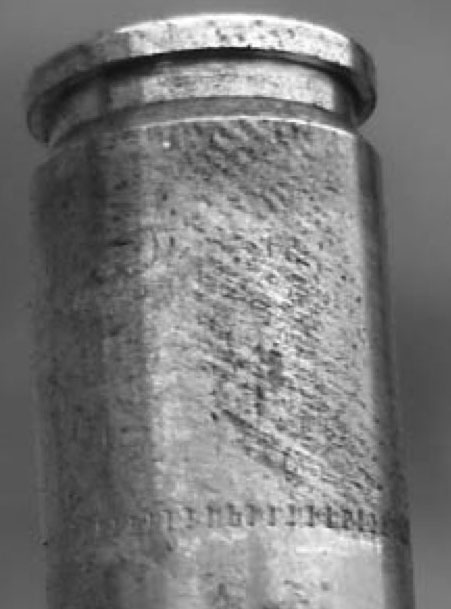
Ask any latent print examiner about imaging fingerprints from expended shell casings, and they will tell you it’s most likely futile.  Any latent prints that have been deposited on cartridges before, or during, loading into the firearm are “erased” by the firing temperatures experienced by the shell casing.  Studies with thermal imaging cameras have shown that the exterior of a brass 9mm cartridge casing will reach approximately 145° F.  This is apparently enough to break down or vaporize the skin oils of which a fingerprint is comprised.

However, a new technology has recently become available.  It relies on the fact that the acidity level in the skin fluids of a latent print is enough to “micro-etch” the surface of the brass shell casing; leaving the brass surface with a very slightly etched image of the latent print.

Dr. John W. Bond, head of the Forensic Science Unit of the Northamptonshire, UK Police and Senior Lecturer in Forensic Sciences at the University of Leicester, developed a method for imaging these micro-etched prints by bringing the shell casing to a high voltage static charge and cascading tiny graphite spheres over the casing while it is rotated.

Here is a journal article by Dr. Bond describing the process:

Shell Casing Prints

Continue reading

Wednesday’s Quick Clicks…

  • CNN this Sunday night, March 25th will at 8pm EST in the U.S. will have a show on the topic of exoneree compensation (or lack thereof).  Your DVR guide may indicate a different show (I think Dr. Sanjay Gupta) but I’m told it will be this show regardless
  • Houston beefing up spending on forensics and plans to make crime lab independent of prosecutors
  • How to attack shaky eyewitness identification testimony in court
  • Claims of innocents convicted and imprisoned in Zimbabwe in sham trials designed to stifle political dissent
  • The Innocence Network UK has posted its latest newsletter, which includes case updates and reform issues.  
  • Death row exoneree Ray Krone to speak tonight at a public forum in New York

Texas’ Forensic Science Commission is Stepping Up

Many may remember the Texas Forensic Science Commission for its controversial role, at odds with the Innocence Project’s advocacy, in the Todd Willingham arson case. Now, with a new committed leader, the Commission is showing signs of stepping up to fill alleged voids in effective oversight of Texas’s forensic crime labs. An example is a letter the Commission recently sent to the El Paso Police Department demanding further steps to resolve unanswered concerns and questions regarding the controlled substances division at the El Paso Crime Lab.  The respected Grits for Breakfast blog details this effort here, highlighting forensic crime lab oversight issues that go well beyond Texas.

Gunshot Residue Evidence – What It Really Takes

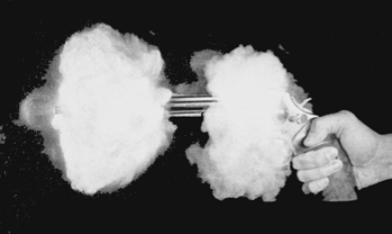
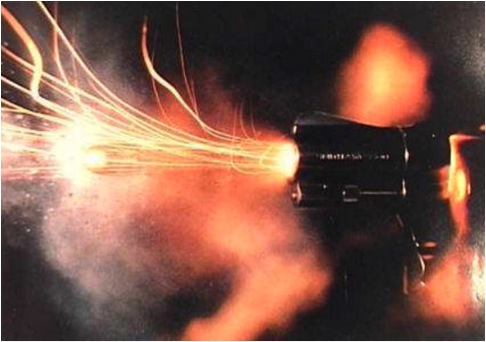
Gunshot residue – GSR.  Gunshot residue consists of tiny (microscopic, 1-10 micron) particles of  the cartridge primer that are ejected from various orifices of a gun when a cartridge is fired.  GSR has historically been identified by it’s elemental composition signature of lead, barium, and antimony.  These elements vaporize when the primer ignites, and then condense into the particles known as gunshot residue – GSR.

The residue floats in the air, and lands on all kinds of  things, not the least of which is the hand, and possibly the clothing, of the shooter – and bystanders.  These pictures will give you an idea of how it happens.

Continue reading

Cuts to Forensic jobs in New South Wales, Australia: Threat to justice

Image

Senior forensic scientists in New South Wales, Australia, are warning that the drastic cuts to the forensic science workforce in the cash-strapped state, will threaten justice. The workforce is being cut by almost a quarter, with police being asked to do primary collection of potential DNA. The State already has a significant backlog of cases where evidence remains to be tested. Claude Roux warns that with police submitting samples for testing, DNA may lose its context – a vital element in correctly interpreting DNA. Read more about the cuts here…

Justice miscarriage warning over forensic job cuts

Tuesday’s Quick Clicks…

  • Interesting article by Gabe Tan of the Innocence Network UK about the problems with requiring “new evidence” or “fresh evidence” in shaky cases before they can be officially re-opened
  • Wisconsin Innocence Project’s motion to recuse a state Supreme Court justice causes a firestorm
  • Georgia Innocence Project has event featuring one of the Duke Lacrosse players falsely charged with rape
  • Chicago exoneree Robert Wilson, who spent 9 years in prison for a murder he didn’t commit, gets $3.6 million settlement
  • Death penalty studies in Connecticut and New Jersey
  • Top judges around the U.S. call for criminal justice reform
  • Six points that cast doubt on the alleged guilt of the “Lockerbie Bomber”
  • Is the UK doing enough to fight wrongful convictions?
  • Hearing continues in Facebook case with Dateline filming; prosectors attack credibility of new witness whose testimony exonerates Higher brothers
  • New York exoneree Jeffrey Deskovic uses settlement money to establish foundation to help others who were wrongfully convicted
  • Innocence Project (Cardoza) client in Maryland seeks to overturn conviction on ground that the state ballistics expert whose testimony led to conviction was a fraud who falsified his credentials

Shaken Baby Syndrome “Science” (Really??) — REDUX

There were some questions generated from my last post on this, so I wanted to provide some clarification about why I am skeptical regarding biomechanical studies (dummies, simulation, and modeling) to determine the “cause and effect” relations of triad symptoms.

To examine more closely the deficiencies with biomechanical studies, modeling, and simulation, let’s look at a particular example.  Let’s take the example of one of the “triad” symptoms, retinal hemorrhage.  What is solely responsible for retinal hemorrhage from head impact is the acceleration experienced by the retina and fluids in contact with the retina, not the skull.  Skull impact acceleration forces will be transmitted (and modified) through various tissues and fluids to the retina, and what the retina experiences will be different than what the skull experiences.  However, as far as I know, we have no way to directly measure acceleration of the retina, so we have to settle for measuring acceleration of a simulation or model of the skull, and infer how that gets transmitted to the retina.  Therein lies part of the problem, and a major reason why modeling or simulating the situation is so difficult.  And in fact, measuring skull acceleration is no easy task in itself, because it will depend upon the “flexibility” or “compliance” of any particular skull.  I would guess that an infant skull with the fontinel still open would be more compliant than one with the fontinel closed, and certainly more compliant than a fully formed adult skull.  (Side note.  Some might say, “Use monkeys or cadavers for these studies.”  However, the physiology of animal brains and skulls is different, and cadavers have no blood pressure, muscle tone, or reflex reactions.)

Continue reading
Review of convictions after DNA contamination in lab discovered.

A rape case has collapsed after LGC, a private forensic provider in England and Wales admitted that the DNA evidence had become ‘too contaminated’ to be used in evidence. Discovery of the contamination had led to calls for perhaps hundreds of convictions based upon forensic evidence to be reviewed. Read more here…

Forensics blunder ‘may endanger convictions’

UPDATE: This is headline news in the UK – read more on the fallout here….

Forensics firm investigated over DNA blunder in rape case

and here….

Probe after forensics contamination leads to trial collapse

and a video from Channel 4 news here…

 Serious conviction reviewed after forensics blunder.


Important New Vulture Study (yes the birds) Upends Forensics…

This article is really interesting.  Excerpt below.   Read full article here:

For more than five weeks, a woman’s body lay undisturbed in a secluded Texas field. Then a frenzied flock of vultures descended on the corpse and reduced it to a skeleton within hours.

But this was not a crime scene lost to nature. It was an important scientific experiment into the way human bodies decompose, and the findings are upending assumptions about decay that have been the basis of homicide cases for decades.

Experienced investigators would normally have interpreted the absence of flesh and the condition of the bones as evidence that the woman had been dead for six months, possibly even a year or more. Now a study of vultures at Texas State University is calling into question many of the benchmarks detectives have long relied on.

The time of death is critical in any murder case. It’s a key piece of evidence that influences the entire investigation, often shaping who becomes a suspect and ultimately who is convicted or exonerated.

“If you say someone did it and you say it was at least a year, could it have been two weeks instead?” said Michelle Hamilton, an assistant professor at the school’s forensic anthropology research facility. “It has larger implications than what we thought initially.”

The vulture study, conducted on 26 acres near the south-central Texas campus, stemmed from….read more

Will Florida governor seek review of cases involving discredited witness?

Governor Rick Scott has formally apologized “on behalf of the state of Florida” for the 27 years William Dillon spent in prison for a crime he did not commit.  He has also signed a claims bill of $1.35 million.  It took another three years of Dillon’s life to navigate the process of getting compensation from the state. But Dillon remains unsettled over the thought of others wrongfully convicted by the now deceased John Preston, Brevard County authorities’ go-to witness whose German shepherd had quite a nose. Preston claimed he could pick up a scent in the middle of a lake Continue reading

From Timbuktu to Kalamazoo, Microscopic Hair Comparison Still (Unfortunately) Has Adherents

Scott Baldwin, convicted of murder in 2002 and now represented by the Wisconsin Innocence Project

This story about a Wisconsin Innocence Project client Scott Baldwin (convicted in 2002 of murder in Michigan) discusses how the judge recently granted DNA testing of hairs that were found clutched in the murder victim’s hand (the evidence suggested there had been a struggle between the perpetrator and the victim).  What was striking to me in the article (although sadly, not surprising) is that the prosecutors opposed DNA testing of the hairs on the ground that the hairs had been microscopically examined at the time of trial, and determined to have come from the victim himself.  Thus, the prosecutors argued, there is no need for DNA testing to further confirm what we all already know.

If anything has proven to be unreliable junk science, however, it’s microscopic hair comparison (it’s perhaps up there with bite mark evidence in terms of unreliability).   We recently had a case in Ohio, for example, where the state’s Continue reading

Recent DNA case shows that DNA may be ‘infallible’ but police and prosecutors are not.

A very interesting article looks at a recent English case where prosecutors attempted to convict a man solely upon DNA evidence – and failed. The article goes on to discuss other cases (incl. in the US) where DNA has not proven to the ‘silver bullet’ to a conviction and gives reasons for doubt about unshakeable faith in DNA evidence. The comments after the article are also an interesting read! read the article here….

The case against DNA

Genetic profiling was once hailed as a magical tool to catch criminals. So why is it now in danger of being discredited?

Shaken Baby Syndrome “Science” (Really ??)

I’ve been reading lately about biomechanical studies that have been, and are being, done to try to quantify the physical forces and accelerations required to inflict damage inside the human infant skull sufficient to cause “triad” symptoms (subdural hematoma, retinal hemorrhage, diffuse edema or diffuse axonal injury).

Dr. Carole Jenny, queen of the SBS protagonists, has dedicated her career to doing research with “bio-fidelic” dummies in search the answers to these questions.  Other researchers have attempted to use the power of computer modelling, employing the technique of finite element analysis, to answer the same questions.

Continue reading

The NAS Report – so where are we now?

Since the publication of the NAS report in 2009, Strengthening Forensic Science in the United States: A Path Forward, prosecutors and the forensic science community have “circled the wagons,” and have been pushing back mightily.  Acceptance and adoption by the courts has been spotty at best.  So where do things stand today?

The (US) National Association of Criminal Defense Lawyers (NACDL) issues a bi-monthly publication called “The Champion.”  In the January/February issue there is an article titled “A Path Forward: Where Are We Now?”  This includes the author’s (Jennifer Friedman) perspective on the situation, along with some practical pointers for defense attorneys in using the NAS report in their case strategies.

This issue of The Champion is not yet available on the NACDL website (www.nacdl.org), so I include the article here:

Champion – NAS

Phil Locke