Category Archives: Police conduct (good and bad)

Constructing Rich FALSE Memories of Committing Crime

We have reported numerous times before about how malleable human memory can be (here and here) and on the dangers of the Reid Technique of interrogation that arise from this (here and here).

On Feb. 3, Mark Godsey posted this article from the LawTimesNews describing the resesarch of Prof. Stephen Porter and Julia Shaw.  The study demonstrated that it is relatively easy to get people to “remember” details of a crime they never committed.

Our sincere thanks to the publisher of the study, SAGE Publications, for allowing us to post a link to the full text of the research article.  The link will be active until March 5, 2015.  See the full text here:  Constructing Rich False Memories of Committing Crime.

This excerpt from the abstract of the article:  “It appears that in the context of a highly suggestive interview, people can quite readily generate rich false memories of committing crime.”  And of course, for the term “highly suggestive interview” we can substitute “Reid Technique.”


Update on the National Registry of Exonerations

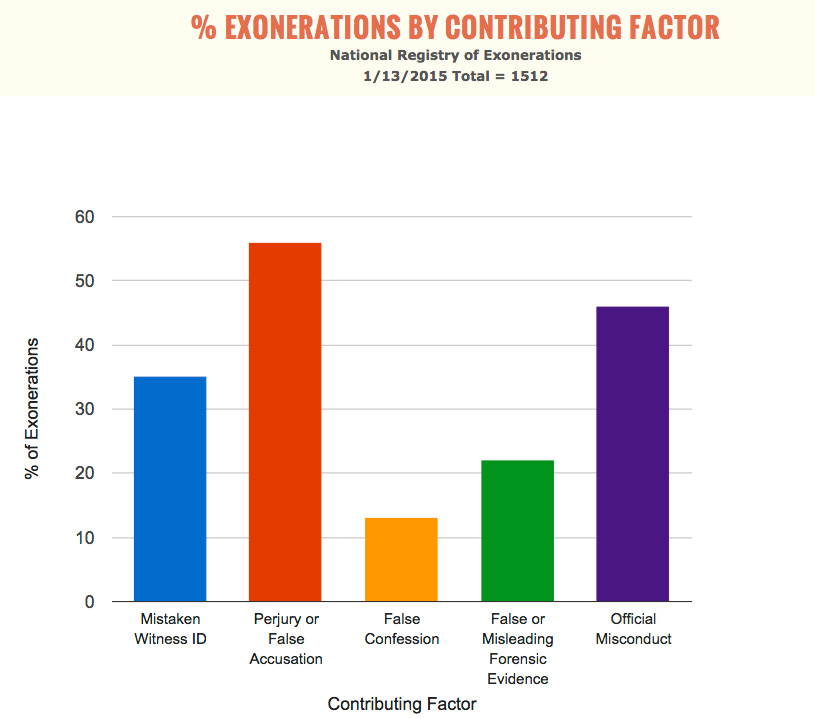
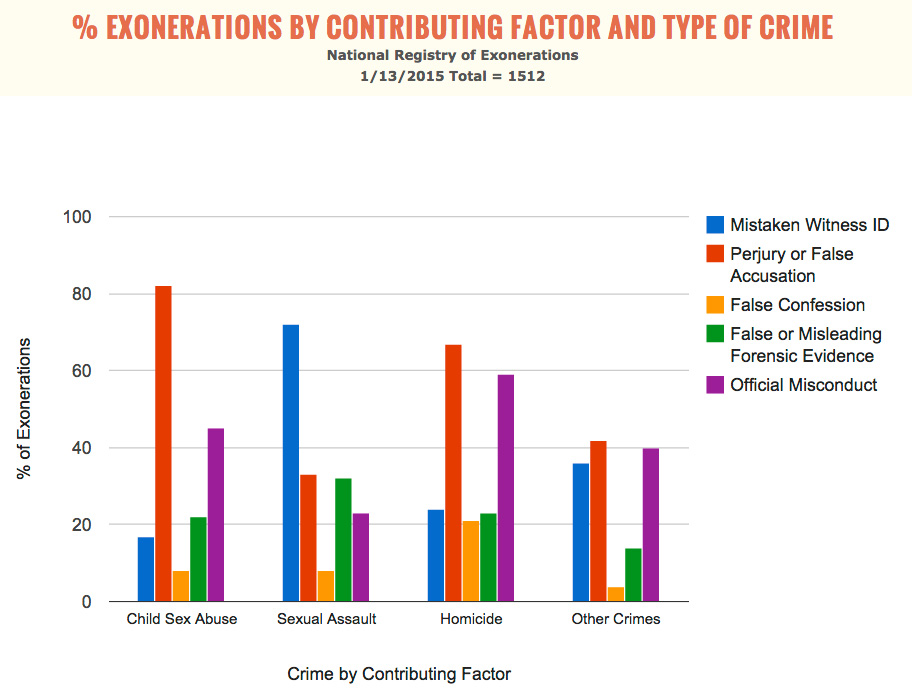
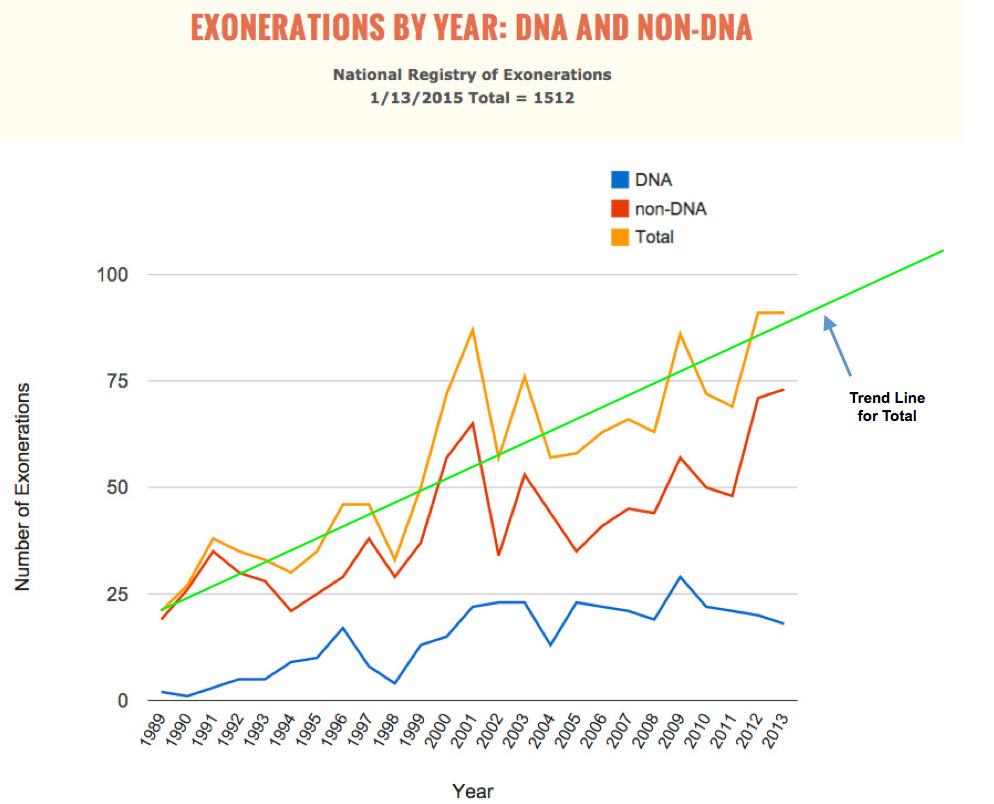
In case you haven’t been able to check in on the National Registry of Exonerations lately, here’s an excerpt from the most recent data.  Note the total is now up to 1,512, and the trend line is definitely UP.

exon dna non

exon cont fact

exon fact crime

I won’t belabor you by pointing out some of the more obvious observations.  Just a few minutes of study will (should) lead you to some very clear conclusions.

It has been reported that the folks at the Registry are hard at work trying to incorporate the exonerations being generated by the newly formed “conviction integrity units” (CIU’s).  For these cases the prosecutors running the CIU’s may not be very motivated to have their exonerations logged into the Registry.

I can’t gush enough about how critical and important this data is.  It is this kind of HARD DATA that will provide the foundation for much needed and long overdue justice system reform.

Wrongly Convicted NY Man Dies 4 Months After $7.5M Compensation

Dan Gristwood was convicted in 1996 of attempted murder for beating his wife with a hammer.  He signed a confession, that he did not write, after 16 hours of interrogation by the NY State Police.

In 2003, the real attacker, Mastho Davis, came forward and confessed. Gristwood was released in 2005, and ultimately awarded $7.5M for his nine years of wrongful incarceration.

Sadly, on January 3, 2015, four months after receiving payment, Dan Gristwood died from lung cancer.  See the ABC News story here.

The syracuse.com story about the case here is definitely worth a read, and reads like a script for the prototypical coerced confession.

In light of all the recent public – and police – furor about police conduct, and how they relate to the community, and how they should be respected, I can do naught but shake my head.  When the police do stuff like this, how can they claim any high ground in this discussion?  Dan Gristwood, after his release, said he thought the problem was a “few bad apples.”  That may very well be so, but guess what? Those “few” bad apples make the whole barrel stink.  And this problem belongs to the police – not the public.

Radley Balko’s Predictions for Civil Liberties in 2015

I suspect that most of the readers who tune in to this blog are familiar with Radley Balko, who writes for the Washington Post.  He has been writing about justice system issues for a number of years, and has authored the books Rise of the Warrior Cop – The Militarization of America’s Police Forces and Overkill: The Rise of Paramilitary Police Raids in America.

He has just issued his 2015 predictions for civil liberties in the US.  You might ask why civil liberties are being covered in the Wrongful Convictions Blog.  But I submit – wrongful conviction and wrongful incarceration (and, most of all, wrongful execution) are the ultimate civil rights violations.

His predictions are sobering – SOBERING – at best.  You can read them here: Horrifying Civil Liberties Predictions for 2015.

I encourage you to read all the way through to the end.  But if you find yourself running short of time, you HAVE to skip to the last paragraph.

Police Want to Revoke Exoneree Bennie Starks’ Certificate of Innocence

Bennie Starks was released from prison in 2006, after serving 20 years for a rape that DNA proved he did not commit.  He was fully exonerated in 2013, and was granted a Certificate of Innocence by the court.

Starks is now suing the Waukegan, IL police department and the forensic experts who falsely testified against him.  As a consequence of this law suit, the Waukegan police are trying to have Starks’ Certificate of Innocence revoked. Their fear is that the Certificate of Innocence will be a deciding factor in Starks’ civil law suit for compensation.

Dr. C. Michael (Mike) Bowers is a California dentist and enlightened forensic odontologist. He also edits a blog called Forensics in Focus.  Dr. Bowers was involved in the exoneration of Bennie Starks, and has posted his comments about this on his blog here.

Appeals Court Dismisses Debra Milke Murder Charges

We have previously posted about the Debra Milke case here and here.

Milke was originally convicted of murder for having her 4-year-old son killed. The conviction rested upon the testimony of a rogue cop, who claims she confessed to him, although there is no documented record of that confession, and Milke denies it ever happened. This officer had a history of substantial misconduct, and that record was withheld from the defense.

In a ruling just today – citing “egregious prosecutorial misconduct,” the Arizona Court of Appeals on Thursday ordered a Maricopa County Superior Court judge to dismiss murder charges against Debra Milke with prejudice, meaning they cannot be brought again.

See the azcentral story here.

Recent Rash of Exonerations Only the Surface: Many More Remain Wrongfully Imprisoned

By Jefferey Deskovic for The Huffington Post

Fernando Bermudez. Sami Leka. Jose Morales. Reuben Montalvo. Lazaro Burts. Kareen Bellamy. Anthony Ortiz. Frank Sterling. Roy Brown. Dennis Halstead. John Kogut. Eric Glisson. Jonathan Fleming.

Those are the names of 13 men that I personally knew and served time with who were exonerated either during my 16 years in prison or thereafter.

Last year there were 91 exonerations. This year there have been 90 thus far. To date there have been 1482 exonerations overall, only 321 of them being DNA related. Since taking office this past January, Brooklyn DA Thompson’s conviction integrity unit has exonerated 11 people.

Most experts estimate the percentage of wrongfully convicted prisoners to be 2 to 5% of the inmate population — that is 120,000 people. I deem the number to be closer to 15 to 20%.

In either case, what is causing the staggering number of wrongful convictions?

Rogue Law Enforcement. In Brooklyn, disgraced retired detective Scarcella was found to have used the same drug addict as the sole eyewitness in six different murder cases. Various news accounts say as many as 70 homicides he worked on are being reviewed.

Forensic Fraud. In Pennsylvania, forensic scientist, Annie Dhookhan, was sentenced to three to five years in prison and two years of probation after pleading guilty to 27 counts of misleading investigators, filing false reports, and tampering with evidence.

Additionally, forensic scientists are given financial incentives for giving prosecutorial favorable results that lead to conviction in North Carolina, Illinois, Alabama, New Mexico, Kentucky, New Jersey, Virginia, Arizona, California, Missouri, Tennessee, and Wisconsin.

Prosecutorial Misconduct. Lying to judges and juries about the existence of benefits and in some cases coercion to informants was a regular practice over the span of the 23 year tenure of former Brooklyn DA Hynes, as was withholding of evidence of innocence.

Junk science. For 40 years, FBI experts have testified in court about “bullet lead analysis” a procedure in which bullets found at a crime scene are tested for arsenic, tin, silver, and other contaminants or additives, and the findings were compared to analysis of bullets found in the possession of suspects. These experts claimed to be able to link one bullet to others from the same production run. For at least 20 years, FBI officials knew that there were no scientific underpinnings to this junk science — that in fact, there were no studies shown to determine how significant a “match” was.

Disgraced dog scent expert Preston came into courtrooms in Texas and Florida for over 20 years, stating that he had trained dogs which would bark if, after being given items to smell from a crime, the dog recognized the scent from a suspect’s item. Preston claimed that his dogs could smell human traces years or months after a suspect walked over the ground, on heavily trafficked streets, underwater, and even after hurricanes. He is not the only “expert” in this “field.”

In 2013, it was revealed that in 27 death penalty cases, FBI forensic experts may have exaggerated the scientific conclusions that were drawn from a so-called “match” between hair found at a crime scene and hair from a defendant.

Tire tracks, footprints, and bite marks are also junk science.

I served 16 years in prison, from the ages of 17 to 32, wrongfully convicted of a murder and rape in New York, despite the fact that the DNA never matched. I lost all seven of my appeals, including two of which now US Supreme Court Judge Sotomayor denied on procedural grounds for having been four days late despite my substantive innocence argument. Ultimately I was exonerated because further DNA testing identified the actual perpetrator, who killed another victim 3.5 years later.

Using $1.5 million dollars of compensation I received, I started The Jeffrey Deskovic Foundation for Justice to exonerate the wrongfully convicted in DNA and non-DNA cases, educate the public, elected officials, and criminal justice professionals on the causes of wrongful conviction and the reforms need to prevent them, and help the exonerated reintegrate. In two years time, we helped exonerate William Lopez, who had served 23.5 years, and helped 4 wrongfully convicted men reintegrate back into society by providing short-term housing, which enabled them to pursue further education, and in one case open a business.

This holiday season, while celebrating with friends and family, we hope you’ll take a brief moment to remember all those who remain wrongfully imprisoned.

To learn more about The Jeffrey Deskovic Foundation for Justice and how you can help, please visit here.

Material Indifference: How Courts Are Impeding Fair Disclosure in Criminal Cases

Recently, NACDL and the Veritas Initiative at Santa Clara Law School released a major Brady study, titled-above.  NACDL’s description of the report reads:

Washington, DC (Nov. 17, 2014) – Today, at the National Press Club in Washington, DC, NACDL is officially releasing its latest report, Material Indifference: How Courts Are Impeding Fair Disclosure in Criminal Cases, a major study produced jointly with the VERITAS Initiative at Santa Clara Law School. Today’s event will feature comments by NACDL President Theodore Simon, NACDL Executive Director Norman L. Reimer (who also will moderate the event), and special guests David W. Ogden, former Deputy Attorney General who is now a partner at the WilmerHale firm, and the Hon. Alex Kozinski, Chief Judge of the Ninth Circuit Court of Appeals. The report’s co-authors – VERITAS Initiative Director and Professor Kathleen “Cookie” Ridolfi, NACDL White Collar Crime Policy Counsel Tiffany M. Joslyn, and VERITAS Initiative Pro Bono Research Attorney Todd H. Fries – will also be discussing their findings and recommendations. NACDL Executive Director Norman Reimer will moderate the discussion.

“This groundbreaking study documents one of the major problems facing the nation’s criminal justice system today: the failure to ensure full, fair and timely disclosure of information favorable to an accused person in a criminal action. It is a significant step towards achieving the vital reforms necessary to guarantee a fair trial for every accused person,” NACDL President Theodore Simon said.

Over 50 years ago, in Brady v. Maryland, the Supreme Court declared that failure to disclose favorable information violates the constitution when that information is material. This guarantee, however, is frequently unmet. In courtrooms across the nation, accused persons are convicted without ever having seen information that was favorable to their defense. The frequency with which this occurs and the role it plays in wrongful convictions prompted NACDL and the VERITAS Initiative to undertake an unprecedented study of Brady claims litigated in federal courts over a five-year period. The study asked: What role does judicial review play in the disclosure of favorable information to accused? The results revealed a troubling answer—the judiciary is impeding fair disclosure in criminal cases and, in doing so, encouraging prosecutors to disclose as little favorable information as possible.

The study’s findings are extensive and dramatic including, for example:

  • The materiality standard produces arbitrary results and overwhelmingly favors the prosecution. Indeed, in those decisions where the prosecution failed to disclose favorable information, it still won 86% of the time, with the court concluding that the information was not material.
  • Courts almost never find Brady was violated by the late disclosure of favorable information. Of the 65 decisions that involve late disclosure of favorable information, only one resulted in a Brady violation finding.
  • Favorable information is more likely to be disclosed late or withheld entirely in death penalty decisions. Favorable information was never disclosed or disclosed late by the prosecution in 53% of decisions involving the death penalty, but only 34% of all the decisions studied.

In his dissent to the Ninth Circuit’s 2013 decision denying a rehearing en banc in United States v. Olsen, Chief Judge Alex Kozinski acknowledged that “[t]here is an epidemic of Brady violations abroad in the land” which in his view, “[o]nly judges can put a stop to.” Material Indifference: How Courts Are Impeding Fair Disclosure in Criminal Cases documents that epidemic and sets forth a prescription for how to contain and ultimately cure it. As former Deputy Attorney General David W. Ogden wrote in his foreword to this report, “judges have an indispensable role and obligation to oversee the system’s guarantees of fairness and to make sure that its truth- and justice-seeking mission is fulfilled in each case.”

According to report co-author Cookie Ridolfi, “despite the clear correlation between withholding evidence and wrongful conviction, the results of this study demonstrate that courts persist in tolerating prosecutors’ failure to timely disclose favorable information.” “Judicial indifference toward late disclosure fosters non-compliance with disclosure obligations. The data strongly suggests that the practice of late disclosure has become a trial tactic rather than an allowance for exceptional circumstances,” added co-author Todd Fries. Co-author Tiffany M. Joslyn was clear, “at its core, judicial adherence to the materiality standard following conviction encourages prosecutors to use that same back-end standard to narrow their front-end disclosure obligations. Our study not only confirms this, it demonstrates that front-end reform is necessary and overdue.”

The report concludes by offering three reform proposals that would serve as mechanisms for increasing fair disclosure in criminal cases. First, in each case defense attorneys should request, and judges should grant ethical rule orders – orders for the prosecution to disclose all favorable information in accord with American Bar Association Model Rule 3.8(d). Second, the judicial rules and policies should be amended to require fair disclosure of information. Finally, the most effective mechanism would be to adopt legislation codifying fair disclosure in criminal cases.

Complete copies of the report, executive summary, and fact sheet are available at www.nacdl.org/discoveryreform/materialindifference. And by sometime on Tuesday, November 18, 2014, a link to the complete video of today’s release event featuring Chief Judge Kozinski, former Deputy Attorney General David Ogden, NACDL President Theodore Simon, and the report’s co-authors will also be available at that web address.

Here is C-SPAN’s coverage of the report’s release:  http://www.c-span.org/video/?322781-1/discussion-fair-disclosure-criminal-trials

Monday’s Quick Clicks

Open Records Policies Shine Light on Misconduct, Injustice

Dallas County (TX) District Judge Mark Stoltz issued findings of fact and conclusions of law last week before recommending that the murder convictions of Dennis Lee Allen and Stanley Orson Mozee be overturned. The two men were subsequently released after each had served 15 years in prison. The judge’s findings will now go before the Texas Court of Criminal Appeals for review. ABC News WFAA 8 reported (here) that the two are expected to be exonerated.

Allen and Mozee were convicted of the 1999 murder of Reverend Jesse Borns Jr., who was found stabbed outside his workplace, a retail store. No physical evidence linked the men to the crime. The conviction was won on the unrecorded confession of Mozee — who immediately recanted and claimed he was coerced into signing the police-written statement — and the testimony of two jailhouse informants. The informants denied under oath at trial that they were promised compensation for their testimony. Continue reading

National Academy of Sciences Releases Landmark Report on Memory and Eyewitness Identification, Urges Reform of Police Identification Procedures

The Innocence Project has posted a notice on its website, with a link to a press release, about the recently released report by the Nation Academy of Sciences on memory and eyewitness identification.

From the report:  “the legal standard that most courts use regarding the admissibility of eyewitness testimony was established before most of the scientific research was conducted.”

The report endorses the following procedures for police lineups:

  • Blind Administration — Research shows that the risk of misidentification is sharply reduced if the police officer administering a photo or live lineup is not aware of who the suspect is. This prevents the witness from picking up intentional or unintentional clues from the officer conducting the lineup.
  • Confidence Statements — Immediately following a lineup, the eyewitness should be asked to describe in his or her own words how confident he or she is in the identification. As the report notes, the level of confidence a witness expresses at the time of trial is not a reliable predictor of accuracy. Having the witness describe their level of confidence at the time an identification is made will provide juries with a useful tool for judging the accuracy of the identification.
  • Instructions — The person viewing the lineup should be told that the perpetrator may not be in the lineup and that the investigation will continue regardless of whether the witness identifies a suspect.
  • Videotape the procedure — The report recommends that police electronically record the identification procedure to preserve a permanent record of the procedure.

Most recent data from the National Registry of Exonerations shows that for the 1,467 wrongful convictions currently in the registry, 35% had mistaken eyewitness identification as a contributing factor.

See the Innocence Project posting here.

Tuesday’s Quick Clicks…

Magazine tells how prosecutors became ‘kings of the courtoom’

“Most prosecutors are hard-working, honest and modestly paid,” The Economist says. “But they have accumulated so much power that abuse is inevitable.” The magazine explains how prosecutors became “the kings of the courtroom,” and how this contributes to wrongful convictions, here.

Weekend Quick Clicks…

New Scholarship Spotlight: Criminologizing Wrongful Convictions

Professor Michael Naughten has posted the above-titled article on The British Journal of Criminology.  Download here.  The abstract states:

This article considers the apparent lack of serious engagement with issues pertaining to wrongful convictions by criminology at present. It seeks to address this by criminologizing wrongful convictions in two senses: firstly, by highlighting a variety of forms of intentional law or rule breaking by police officers and prosecutors in the causation of wrongful convictions that in other circumstances would likely be treated as crime and dealt with as such; and, secondly, to reveal the extent to which such powerful criminal justice system agents can cause profound and wide-ranging forms of harm to victims of wrongful convictions, their families and society as a whole with almost total impunity. In so doing, the relevance of the study of the intentional forms of crime and deviance committed by criminal justice system agents in the manufacture of wrongful convictions to both arms of the criminological divide is emphasized: mainstream and critical criminology. The overall aim is to show that the study of wrongful convictions can further extend and enrich existing criminological epistemology in vital and important ways and can even contribute to the prevention and possible elimination of those that are caused deliberately.


A Little More on Militarization of the Police

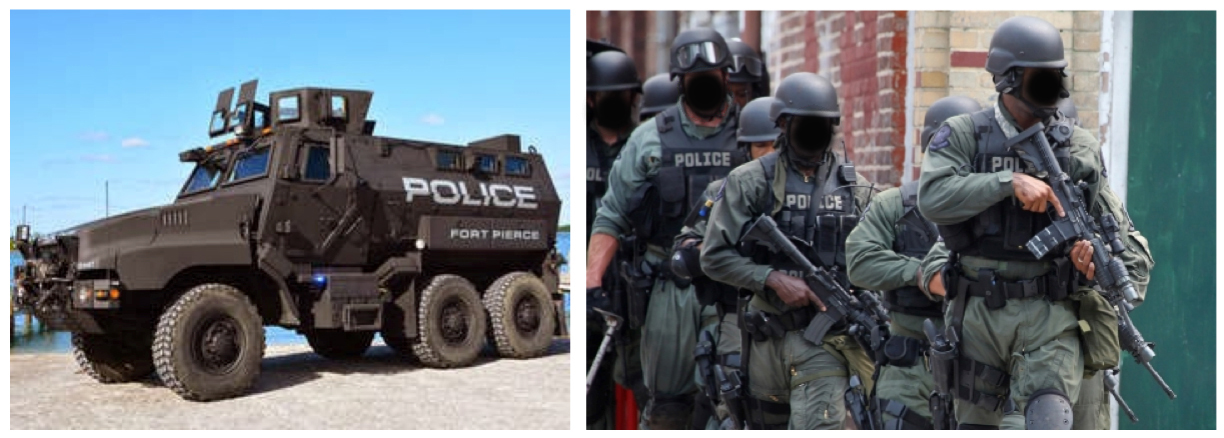
MPolice

According to the latest data from the National Registry of Exonerations, 46% of wrongful convictions have “official (including police) misconduct” as a contributing cause.  The state bestows official “police powers” upon the police, which does, in fact, make them very powerful; and most police misconduct is manifested in the form of abuse of power, rather than simple error.  In recent years, we have, increasingly, given the police not just “police power” but “military power.”  As Lord Acton so insightfully stated in 1887, “Power tends to corrupt, and absolute power corrupts absolutely.”  Giving military power to police brings them that much closer to absolute power, and that power becomes easier and easier to misuse.  This is compounded by the fact that the police have a demonstrated history of not being good at “policing” themselves, and official police oversight is perfunctory.  Police departments will claim to have “internal affairs” divisions.  I submit this like having the fox watch the henhouse, and they apparently don’t work, because police misconduct persists, and “official misconduct” continues to contribute to 46% of wrongful convictions.

See our previous WCB post about the militarization of police here.

Everyone has recoiled at what has recently transpired in Ferguson, MO.  A recent NY Times article relates events in Ferguson to the militarization of police:  here.

This all started in 1990 with Section 1208 of the National Defense Authorization Act passed by Congress.  In 1996 Section 1208 was replaced with the Section 1033 DOD program, which is still in place today.  And with the 1033 program in place, the wind down of the Iraq war opened the floodgates of military equipment available to police departments.  See the Newsweek article How America’s Police Became an Army: The 1033 Program.  See also the NY Times article War Gear Flows to Police Departments.  While this was certainly well intentioned, the legislators failed to grasp the psychological impact this would have on the people who would actually be using the equipment.

All the military equipment and fire power is scary, but all that stuff is really just an “enabler.”  What’s really scary is what’s going on in the brains of the cops.  They seem to be increasingly adopting a “battlefield” mindset – vanquish the enemy – and giving them MRAP’s and M-16’s substantially reinforces that state of mind.  Plus, if the police have all this stuff, of course they’re going to want to use it.  For example, we’ve seen the evolution of  excessive use of SWAT teams.  SWAT teams have been around since the 1960’s, but SWAT teams are now commonly used to perform such routine functions as serving warrants and making simple arrests.  There was a recent (Feb. 2014) debate between Radley Balko, Washington Post investigative reporter and author of “Rise of the Warrior Cop,” and Maricopa County (AZ) Attorney Bill Montgomery about the militarization of our domestic police. During this debate, Mr. Montgomery stated, “These ‘elite’ officers have to stay sharp and on alert. They have to practice.”  Practice by having a SWAT team storm a young mother’s home at 3:00 AM to serve a warrant and make an arrest?  Might I suggest this is “over the top?”

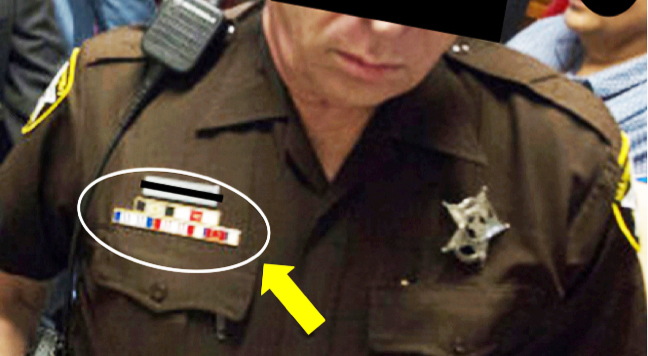
As an example of “military mindset,” I was recently startled by a news photograph of a police officer with what appears to be military style campaign ribbons on his uniform.  Campaign ribbons?  On a police uniform?  What’s up with that?  If this isn’t an indicator of a military mindset, what is?

Police Campaign Ribbons

If the situation calls for military intervention, then call in the National Guard.  That’s what they’re for.  But we just can’t have the “military” patrolling our streets and enforcing the law on a routine basis.

The Innocent on Death Row – NY Times Editorial

We (Martin Yant) recently reported here on the WCB about the North Carolina exoneration of death row inmate Henry Lee McCollum.  McCollum’s exoneration has prompted a highly compelling editorial by the The NY Times editorial board.  That editorial with active links appears here.  It appears below without embedded links (bolding emphasis is mine):

The Innocent on Death Row, by THE (NY Times) EDITORIAL BOARD, September 3, 2014

The exoneration of two North Carolina men who spent 30 years in prison — one on death row — provides a textbook example of so much that is broken in the American justice system. And it is further evidence (as though more were needed) that the death penalty is irretrievably flawed as well as immoral.

In late September 1983, an 11-year-old girl named Sabrina Buie was found murdered in a soybean field in Robeson County. She had been raped, beaten with sticks and suffocated with her own underwear.

Within days, police got confessions from two local teenagers, Henry Lee McCollum, 19 at the time, and his half brother, Leon Brown, who was 15. Both were convicted and sentenced to death.

The crime was so horrific that it has echoed for decades through North Carolina politics and beyond. In 1994, after Justice Harry Blackmun of the Supreme Court announced that he opposed capital punishment in all circumstances, Justice Antonin Scalia cited the Buie murder as a case where it was clearly warranted. “How enviable a quiet death by lethal injection compared with that!” he wrote.

On Tuesday, a state judge ordered both men freed after multiple pieces of evidence, some of which had never been turned over to defense lawyers, proved that neither Mr. McCollum nor Mr. Brown was responsible for the crime. DNA taken from a cigarette found at the crime scene matched a different man, Roscoe Artis, who is already serving life in prison for a similar murder committed just weeks after Sabrina Buie’s killing.

Virtually everything about the arrests, confessions, trial and convictions of Mr. McCollum and Mr. Brown was polluted by official error and misconduct.

No physical evidence linked either man to the crime, so their false confessions, given under duress, were the heart of the case the prosecutors mounted against them. Both men’s confessions were handwritten by police after hours of intense questioning without a lawyer or parent present. Neither was recorded, and both men have maintained their innocence ever since.

Equally disturbing, Mr. Artis was a suspect from the start. Three days before the murder trial began, police requested that a fingerprint from the crime scene be tested for a match with Mr. Artis, who had a long history of sexual assaults against women. The test was never done, and prosecutors never revealed the request to the defense.

It was not until 2011 that the North Carolina Innocence Inquiry Commission, an independent state agency that had taken on the men’s case, discovered the old fingerprint request. The commission also found that multiple statements in the two confessions were inconsistent with each other and with the facts of the crime. In July, the commission finally got the full case file and matched the DNA to Mr. Artis.

None of these pieces mattered to the prosecution in 1984. The prosecutor on the case, Joe Freeman Britt, was listed in the Guinness Book of World Records as the “deadliest prosecutor” for the nearly 50 death sentences he won during his tenure. Almost all have since been overturned.

Mr. McCollum and Mr. Brown, who are now middle-aged, have a hard road ahead. In addition to the difficulties of adapting to life after three decades behind bars, both are intellectually disabled. (Since their conviction, the Supreme Court has banned the death penalty for both juveniles and those with intellectual disabilities.)

Cases of capital prosecutions based on flimsy evidence or marred by prosecutorial misconduct, not to mention racial bias, are distressingly common. Yet, even as death-penalty supporters insist that only guilty people are sent to their death, it is now clear that Justice Scalia was prepared 20 years ago to allow the execution of a man who, it turns out, was innocent.

How many more remain on death row today? Can the American people be assured that none will be killed by the state? For this reason alone, the death penalty must end.

A version of this editorial appears in print on September 4, 2014, on page A26 of the New York edition with the headline: The Innocent on Death Row.

Militarized Police

The militarization of police scares the hell out of me.

How about you?

This from the NY Times: Get the Military Off of Main Street.

98-year-old woman seeks to overturn 1950 spying conviction

Hysteria often breeds wrongful convictions. The anti-communist hysteria of the 1950s McCarthy era undoubtedly led to some miscarriages of justice, and Miriam Moskowitz says her espionage conviction was one of them. Now 98, Moskowitz says she wants to clear her name while she still has time, and has asked a federal judge to throw out her 1950 conviction. You can read about the case here.

Monday’s Quick Clicks…