New California Law Addresses Prosecutorial Misconduct

Prosecutors who intentionally withhold evidence from defense attorneys or the court could face tougher punishment and greater scrutiny under a new state law prompted by the misuse of jailhouse informants by Orange County prosecutors.

The legislation, signed by Gov. Jerry Brown, strengthens the ability of judges to remove individual prosecutors and, if warranted, their offices, from cases if prosecutors are found willfully withholding evidence.

The new law also requires judges to report offending prosecutors to the state bar, which licenses attorneys.

From the Orange County (CA) Register:

Link to full article:

http://www.ocregister.com/articles/prosecutors-686481-law-evidence.html

C. Ronald Huff

Thursday’s Quick Clicks…

The Cure for the Cynical Prosecutors’ Syndrome: Rethinking a Prosecutor’s Role in Post-Conviction Cases

“The Cure for the Cynical Prosecutors’ Syndrome: Rethinking a Prosecutor’s Role in Post-Conviction Cases” by Laurie L. Levenson  of the Loyola Law School in Los Angeles was recently published by the Berkeley Journal of Criminal Law. The abstract reads:

One of the biggest challenges facing the criminal justice system is dealing with the growing tide of post-conviction petitions claiming wrongful conviction. Each year, the number of exonerees grows. In 2014, an unprecedented 125 exonerations were recorded in the United States. In analyzing how post-conviction matters are handled, it becomes apparent that one of the key roadblocks to remedying these injustices is not, as some have suggested, the attitude of young prosecutors. Rather, senior prosecutors also suffer from a type of “Cynical Prosecutors’ Syndrome” that impairs their ability to play a constructive role in the exoneration process. This article discusses the role of prosecutors in the post-conviction process, analyzes current studies of prosecutorial attitudes, and proposes reforms to ensure that meritorious post-conviction challenges are handled properly.

You can download the full article here.

Wednesday’s Quick Clicks…

Investigation by Sarasota Herald-Tribune Results in Release of Florida Inmate

Investigative Journalism often plays a vital role in overturning wrongful convictions. Such is true in the case of Andre Bryant. Bryant was convicted of robbery in 2006 and sentenced to serve 30 years in prison. Last year, Sarasota Herald-Tribune journalist Elizabeth Johnson began looking into Bryant’s case. After nine months of reporting, the Herald-Tribune published an investigation that raised questions about the arrest and conviction of Bryant in the 2006 robbery of a deputy’s wife and children. The investigation led the Innocence Project of Florida to represent Bryant and the State Attorney’s Office to re-examine the case. Last week, Bryant was released from prison following the the State’s decision to set aside the robbery conviction.
Kudos to Johnson and all other investigative journalists whose efforts are key to correcting the issue of wrongful conviction.

For more on Andre Bryant’s release click here

Let’s Be Clear About DNA

The National Academy of Science’s landmark report, Strengthening Forensic Science in the United States, A Path Forward, states on page 7 that (nuclear) DNA is the only forensic method “rigorously shown to have the capacity to consistently, and with a high degree of certainty, demonstrate a connection between evidence and a specific individual or source.”

This is, in fact, a true statement, with some important caveats. Nuclear DNA evidence is unequivocal, provided:

1)  There is a single DNA profile present in the sample.

2)  A sufficient quantity of genetic material is present in the sample

3)  The genetic material in the sample is not too degraded.

4)  It’s clear how the evidence arrived at the crime scene.

5)  The testing lab makes no errors in its analysis.

6) The sample of genetic material is from a primary transfer, not secondary or tertiary. (Deposited directly by the person indicated by the DNA profile.)

I won’t belabor you with the details of electropherograms, relative fluorescence units, molecular weights, loci, alleles, detection thresholds, or stochastic thresholds. I’m guessing your eyes would just glaze over.

But be aware. For cases in which the biological sample is a mixture of DNA profiles, or if the sample doesn’t contain sufficient genetic material, or if the sample is degraded, you get into the area in which the analyst has to start making judgement calls. And this puts things right back in the same boat with all the other forensic pattern matching evidence – fingerprints, hair and fiber analysis, ballistics & toolmarks, shoe prints, tire tracks, and bite marks – that rely solely upon the individual analyst’s training, knowledge, experience, judgement, … and cognitive biases. A good example of this would be the Amanda Knox case in Italy. You can see our earlier post about this case here, which goes into more of the detail of DNA analysis (including secondary and tertiary transfer).

Please maintain awareness – DNA is trickier than you might think. Just because someone says they have “DNA evidence,” doesn’t mean it’s a ‘slam dunk.’ You really have to dig into the details; and as always, “the devil’s in the details.” The DNA testing lab should provide a “probability of occurrence” statistic which reflects consideration of all of the above provisions. And keep in mind that the lab won’t be able to tell you if they made any errors in their analysis.

Monday’s Quick Clicks…

Courtney Bisbee Case – Redux (Sentencing)

This post is in regards to our recent post A Broken Justice System – Cases in Point – Part 2 – The Case of Courtney Bisbee.

Courtney, who is demonstrably innocent, was sentenced to 11 years in prison for “touching” a 13-year-old. This was clearly the result of a false accusation, and was a “crime” that never happened.

Let’s put this outrageous sentence into perspective.

Mary Kay Letourneau was a school teacher in Washington who not only had sexual relations with a 12-year-old, but also actually bore his child, which she delivered during her trial. She wound up spending a total of 6 years in prison.

Debra Lafave was a school teacher in Florida who had multiple sexual encounters with a 14-year-old boy. She wound up with no prison time and three years of house arrest.

In all these cases, you have to question whether these weren’t actually victimless crimes. Regardless, Courtney’s sentence should appear to the logical, rational person to be excessively draconian and punitive. PLUS, she will have to be on the sex offender registry for the rest of her life – for “touching” – which actually didn’t happen. What’s wrong with this picture??

Is it any wonder that the US has only 5% of the world’s population, but has 25% of the world’s prisoners?

ADDENDUM, October 5, 2015:

Yet another case, Jennifer Mally, and this time in Arizona. Jennifer Mally was a high school teacher and cheer coach who was charged with 17 counts of sex with a minor. This was just two years after Courtney’s conviction. She wound up spending six months in prison – NOT 11 years!

A Broken Justice System – Cases in Point – Part 2 – The Case of Courtney Bisbee

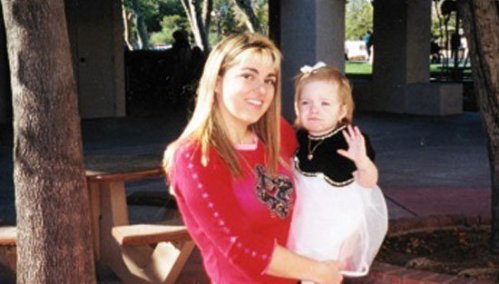
Courtney

From time to time, I become aware of cases that are particularly good examples of the flaws, the problems, the shortcomings, the failures, and the actual injustices of our so-called justice system (that I have been writing about here for the last 3 1/2 years). This is Part 2 of what is intended to be a continuing series highlighting these cases. These cases have been selected as representative and demonstrative examples, but be aware they are just the “tip of the iceberg.” This kind of stuff is happening every day in every state. You can see Part 1 here.

[Note: To the best of my knowledge, everything in this article is a matter of public record. If it can be shown that there are any misstatements, I will immediately post a retraction and an apology. This article has been reviewed and approved for posting by both Courtney Bisbee and her family.]


“Part 2” is the case of Courtney Bisbee in Arizona. Courtney Bisbee is a clearly innocent woman who was wrongfully convicted of improperly “touching” a male adolescent. There is compelling, documented evidence of Courtney’s innocence, but she continues to be incarcerated in Perryville prison in Arizona, where she has been for the last ten years. I’ve been studying this case for two years, and it is a “perfect storm” of what is broken and wrong with the justice system. At the end of the article, I’ll enumerate at least some reasons for this, and the list is long. Let me also comment that this is an overview of the case. The more deeply one digs into the details of this case, the murkier, the dirtier, and the more putrid it gets. We just don’t have the time or the space to cover all of that here., but I can say that, in general, it relates to the state of the justice system in both Arizona and Maricopa County. This is the kind of horror story that the average citizen would say “can’t happen here,” but it does.

Stephen Lemons, writing for the Phoenix New Times in 2008, wrote a comprehensive and detailed summary of Courtney’s case. See that story by Stephen Lemons here. If you have even a casual interest in the case, I suggest you read the article. Here’s an “abbreviated” version of the case:

Courtney Bisbee was raised in Michigan in a traditional family that worked hard, played by the rules, and was living the American dream; and had never had any exposure to the justice system. In 2004, she was a successful single mom of a 4 1/2 year old daughter, living and working in Scottsdale, AZ, and life was grand. She had begun a new job as a high school nurse, while completing the final weeks of her master’s degree. A compassionate and caring person, she was even tutoring some troubled teens, and therein begin the problems, because two of these troubled teens had an even more troubled non-custodial mother, with a prior criminal record.

To understand the details of the alleged incident, I refer you to the Lemons article. But basically what happened was that the non-custodial mother of two of the teens Courtney had been mentoring learned, by accident, that the boys were secretly living with another family while their custodial father was completing work-furlough for DUI. She was irate about this, and after learning that Courtney had been at this family’s house with her two sons and several other teens, cooked up a plot to sue for money based upon Courtney’s allegedly “touching” her 13-year-old son inappropriately. She even consulted several attorneys prior to ever taking her son to talk to the police.

After the accusation was made, Courtney was arrested at her home by a SWAT team, without a warrant, and in front of her 4 1/2-year-old daughter. This was after the detective on the case, just prior to her warrantless arrest, had illegally searched Courtney’s home, also without a warrant, confiscating her computer and her camcorder. And because that same detective later lied to the Grand Jury about the case, Courtney was held non-bondable for 66 days, until a second Grand Jury could be convened, which was forced by her initial attorney. Only then was she able to be released on $100,000 bond in this “he said – she said” case.

The only detective on Courtney’s case clearly went into it with the presumption that she was guilty, failing to thoroughly investigate, and concocting his own information to support his preconceived belief. This included not following established rules and protocols for interviewing children (Multidisciplinary Protocol.2003), badgering and coercing Courtney during her lengthy interrogation, lying to the Grand Jury, and lying in court. He also did not investigate one critical, verifiable fact that would have disproved the “victim’s” story (see the Lemons article), and would have, most likely, resulted in Courtney’s acquittal.

From the onset, the prosecution employed a “win at all cost” strategy to obtain a a conviction in Courtney’s “high profile” case. At that time, the Maricopa County Attorney had been conducting a five year “witch hunt” reign of terror, even investigating and charging sitting judges and county supervisors who he believed had “crossed him.” Please see the very revealing American Bar Association Journal article about this prosecutor here. He openly boasted about his 200,000 felony convictions. Also at that time, there was a nationwide moral panic going on about the safety of children in schools, and this was a hot-button political issue for the prosecutor; resulting in a rush to judgement based upon false allegations with no presumption of innocence. Courtney was clearly a victim of all this, and her family has documented multiple instances of prosecutorial misconduct during the course of the investigation and trial in the prosecution’s drive to rack up another politically advantageous conviction.

At trial, Courtney was represented by an expensive but inadequate attorney from a well known Phoenix law firm who presented a lackluster defense. This attorney had coerced Courtney into opting for a bench trial. He even failed to call a key defense witness who was there waiting in the court house to testify during the trial, and who had exculpatory testimony to give.  This witness had been present when two of the state’s key witnesses had discussed the fact that the accuser was lying, and that nothing ever happened between Courtney and the alleged victim. In my opinion, this very well could have changed the outcome of the trial. Also in my opinion, this was just boneheaded legal incompetence. (Either that, or it was intentional. I’m sure we’ll never know. Why would he not call this witness?)

In 2006, the bench trial judge, who had been under investigation by the Maricopa County Attorney, ultimately found Courtney guilty, and imposed the mandatory minimum sentence plus one year – 11 years.

In 2007, the state’s key trial witness, the “victim’s” older brother, who was present at the time of the alleged incident, came forward with a sworn affidavit stating that he had lied in court during Courtney’s trial, that his brother had lied in court, and that the whole case was a scam for money perpetrated by their mother. Additionally, the “victim’s” (accuser’s) best friend was deposed by Courtney’s civil attorney, and stated under oath that the victim had confessed to her several times that nothing ever happened between Courtney and him, and that his mother was making him do it for the money. I have read the transcript of the deposition, and it is unequivocal; and what’s particularly striking about this is that the prosecutor was present for the deposition, and has failed to take any action as a result of it. This just makes my brain explode. This affidavit and the deposition have yet to be acknowledged or considered by a court. The Maricopa County Attorney’s Office has steadfastly ignored all this new evidence. Phoenix Fox News 10 did a story about the older brother’s affidavit recanting his testimony, saying that nothing ever happened, that his brother (the alleged victim) was also lying, and that their mother made them do it so she could sue for money. See that video here. In the video you’ll see Courtney sobbing as she declares her innocence and begs the judge not to separate her from her daughter; and maybe it’s my imagination, but I could swear the judge is actually smirking.

When Courtney was tried, convicted, and sent to prison in 2006, her parents lived in Atlanta. They moved to Phoenix with the idea that it would take them a year or two to get Courtney out of prison. They would ultimately have to sell Courtney’s and their homes, close their successful businesses, and cash in many of their assets to pay for Courtney’s failed defense. Ten years later, they are still in Phoenix, and Courtney is still in prison. Over this time period, they have dealt with a veritable parade of attorneys, none of whom have actually accomplished anything – except for collecting their fees. This was up until the point that her New York City attorneys were retained and filed her Writ of Habeas. Courtney has had an absolutely compelling habeas petition pending before the court for the last 2 1/2 years, but it is yet to be heard. I’ve read the petition, and it’s very well done, and anybody who reads it has to say, “Wait a minute. There’s something very wrong with this conviction.”

And here’s the real kicker. The people in this case who actually committed crimes – false accusation, perjury – get off scot-free. And the prosecutors, the judge, and the lawyers all suffer no consequences whatsoever. And they were all, all, complicit in sending an innocent mother to prison. And on top of all that, Courtney has been separated and alienated from her daughter by an antagonistic ex-husband, and has neither seen nor heard from her daughter in over 10 years.

What I believe this case exemplifies and demonstrates is ….

Continue reading

Ohio Moving to Curtail Civil Asset Forfeiture

In many states, including Ohio, the police may seize and keep a person’s assets merely with evidence that “wrongdoing” has occurred. This includes cars, houses, boats, and cash. A person does not have to be convicted of a crime to suffer civil asset forfeiture, and in many instances “evidence of wrongdoing” is very subjectively interpreted by the police.

There is currently a bill moving through the Ohio legislature that would curtail this practice, and if passed, would require a conviction before the police could keep seized assets.

See the WCPO Cincinnati story here.

The Ohio Innocence Project Joins In Celebration of 2nd Annual International Wrongful Conviction Day

On October 2, 2015 the Ohio Innocence Project at the University of Cincinnati College of Law and the newly formed OIP-u will unite with dozens of other organizations around the world to commemorate the 2nd Annual International Wrongful Conviction Day. This day is dedicated to recognizing those whose lives have been adversely impacted by wrongful conviction and to educating the public on the causes, consequences and complications of wrongful conviction.

The celebration will mark the launch of OIP-u, Ohio’s Collegiate Network of Innocence Advocates. The mission of OIP-u is to support the Ohio Innocence OIP-u Official LogoProject in its effort to free the innocent and prevent wrongful conviction by educating the public about its causes and consequences. OIP-u provides a way for undergraduate and graduate students all over Ohio to come together and fight for the freedom of the many innocent men and women incarcerated in this state. OIP-u and the Ohio Innocence Project will be holding events at several universities across Ohio with newly formed OIP-u chapters, featuring OIP exonerees and staff members.


Upcoming Wrongful Conviction Day Events in Ohio

October 1st
Ohio University 5-7pm Bentley Hall, Room 136
Speakers: Ohio Exoneree, Ray Towler, and OIP Staff Member, Liza Dietrich
Hosted by OIP-u Ohio University Chapter

October 2nd
The University of Dayton 3:30-5:30pm O’Leary Auditorium in Miriam Hall Room 119
Speakers: Ohio Exoneree, Robert McClendon, and OIP Director, Mark Godsey
Hosted by OIP-u University of Dayton Chapter

The Ohio State University Noon-1:30pm Saxbe Auditorium located in Drinko Hall
Wrongful Conviction Day Panel featuring Emmy Award winning correspondent, Erin Moriarty ’77, CBS News; Joanna Feigenbaum ’11, Ohio Public Defender Wrongful Conviction Project; Jennifer Bergeron, Ohio Innocence Project attorney; and Clarence Elkins, an Ohio Exoneree. The panel will be moderated by Nikki Baszynski ’13, also of the Ohio Public Defender’s office.
Hosted by the Ohio Public Defender and the OIP-u Ohio State Chapter

For a complete list of International events visit: wrongfulconvictionday.com

#WCDOhio2015 #IWCD2015

Wednesday’s Quick Clicks…

Tuesday’s Quick Clicks…

Ohio Exoneree Ricky Jackson Receives Standing Ovation at the MET

Last Saturday Ohio Exoneree Ricky Jackson participated in a TEDxMET performance at the Metropolitan Museum of Art in New York City. Ricky spoke about his love for art, one that developed when he was a child and helped him endure 39 years of wrongful incarceration. The audience was visibly moved by Ricky’s words which were met with a standing ovation.

Limor Tomer, the General Manager of Concerts & Lectures at the Metropolitan Art Museum, had the following to say about Ricky’s performance:

Yesterday Ricky inspired, touched, moved and brought the house down at TEDxMET.  His depth, humility, intelligence, perceptiveness, heart and soul shone through and touched everyone very deeply.

Click here to view Ricky’s 12 minute segment via the Met’s website. You can view all of the TEDxMET participants here.

“CSI” FINALLY Going Off the Air

See the CNN story here.

Thank you. Thank you. Thank you.

CSI – I hate the show. A pile of fictitious forensic junk that has been a burden to innocence work since its inception.

Prosecutors complain about it because they think it instills in the minds of jurors that there needs to be fancy, technical forensic evidence in order to convict a defendant. Maybe so, and if so, this might possibly result in a jury finding a defendant innocent who is actually guilty.

But there is a much more pernicious “other edge” to that sword. My view has always been that it instills in the minds of jurors that fancy, technical, forensic evidence is infallible, even though it may be scientific garbage. And this can, and does, result in a jury finding a defendant guilty who is actually innocent.

CSI, RIP. (No, not really.)

Friday’s Quick Clicks…

Thursday Quick Clicks…

Prosecutor Can be Sued for Presenting False Information to Grand Jury

The US Second Circuit has ruled that a prosecutor can be held to a standard above “qualified immunity,” and thus can be sued, for knowingly presenting false information to a Grand Jury.

This quote from the court: “It ought not to be difficult, even for the most single‐minded of prosecutors, to avoid misconduct of the scope and seriousness of that in which the defendants engaged:

Creat[ing] false or fraudulently altered documents in the course of their performance of “investigatory functions,” knowing that such information was false or fraudulent; where “false” is defined as “untrue when made and . . . known to be untrue when made by the person making it or causing it to be made” and “fraudulent” as “falsely made with intent to deceive“.

It does not seem to us to be a danger to effective law enforcement to require prosecutors and their aides to abide by these rules even when pursuing the most complicated of cases with the utmost determination.”

See the story on the “Above the Law” website here.


Wednesday’s Quick Clicks…

Tuesday’s Quick Clicks…