Author Archives: Phil Locke

Rob Warden to Continue the “Good Fight”

Warden

As previously reported here on this blog, Rob Warden, co-founder and director of the Northwestern Law Center on Wrongful Convictions has set a retirement date.

However, his efforts and his impact on the innocence movement won’t end there.  This recent article from the Chicago Tribune talks about his post retirement plans.

One of the things in the article that I found “of interest” was the comment by the office of Cook County State’s Attorney, Anita Alvarez:  “It is our hope that the new leadership there will display a more respectful and fair-minded view of the work of the prosecutor, rather than the cynical ‘Us versus Them’ theory disseminated by Mr. Warden throughout the course of his tenure.”

Now, I ask you; is this not the pinnacle of hypocrisy?

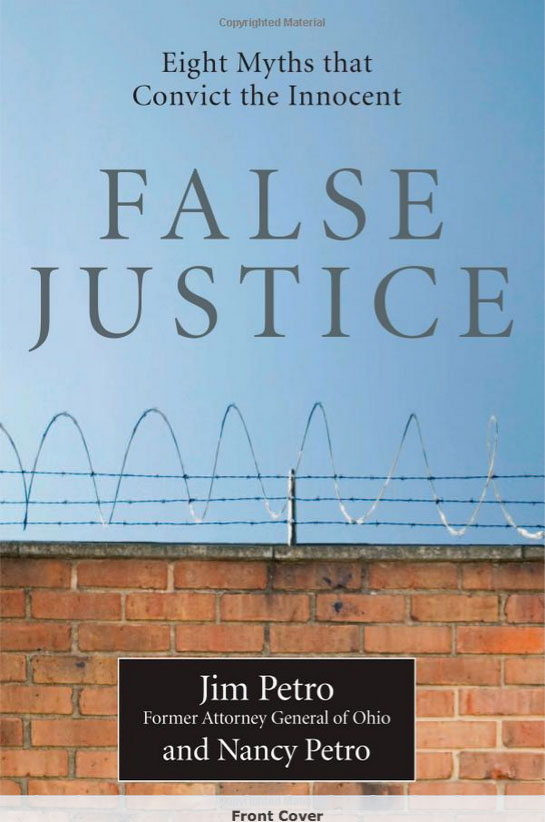
‘False Justice: Eight Myths That Convict the Innocent’ – Why Did They Write It?

FalseJusticeI hope that you’re all familiar with, and in fact have read, the book by Jim and Nancy Petro, False Justice: Eight Myths That Convict the Innocent.

Jim&Nancy

.

.

.

.

Jim is a former Attorney General of the state of Ohio, and Nancy, among her many other endeavors, is also a contributing editor to this blog.

I recently just happened across this interview with Jim and Nancy at the Columbus Metropolitan Club in 2010.  They talk about what brought them to write the book.

It’s about an hour long, and I found it both fascinating and illuminating.  Definitely worth a watch.

Texas to Execute Robert Garza Tomorrow

Texas just keeps them coming  ……..

RADIO SHOW PREVIEW: EXECUTION WATCH.  Unless a stay is issued, we’ll broadcast live: Thursday, 19 September 2013, 6-7 PM Central Time KPFT FM Houston 90.1 and Online…    http://executionwatch.org > Listen

TEXAS PLANS TO EXECUTE:

ROBERT GARZA, condemned following his conviction on a pair of murder charges in the 2002 shooting deaths of four women in the Rio Grande Valley. Garza’s appeal was rejected in February 2013 by the U.S. Supreme Court. He reportedly told law enforcement he witnessed the shootings and knew of the plot to kill the women but did not fire a gun. A jury convicted him of capital murder under the Texas law of parties, which allows for a defendant to be considered just as responsible as the killer if he or she plays a secondary role.

NEXT SCHEDULED EXECUTION

On Sept. 26, Texas plans to kill ARTURO DIAZ. If it does, Execution Watch will air coverage.

Crime Stoppers Gets it Wrong … Again

We’ve reported previously on this blog about the devastating results that can occur from a combination of misinformation from a Crime Stoppers tip and police tunnel vision.  See that posting here.

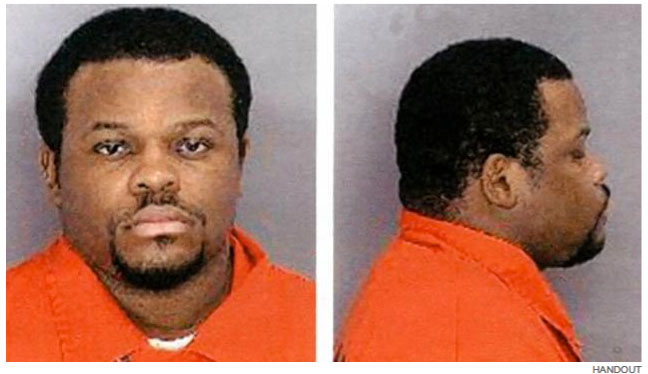
Here’s another example of how that happens.  In Dallas, Alan Mason was publicly identified as a “person of interest” in a series of rapes in south Dallas.  This was based upon an anonymous, non-specific Crime Stoppers tip.

Alan Mason was not officially named as a ‘suspect,’ but his picture and name were made public as a ‘person of interest.’  Another man was subsequently linked by DNA to four of the rapes, and was named a suspect.  Mason has been cleared of involvement in the rapes, and is no longer a ‘person of interest.’  Clearly, the Crime Stopper’s tip was bogus.  If Mason was only a ‘person of interest,’ why was it necessary to make that public before it could be confirmed?

AMason

Read the Dallas News stories here and here.

There is absolutely no control over the quality or the veracity of the information that comes into Crime Stoppers; nor is there any knowledge of the motivation of the informant.  We can only hope that the police sort it out correctly, and don’t jump to tunnel vision conclusions; including making premature public statements.  Thankfully, this case did not result in an innocent person being convicted and incarcerated.

Debra Milke Released Pending New Trial

Milke

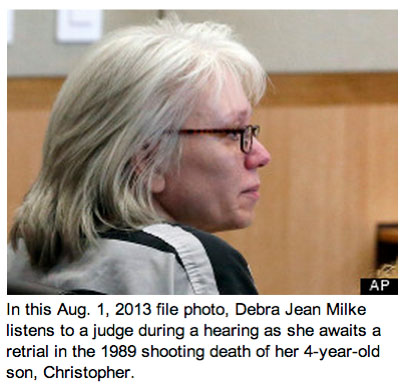
Debra Milke has been in prison since 1990 for arranging the shooting death of her 4-year-old son.  A detective, Armando Saldate, had testified that she had confessed to him.  She has steadfastly maintained her innocence.

Here is an excerpt from the court’s opinion:  “No civilized system of justice should have to depend on such flimsy evidence, quite possibly tainted by dishonesty or overzealousness, to decide whether to take someone’s life or liberty,” Chief Judge Alex Kozinski wrote for the court.

The court noted four cases in which judges threw out confessions or indictments because (detective) Saldate lied under oath and four instances in which cases were tossed out or confessions excluded because Saldate violated the suspect’s constitutional rights.

He was also suspended for accepting sexual favors from a female motorist he stopped and then lying about the encounter, the court said.

The prosecutor had withheld this information from the defense.

Read the full HuffPost story here.

The Wrongfully Convicted Sex Offender

RSO

(Editorial Note:  In no way do I want to minimize the issue of violence against women or children.  Rape is clearly a crime of violence, and must be dealt with appropriately.  Pedophile predation is abhorrant, and must also be dealt with sternly and appropriately.  But I think the issue has become – what actually is appropriate for dealing with the range of sex offenses, and in some cases, have we gone too far; and what does this mean for the wrongfully convicted?  It begs the age old question – does the punishment fit the crime?)

Woe be to the wrongfully convicted sex offender, because you’re not just a wrongfully convicted ‘felon.’  You’re a wrongfully convicted ‘sex offender,’ and the state makes sure you get some extra special attention.  Note that I’m careful to use the qualifier “wrongfully convicted” here, because in the case of sex offenders, when the justice system “gets it wrong,” the injustice gets amplified.  I’m not saying we should let actually guilty sex offenders off the hook, but the punitive measures have become so severe, that when someone is wrongfully convicted of a sex offense, the consequences they are forced to endure magnify the injustice.

Continue reading

NSF to Support Forensics Research

The NAS Report (see here, here, and here) is ever so slowly starting to have an impact.

From the journal Nature, Aug.28, 2013.

The US National Science Foundation (NSF) is seeking proposals for basic research in forensic science, in an effort to improve rigor and standards. The move is partly a result of a 2009 US National Research Council report that called for the NSF to support forensics research, and for scientists and medical officers in the field to be certified, says Mark Weiss, division director for behavioral and cognitive science at the NSF in Arlington, Virginia. “If you’ve got an idea, we want to hear about it,” says Weiss, who adds that forensics research is considered a national and legislative priority. He encourages interested researchers to contact program directors in any relevant NSF directorate.

Judge Overturns Conviction of Jimmy Dennis – on Death Row for 21 Years

Jimmy Dennis

In the Pennsylvania case of Jimmy Dennis, Judge Anita Brody vacated both the conviction and the death sentence in a scathing indictment of the prosecutor’s case. The Judge called the conviction against Dennis “a grave miscarriage of justice” based on “scant evidence at best” and found that authorities withheld evidence at the initial trial and that the case was based on shoddy police and prosecutorial work.

Read the NY Daily News story here.

New Jersey Man Spends 4 Years in Jail Without a Trial … and Then Charges Are Dropped

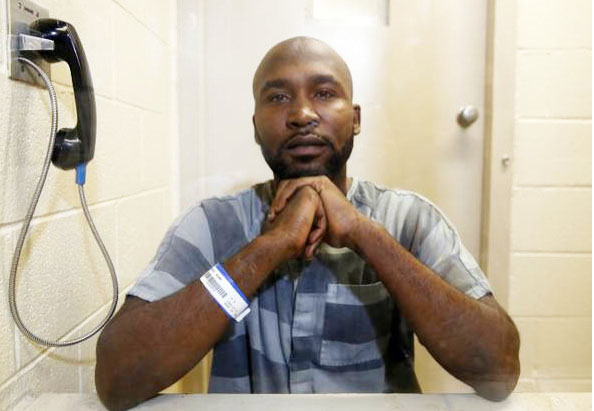
IanettiValentino Ianetti’s wife took enough oxycodone to cause her death, and then stabbed herself multiple times.  Valentino was charged with murder and jailed on $500,000 bond.  After 4 years in jail without a trial, his court-appointed attorney was able to produce new evidence showing that Ianetti’s wife had actually committed suicide.  This was independently confirmed by the prosecution, charges were dropped, and Ianetti was freed.

But while languishing in the Sussex County  Jail, Mr. Ianetti lost a child, a brother and his home.

Read the HuffPost story here.

Exoneree Brian Banks Plays in His First NFL Game

BanksThe Atlanta Falcons played the Cincinnati Bengals in NFL pre-season football last night.  Brian Banks, playing for the Falcons, logged his first game minutes, and was credited with a tackle late in the game.

Brian’s exoneration has been previously covered on this blog here, here, here, and here.

Read the game story here.  Be sure to watch the video.

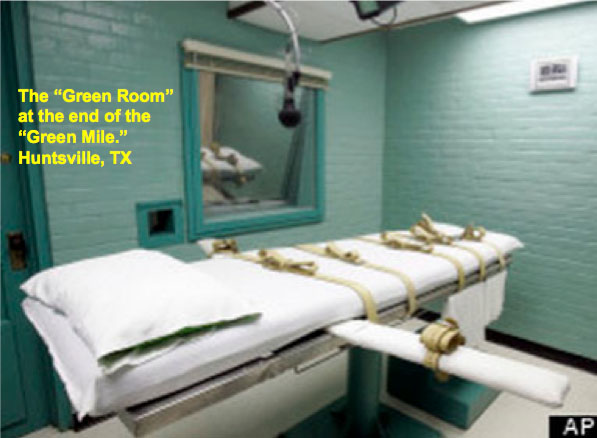
Texas Running Out of Execution Drug

TX ex drugTexas has been on such an execution “roll,” they’re actually running out of pentobarbital.  It takes a 5.0g dose to execute a prisoner, and they only have 23 doses left.

And apparently, the manufacturers of the drug are trying to clamp down on its use for executions.  What’s Texas to do?  They have a long history with both hanging and the electric chair, so maybe they could go “retro,” but that could be a big political/public relations problem.

Read the HUFFPOST story here.

Death Investigation in the US – Medical Examiner or Coroner?

autopsy table

It’s common, in cases which involve a death, for the determination, by autopsy, of manner and cause of that death to result in criminal charges being filed against a suspect.  And in many cases, the results of that autopsy will be the evidence that convicts or acquits that suspect.  Unfortunately, it’s all too common for the results of an autopsy to be unreliable or downright wrong.

A wrong result from an autopsy?  How can this happen?  Accurate determination of manner and cause of death by autopsy requires a medical examiner, or coroner, with a high level of competency and with special training.  Sadly, there are both coroners and forensic pathologists practicing in this country who are unfit for the job.  To understand how this can be, it’s important to understand the distinction between a “medical examiner” and a “coroner.”  Medical examiners are appointed, or hired, by the responsible governmental body, and are uniformly qualified as forensic pathologists.  Coroners are politically elected, and in some states, are not even required to be a doctor.  In fact, South Carolina only recently required that a coroner be a high school graduate.  Coroners who have no medical credentials what so ever will commonly hire or contract forensic pathologists to perform the actual autopsies, but the competence and credentials of those pathologists may be of little concern to the hiring coroner, and the most important determining factor controlling those hiring decisions will be the budget.  There is also evidence to suggest that because the coroner is an elected political position, that those officials may unduly favor law enforcement in the decisions that they make.

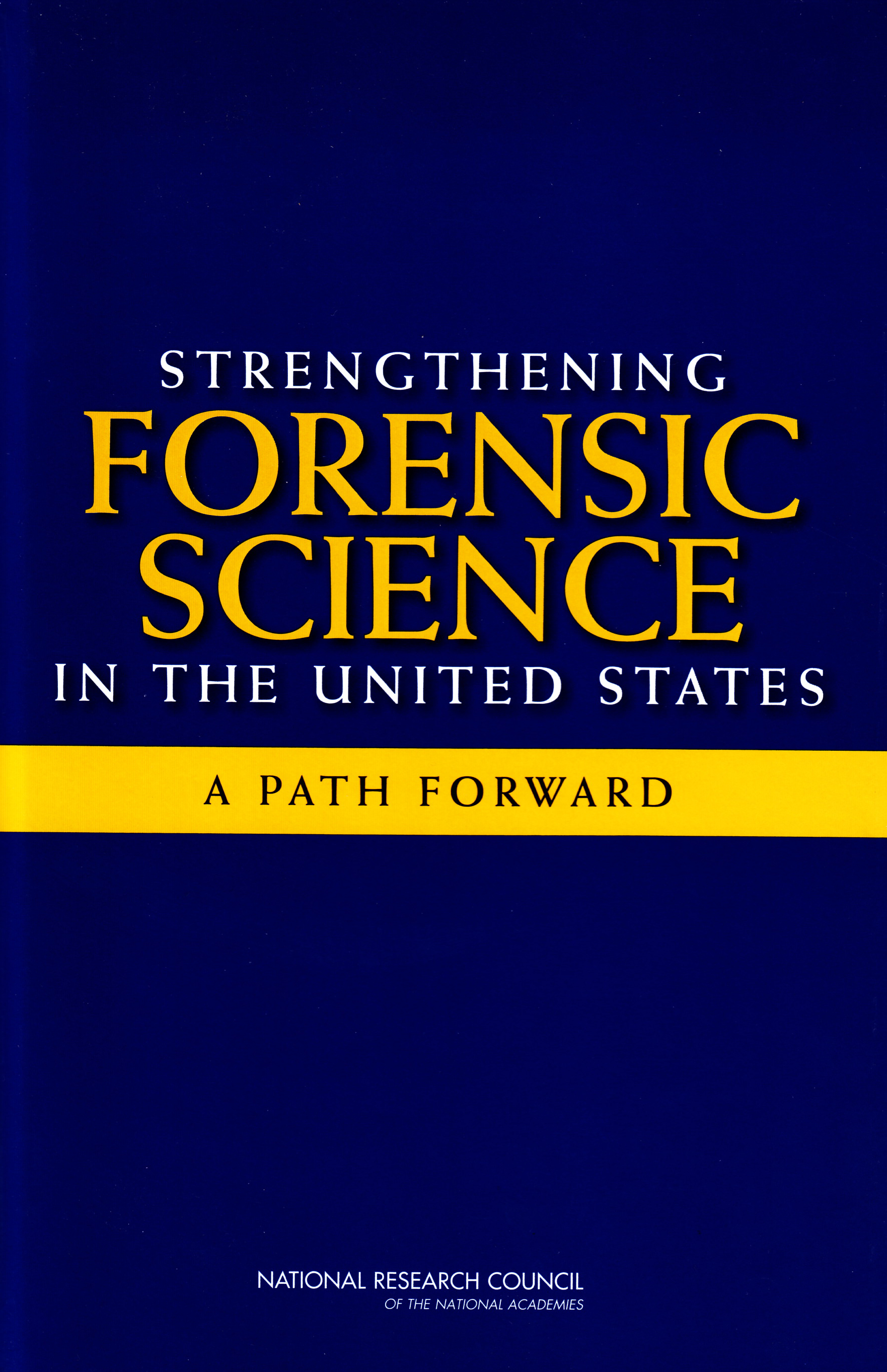
The problems with the coroner system have been egregious enough that the National Academy of Sciences, in it’s landmark 2009 report “Strengthening Forensic Science in the United States, A Path Forward,” recommended that the coroner system be abolished.

In February, 2011, PBS aired an hour long investigation into the coroner system in the US titled ‘Post Mortem.’  I personally found this to be illuminating, eye-opening, infuriating, and riveting.  You can watch the video, PBS Frontline, “Post Mortem” here.

A New Twist to False Confessions – The Pharmacological Factor

RxWe’ve reported before on this blog about how police interview & interrogation tactics and techniques can contribute to false confessions.  See previous posts herehere, herehere and here.  One aspect of false confessions that we have not previously covered is the situation in which a subject is interviewed or interrogated while under the influence of medically supervised mind altering drugs.  Recently, two prominent researchers in this area have undertaken a collaboration on this very subject with the intent of educating attorneys about the pharmacological and psychological factors that may affect how a suspect responds to the pressure of interrogation.

Dr. David Benjamin (medlaw@doctorbenjamin.com) is a Clinical Pharmacologist and Forensic Toxicologist, and Adjunct Associate Professor in the Pharmaceutical Sciences Department of Northeastern University School of Pharmacy in Boston, MA.  Dr. Brian Cutler is Professor of Forensic Psychology and Associate Dean of the Faculty of Social Science and Humanities at the University Of Ontario Institute Of Technology, Oshawa, Ontario, Canada (briancutler@mac.com).  Both have extensive experience as educators, consultants, and expert witnesses.

Dr. Benjamin has authored numerous papers, some of which are available on his website,  www.doctorbenjamin.com.  He also conducts a seminar on “Developing Active Listening Skills” which is intended to raise the awareness of testifying expert witnesses to the rhetorical ploys, subterfuge, forms of questions and other attempts to gain concessions used by prosecutors during depositions or during cross examination.  Dr. Cutler has co-authored, with Prof. Timothy Moore, the article titled “Mistaken Eyewitness Identification, False Confession, and Conviction of the Innocent,” and you can read that article here:  Cutler & Moore

As part of their mission to educate attorneys on interrogation and false confessions in general and pharmacological issues in particular, Dr. Benjamin and Dr. Cutler have proposed a workshop on the topic to the National Association of Criminal Defense Lawyers (NACDL) and the American Bar Association (ABA).  The workshop proposal is under review, and the abstract is provided below.  Regardless of the outcome of the review processes, Drs. Benjamin and Cutler aim to pursue educational opportunities for attorneys and are open to presentation, publication, and other methods of reaching out to attorneys about this timely and important topic.

False and Coerced Confessions: Causes and Cures by David M. Benjamin Ph.D. and Brian L. Cutler Ph.D.

Continue reading

“Kids for Cash” Judge Sentenced to 28 Years

In what has to be the pinnacle of judicial misconduct, Pennsylvania judge Mark Ciavarella Jr. has been sentenced to 28 years in prison for “selling” juveniles into a private prison system.  The Pennsylvania Supreme Court estimates that over 5,000 young men and women were denied their constitutional rights, and were unjustly incarcerated.  The court has, so far, overturned 4,000 of those convictions.  Ciavarella received millions in “bribes” from the private prison system for railroading kids into prison.  In May, 2013, a Federal Appeals Court upheld that sentence, confirming that Ciavarella did, in fact, receive a “fair and impartial” trial.

Read the story here and here.

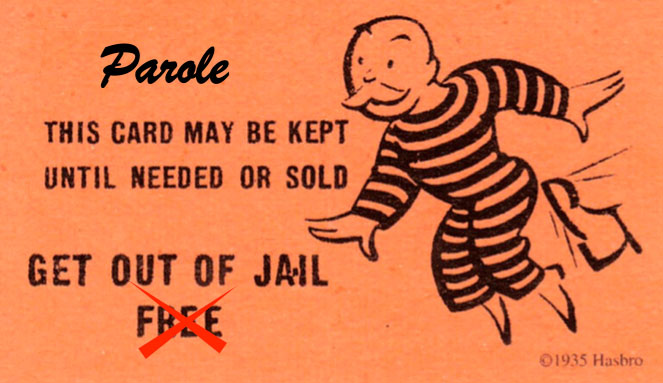
The ‘Catch 22’ of Parole for the Wrongfully Convicted

gojfc

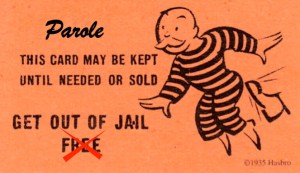
Parole.  Parole is the release from prison, prior to completion of full sentence, under supervised conditions.  The parolee is still considered to be serving his/her prison term.  The granting of parole is determined by a parole board, whose members are typically appointed by the governor of the state.  Currently, sixteen states have abolished parole completely, and four more have abolished it for violent felons.  This leaves 30 – 34 states where parole is still a potential path to early release for inmates.  The preconditions for parole are generally:  good behavior in prison, having achieved sufficient rehabilitation, believed not to be a danger to society, and means of support and a place to live after release.

Parole systems tend to operate in the “shadows” of the justice system.  Parole system activities rarely attract media coverage, unless it involves a very high profile case, like Charles Manson, and even then, the only coverage is “was parole granted or not?”  Parole boards cannot, and do not, determine innocence or guilt.  They absolutely presume guilt, and based upon that, can only determine whether a prisoner is suitable for early release.  I expect that the general public is largely clueless about how parole systems operate.  And as far as I can tell, parole boards are subject to no oversight, and have no accountability.

One of the less recognized aspects of the conditions required for grant of parole has to do with “having achieved sufficient rehabilitation.”  Parole boards commonly require that a prisoner “admit guilt and express remorse” before they will grant parole.  The parole officials in some states will insist that admission of guilt is not a precondition.  California law prohibits “admission of guilt” as a precondition for parole, and New Jersey parole board officials insist that “admission of guilt” is not a precondition for parole to be granted.  But it seems that this is an area where “theory” and “practice” do not necessarily agree.  And as I mentioned above, as far as I can tell, parole boards have no accountability or oversight to ensure that “admission of guilt” is, in fact, not a precondition.

Now, here’s the Catch 22.  An actually innocent, wrongfully convicted person serving a long prison term will, more likely than not, have to admit guilt and express remorse to be granted parole.  Not only does this mean that the innocent person would have to compromise his or her principles, and admit to a crime they did not commit, but in admitting guilt he or she also closes out any options they may have for eventual exoneration.

Continue reading

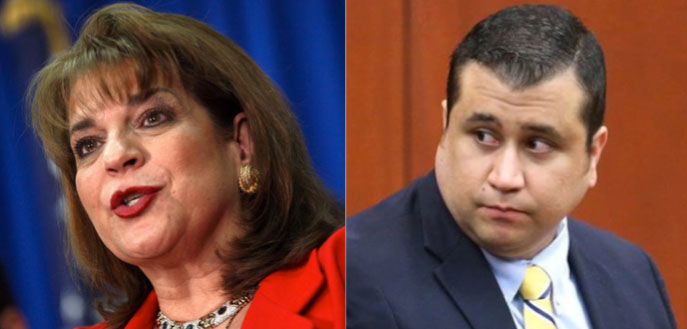
What About the Prosecutor in the Zimmerman Case?

corey-zimm

As expected, the verdict in the Zimmerman case has created a furor.  My belief is that this is largely (as we have lamented several times before on this blog) because the case was openly tried in the media.  EVERYBODY had an opinion that was primarily a consequence of their own prejudices.  Unfortunately, all the public hears from the media is sound bites filled with spin.  The public doesn’t get to read all the reports, analyze all the evidence, and hear all the testimony.  I’ll make no judgement about whether the verdict was ‘right’ or ‘wrong,’ but I will point out that this case has been a horrible example of how the justice system is supposed to work – particularly on the part of the prosecution.

Just as with the Casey Anthony case, the prosecution got greedy.  Spurred by career and political ambition, they “over charged” with second degree murder; a charge that the court allowed to be entered as the result of a false affidavit being filed by the prosecutor.  And just as with the Anthony case, the jury didn’t agree.  A manslaughter charge “could”  have been achievable.

Here is a fascinating interview with Harvard law professor Alan Dershowitz about the conduct of the prosecutor in the case, Angela Corey.  He even goes so far as to say that Angela Corey should be disbarred.  See it here.

Texas Heads Toward Executions #501 and #502

EXECUTION WATCH:  Unless a stay is issued, we’ll broadcast live:  Tuesday, 16 June 2013, 6-7 PM Central Time; KPFT FM Houston 90.1 and Online…

http://executionwatch.org > Listen        Join the discussion on Facebook: Execution Watch

TEXAS PLANS TO EXECUTE:  JOHN QUINTANILLA JR., convicted in a 2002 robbery in Victoria that turned deadly,  He allegedly entered an amusement arcade with fall partner Jeffrey Bibb, demanded cash from a worker and ordered customers to lie on the floor. The murder victim, a former sheriff’s deputy, was shot three times when he stood up and grabbed Quintanilla’s rifle. Bibb and Quintanilla were charged with capital murder. Bibb received a lengthy prison sentence. Quintanilla’s execution would be the 501st in Texas in the modern death-penalty era.

NEXT SCHEDULED EXECUTION:  On Thursday, Texas plans to kill VAUGHN ROSS.  If it does, Execution Watch will air.

EXECUTION WATCH:  Unless a stay is issued, we’ll broadcast live:  Thursday, 18 June 2013, 6-7 PM Central Time; KPFT FM Houston 90.1 and Online…

http://executionwatch.org > Listen         Join the discussion on Facebook: Execution Watch

TEXAS PLANS TO EXECUTE:  VAUGHN ROSS, A former architecture student at Texas Tech. He was condemned in the 2001 murders of an 18-year-old woman with whom he was feuding and a Texas Tech associate dean who happened to be with her. Ross’s attorneys argued that police contaminated DNA testing by mishandling it and suggested the slayings stemmed from Birdsall’s visits to “a high-crime area” to patronize prostitutes. Family members of the victims said the death sentence brought them little peace. Family members included Birdsall’s son, Nat, who opposes the death penalty and said his father did, too. Ross’s execution would be No. 502 in Texas in the modern death penalty era.

Shaken-baby Science Doubts Grow

There was an article just published in the Rochester, NY Democrat and Chronicle about a shaken baby syndrome case in Monroe County, NY.

If you’re new to the “SBS wars,” this article does a pretty good job of outlining the basics of what the debate is all about.

You can read the article here.

Shaken Baby Syndrome: Perspectives on a Controversial Diagnosis

The Medill Justice Project at Northwestern University has recently produced a video featuring a number of notable participants in the current SBS debate.  The title is Shaken Baby Syndrome: Perspectives on a Controversial Diagnosis.

You can see that video here.

Thanks to Sue Luttner at OnSBS.com for the notice about this video.

The NAS Report – Aftermath

NASIt’s been four years since the National Academy of Sciences published its landmark study of forensics in the US —  Strengthening Forensic Science in the United States – A Path Forward (commonly known as ‘the NAS report’).  The report was nothing short of a “bombshell,” detailing the substantial scientific deficiencies of essentially all forensic disciplines, with the exception of DNA.  A report by the National Registry of Exonerations, covering 873 wrongful convictions from 1989 to 2012, shows that “false or misleading forensics” was a contributing cause in 24% of those cases.  The NAS report has been previously covered on this blog here and here.

The NAS report was met with “stonewall” and dismissive resistance by the extant forensic community, as well as the National Association of District Attorneys.  This is not surprising, since the members of these groups have much personally invested in the existing (but scientifically invalid) methods of forensics – not the least of which is careers.  The inertia to be overcome in “fixing” forensics is monumental, and for this reason, many of us in the innocence world (this editor included) feared that the NAS report would languish on the bookshelves of the legislators.

I am happy to report, however, that a significant first-step action is now underway at the federal level.  The Justice Department has announced that, in cooperation with the National Institute of Standards and Technology (NIST), it is forming the National Commission on Forensic Science.  The commission will have responsibility for developing guidance concerning the intersections between forensic science and the courtroom and developing policy recommendations, including uniform codes for professional responsibility and requirements for training and certification.

Now, before jubilation sets in, note that the commission’s responsibilities are described as “guidance” and “recommendations.”  The commission has not been endowed with the powers of oversight, enforcement, or establishing standards.  So, clearly, this is just a first step in the journey toward “fixing” forensics.  But as the old proverb says, “A journey of a thousand miles begins with but a single step.”  Nothing is going to happen quickly, but it is a start, and we’ll take it.

Continue reading