Category Archives: Editorials/Opinion

An Exoneree’s Perspective on the Quantum and Adequacy of Compensation

Jeffrey Deskovic is not your archetypal exoneree. He holds strong views about the subject of wrongful conviction, and even stronger views on the sufficiency of state compensation for victims of wrongful convictions. In his article entitled – A Critique of Innocence Project Report on Exoneree Compensation ‘Making Up for Lost Time’ – he critiqued some of the recommendations made by the Innocent Project.

His views were in direct response to  the Project’s report on the question of legislating compensation and the reasonableness thereof. See pdf report – http://www.innocenceproject.org/docs/Innocence_Project_Compensation_Report.pdf

Jeffrey goes on in his article to make the point that, compensating the innocent must be sue generis. It must take account of each individual’s circumstances; station in life, pain and suffering, education, present and future earnings et al. Read his article herehttp://www.examiner.com/article/a-critique-of-innocence-project-report-on-exoneree-compensation-making-up-for-lost-time

While his criticism does weigh up the issues, and on balance, seem to tilt towards a case by case consideration of each application, it is submitted that, the courts still remain the best fora to determine what is best, or what represents adequate compensation for each victim. No legislation can set the amount of compensation in stone for every given situation. What a Statute does, and can do, is to set a benchmark, albeit a guide for the courts to be guided by in coming to a decision on compensation. The ultimate decision will always boil down to each individual circumstances.

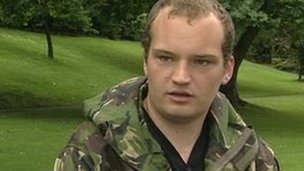
James Taylor:A Life in Ruin!

One of the troubling after effect of a wrongful conviction, remain how victims come to terms with their present situation; how they go past it, put it aside and move ahead. Some never do. Others just resign themselves to fate and the vicissitudes of life. The system is so skewed and unfair to leave a man stranded for apparently no fault of his.

The vexed question of post wrongful conviction compensation, whether and when to pay, indeed, if there is a right to restitution remain a moot point – both with adversarial and inquisitorial jurisdictions. It sounds strange that the system would continue to stigmatise a man for an offense he did not commit or has not been found culpable by a court of competent jurisdiction.

Despite the ‘giant’ stride that has been made in the United Kingdom, and the long line of cases of miscarriages of justice – from the days of the Birmingham Six,  to the establishment of the Criminal Cases Review Commission – it seems cases still seep through the system undetected and uncompensated when they come to light.

James Taylor deserve to get his life back. He must explore all in his power and within the law to see to that, if the pronouncements of Judge Peter Clarke QC is to make any sense. Judge Peter Clarke QC is reported to have said that ‘We find the consequences to Mr. Taylor little less than horrifying’

You can read Taylor’s odyssey here and make up your own mind http://www.bbc.co.uk/news/uk-england-kent-18787249

Eyewitness Nightmare: We’ve Convicted Countless on Evidence that is Unreliable 25% of the Time

A fundamental principal in American criminal justice is that one is innocent until proven guilty beyond a reasonable doubt. But in the past two decades, DNA-proven wrongful convictions have revealed that we’ve routinely met the standard of “beyond a reasonable doubt” with evidence that is quantifiably incorrect one-fourth of the time.

A 25 percent error rate in school has historically earned the very lackluster grade of D. A 25 percent margin of error would shutter any hospital and ground any airline. But, in the criminal justice system, most Americans, blinded by trust in the system and a popular allegiance to “tough on crime” policies, have yet to Continue reading

Rate of Wrongful Convictions – You Can’t Improve What You Don’t Measure – Six Sigma and the US Justice System

(Editor’s note:  some readers may find this post a little “dry”, but I believe it’s none the less relevant.)

Just what is the rate of wrongful convictions in the US?  Nobody knows for sure.

Estimates of the rate of wrongful convictions in the US span a range from 0.5% to 5.0%, based upon several recent studies done by law schools, and cited on this blog.  SCOTUS Justice Antonin Scalia happens to believe that it’s 0.027%, but he is clearly not connected with reality.  Anything in the 0.5% to 5.0% range is a staggering number, and would cry out for remedy.

What if we were confident that the justice system produced the correct result 99.99966% of the time, and we had the data to prove it?  Another way to say this is that the justice system would get the verdict ‘wrong’ only 3.4 times per million cases, or a 0.00034% wrongful conviction rate.  That would be a wonderful thing.

Continue reading

Kirstin Lobato: Is this Another American Miscarriage of Justice?

The law on DNA testing in the US appears to be in a flux. Or at least, there are variants of the law that does not exactly add up, as you move from state to state. The curious question you would want to ask, would be, why should a ‘simple’ request for DNA testing be turned down or even denied? What if that goes to the substratum of the case; one that is capable of tilting the case one way or the other.  If justice is actually the ends of prosecution, why would there be obstacles and booby traps, or any legitimate means of achieving it be prevented, stultified or even stalled, a day longer than necessary.

It’s questions like these that really underscores the need for a broad based advocacy strategy for law reform that cuts across state boundaries, indeed, as an international norm, if the rights to innocence, fair trial provisions and to disclosure of evidence, would make any sense in reality. In a sense, this also interrogates the relevance and the nature of the legal system, around on-going debate as to whether the inquisitorial or adversarial system of justice best serves the interest of accused persons.

The Kirstin Lobato case is another case, in a long time of cases where DNA testing is being challenged by the DA. It will be interesting to see what the outcome would be. Petitions are currently awash on numerous sites urging the DA to do the right thing ‘not to file any opposition to Lobato’s appeal to the Nevada Supreme Court, and request that he allows the Innocence Project to conduct DNA testing and re-testing of crime scene evidence’ Read Ground Report of this case here, including efforts to get Lobato exonerated http://www.groundreport.com/US/100-000-Call-For-DA-To-Allow-DNA-Testing-In-Kirsti/2946798

Nigeria: Trading Justice for ‘Self Help’

Dispensing ‘jungle justice’ is a sign of the times in Nigeria. Truth be told, the Nigerian justice system is not only broken, it has completely failed, thence, the resort to self help. As BBC Andrew Walker’s report highlights, the activities of vigilante group who have completely taken over neigbouhood policing, is worrisome. It’s evidently the clearest indication yet, that it is everyman for himself and God for us all. The Hobbesian state. How did Nigeria get to this sorry state?

Ordinary people have completely lost faith in the police and the judicial system to help them seek justice. Despite the understandable constraints under which the police work, that is no excuse for bad policing, extortion of money, bribery and corruption, which seems to be the hallmark of how the ordinary Nigerian views the police and the outright failure to carry out their statutory duties. On the other hand, the ineffective judiciary is plagued with its own malaise of court delays, needless and endless adjournments, deliberate obfuscation of the court processes by lawyers who manipulate the rules of court with a view to ‘extorting’ money from clients, just to prolong cases unnecessarily – bad lawyering. And they find willing accomplices ‘sometimes’ from the bench. In the result, Nigerian citizens are left to their own mercies and fate. Do you really blame them when they now resort to jungle justice? Read Andrew Walker’s report here.http://news.bbc.co.uk/2/hi/africa/8021468.stm

The Nigerian state must find a way to redress this. Most of the institutions connected with the administration of justice should be re-jigged, particularly, the police and judiciary. Leaving this essential reform to international development agencies like DfID, is surely, but a stop gap measure.  They can only compliment the efforts of  government, not as a substitute for government implementing reforms.

‘Self-help’ undermines justice, due process and human rights of victims – however justified the vigilantes are. The likelihood of lumping and lynching an innocent person, by a vigilante ‘mob’, in a situation where there are no defined rules, processes and procedures, is very high. Innocent people have been known to have been killed.

The Exonerated Sound Wakeup Call on Abuse of Solitary Confinement

Clarence Elkins spent six and a half years in prison for a crime he didn’t commit, but the worst of it was the last three months leading up to the day he was exonerated and released. Because the true perpetrator of the crime that had stolen Elkins’s freedom was in the same prison, Elkins was placed in solitary confinement for his own protection. Solitary is sometimes used as a means of separating inmates. Even though Elkins had done nothing to deserve it, he was treated like any other person in solitary. It was a nightmare. Last week Elkins and five other exonerees reported their solitary confinement experiences in a written report to the Senate Judiciary Subcommittee on the Constitution, Civil Rights, and Human Rights.

I feel certain that the short but powerful report, here, would appall the vast majority of Americans.

Samplings from the report: “No blanket, no underwear, or pillow…no bed mat. Continue reading

Advocacy of State’s Conference of District Attorneys: A Disservice to North Carolina, Justice

North Carolina has added a new restriction to its compensation law for those wrongfully convicted: Those who plead guilty are no longer eligible. Denying compensation to those who “contributed” to their conviction by entering a guilty plea has been a common argument from those who seek to minimize the state’s responsibility in miscarriages of justice or deny compensation to those who have had years of their lives stolen through wrongful conviction. But, it’s an argument that should no longer have credibility.  Continue reading

Were the Trayvon Martin Charges Politically Motivated?

The governor-appointed prosecutor in the Trayvon Martin shooting case, Angela Corey, brought charges of 2nd degree murder against George Zimmerman without a grand jury indictment.  Harvard law professor Alan Dershowitz has questioned the foundations for those charges and that action.

The following link is to an article that explores this question.

http://www.cnn.com/2012/06/19/opinion/nejame-angela-corey/index.html?hpt=hp_bn7

This, once again, raises the issue of “prosecutorial immunity”.  So much power vested in a single individual with no accountability.

Judge: I’ll Never Forget The Innocent Person I Sentenced to Prison…

From the Mercury News:

I will always remember Bobby Herrera, the man whom I wrongfully sentenced to prison.

It was a serious case. The victim had been shot at a graduation party in San Jose. Two people identified Herrera, a 17-year-old mechanic with no criminal record, as the shooter. Herrera’s attorney told him if he went to trial, he would risk 25 years in prison. On the attorney’s advice, Herrera pleaded no contest and accepted a shorter prison sentence. As the presiding judge, I approved the plea bargain and sentenced him to five years.

I subsequently learned that Herrera’s attorney was suspended from the practice of law when he represented Herrera. With the support of the district attorney, I returned Herrera to my court, appointed the public defender to represent him and released him from custody. By then he had served 11 months in prison. His new attorney found evidence of his innocence. The charges were dismissed.

Herrera’s case is one of 873 individual exonerations profiled in the National Registry of Exonerations, a joint project unveiled in May by the University of Continue reading

New Study: Significant Risk of Wrongful Conviction in Plea Bargaining

The nation has been enthralled by the story of Brian Banks. A former blue-chip high school football athlete, Banks served five years in prison after a rape conviction, wore an ankle location bracelet, and was labeled a sex offender for five more years, before his victim admitted the rape never happened. When NFL teams lined up to give him a second chance, the nation reveled in the comeback story but also faced troublesome questions. Why would an innocent person take a plea deal that would send him to prison and  label him a sexual offender? How often does this happen? A new study suggests many are vulnerable to taking a deal even when innocent.

Lucien E. Dervan and Vanessa Edkins report here that over half of the participants in a research study were willing to falsely admit guilt in exchange for Continue reading

How Nations Handle Extra-Territorial Breaches of their Nationals’ Right to Innocence and Miscarriages of Justice

That the world is shrinking by the day, is much more than a metaphor. It’s a reality. Nationals of nations are scattered all around the globe, seeking different realities, challenges and opportunities. In the process, they are confronted with different norms, cultures and laws which they are compelled to abide by, or face sanctions for breaches of the laws of their host countries. In effect, nationals outside their own territories, must not only comply with the laws of their host countries, but there is a continuing responsibility of their own governments to ensure that they are treated fairly,  justly and in line with internationally acceptable legal standards.

What happens when a government fails to take up that challenge on behalf of their own citizens abroad? It’s sometimes a catch twenty-two situation, given the intersection between politics and law. One thing is certain though, most international Instruments lay down certain minimum standards for the dispensation of justice and, indeed, of the trial process. Recent cases of US and Nigerian citizens with criminal processes/procedures abroad, have demonstrated that, whilst one nation takes seriously it’s continuing international obligations to its nationals; the other have simply shirked her responsibilities to it’s nationals abroad, leaving them at the mercy and vagaries of the ‘laws’ of the host countries, without regard to the fairness, justice or indeed, whether the laws of the host countries guarantees the minimum rights under international law.

With respect to the US, the recent case of Jason Puracal (An American citizen) in Nicaragua was handled ‘fairly’ well, if for nothing, the drawing of the attention of the US Congress (43 House of Representatives members) to his plight, and the calling of the attention of the United Nations, declaring the Nicaraguan judicial system as flawed and a violation of international law. Read archived post on this case here.

That Nigerian nationals face legal hurdles and challenges abroad is well documented. What is not well appreciated is the response of the Nigerian government, and it’s attitude to her nationals undergoing criminal processes abroad. In Indonesia for instance, there are a sizeable number of Nigerians who have alleged that, their right to justice, and sometimes, outright miscarriages of justice have occurred; which has left them wrongfully imprisoned, some on death row, and others, actually have been executed without due process. Read here and here

There is the on-going trial of a Nigerian pastor in Austria – Pastor Joshua Esosa -for ‘drug related offenses’, which he vigorously denies. He was made to undergo criminal processes in Austria which resulted in his ‘conviction and sentence’, whereupon he appealed the decision. An appellate court in Austria, it seems, have ordered the remittal of his case for re-trial de novo. That re-trial commenced, or rather, took place on the 6th of June, 2012. The point here is that, Pastor Joshua Esosa practically shouted himself hoarse, before he was given the right of re-trial, despite the unfairness of the initial trial process; and the Nigerian Embassy appearing to have utterly failed him. Read his story here

In conclusion, the anecdotal facts above, clearly demonstrate that governments owe it’s own nationals obligations to ensure that they are given a fair trial abroad. That obligation is a continuing one. It must be exercised responsibly in line with internationally acceptable legal standards. Where those domestic standards falls short of universally acceptable norms, by virtue of its continuing obligations, it behooves governments to engage on her nationals’ behalf to ensure justice is done. The Nigerian government must now begin to learn to shift grounds, and explore not only legal measures, but political means to protect her nationals abroad.

Problematique:Stand Your Ground Law, What Does it Really Mean?

Stand your ground law and related concepts like, self-defense; the ‘castle doctrine’; and the duty to retreat, have continued to pose significant legal problems in different jurisdictions and States in the US.  Defendants are now more willing to resort to these defenses, when it appears all else have failed. This, in large part is due to the fluidity and overlapping nature of these defenses, and the different legal interpretations given to different sets of facts, even where in some cases, none of these defenses could ever avail the defendant. The Trayvon Martin and Zimmermann case, is just one, in a long line of cases, that have recently come to the attention of the public; highlighting the intricacies and difficulties of applying the stand your ground law.

In the last 2-3months, there have been an avalanche of legal commentaries and commentators taking and defending positions regarding the stand your ground law. None, in my opinion is as pungent and explanatory as that expressed by Prof. Sherry F. Colb in her article entitled: ‘Stand your ground’ laws and competing visions of ‘fight and flight’ in the real world. In the said article, she connects the dots, as well as delineate the fine distinctions between the duty to retreat, the castle doctrine and stand your ground law, providing examples and interesting case studies: connecting one with the other, and explaining lucidly where one defense begins and ends, and where the other defense(s) kicks in.

Her conclusions will no doubt reveal where she stands – particularly on the stand your ground law and the Trayvon Martin case, albeit sub judice – and how she thinks the concepts have been muddled up. Read full article here.

After Exoneration: Multiple Challenges, Harsh Welcome

Wrongfully convicted persons are often provided less assistance in exiting prison than guilty convicts departing after completing their sentence. When Michael Williams left a Louisiana prison after serving 24 years for a rape he didn’t commit, he was given ten dollars and a bus ticket. But that was just the beginning of his problems. Many exonerees quickly discover a new, challenging, Continue reading

Role of Prosecutors in Postconviction Proceedings

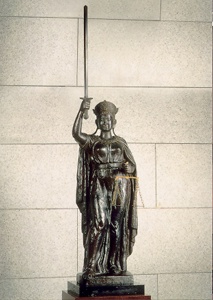
Lady Justice, in the Supreme Court of Japan

As I posted on Thursday, there was a decision by the Tokyo High Court to grant a retrial to Govinda Mainali. The High Court also ordered his release. He was finally released after 15 years of confinement. Since he has a conviction for visa violations, he is placed in immigration custody, and will be sent back home to Nepal, to his family.

However, the Tokyo High Public Prosecutor’s Office immediately filed an objection to the High Court. Even if the Court denies the objection, they can still file an appeal to the Supreme Court. Deputy chief prosecutor of the Tokyo High Public Prosecutor’s Office was quoted as saying that the Court’s decision to grant Mainali a retrial was “absolutely unacceptable”.

Meanwhile, Asahi Shimbun news reported on June 3rd that the Supreme Public Prosecutor’s Office will be holding the first meeting ever with the public prosecutors who deal with postconviction claims of innocence. They are apparently alarmed about the relatively high number of recent court decisions to retry cases. Of the eleven decisions (in death penalty or life sentence cases) to grant a retrial since the end of WWII, five  were handed down after 2009 (decisions in Ashikaga, Fukawa, Fukui, Higashi Sumiyoshi, and Mainali cases. Note that four of these involve false confessions).

The court decisions in these cases were made possible in part by the state-of-the-art DNA testing. As the exonerations all over the world have made it clear, DNA is a strong tool to prove innocence of the wrongfully convicted.

However an exoneration means the police and prosecutors who investigated, prosecuted, and helped to convict an innocent person will be criticized by the public. Thus, it was reported that the prosecutors are worried that these decisions to retry cases “will undermine the public’s trust to the investigation process, and therefore worrisome from the standpoint of public safety”. An executive prosecutor said that they “will do their best to battle these retrial claims by developping prosecution’s scientific knowledge.”

If the prosecutors truly believe what they said in these media reports, it is an evidence that the public prosecutors are worried more about “winning” postconviction cases than finding out the truth. Continue reading

Thomas Arthur, Death Row, and State v. Commercial Labs….

Thomas Arthur

I previously blogged here about Thomas Arthur, a man who is awaiting execution in Alabama.  He’s on my mind again, because I’m being interviewed today by the Oprah Network for an episode on the case (because I was an expert witness on the case back in 2008).  The issue now is that state officials down in Alabama want to move quickly toward execution, but won’t allow Mr. Arthur the chance to exhaust all possible DNA testing avenues to prove his possible innocence.

The perpetrator in this case wore a wig that was later recovered.  Years later, someone else confessed under oath to wearing the wig and committing the murder.  The State says the third-party’s confession is bogus and was orchestrated by Mr. Arthur.  That may very well be true.  Or it may not.  No one, of course, really knows but Mr. Arthur and the confessor.  But a DNA test result finding the confessor’s DNA in the wig would prove the confession to be accurate and reliable.  And it’s not like DNA has never proven a prosecutor to be dead wrong.

The State submitted the wig to nuclear STR testing in its own lab, and it failed to find a DNA profile.  But anyone who does this type of work knows that private labs, which used more sensitive and advanced forms of DNA testing like mini-STR, frequently find DNA profiles when the state labs can’t.  Just ask my client Raymond Towler.  The State of Ohio in his case claimed for years it could not find any sperm or male DNA  on the child rape victim’s panties.  We sent the same piece of evidence to a commercial lab, which found sperm galore and developed a DNA profile that sprung Mr. Towler from prison after 29 years.  I’ll never forget the call with one of the  prosecutors after we got the exonerative results, wherein she expressed amazement that the commercial lab found something that the State lab  had not.  I wanted to say, “Are you kidding me?, this is the rule rather than the exception.”

I’m not trying to knock state labs or the good people who work for them.  They are underfunded and overworked and have smart and hardworking people doing the best they can (like our state labs in Ohio, who are staffed by scientists I know and trust).  But the simple fact that commercial, private labs usually have more sensitive and up-to-date technology and can often get DNA results that state labs can’t is a given to anyone in this line of work.  The fact that Alabama turns a blind eye to this phenomenon, and wants to execute Arthur without seeing what a private, commercial lab can add to the equation, is egregious.

This editorial from the Atlantic says it all:

Another month, another man on death row, another excruciating case that illustrates just some of the ways in which America’s death penalty regime is unconstitutionally broken. This time, the venue is Alabama. This time, the murder that generated the sentence took place 30 years ago. And this time, there is an execution date of March 29, 2012, for Thomas Arthur, a man who has Continue reading

Effort to Increase Compensation to Exonerees in Louisiana Falls Short

Henry James, 50, was released from a Louisiana prison last year after serving 30 years for a rape DNA proved he didn’t commit. If he successfully navigates the state’s compensation process, he’ll receive $8,333 compensation for each year of wrongful incarceration. As reported here, State Representative Herbert Dixon (D) had sought to increase the state’s compensation from the current cap of $250,000 to $500,000, but the effort has failed for a second time.

Exonerees in the state are paid in installments of up to $25,000 per year but first must file petitions for a judge’s eligibility order, then present the order to the Continue reading

Brian Banks’s Redemption Offers Hope for Justice

Brian Banks lived one of life’s worst nightmares. Now he’s tasting his biggest dream. Recently, he’s been contacted by the Washington Redskins, the Kansas City Chiefs, and the Miami Dolphins. Banks spent five years in prison for a rape he didn’t commit and five more labeled a rapist. Now these teams want to see what he’s got. The 2002 blue chipper is getting a second chance.

Banks’s rape and kidnapping convictions were overturned by a California judge last week after the key witness and victim recanted. She admitted in a taped interview that the crimes never happened. His life changed dramatically as the truth was revealed.

Many say you can’t come back to NFL skills after 10 years. As Rick Reilly of ESPN Continue reading

Innocence Project, NY Bar, Rally Today for Law to Prevent Wrongful Conviction

The Innocence Project and the NY State Bar Association are rallying in Albany, NY, today to urge lawmakers to pass legislation requiring best procedural practices to reduce eyewitness misidentification and false confessions. Laws requiring or recommending best practices are in place in New Jersey, Connecticut, Texas, North Carolina, and Ohio, but have met resistance and failed to pass in New York and other states.

The Innocence Project is expected to release data showing that no police departments in NY have reported following recommended identification procedures. These reforms are frequently said to be “cost neutral” when compared to existing procedures. However, they arguably save and protect taxpayers, since the human and financial cost of convicting the innocent and permitting the guilty to continue lives of crime are enormous.

More on this here, here, and here.

Blawg Review #323 – Memorial Day, the Rule of Law, & Human Rights.


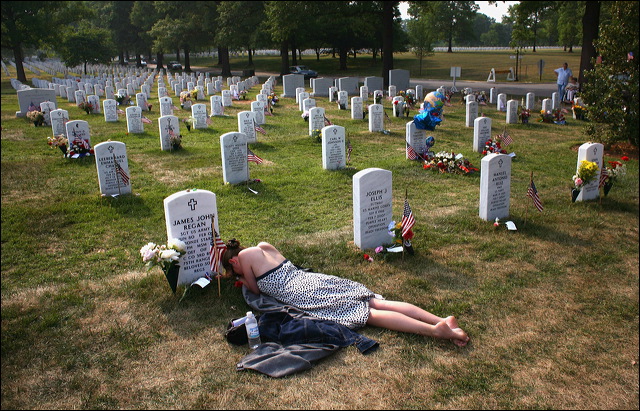
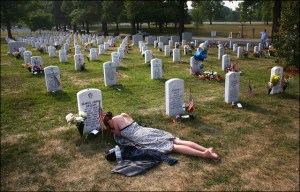
While those of us in the US or UK may be taking a chance to relax or spend time with friends and family (28th May 2012 being Memorial Day, or Spring Bank Holiday in the UK), it is trite to point out (and for many of us, guilt-inducing) that many more will be continuing their struggles to improve the lot of humankind, or will be imprisoned, or lost to their loved ones. Today also marks the anniversary of the publication of the letter ‘The Forgotten Prisoners’ in The Observer newspaper in 1961, authored by Peter Benenson. Benenson’s call to arms to write letters of support for those whose human rights are breached is credited with starting the organization Amnesty International. The fight to uphold human rights is continued by millions around the world today and there are a plethora of blogs reflecting an interest in such human rights campaigns. (see list of some here)

Some of the more essential blogs for those interested in human rights, in the US, see this. Australian human rights lawyers are meanwhile well served by the great blog at the Castan Centre. UK lawyers should not go past The Human Rights Blog or the blog out of 1 Crown Office Row.

My interest in ‘injustice’ focuses on the criminal justice system and failings therein. Justice is about distributions – according persons their fair shares and treatment. The primacy of individual autonomy and rights is central to the ‘due process model’ of criminal justice, recognising that human fallibility and systemic failures can yield grave injustice. Embracing an ‘encompassing’ model of miscarriages of justice can stir debate over the proper focus of researchers and campaigners alike, with some claiming that an exclusive focus on the ‘innocence’ is vital. They prefer the term ‘wrongful conviction’ (although this too can have wider meaning, to include the factually and legally innocent as well as those convicted through unjust procedures), to distinguish those convicted but innocent, from those unjustly convicted.

The debate over taxonomy continues but does not detract from the work of many globally, trying to address the injustices caused by the criminal justice system. In the UK, many legal professionals and investigative journalists, have worked tirelessly alongside campaigners, to bring miscarriages of justice to light. Pressure groups such as Justice and Liberty have now pretty much abandoned this area, leaving it to smaller, largely unfunded organisations such as MOJO (Miscarriages of Justice Organisation) and Innocent (who maintain a wonderful resource rich website covering almost all the miscarriages of justice in the UK since 1993). An international source of information and links, originated in Australia, is ‘Networked Knowledge’, by Robert N. Moles. Single campaigns of course continue, with some great examples of webpages highlighting their cases, such as: Simon Hall and Sam Hallam (exonerated last week). University based Innocence Projects are also working tirelessly in the UK on alleged miscarriages of justice, (see Universities of Cardiff and Leeds for just two examples. This model is replicated from those Innocence Projects so successful in the US, and now expanding internationally.
The original Innocence Project in New York continues to be a source of inspiration and information. The work of the Innocence Project and the Innocence Network now has its own global dimension with The Center for the Global Study of Wrongful Conviction at the University of Cincinnati College of Law. Their blog is new but rapidly growing in prominence. Whilst covering breaking news, in terms of exonerations and legislative or political manouvres, it also features some great contributions on the causes of wrongful convictions. Many other individual Innocence Projects maintain great websites and blogs that are worth following, such as Northwestern Law Center on Wrongful Convictions. The University of Texas at Austin has an ‘Actual Innocence Awareness Database’ while Northwestern University and Michigan University have also launched a National Registry of Wrongful Convictions, a vital research tool for anyone interested in wrongful convictions in the US or elsewhere.

Of course, the ‘Innocence’ movement would not be what it is today without the advent of forensic DNA profiling, leading to the exoneration of many, and proving without doubt their innocence. Yet, while forensic science is acclaimed in the media, it has a blemished history in reality. Many infamous miscarriages of justice have had at their core, scientific evidence that was not disclosed, flawed, or misrepresented in court. This is not to assert that ‘scientific’ methods of identifying criminal perpetrators in particular, have not advanced dramatically. Lessening reliance upon inherently flawed eyewitness or other evidence has undoubtedly saved many innocent individuals from investigation or possibly, wrongful conviction. It is simply to concede that such ‘scientific’ methods of identification are not infallible. This is a focal point of my research, the contribution of ‘science’ to (in)justice. As such, there are a wealth of ‘forensic’ blogs to keep up with if one is to keep anywhere near ‘on top’ of developments in forensics.

Many, if not most, are maintained by forensic departments in universities, such as the Florida University Forensic Science Blog or by keen individuals (the

‘father’ of forensic blogging is ‘Zeno’. Forensic Suite 101 has a wealth of reading materials and great videos for those with strong stomachs. Some more recent newcomers include the Forensics Guy and one aimed at criminal defense lawyers, The Truth About Forensic Science. Covering forensic science and news about injustices and wrongful convictions, the blog by Peter Tillers also does a great job on discussing issues relating to evidence, while David Kaye, author of ‘The Double Helix and the Law of Evidence’ blogs at Double Helix Law on all things ‘DNA’ and law and also blogs on Forensic Science, Statistics & the Law. ‘The Charles Smith Blog’ blog was named after the infamous pathologist, responsible for much injustice in Canada. Maintained by a retired journalist, the blog now covers fascinating news on all things ‘criminal injustice’ related and is a must read.

The scale of injustice perpetrated by the criminal justice system itself may never be agreed upon. “How Bad Is The U.S. Wrongful Conviction Problem?” asks Brian Evans on the Human Rights Now Blog of Amnesty USA. However, it is easy to see that the issue coming to the fore globally now, more than ever. The work of the Innocence Network is unrivaled in this respect, but so too is the most often thankless (and costly) work done by individuals and campaigners, including criminal lawyers, working on cases and trying to bring about reform. Without the development of forensic DNA profiling, who knows whether this explosion of interest would have happened, or could have been maintained. While they may be sometimes at fault, it is good to see some great examples of forensic scientists also working hard to remedy injustices, and work to ensure the prevention of many more. Long may these individuals and organisations, which look out for our human rights, have our support.

We begin this week’s Blawg Review #323 at the Innocence Blog, where the Innocence Project honors the wrongfully  convicted who had served in the military. Perhaps more to be honored on Veterans Day, former Army Sergeant Dennis Maher served almost six years on active duty before he was wrongfully convicted in 1984. Exonerated through DNA testing in 2003, Maher says “Because of my wrongful conviction, I missed the opportunity to serve my country because I was going to be a career soldier. I think about that on Memorial Day.”

Returning to the anniversary of Amnesty International,  #AmnestyReport2012 – an overview of state of human rights worldwide – is now available in full online here. Apparently, the US Department of State submitted the report to Congress, except the part about the USA noting, “The focus of the Human Rights Reports is on the human rights performance of other governments. We note that the United States does examine its own human rights record against its international commitments and obligations in many other fora. For example, in December, the United States submitted a lengthy report to the U.N. Human Rights Council on U.S. implementation of the International Convention on Civil and Political Rights. The United States also engages in the U.N. Universal Periodic Review process, through which the human rights records of the U.N.’s 193 Member States are reviewed and assessed once every four years. These reports are available on HumanRights.gov.”

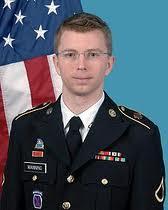
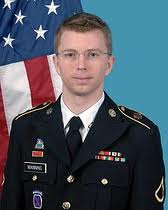
“The military trial of the WikiLeaks suspect Bradley Manning is being conducted amid far more secrecy than even the prosecution of the alleged 9/11 plotters in Guantanamo, a coalition of lawyers and media outlets protest,” writes Ed Pilkington for the guardian in New York.

Kenneth Roth, Executive Director, Human Rights Watch, on Twitter points us to an editorial of the New York Times alleging a court covers up that concludes, “The judges should have given the government’s overwrought claims of national security and secrecy special scrutiny, not extreme deference.”

Daphne Eviatar reports on HuffPost that “perhaps the most closely watched Guantanamo-related case since the Supreme Court confirmed detainees’ right to judicial review in Boumediene v. Bush in 2008, Latif v. Obama raises a critical issue that goes to the heart of whether U.S. prisoners have a meaningful opportunity to challenge their detention. Must a court presume the accuracy of a government document introduced against a Guantanamo detainee, even if it’s not clear how that document was produced?”

Focussing upon a particularly pernicious abuse of human rights, The Renditon Project website was officially launched. UK legal action charity, Reprieve, issued a press release, in which Clare Algar, Executive Director of Reprieve said, ‘The Rendition Project will be an important tool in bringing the tangled web of the CIA’s illegal rendition programme to light. It is essential that we get to the bottom of what was one of the worst human rights abuses of the ‘War on Terror’ – including the involvement of the UK, a number of other European states, and major corporations.

A Pakistani doctor was sentenced to 33 years in prison Wednesday for helping the Central Intelligence Agency (CIA) locate Osama Bin Laden  reported JURIST news. “After a trial lasting two months during which Shakeel Afridi was not afforded the opportunity to defend himself, a tribal court convicted him of treason and spying.” Glenn Greenwald, in a provocative op-ed post on Salon.com says that “American rage at Pakistan over the punishment of a CIA-cooperating Pakistani doctor is quite revealing of The Imperial Mind.”

One of the most common human rights concerns in the USA, wrongful convictions, is reported by The Wrongful Convictions Blog and the ABA Journal as well as other media this week. The first-ever published report (PDF) of the National Registry of Exonerations, assembled by the University of Michigan Law School and the Center on Wrongful Convictions at Northwestern University School of Law, “highlights grave questions about the legitimacy of the legal justice system.”

On the Huffington Post Chicago, the president of the Chicago Innocence Project, David Protess, introduces the exonerated.

More than 200 men and women have been wrongfully convicted of serious crimes in California, six of whom were sentenced to death.  Here on Death Penalty Focus are some of their stories.
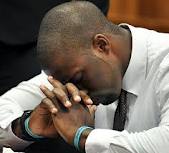
Brian Banks, former football star and USC Trojan recruit, was exonerated this week, as reported here on The Wrongful Conviction Blog. The “victim” recanted and admitted she lied at trial (the sex was actually consensual). She did not come forward earlier because she didn’t want to “give the money back”–meaning the settlement that she obtained from the school where the rape allegedly occurred.

The Innocence Blog points to a story on Salon.com that describes The Long Road From Exoneration to Compensation for the wrongfully convicted.

Meanwhile, on the other side of the Atlantic, there was an important victory for prisoners (and the public) in the European Court of Human Rights, with the Court RE-affirming earlier decisions, that there should not be a blanket rule disenfranchising prisoners. On the UK Human Rights Blog, Reuven Ziegler writes about the case for letting prisoners voteCharon QC notes the latest prisoner votes case from Europe on his blog, “The case is important.  For my part, I have no problem whatsoever with prisoners voting.  I rather hope that prisoners will return to society improved for paying their debt to society and be part of society.  Pie in the sky for recidivists… but an ideal to which we should aspire? I am, I suspect, in a sizeable minority.”

However, as the honest among us would readily admit, on the whole, our prison system does little to rehabilitate, in fact, as Alisa Roth on the ACLU Blog of Rights argues prisoners subjected to solitary confinement in particular are ““more broken than when they went in”. Meanwhile, Gideon, a public defender, looks at some reactions to the death penalty repeal  in CT and tells the tale in a post titled, Idiocracy.

A topic comes up time and again on the Wrongful Convictions blog, Conrad Black points to cases of prosecutor misconduct and asks, “How Many Wrongful Convictions Will the Public Stand for?

“Facing the truth is hard to do, especially the truth about ourselves,” says Bill Moyers. “Not surprising, Americans have been sorely pressed to come to terms with the fact that after 9/11 our government began to torture people and did so in defiance of domestic and international law. It’s no secret such cruelty occurred. It’s just the truth we’d rather not think about. But Memorial Day is a good time to make the effort because, if we really want to honor the Americans in uniform who died fighting for their country, we’ll redouble our efforts to make sure we’re worthy of their sacrifice. We’ll renew our commitment to the rule of law. For the rule of law is essential to any civilization worth dying for.”

Blawg Review has information about next week’s host, and instructions how to get your blawg posts reviewed in upcoming issues.