Category Archives: Inquisitional and adversarial systems of justice

New Study Predicts Wrongful Conviction Rate in U.S. at 5,000 to 10,000 Per Year

Prof. Marvin Zalman

By Professor Marvin Zalman.   Full article here.

The conclusion states:

The ultimate question is whether the prospect of, at a minimum, 2,000 innocent defendants going to prison every year (with capital murder defendants a disproportionately higher part of this total as their wrongful conviction rates are demonstrably higher than 0.5%), and another 3,000 receiving lesser felony sentences, should move the innocence reform agenda. That question will be decided in the political and policy arenas. Whatever activists or policy makers do, scholars have an obligation to think clearly about the issue. This obligation led me to rethink the bases of my belief that the Estimate of a general wrongful felony conviction rate of 0.5% to 1.0% is correct, which reconsideration has been explained at length herein.

As the Estimate is an estimate it could be wrong in either direction. It is likely that the number-of-wrongful-convictions-is-vanishingly- small hypothesis is the ideologically tinged wishful thinking or defensive reaction of some judges and prosecutors. Against such a conclusion, I hold to the Estimate beyond a reasonable doubt (in the law’s terminol-ogy) or almost certainly (using words of estimative probability).  It may be that the actual general rate of wrongful convictions across the nation is higher, a possibility that is limited by the fact and the conjecture that wrongful death sentences are higher, at about 3%.  It is also cabined by the opinion surveys of justice system actors.  Against the Estimate being wrong in that direction, I hold to it with less firmness. In legal terms I believe that clear and convincing evidence and reasoning supports the Estimate against a higher error rate. Applying terms of estimative probability, the Estimate is probably correct against a higher error rate.

Acceptance of the Estimate creates a moral obligation to correct the factors that most likely generate wrongful convictions. If the Estimate is wrong as against higher estimates of 2 or 3% or higher, moral and professional reasons to enact innocence reforms become stronger. The more difficult issue is whether an error rate of 0.5 or 1% justifies reform efforts. I believe that most Americans would say that one out of 100, or even one out of 200 unnecessary infections contracted by hospital patients because of preventable systemic problems is too high in an advanced technological society. I believe that most Americans would say that one out of 100, or even one out of 200 innocent defendants convicted of felonies because of a range of preventable systemic errors by the very governmental system designed to provide justice is too high in a society guided by the rule of law. Arguments to the contrary are based either on ignorance of criminal justice realities or on faulty cost-benefit analyses. The intuition of those who support justice system reforms designed to prevent wrongful convictions, that wrongful convictions are large in number, is supported by a sober look at the realities of the criminal justice. The imperative to act and to keep as few as 2,000 innocent inmates a year out of prison is supported by our ideals of justice and our com- mitment to professionalism in the justice system.

“The Real CSI”

I hope you were able to watch “The Real CSI” on PBS last night.  The program shined a bright light on the shortcomings and failures of the forensic disciplines.(Excuse me, but I refuse to call them “sciences”.)  The focus was mainly on “fingerprints”, “bite marks”, and “odor analysis”, but mention was also made of “blood spatter”, “hair & fiber”, and “ballistics”.  There was also a piece about the shoddy state of forensic expert “certification”.  Please see the earlier post by Mark Godsey:    https://wrongfulconvictionsblog.org/2012/04/18/must-read-story-about-lack-of-control-in-forensic-accreditation/

If you were not able to watch, you can view the program online here:

http://www.pbs.org/wgbh/pages/frontline/real-csi/

In the closing of the program, Federal Judge Harry T. Edwards, who was one of the principal authors of the NAS report, got it exactly right when he said, “It’s not pro-defense.  It’s not pro-prosecution.  It’s pro-justice.”

The question I have to keep asking the forensic “experts”, and the one that will stop them in their tracks, is – “Show me the data from which I can compute a probability of occurrence.”  The only forensic discipline that can do this today is DNA.

Lawyers in UK claim new rules to ‘speed up’ trials resulting in miscarriages of justice

A new policy, called ‘Stop Delaying Justice’, introduced to ‘streamline’ trials in the lowers courts in England and Wales (the Magistrate’s Courts), may be leading to an increase in miscarriages of justice according to lawyers. The strict time restrictions are forcing people to plead guilty without seeing the evidence against them first. In one case, a defendant was asked to plead guilty before seeing crucial fingerprint evidence. He refused, and the fingerprint evidence later proved his innocence. Read more about the investigation into such cases on the BBC:

Lawyers claim new policy causes miscarriages of justice

New York AG’s Office to Create Internal Wrongful Convictions Review Unit…

From the New York Times (full story here):

Eric T. Schneiderman, the New York State attorney general, is creating a bureau to investigate criminal cases across the state in which convictions have been called into question.

The Conviction Review Bureau represents the first statewide initiative by a law enforcement agency to address potential wrongful convictions, at a time when many in the state’s criminal justice system, including the chief judge, have been calling for changes like the videotaping of police interrogations and the use of new practices for eyewitnesses’ identifications.

“There is only one person who wins when the wrong person is convicted of a crime: the real perpetrator, who remains free to commit more crimes,” Mr. Schneiderman said in a statement. “For victims, their families and any of us who could suffer the nightmare of being wrongly accused, it is imperative that we do everything possible to maximize accuracy, justice and reliability in our justice system.”

The bureau will consist of one current assistant attorney general, who will be able to call upon investigators and assistant attorneys general as needed. A panel of seven senior lawyers in the office will advise the bureau.  To continue reading, full story here.

New Scholarship Spotlight: False Justice and the “True Prosecutor”

Jim Petro

Here is the final version of my latest article, which honors former Ohio AG Jim Petro and discusses the problem of prosecutorial tunnel vision and resistance to innocence claims…The abstract states:

This article is a review of False Justice: Eight Myths that Convict the Innocent by Jim and Nancy Petro. But this article is also a memoir, in that I tell the story, from my own perspective as Director of the Ohio Innocence Project, of how I have watched Jim Petro go from prosecutor and elected Attorney General of Ohio to a leading champion of the wrongfully convicted across the nation. The article is also a commentary in that, along the way, I address what makes Jim Petro so different from many prosecutors in this country. In this respect, I discuss problems in our criminal justice system that unfortunately lead some prosecutors, in far too many instances, to contest post-conviction claims of innocence in ways that I believe are contrary to our profession’s ethical standards. With this article, I hold out Jim Petro as a national model – an example that all other prosecutors should strive to emulate.

This Sunday Dateline NBC to Air Episode About Day Care Hysteria that Led to Many Wrongful Convictions

Those involved in innocence work are aware of the day care molestation hysteria that swept the U.S. (and other countries) in the 1980s and 1990s that led to many wrongful convictions.  This Sunday at 7pm EST in the U.S. Dateline NBC will air a one-hour episode about one of these cases–the Nancy Smith/Joseph Allen case.  The Ohio Innocence Project and its students will be featured in the latter part of the show.

Many know Nancy from her attendance (and speaking roles) at the past few Innocence Network Conferences, and for her art contributions to Illustrated Truth:  Expressions of Wrongful Conviction…

Contributing editor Martin Yant was the investigator on the case who stayed with it over the years (he worked on it longer than anyone) and got the ball finally moving toward Nancy’s freedom…

Tune in Sunday night…this is an interesting case and should be a good show…


Italy: A Legal system in crisis?

The legal system in Italy is renowned as having ‘difficulties’. These are laid bare in this article, explaining how Italy’s justice has almost ground to a halt, weighed down with too many cases, too many solicitors and massive backlogs. A glimpse of the issues was shown to the world via the famous Amanda Knox and Ralph Sollecetio case, but this is just the tip of what appears to be a very big iceberg:

  • There is a backlog of 3.4million criminal cases;
  • 84million Euros was paid out last year in compensation for miscarriages of justice and delays;
  • a further 46million Euros was paid to people unjustly imprisoned…

read the full story here…

Insight: Overloaded justice system ties Italy in knots

Prosecutorial Ethics in Inquisitorial Systems…April 2012 Thoughts….

Anyone who does innocence work in the U.S. is familiar with prosecutorial tunnel vision, stiff prosecutorial resistance to innocence claims, and all the nasty and unreasonable responses we often get from prosecutors that we tend to chalk up as a by-product of our adversarial system of justice.

After reading Huff and Killias’ book Wrongful Convictions:  International Perspectives on Miscarriages of Justice, I became very interested in prosecutorial training and ethics in the inquisitorial justice systems of Western Europe.  Many of the articles in the book depict the inquisitorial systems of justice as ones in which prosecutors take very seriously their duty to remain neutral and seek justice over victories.  Anyone interested in this issue should read the Huff and Killias book, as they do a convincing job of highlighting some strengths in the inquisitorial systems.  This book, and conversations with some of the authors in the book, caused me to say in a forthcoming article:

In recent years, I have spent quite a bit of time outside of the United States helping attorneys and scholars set up the framework for innocence organizations in their home countries.  In Western European countries, where the systems are inquisitorial rather than adversarial, scholars tell me that the prosecutors are trained early on to seek the truth and to be as objective as possible.  This Continue reading

Second serious DNA ‘error’ in UK made public.

Hot on the heels of the Adam Scott case where DNA contamination at LGC labs in England led to an innocent man being charged with rape, (see post here… Review of convictions after DNA contamination in lab discovered.) we now read that another error – this time a typographical error made during data entry on a computer – has led investigators on a wild goose chase for more than a year in a murder inquiry. The revelations in the case of Gareth Williams, whose death still remains a mystery, has led to further comments on the problems with the privatisation of forensic science in the UK, as well as the risk that miscarriages of justice are just as likely as ever, with faulty science often being to blame. Read here:

Calls for inquiry into ‘astonishing’ DNA error

and comment on privatisation from Prof Peter Gill:

Privatisation is a catastrophe, warns godfather of forensics

Listen here to Michael Mansfield QC warning that miscarriages of justice in England and Wales are NOT a thing of the past:

Michael Mansfield: ‘Risk of miscarriages of justice as great as ever’ – video

Weighing up the Law on Presumption of Innocence

The presumption of innocence is an international protective legal norm – whether in civil or common law jurisdictions. It’s an integral part of the principle of fairness. We are increasingly witnessing a sustained assault on this time tested legal principle.

In Nigeria, in 2009, Mohammed Yusuf the acclaimed leader of the ferocious and violent Islamic sect, which goes by the name Boko Haram, was brutally ‘murdered’ by the police. He was shot with cuffs in hands by the Nigerian police. Where was the presumption of innocence? Without prejudice to the on going investigation of the tragic death of young Trayvon Martin, George Zimmerman in some quarters, is already presumed guilty. Where is the presumption of innocence?  It seems there is the tendency that we confuse presumption of innocence with other concepts. For a didactic analysis of presumptions, assumptions and assertions, and how they colour our perceptions of crime, read herehttp://surftofind.com/justice

Official inquiry finds error rate of 7% in prosecutions in England and Wales.

An official inquiry into prosecution standards by Her Majesty’s Crown Prosecution Inspectorate has found an error of ‘analysis or judgement’ in up to 7% of cases. In any one year, this can mean 60,000 cases with errors: either prosecutions that should not have been brought, or cases that have failed to continue to a prosecution. Such a significant error rate has serious implications for the effectiveness of the criminal justice system in England and Wales. Read a news report here…

Mistakes in one in every 15 criminal prosecution cases, report suggests

The official press release can be found here….  and the full report is here:

Thematic review of the CPS Core Quality Standards Monitoring scheme

Scottish CCRC’s 800-Page Report on Problems in “Lockerbie Bomber” Conviction Leaked…

From a news source:

Glasgow-based newspaper the Sunday Herald published the 800-page Scottish Criminal Cases Review Commission (SCCRC) report on its website.  It documents the details of al Megrahi’s second appeal in 2007. According to the report, prosecutors failed to disclose seven pieces of evidence that led to the fresh appeal.  The SCCRC upheld six grounds that could have constituted a miscarriage of justice.  Megrahi was convicted of murder over the 1988 bombing of Pan Am Flight 103, which was destroyed over Lockerbie, Scotland, in 2001.

At the end of an 800-page report, the commission says: “In accordance with the principles set out at the beginning of this chapter the Commission has also considered whether, notwithstanding its conclusion that a miscarriage of justice may have occurred, the entirety of the evidence considered by it
points irrefutably to the applicant’s guilt. The Commission’s conclusion is that it does not.”

“In these circumstances the Commission believes not only that there may have
been a miscarriage of justice in the applicant’s case, but also that it is in the interests of justice to refer the case to the High Court. The Commission accordingly does so.”

The release of the report has been applauded, and some have called for an inquiry into the official misconduct

More here

The Disease of Certainty…

Author Dr. Everett Doolittle

Following up on this piece from The Police Chief here is another insightful article, also written from the law enforcement perspective, about the dangers of tunnel vision. With articles on the subject in the same month in two major law enforcement publications, perhaps it is a sign that an important cultural change is starting to occur in the law enforcement community.  Here is an excerpt from the piece (full article here) appearing in FBI Law Enforcement Bulletin, and written by former officer (now professor) Dr. Everett Doolittle:

I have had great opportunities over my many years in law enforcement. I have served as a police officer, a deputy sheriff, and even the chief deputy, but I found my greatest career opportunity at the Minnesota Bureau of Criminal Apprehension (BCA). At BCA, I tackled my most challenging assignment when I led the Cold Case Unit (CCU).

Early in my career, I gained valuable experience by working on homicide teams. But, studying the errors of others and reworking an old case granted me even greater insight into why cases fail. This article describes one of the major sources of these investigative errors: a phenomenon I dubbed the “Disease of Certainty.”

The Disease of Certainty is fatal to investigations. Both inexperienced and seasoned officers can catch this contagious disease, and it can spread throughout a team. It occurs when officers feel so convinced of their own beliefs that they allow themselves to become tunnel-visioned about one conclusion and ignore clues that might point them in another direction. Those who resist the disease may be ridiculed and ostracized for their supposed lack of understanding and inability to see the truth if all of their coworkers share the same beliefs and assumptions about the investigation.

Public Pressure Builds for Sheriff in Michael Hash Wrongful Conviction Case to Resign…

Good for the freedom fighters and vigilant citizens of Culpeper, Virginia.  On the heels of the exoneration of Michael Hash, citizens are putting pressure on Scott Jenkins, the sheriff of Culpeper, Virginia, to resign immediately.  The prosecutor in the case has already resigned after the federal decision throwing out Hash’ convictions strongly condemned the conduct of both sheriff and prosecutors.  More than 150 people showed up at a rally last night to blast Jenkins and demand his resignation.  Excerpt from news coverage:

“Enough is enough,” said citizen Bob Buettgens, mentioning his background in law enforcement, and how he had never seen a judge opine to this level of criticism.

“We are not going to stand for it anymore. We don’t care about your politics or who you’re friends with. You need to step down and be done with it!”

The provoked gathering of young and old posed questions like: 1) if the sheriff broke the law as an investigator why couldn’t he just be charged, convicted and arrested like everyone else 2) are local media reports about what occurred in the case really true and 3) why isn’t Culpeper County Lieutenant of Courts James Mack being held more responsible for his role in the seemingly botched investigation.

Recall Petition organizer Wayne Stephens, a civil engineer from Rixeyville, said the thing that bothered him most was a statement in the judge’s report attributed to Jenkins in which the sheriff said he never believed Hash and his two teenage accomplices killed 74-year-old Thelma Scroggins in her Lignum home.

“Yet he participated in the prosecution of these three boys,” Stephens said. “To me that is a misuse of justice, not excusable by a deputy or a sheriff.”

The avid blogger and apparent activist said you can’t just hide behind the excuse, ‘My boss told me to.’ Stephens called that “a variation of the Nuremberg defense some Germans tried to use after World War II.”

News here and here.

Good Cops Warm the Heart

I reported previously about police in Southern Illinois working with the Downstate Illinois Innocence Project to exonerate Jonathan Moore.  Now, there is news that the police voluntarily re-opened the murder case of Barton McNeil.  McNeil was convicted of smothering his 3-year old daughter in 1998, but always claimed that his girlfriend at the time was the true perp.  After the girlfriend was convicted of another murder last year, the police decided to take a second look at McNeil’s case.  They contacted McNeil’s supporters and conducted numerous interviews, but have not yet been able to find any new evidence supporting innocence.  They state that they want to work on the case with the Downstate Illinois Innocence Project.  Article and video here.

L’affaire d’Outreau and the Parliamentary Investigation Commission

One of the most intriguing wrongful conviction cases I uncovered in France is called, L’affaire d’Outreau (this link is to the original French article but can be translated online). This is a 2004 case of alleged sexual abuse of children producing 17 indictments, 4 convictions, and 12 acquittals. The case was built around testimony of one of the co-defendants who lied about the involvement of the others. Like so many of the cases investigated by innocence organizations in the United States, there was no physical evidence, only the word of an accuser.

Between January 10 and April 12 of 2006, a Parliamentary investigation was undertaken to identify those factors leading to the wrongful convictions. The commission members heard from 221 people for more than 200 hours of testimony. Witnesses included alleged victims, defendants, prosecutors, police officers, judges, sociologists, psychologists, linguists, and others. Questions focusing on oral testimony sought insight into the following: “How to listen and transcribe depositions, interrogations and confrontations,” “What form of orality is more conducive to the emergence of the truth?,” “What is the validity of orality in the construction of the judicial process?”

It is important to note that, largely in response to public outcry over the Outreau convictions, the French Parliament saw fit to establish an investigatory commission to review the entire investigation and trial to determine where fault should lie, and how procedural improvements could be made. While US legal scholars have conducted postmortem analysis of wrongful conviction cases to determine their causes, nothing similar to the French Parliamentary commission investigating Outreau has occurred in the US. This is precisely the kind of transnational sharing of information and experiences that can prove invaluable and inspirational to the human rights movement seeking justice for the wrongly convicted. For example, Barry Scheck, Peter Neufeld, and I have each on different occasions argued for the creation of a federal level review body with the mandate to investigate the causes of wrongful convictions. I have referred to such a body as the National Safe Conviction Board (NSCB). This NSCB would have full subpoena authority and would serve to generate a set of national priorities based on its investigations (see Robert Schehr. 2010. “A View From the United States,” in M. Naughton (ed.), The Criminal Cases Review Commission: Hope for the Innocent? pp. 205-218.). Regardless of what it’s called, the purpose of a federal commission authorized to hold hearings to deconstruct the causes of wrongful convictions, and to publish its findings and recommendations for investigation and due process remedies, is something that I strongly believe we should lobby for in the United States.

The French Parliamentary commission appears to have operated much like a truth in reconciliation  that privileges parrhesia – the ability to speak freely, candidly, with a  degree of risk. Some of the statements made by the exonerees are compelling:

Sandrine Lavier: “We were never heard. We told them we were innocent, we were talking to a wall.” When asked “Who was this wall?” “Investigators, Judge Burgaud, the prosecutor, the juvenile judge, the Board of Appeal, all.”

Frank Lavier: “To prove our innocence, it’s like you say it’s windy but you do not see it. There is a difference: one is innocent, but we cannot prove it to you. The wind is there but does not see.”

The Commission members admitted the difficulty of attempting to determine innocence and guilt when, as in this case, there is no physical evidence.

The takeaway from reading about the Outreau affair is that, at least in this one case, the French appear to share much in common with those of us operating in adversarial systems. Perhaps the more compelling lesson for those of us operating within the United States is that we can follow in France’s footsteps by creating a National Safe Conviction Board to conduct postmortem review of exoneration cases.

An American in Bordeaux – Part 1

Being a member  of the Innocence Network Board of Directors and the co-Chair of the International Committee, I am gifted with the opportunity to travel abroad to meet our colleagues working on similar issues.  I spent last week in Bordeaux, France where I was graciously hosted by the faculty and students at the Montaigne-Montesquieu – Bordeaux IV, Ecole de Droit (Law School). While there, I lectured on the topic of wrongful conviction and criminal procedure in the United States.  Based on a week’s worth of conversations with my colleagues in the law school, and graduate students studying law, a few things became apparent to me. First, the students were extremely interested in the idea of being able to apply their legal training to questions of unsafe convictions. To a number, their questions were probing, thoughtful, and enthusiastic. However, to my knowledge there is no history of clinical legal education like what exists in the United States (and what manifests as innocence projects) in France for the faculty and students to participate in. Moreover, French defendants do not have access to their investigation, trial, and appellate documents making post-conviction case investigation virtually impossible.

While not insurmountable obstacles to the creation of innocence projects and the investigation of wrongful conviction more generally, a significant amount of transnational dialogue should take place between Innocence Network members and French legal scholars, students, politicians, and justice practitioners to better describe what it is that the Network does, and how that might be replicated in France. One way that we might be able to accomplish this is by developing relationships with French universities and hosting law school students on summer internships. The Arizona Innocence Project and Northern Arizona University is proposing just such a relationship with the University of Bordeaux Law School, as well as a summer study abroad. The point is to enhance our interactions with our French colleagues so that we may better understand their systemic issues, while also sharing what we know about case investigation and litigation, and legal scholarship. Of course, other non-university relationships should also be developed with justice practitioners. The Network International Committee will be engaging in these efforts.

For now, with so many French people interested in this international wrongful conviction blog, perhaps we can hear more from them about ways to proceed.

Bryant “Rico” Gaines to Walk Free Today in Ohio: Reflections on System Resistance to Innocence

Later today, Ohio Innocence Project client Bryant “Rico” Gaines will walk free after serving 9 years of a life sentence for a murder he did not commit.  (Details of case, and grounds of innocence, available  here).  OIP attorney Karla Hall and Cincinnati defense attorney Bill Gallagher, along with scores of students, worked very hard over the years to bring about Rico’s freedom, and they deserve many congratulations.  But Rico will not be going home cleared of all charges, despite the fact that he is innocent.  He walks free today after deciding to  take a plea deal to a reduced charge of “conspiracy to commit involuntary manslaughter.”  His decision was simple.  He has two daughters, including an 11-year old daughter that he has barely seen since she was 2 when Rico was locked up.  Rico knows he had nothing to do with the murder in this case, but after having clear evidence of  innocence in his favor for many years, and seeing how the prosecutors and courts refuse to listen, he decided that taking a plea and lying about his involvement in the murder was the price to pay for freedom and being reunited with his daughters immediately.

Rico’s case is a testament to three things:  (1) how difficult it is for an innocent man to win his freedom when there is no DNA in his case; (2) the lengths that the system will go to deny admitting a mistake; and (3) how difficult it is for a Continue reading

Worrying report about competence of expert witnesses in UK’s family courts

A very worrying report into experts acting in cases at the family courts in England and Wales, reveals that up to 20% are not qualified, a third had no experience in mental health, and 90% were no longer in practice. Some psychologists were found to be writing reports on parents that they’d never met. The Family Courts are shrouded in secrecy but many cases result in children being removed from their families – many parents claim unfairly or on false or flawed evidence. Some have gone on to be convicted in the criminal courts. These represent miscarriages of justice largely hidden from our system. Read more and watch a video report here…

How Competent are Expert Witnesses? 

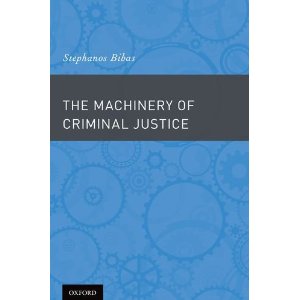
New Book: The Machinery of Criminal Justice

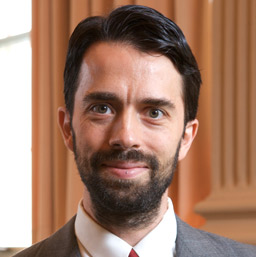
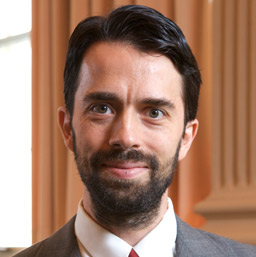
Penn Professor Stephen Bibas has published an interesting new book titled The Machinery of Justice.  Available for purchase here.  The abstract states:

Two centuries ago, the American criminal justice system was run primarily by laymen. Jury trials passed moral judgment on crimes, vindicated victims and innocent defendants, and denounced the guilty. But over the last two centuries, lawyers have taken over the process, silencing victims and defendants and, in many cases,
substituting a plea-bargaining system for the voice of the jury. The public sees little of how this assembly-line justice works, and victims Continue reading